
by Shelly on Feb 3rd 2010 6 comments
Learning doesn’t just happen at school. You can stimulate your child’s mind at home with these simple activities:
Sometimes when kids seem to need a lot of extra attention, are bugging you constantly to watch TV and movies, or are generally in your face 24/7, they might actually be asking for more intellectual stimulation. When kids get bored, they turn to you for help, but they might not know exactly what they’re wanting.
If you think this might be what’s happening in your household, I’ll give you some ideas and examples of simple things you can do to stimulate your child’s mind, support more independence, and encourage self-directed activities.
First, consider your child’s favorite things. Does she love dinosaurs, dolls, horses, or art? Does he enjoy cooking or playing in the sandbox? These preferences can inform which kinds of activities your child will enjoy right now. Let’s say she’s into dinosaurs. She loves to play with her dinosaurs and sometimes corrects you when you call them by the wrong name.
So, how can you create an engaging, self-directed activity that will build on your child’s knowledge and encourage her to learn even more about dinosaurs? Read the rest of this entry »
by Jill on Jan 27th 2010 3 comments
One of my biggest challenges as a parent is trying to find ways not to take it personally when my child blames me for his unhappiness. Sometimes, it’s easier than others. For example, when I hear, “You’re so mean!”, it’s easy for me me to remember that this is all part of the parenting mix. It’s harder when he does things like vigorously reject my home-cooked food.
I don’t know whether “You’re so mean” rolls off my back because I’ve heard it so many times lately (whenever my son doesn’t get what he wants), and thus am getting used to it but somehow, I’ve been able lately to keep a calm heart in the face of “You’re so mean”, and offer up empathy guesses into feelings and needs:
“Ah–are you saying you’re angry because you’re not getting what you want?”
“Yeeahhhh.”
Whew. That I can hang with! And it also helps take the edge off his upset. In fact, whenever I can remember to tune in deeply to my son, and help him feel heard and understood, his anger dissipates, and least a bit.
I think if I could remember each and every time I hear something personal, to tune into the feelings and needs underneath, I’d probably be a lot more peaceful.
As it is, what comes up for me sometimes is, well, taking it personally. And then fighting accordingly. This is especially easy to do when I get called a name. For a period of weeks, when my son was unhappy, he’d shout, “Stink!”, which I think was meant to be a noun, as in, You are a “stink,” an unpleasantly-scented thing…like a piece of poop for example.
Read the rest of this entry »
by Shelly on Jan 20th 2010 No comments yet
I know it sounds like an outrageous claim, but the truth is that kids always have a positive intention behind EVERY action. Even when he’s smearing peanut butter all over your computer keyboard, or convincing his little sister to eat dog food he has a positive intention. And when she’s cutting her hair, coloring on the walls with crayons, or purposely waking up the baby, even then, she has a positive intention.
Kids, just like the rest of us, are just trying to get their needs met. They may not always have the most effective strategies for getting what they want, but they’re always doing their best and responding to the world around them.
When we can assume a positive intention and even try to discover what that intention might be, suddenly we can move from feeling angry and exasperated, “Why in the WORLD would she DO that?!” to a state of compassion and understanding. “Oh, I see, she was needing some excitement and stimulation, so she woke up the baby to play with him.”
When we’re aware of the underlying needs behind our children’s seemingly bizarre behavior, we can start to empathize with them and teach them better strategies that will actually get them what they want. But first we have to learn to breathe and take a moment BEFORE we react.
Right now, imagine the most frustrating thing your child has done in the past week or so. Remember how you responded. Now, consider, what might be the positive intention behind your child’s actions? Imagine yourself in a similar situation in the future. Is there a way you could have responded that would have created more connection and understanding between you and your child?
Let’s try the “Assume a positive intention” technique: Read the rest of this entry »
by Jill on Jan 4th 2010 No comments yet

we are blooming...so beautifully...by Glenn E Wilson
Happy Gregorian New Year! Whatever calendar we may observe as part of our many traditions, the popularity and ubiquity of the Gregorian New Year offers us a time to reflect, regroup and realign with what we want most.
This past October, as part of my year-long program studying Nonviolent Communication (NVC) mediation, I went on one of three retreats. I got to deepen my NVC skills, learn new ways of approaching mediation, and make many wonderful connections with other mediators.
One powerful demonstration stood out in my mind. John Kinyon, one of my mentors, stood with one foot in front of the other. He said he was about to recall something he was upset or angry about, and to think of it in “jackal” or judgmental terms, such as “that person’s a jerk,” (or bad, or wrong or similar). He did so, and asked a volunteer to attempt to push him off balance. John got knocked over quite easily.
Then, he stopped and asked himself what he was needing. For example, peace, support, or respect. He allowed himself to “drop down into,” or really feel the awareness of that need, beneath the judgment. The volunteer attempted once again to knock John off balance and was not able to do so. We got together into pairs and tried the exercise–it worked! When I dropped down into my need beneath my judgment, I felt calm, solid, and grounded, and in fact was not pushed over.
What does any of this have to do with the Gregorian New Year?
Read the rest of this entry »
by Shelly on Dec 23rd 2009 1 comment
Happy holidays everybody! I hope you’re having a lovely time together as a family and I know that when we get extra time together with our immediate families and especially when we spend time with extended family, tensions can run high. I’m sure you know what I’m talking about.
Almost inevitably when we celebrate with our families, there’s someone whose beliefs are different from our own, or there’s a sibling or parent who treats us in just the same way they treated us when we were five or who treats our children in ways we don’t enjoy. The holidays can be a time of joy and celebration, and a time that warrants a lot of introspection, conflict resolution skills, and mediation between family members.
Although we all might intend to have a nice Christmas dinner or a beautiful Solstice celebration or (insert your holiday here), there are times when feelings get hurt, alcohol helps remove inhibitions, and we can suddenly find ourselves or other family members in the midst of conflict. So what can we do when our lovely celebration is about to deteriorate into chaos? Read the rest of this entry »
by Jill on Dec 16th 2009 3 comments
In his Seven Habits of Highly Effective People, Stephen Covey enjoins us to “Seek first to understand, then to be understood.”
As hard as this may be to remember to do with other adults sometimes, I find it even harder to remember to do with my son.
Recently I got my son and his stepbrother reading and math workbooks based on movie characters. My son got a Cars (as in the Disney movie) workbook for Chanukah, while his stepbrother got a Spiderman workbook. My son wailed and hollered for days…”It’s not fair! It’s not fair! Why did you give him that?”
I explained that I knew Canaan (my son, and that’s his new chosen spelling of his name) liked Cars, so I got him that, and I knew Taebin (his stepbrother) liked Spiderman so I got him that. Completely logical. Meanwhile I was kicking myself for not remembering to get them identical gifts.
Read the rest of this entry »
by Shelly on Dec 8th 2009 5 comments
Young people are discovering their world and constantly coming up with strategies
to meet their needs. Sometimes these strategies cause pain and upset in others and are experienced as destructive.
The most common examples of destructive behaviors in 1-5 year olds are hitting and biting. Older kids often use their words to destructive means. And teenagers do all sorts of behaviors that we adults see as destructive and dangerous. But what if we were able to see the beautiful needs behind these behaviors and redirect kids in a way that helps everyone experience more peace and joy?
Redirection is a wonderful tool that will help you help your child. When we can offer another option that’s less destructive, kids will often gladly take our suggestions. After all, they’re usually not trying to hurt others, they’re just trying to meet their own needs.
When I was a nanny one of my charges began to bite his brother, other kids at the park, and even me and his mom. Ouch! I’ve heard all sorts of stories about what to do with a kid who’s biting from ignore it to bite him back. But I knew that biting a baby or young child was not going to work for me. I would certainly feel sad and guilty if I were to retaliate against such a young child (or any child for that matter). And ignoring a destructive behavior can just help it grow and become ingrained. So we tried another strategy–redirection. Read the rest of this entry »
by Jill on Nov 30th 2009 2 comments
Sometimes the best and simplest solutions are the hardest to remember. I’m not sure why that is. Back in the days when Shelly and I lived in the same city and taught classes “real-time,” one of the things we brought up frequently was that in real life, you don’t really get “rewinds,” where you can go back and start over. So we’d replay challenging situations and get to try out new behaviors so we could become comfortable with them.
However, you *can* start over in real life. Well, not really, in the sense that the past is still there. But you can “rewind,” if both people agree.
The other day, I talked to my girlfriend in a way neither of us really liked. It took us in an uncomfortable direction. On a lark, I said, “Let’s start over.” All four of our shoulders fell several inches in relief.
And you know what? The new beginning was just as good as if the old beginning had never happened. Why is that?
I think it’s because, most of the time, when we head down a path that feels like it just isn’t working, everyone involved can feel trapped. So starting over gives the opportunity to pick a different beginning point, which most people want anyway if where they are isn’t working.
This trick can work with grownups, kids, and everyone in between. You can offer it to young people as a way to have a “second chance,” in a warm and playful way. Not as if they were somehow bad or wrong, but as an offering of another option. “Ooh, that didn’t work for me so well–would you like to start over?”
When we feel scared, hurt, angry, or a whole host of other emotions, we can default into ways of being that don’t help connect or get us where we want to go. Try playing with this technique of starting over, and see if you can’t create more beautiful pathways–let us know how it goes!
Warmly,
Jill
by Shelly on Nov 18th 2009 1 comment
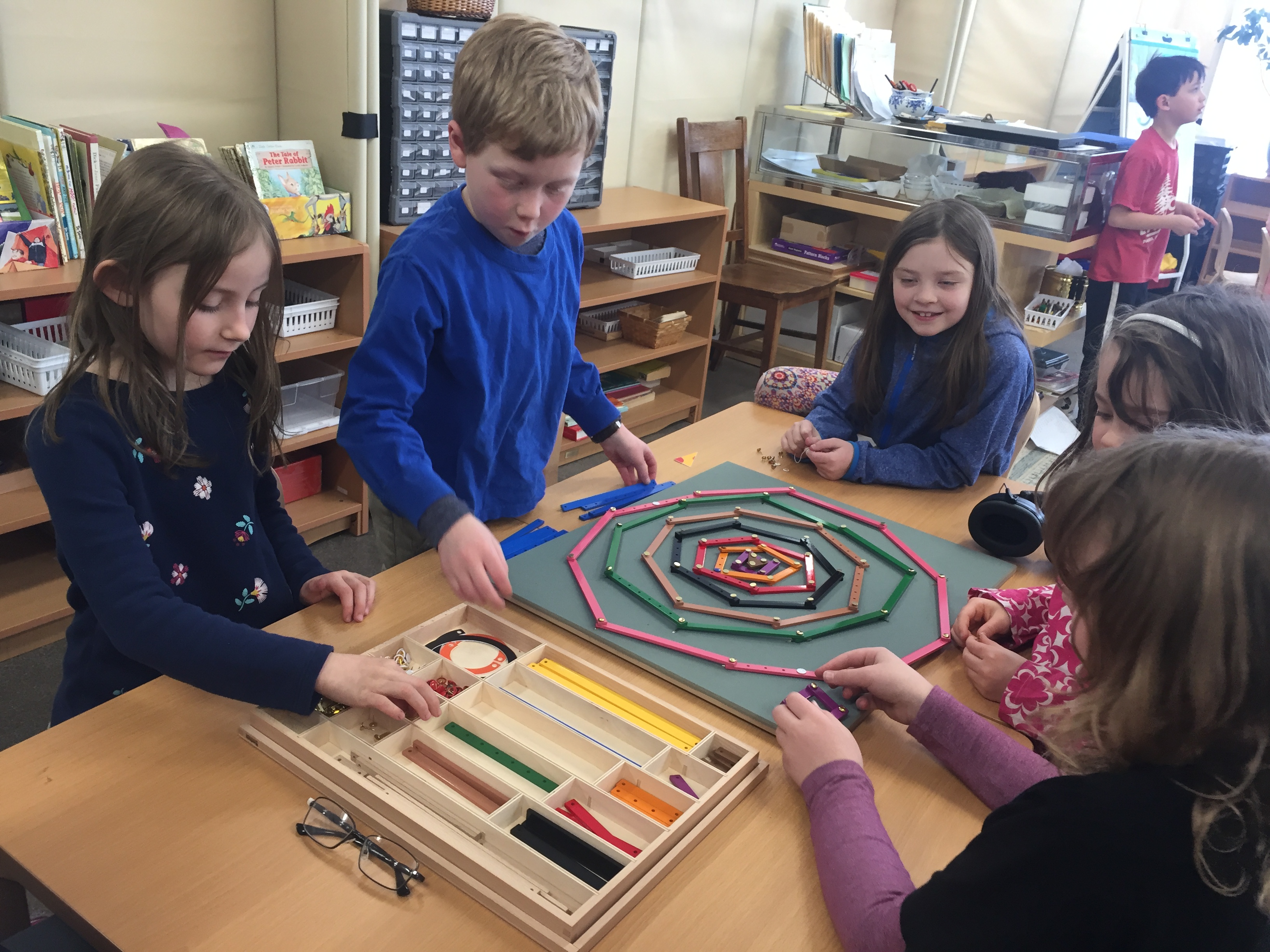
When I worked in Montessori schools I was consistently amazed at how happy, engaged, and capable the kids in my class were. This got me thinking, “If kids can be this self-sufficient and joyful in a classroom, then why not at home too?!” I’ve noticed that young people often feel frustration at living in a an adult-centered world. I can remember feeling irritated about not being able to see over the counter, or out the car window (before the advent of booster seats).
Although young people make up a significant portion of our population, they don’t pay the bills, so they usually aren’t catered to in the way that adults are. Most furniture is not built to accommodate them. There are often no stools provided where needed, especially in public.
Even going to the bathroom in a public restroom and washing one’s hands can be quite difficult for a person with a small body. Doors are large and too heavy; tools are too big for their hands… I think you get the idea.
So if there’s a place where a child can find solace from these frustrations, I hope it will be their home. I would be inspired to live in a world where a child’s home is a place where she can reach the counter top, make herself a snack, and take care of her personal hygiene easily. I’ve found that when young people are given the tools they need to be able to have these freedoms, they are more peaceful and often much more responsible. Trusting young people to care for themselves and giving them the necessary tools to do so, fosters a sense of self-care, self approval and healthy pride. Read the rest of this entry »
by Jill on Nov 11th 2009 9 comments
We don’t blog much about, and certainly don’t advocate much for, demands. But sometimes a seemingly rash move like a demand can really shake things up–in good ways.
Last week a good friend of mine back east quit his job. His boss, who rarely had anything but criticism and sarcasm for him said, “I didn’t think you’d have the guts to do what’s best for yourself.” Then the two of them sat down and had a heart-to-heart that lasted over two hours!
This got me thinking–it seemed like the boss, too, was caught in some kind of pattern that was harmful even to herself. She experienced a kind of relief, too, when my friend quit–essentially, did the only thing in his power to demand the behavior stop. She also expressed some sadness and regret that things had gone the way they did. Once my friend unilaterally changed the terms of their relationship by walking out, the boss also got freed up to be more herself–got more access to her full humanity.
Which got me thinking about how sometimes we get stuck in patterns we don’t want, or might not even be aware of. And how we–or our kids–can feel stuck in a pattern, even as we defend our behavior in that pattern. And how making a unilateral decision–in this case, a demand–can turn things around.
Read the rest of this entry »