This article is the fifth in our Whole Life Parenting series, which offers practical tips to meet the needs of both parents and children.
Not too long ago, I went to the party of some friends. Small children buzzed, hooted, rolled, walked, cried and ran around throughout the whole party. The host said, It’s amazing how the parties have changed over the years as this group of friends has had children. We’ve just opened up into a kid-friendly space.
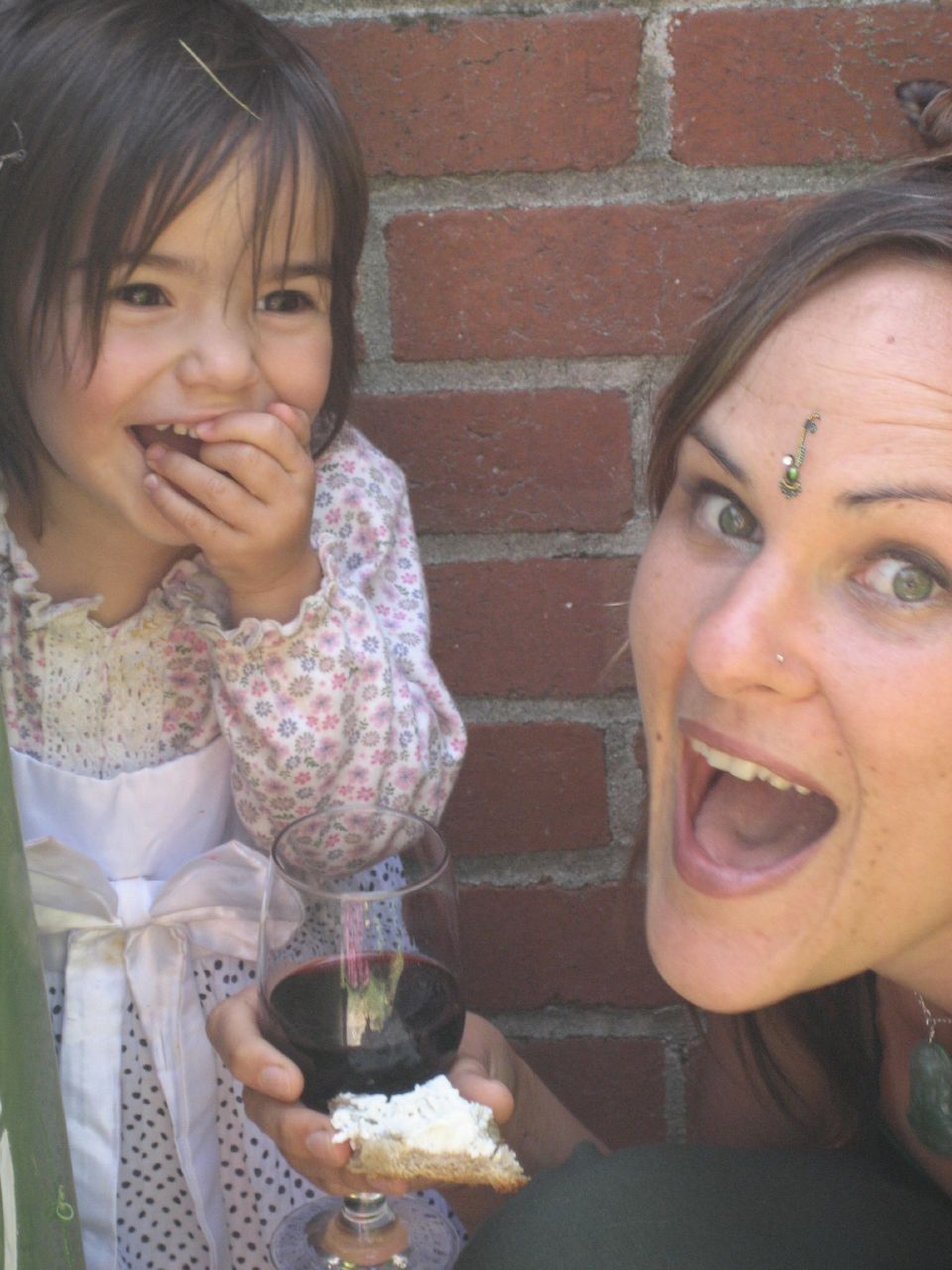
This, I think, is the key to having a great time at party when you have kids around—think of it as a kid-friendly space where you also get to have some grownup time—more mindful grownup time, perhaps than before you had kids, but grownup time nonetheless.
Here are eight ideas for creating parties that meet both young people’s needs and adult needs:
1. Cluster ages, mix genders. Try to invite clusters of kids close to the same age, and a mix of boys and girls. An odd child out can wind up getting left out of the social activity, or not treated as warmly as the others. Kids close to the same age will organize themselves into self-directed play. Mixed ages can also work well when older kids help supervise the younger kids, and younger kids get to look up to the older kids as role models.
2. A little bit of kid-friendly goes a long way. If you plan an activity or two just for the kids, one or two adults can supervise while the others get to interact with each other. For example, last Chanukah, I had the kids cut out cookies. After I baked them, I put the cookies and decorating supplies in a big tray, and the kids occupied themselves decorating the cookies while the grownups got to schmooze. We always keep a kid-sized table with a box of art supplies and paper in the living room, plus a barrel of toys, so our young visitors can entertain themselves if the grownup talk gets too boring.
3. Rotate supervising grownups. Depending on the ages of the kids, you might be able to get away with rotating the supervising grownup. This often happens naturally, but it can’t hurt to ask ahead of time if folks would be willing to take a short shift supervising the kids so it doesn’t all fall on one parent.
4. Find an enclosed space, whether natural, or human-made. An open space, such as a park in a valley, or a field surrounded by a fence or forest, can provide kids with an exciting play environment, as well adults with peace of mind that the kids won’t encounter traffic. And sometimes it’s just nice to get out of the house and commune with nature while you socialize.
5. Create a staggered party. I have held and attended a number of these. Basically, the set up is, create some specifically kid-friendly time for part of the time, followed by a transition time, followed by grownup time. For example, you might have a weekend barbeque with 4:00 p.m. to 6:30 p.m. as designated child-friendly time, and set up your space according to some of the ideas above. Let the focus be on the kids during this time, so they can get play hard, eat well and get ready to go home. 8:00 p.m. could begin the adults-only time, and the intervening period can serve as transition. This way, guests can choose to come to either one or the other party segment, or get a taste of both by staying for the transition. Some guests might even choose to take their child home and then return. Others might put their child to bed in an extra bedroom and continue to party!
6. Set up separate kid space. Though this doesn’t work equally well in every space, some families are fortunate enough to have a space big enough where kids can hang out separately from the adults. I went to a party where a friend had converted her attic into a playroom, and her babysitter hung out with the kids while we parents had some adult time downstairs. We all chipped in for the babysitter at the end. Babysitting can also be a great way to get older kids involved, who might otherwise be bored or tempted toward something not good for them. It’s also a chance for them to earn a bit of money.
7. Plan a party with activities both kids and adults can enjoy. Costume parties with dancing, pumpkin carving, barbeques, henna or face-painting, music and food are all things people of walking and talking age can join in, at least on some level. There are lots of ways to cut loose without a drop of alcohol, so adults can have fun while still keeping a clear head for the kids.
8. Revel in the freedom of kid-friendly space. When we put kids at the center of our consciousness, tune into them, and follow their lead, we actually get a chance to drop some of the adult rules. We get to be silly, get muddy, act nonsensical, run around and maybe even get more exercise than we would if we “acted our age.” This kind of permission can renew our spirits in ways we might not even realize we missed if we don’t take the opportunities.
As a parent, you don’t have to give up having parties, and not all your parties need take children into consideration all the time. Certainly, life with children will never be the same as before you had kids, but with a little planning, vision and intention, you can enjoy your children, and have social time with adults.
How have you been partying, if at all? Please let us know in the space below.
Party on,
Jill