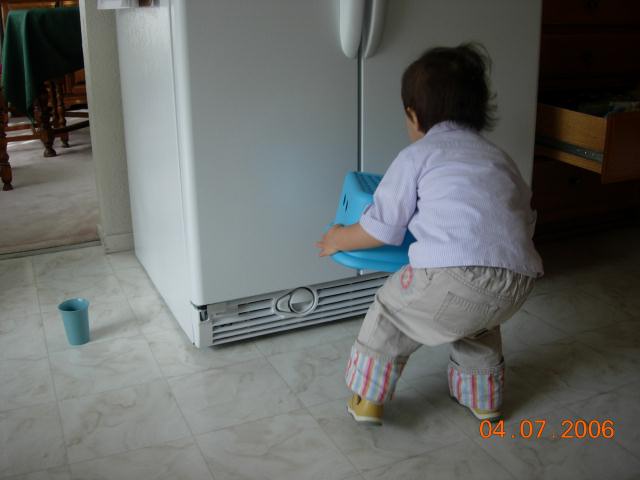
 When I worked in Montessori schools I was consistently amazed at how happy, engaged, and capable the kids in my class were. This got me thinking, “If kids can be this self-sufficient and joyful in a classroom, then why not at home too?!” I’ve noticed that young people often feel frustration at living in a an adult-centered world. I can remember feeling irritated about not being able to see over the counter, or out the car window (before the advent of booster seats).
Although young people make up a significant portion of our population, they don’t pay the bills, so they usually aren’t catered to in the way that adults are. Most furniture is not built to accommodate them. There are often no stools provided where needed, especially in public.
Even going to the bathroom in a public restroom and washing one’s hands can be quite difficult for a person with a small body. Doors are large and too heavy; tools are too big for their hands… I think you get the idea.
So if there’s a place where a child can find solace from these frustrations, I hope it will be their home. I would be inspired to live in a world where a child’s home is a place where she can reach the counter top, make herself a snack, and take care of her personal hygiene easily. I’ve found that when young people are given the tools they need to be able to have these freedoms, they are more peaceful and often much more responsible. Trusting young people to care for themselves and giving them the necessary tools to do so, fosters a sense of self-care, self approval and healthy pride.
 Consider the daily activities of the child in your home. What does he do and what would make his tasks easy to accomplish without asking for adult intervention? Is there a convenient place for him to hang his coat when he enters his home? (Tip: for very young children, a low hook is the easiest place for a jacket) Can he reach the sink easily for hand washing? Are there art activities, games, puzzles and books that are within easy reach? Does your child have comfortable furniture that fits his body?
Ask your kids what changes they’d like to see in their home environment. And consider what changes would ultimately make things easier for all family members. For instance, if children’s dishes are where they can reach them and they know where the carrot sticks are and that carrots are an acceptable snack, they can simply let you know what they’re doing (or not, depending on your house rules), without needing you to stop what you’re doing and fix them a snack. Also, consider asking older children to help younger children. Requesting the help of your older child (without demanding) can foster teamwork and interdependence between siblings.
Ultimately, your children want to feel capable and supported in their home, and although that might require some rearranging and consideration, it’s not much work to provide possibilities for autonomy and it’s almost no work for you once they know how to care for themselves! So, take a look around your home this week to be sure that everyone in your family has access to:
Water (for drinking and washing)
Food
Clean clothing
Warm clothing
Books/toys/art supplies
Towels and cleaning supplies
Art at eye level
Full-length mirror in bedroom
Things to nurture like a plant or a pet
So, I hope you’ll use this list as a guide, and talk with your child about what sort of changes would make life at home easier, more fun, and more equitable. When we honor children by taking the time and making the effort to accommodate their needs, they feel treasured in ways they can’t even express. But I’m sure you’ll notice the difference! I’d love to hear about how simple changes around the house have made a difference in your kids lives. Please leave us a comment below.