Helping Kids Eat Healthy Foods

Here’s a question I hear a lot from parents of toddlers (and older children too): “How do I get them to eat nutritious foods?” Well, I’m going to give it to you straight, but you might not like what I have to say on the subject.

The current research is clear about two things:

1) Eating meals together as a family produces healthier eating

2) Your kids will eat what you eat

So, if you don’t want your children to drink sugary soda, guess what? You’re going to have to give it up.

Of course, we’ve found a temporary way around that one, we just tell our daughter that we’re having an “adult drink” and so far, she accepts that. But we know it won’t last forever, and truly, sugary drinks are quickly becoming the next national health crisis. We have got to get over our addiction to them.

When my daughter was just starting solid foods I kept a list of the foods I had introduced and made sure to offer new ones every week. I’m not quite sure why I stopped that, but if you find yourself in a rut, try making a list of all of the foods you know your child will eat, and then make another list of foods to introduce. Go through your list systematically and record their responses.

Don’t give up if your child says they don’t like Brussels sprouts (or any other vegetable). Instead, find new ways to prepare them and offer them multiple times throughout the week or month.

Children’s taste buds change a lot as they mature, so just because they didn’t like it in April, doesn’t mean they won’t enjoy it in October. Children also enjoy refusing foods as a way to have some control over their lives, and sometimes just to see if they can get an emotional reaction. My recommendation is to relax, let go of your attachment to them eating your world famous chicken soup, and keep offering them the healthy foods you love to eat. Eventually you’ll win them over.

Here are some “foods” to watch out for:

  • Hydrogenated or partially hydrogenated oils
  • Added sugars (including fructose, corn syrup, dextrose, sucrose and more)
  • White breads and crackers
  • Fried foods
  • Foods high in saturated fat
  • Sugary drinks (including juices)

And here are some foods to encourage:

  • Fruits (any and all whole fruits are healthy)
  • Vegetables (a wide variety of colors and textures)
  • Nuts and legumes
  • Lean meats and fish
  • Whole grains
  • Calcium rich foods

At our house, I’ve found that it’s much easier to encourage my daughter to eat fruits and veggies when that’s what we have around the house and on the table. She inevitably asks to eat whatever we’re eating, so when everything available is something I’d feel good about feeding her, I know we’re on the right track.

There are lots of strategies you can employ for how to encourage healthy eating. Sometimes I offer the green vegetables first when Julia is hungriest and then I add cheese and fruit toward the end of the meal. We also keep a large bowl of fruit on our kitchen counter and everything processed is hidden away in the pantry. That way, when we need a quick snack, fruit is the quickest, easiest, and most available choice. Plus it’s delicious and nutritious!

If your child is particularly stuck on “kid foods” like macaroni and cheese and pizza, try making your own whole-wheat and low fat versions of their favorite foods.

Another strategy is to engage children in the activities of cooking. When kids prepare their own food, they’re much more likely to want to eat it.

I enjoyed reading Jessica Seinfeld’s cookbook “Deceptively Delicious” in which she shares recipes with hidden healthy ingredients, usually in the form of vegetable purees added to traditional meals.

And while I love it that she figured out a way to get her kids to eat their veggies, I’m not sure how I feel about the fact that they don’t know about it. Personally, I’d rather model healthy eating that’s above board.

I want my daughter to get into the habit of eating fruits and vegetables so that when she’s faced with other choices, as she gets older, she already knows that she loves squash, sweet potatoes, lentils, and black beans.

I know that modeling healthy eating works because just last week as I ate a spinach salad, my daughter asked, “Can I have some?” and then proceeded to scarf down about 10 pieces of raw baby spinach. I hadn’t really offered her raw spinach before, assuming that she’d prefer it cooked. But she loved it!

So my recommendation if you’re having trouble getting the kids to eat their veggies, is to continue to enjoy your own plate of delicious vegetables and keep offering them some time after time until one day they decide they really like them.

When you’re packing snacks for a day out, be sure to include some fresh fruit and vegetables along with the standby applesauce (with no added sugar) and cheesy crackers that you already know they love.

Two more things:

1) We have to let go of the idea the every meal has to be well balanced and eaten heartily. Kids have variable appetites, some days they’ll eat everything you put in front of them, and other days just a few bites of food is enough. So, start to think about your child’s nutrition on a weekly, rather than a daily basis.

2) Let go of the idea that by refusing the food you’ve prepared, your child is somehow trying to hurt your feelings. They’re not. They’re just being kids and we have to trust them to know what their bodies need (as long as we’re providing nutritious options). When we get attached to a specific outcome, children often rebel. No one wants to be forced to do anything, so the more you can model healthy eating and then let go and trust, the more likely it is that your child will choose to eat healthy foods.

Have a healthy week!

Warmly, Shelly
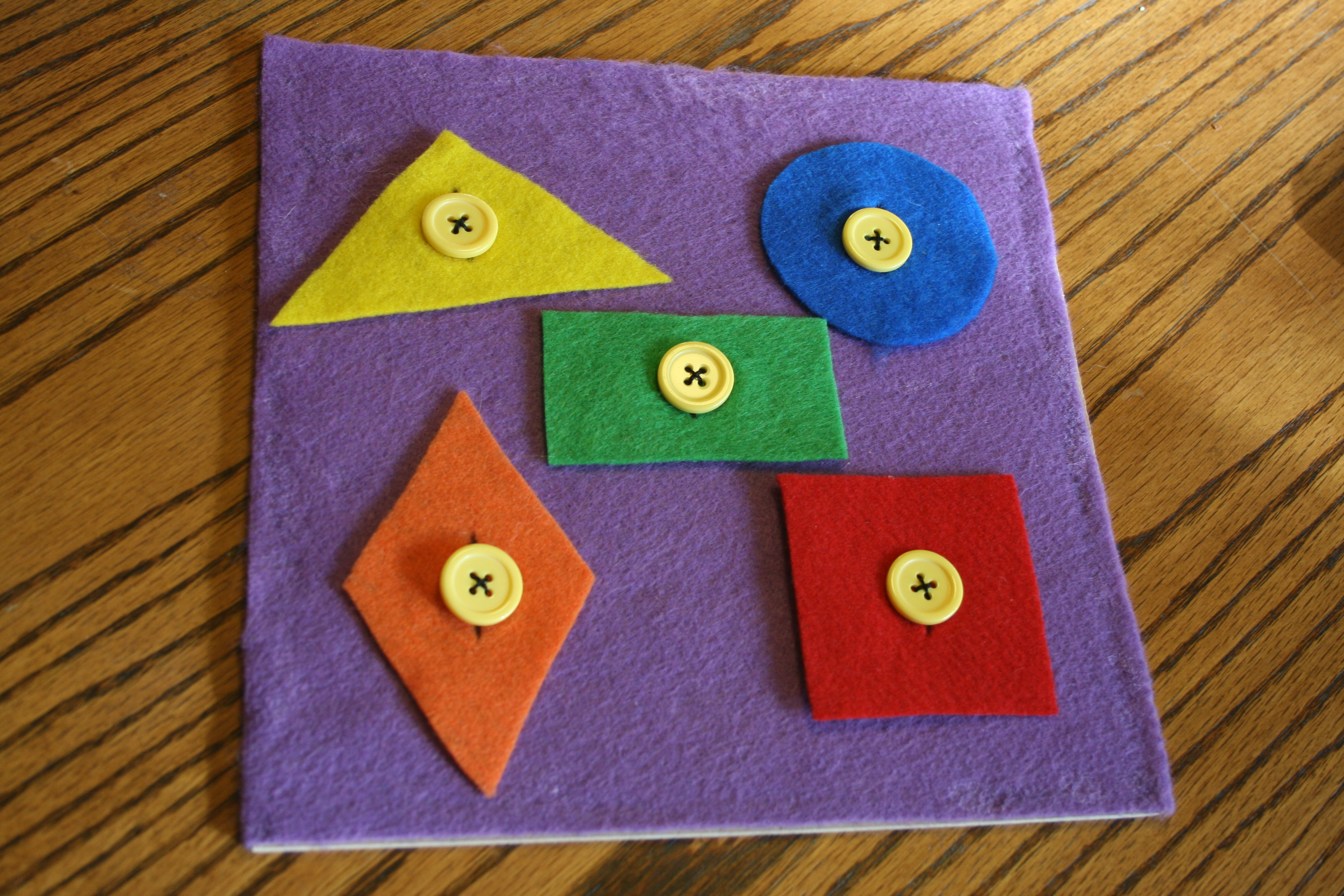


DIY Button Board

This button board was simple to make.

You just need:

1) A board

2) Felt

3) Buttons

4) Sharp scissors & a sewing kit

Simply sew the buttons onto a piece of felt the same size as your board. Then glue it onto the board with fabric or wood glue. Cut out shapes and cut button holes in them. And you’re done! The kids love this one.

Button Board

Hooray for Mistakes!

I’ve been reading a very interesting book about exactly why intrinsic motivation is so important for children AND for adults. It’s called “Mindset: The New Psychology of Success” by Carol S. Dweck and in it Dweck describes two opposing mindsets we all experience.

She refers to the first as the “fixed mindset.” This is the voice in our heads that tells us that we have a fixed amount of talent, intelligence, or skill at a certain task and there’s nothing we can do to change it. This mindset also associates effort with a lack of natural talent. This is the part of you that thinks you’re just not a fill in the blank kind of person. “I’m not artistic.” Or “I’m just not very playful.” Are examples of the fixed mindset.

The other mindset is called the “growth mindset.” When we’re in the growth mindset we believe that we can learn and grow and become better at anything that we put effort into. The effort becomes part of the fun as we develop our skills and reach for our goals.

Interestingly, when we tell children things like, “good job” we’re inviting them into a fixed mindset. Our focus is on the outcome, rather than the effort or the journey of discovery. And, once we’ve labeled them as “good” or “smart” or “talented” children in the fixed mindset suddenly have something to loose if they fail. So, they stop trying at all. Not exactly the result we were wanting when we offered the praise in the first place.

On the other hand, when we focus on the effort, “Wow, you really put a lot of effort into that!” we’re inviting them to see effort as a part of the learning process (which it is!). In this mindset, children will experiment, try harder and harder puzzles, and get excited about learning new stuff. Now, that’s what we’re wanting for our kids, right?

The thing I’m finding most interesting is that people in the growth mindset often celebrate their mistakes, rather than sinking into a hole of despair about them. And that one choice, to celebrate our mistakes rather than getting down about them, makes a HUGE difference in our overall ability to learn something new.

This is true for children and adults alike. So as I’m reading this book, I’m thinking, I know a lot of moms who are in a fixed mindset about mothering. We think that we should already be good at it, or that we’re just naturally bad at it and there’s not much we can do about growing our mothering abilities.

But I’m here to tell you that even if you’ve been doing all sorts of things you don’t want to be doing with your kids, you CAN change. You absolutely can learn and grow as a parent. And from over here in the growth mindset, that learning is half the fun of parenting!

So this week, instead of beating yourself up for the thing you said or the tone you used or the way you treated your child, imagine that there really are new skills that you’re discovering through these incidents. Try to figure out what those skills and next steps might be and then get excited about learning them!

If you’re yelling, you can learn to manage your emotions more effectively and come to your children with more composure more of the time. That doesn’t mean you won’t fail. But from this mindset, every “failure” is another step closer to success!

If you’re experiencing power struggles, or whining, or tantrums, or any number of parenting challenges, you can see these things as new opportunities, rather than as a life sentence.

The belief that things can change is a powerful belief, and it’s one that I use often, especially when I feel stuck in a situation I don’t enjoy. So, what is it that you’d like to learn this week? What would you like to change? How do you want to grow and stretch yourself?

I can’t wait to hear all about what you’re up to!

Sending warm hugs, Shelly

DIY Montessori Counting Activity

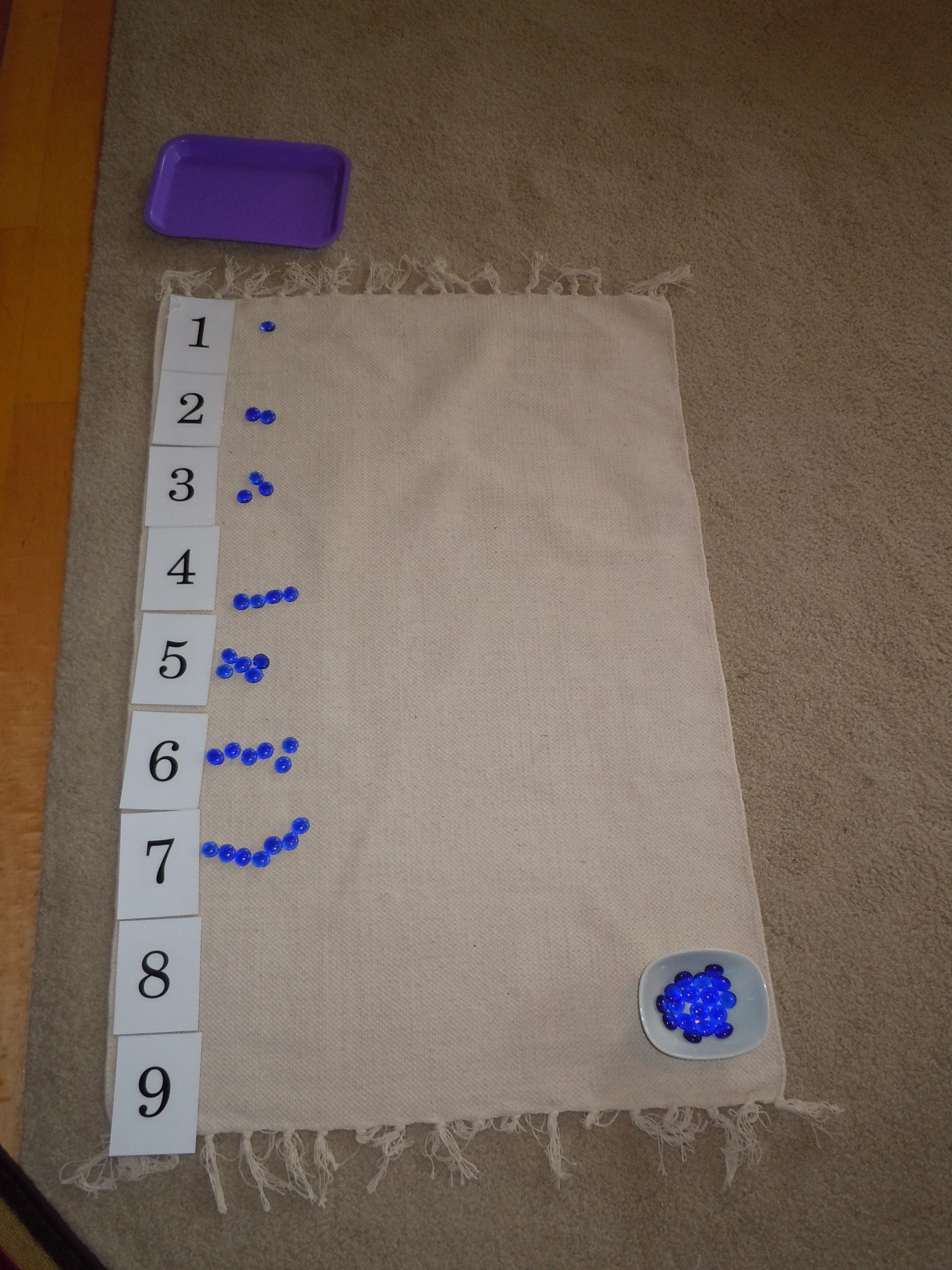
I recently created this Montessori counting activity for our Montessori inspired homeschool. I started with number stickers and card-stock. Laminated the number cards. Found these beautiful blue glass counters in our game closet, stuck them in a beautiful ceramic bowl. Put everything on a tray and voila! We now have a very popular counting work for the math shelf. Just make sure this activity has supervision as the counters are choking hazards for children under three years.

DSCN1869

Back into Diapers Again

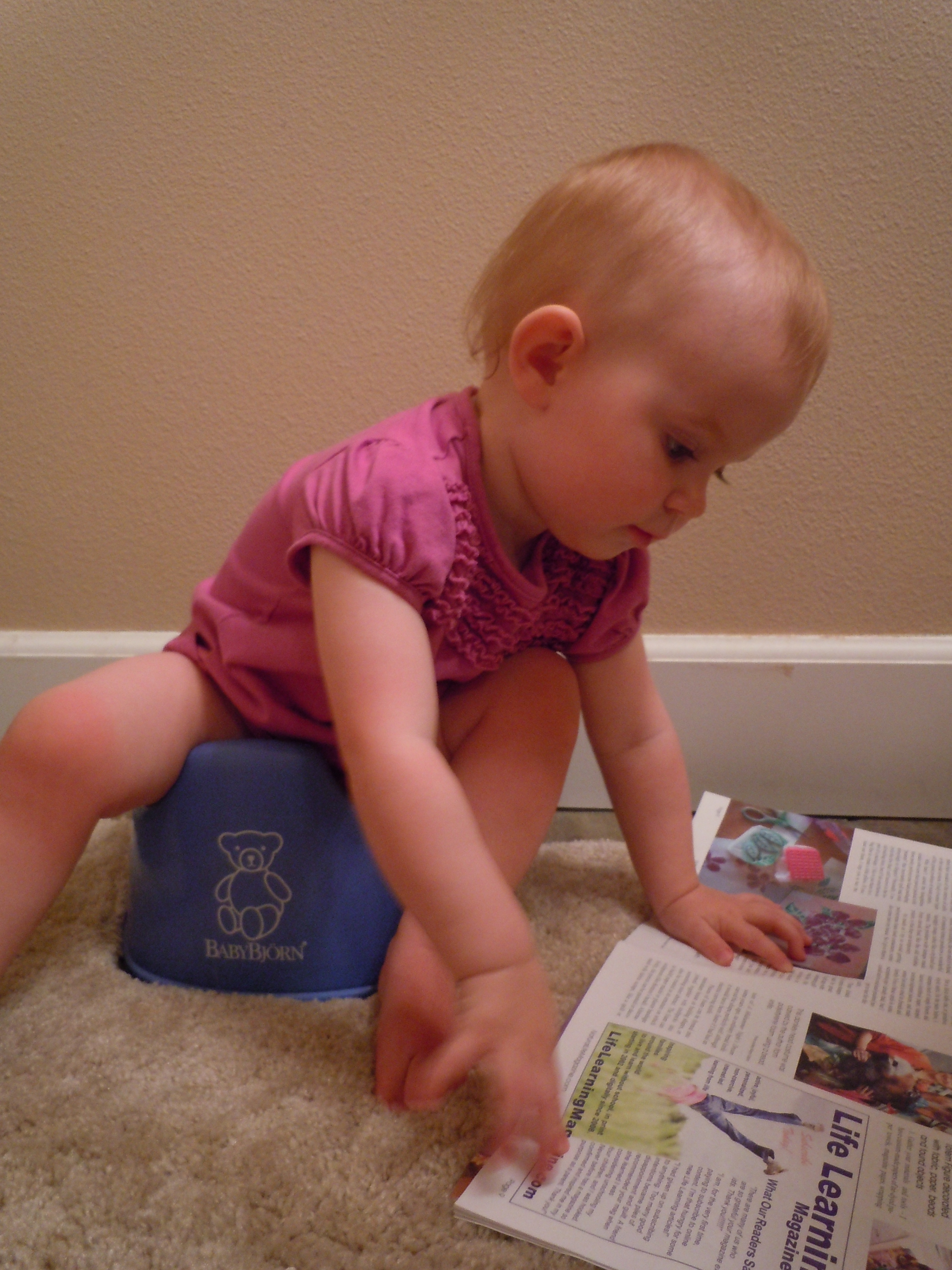
Toilet learning is something that so many parents struggle with, yet somehow I thought I’d make it through unscathed. Julia has been using the potty occasionally since she was just a couple of months old. You can read about our early Elimination Communication journey here.

But this week I realized that I’ve been rushing her and so I’ve decided to back way off and try again when she’s more interested and ready.

She’s a pro at knowing when she has to poop and has done that consistently on the potty since she was about six months old! Hooray! However, peeing is another story.

I’ve been “catching” her pee for her whole life, but unless she’s nude, she doesn’t seem to understand that she’s about to go. It’s fascinating to me that all summer long, we’d just leave her pants off and she would always run to the potty when she needed to go. But as soon as we put a pair of training underwear on, she seems to lose the ability to anticipate going and she definitely doesn’t have any interest in running over to the potty. She’d much rather pee in her underwear.

We’ve done all sorts of things to encourage her like playing games, racing to see who can pee first, showing her doll how to go on the potty, reading books about the potty etc. I’ve even started to ask her to pull down the wet undies herself (which is hard!) and take them to her diaper bin.

But the truth is, she just doesn’t seem to mind running around in wet underwear and she kind of enjoys any new task I offer that invites her to take more responsibility for herself and her things. So, rather than being a motivator for change, taking care of her wet underwear is just another fun new task that she can accomplish with pride.

Since I do my best not to bribe her, I’m at a bit of a loss as to how to motivate her to keep her underwear dry. I mean really, what’s in it for her?

Last week was the worst. She seemed to clue in to the fact that all the adults in her life would like her to keep her underwear dry and since she’s two and a half, the lure of defiance and subsequent feelings of power were just too strong to resist. She started to hold it while sitting on the potty and then go in her pants ten minutes later. Needless to say, I was frustrated with the backsliding.

But since she has NEVER yet told me, “Mama, I have to pee,” I’ve decided that she’s just not ready yet, and we’re going back into diapers for a time. I just need to let go of my hope that she would have learned to go on the potty by now and relax into the knowledge that she’ll learn it when she’s ready and motivated to learn.

“If you want to pee in your pants, that’s fine, that’s what diapers are for, so we’ll just go back to diapers and when you’re ready, we’ll try underwear again.” She is fine with it. In fact, I think she’s relieved that she doesn’t have to run to the potty every hour. She’s busy learning and growing in so many other ways, and she’s just not interested in potty learning right now.

She did mention that the diapers are more bulky and uncomfortable than the underwear is. Maybe that will help to motivate her when she’s more ready.  And when it’s warm again, we can let her run around in the buff, which somehow makes it easier for her to tell she’s about to pee.

I know a lot of preschools in my area require children to be “potty trained” before admittance (at around 3 years old) which can be quite stressful if you’d like to enroll your child, but he’s not yet using the toilet reliably. Luckily, we’re homeschooling for the time being, so no worries there.

I’m curious, how did you handle toilet learning? Did you resort to bribes? Do you think that’s OK? Or did you just wait until your child showed a genuine interest? What seemed to motivate them to learn to use the toilet? And at what age did it happen?

I guess I’ll run over to the library and check out “The No-Cry Potty Training Solution” Oh, and by the way, if you’re struggling to figure out whether your child is ready or not, I like this quiz for “potty training” readiness from Elizabeth Pantley.

Have a great week! Warmly, Shelly