How to Teach Toddlers to Share

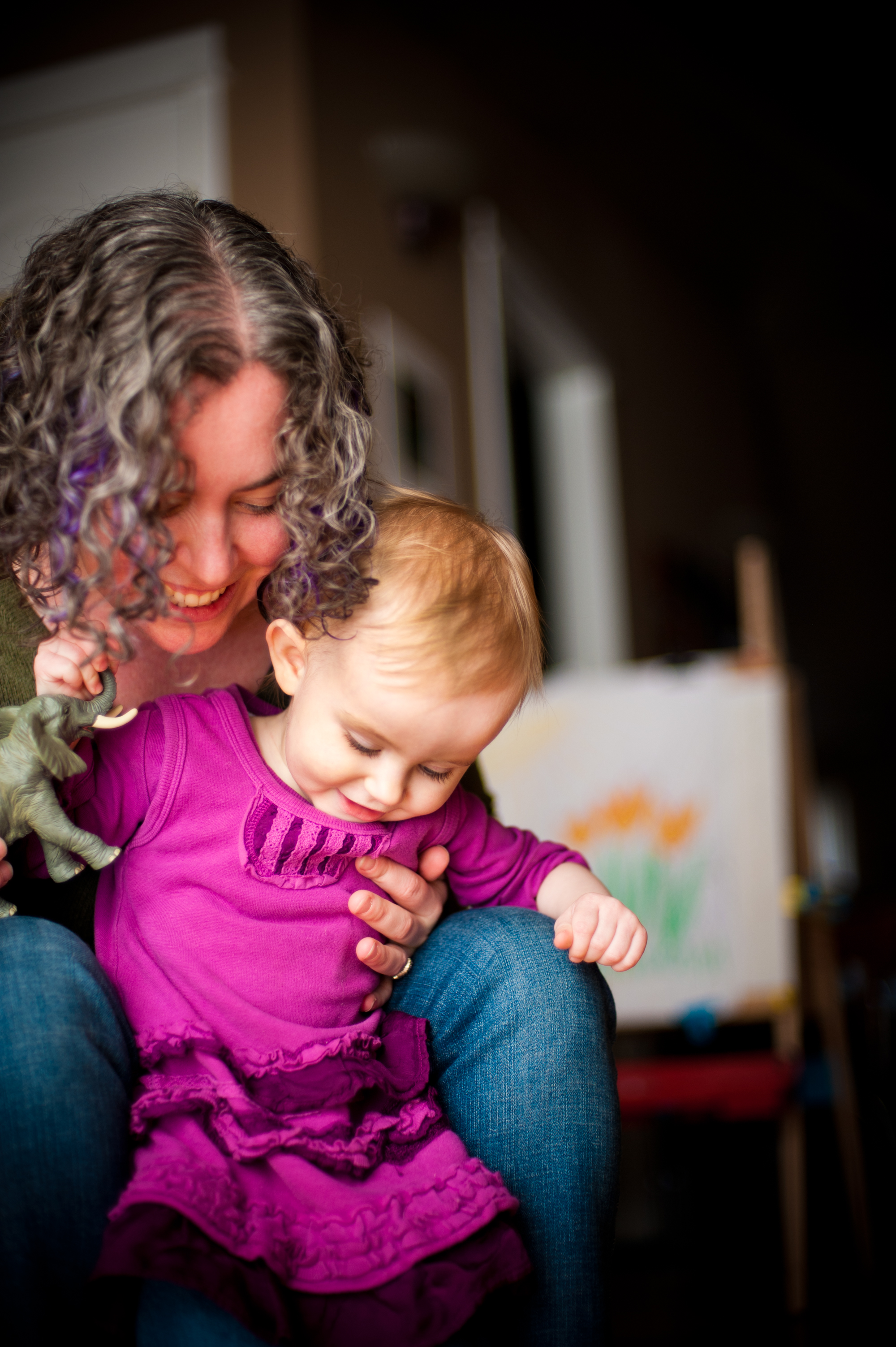
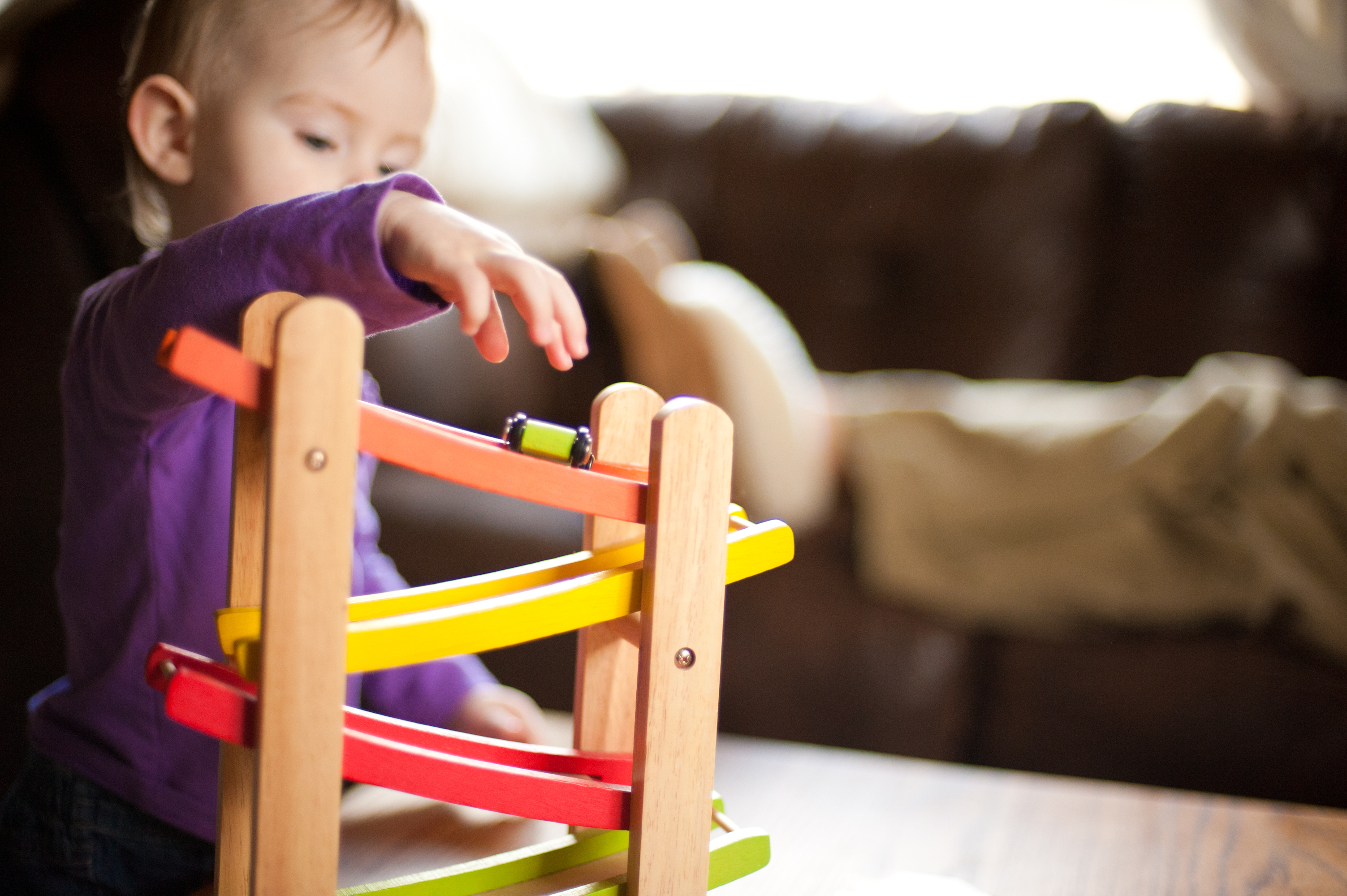
This week at our Montessori inspired home based preschool something truly magical happened. Two year olds began sharing easily and generously without being forced, coerced, bribed, or scolded. I’ve never seen anything like it before.

A couple of weeks ago there were a lot of tears as the children grabbed toys from one another, wrenched them out of each other’s grasp, hoarded and hid the coveted toys, and when they were recovered by the other party, a whole new set of tears ensued.

I enjoyed this humorous description I recently read online about how toddlers feel about possessions. This has circulated the internet so I’m not sure who originally wrote it, but here you go:

1. If I like it, it’s mine.

2. If it’s in my hand, it’s mine.

3. If I can take it from you, it’s mine.

4. If I had it a little while ago, it’s mine.

5. If it’s mine, it must never appear to be yours in any way.

6. If I’m doing or building something, all the pieces are mine.

7. If it looks just like mine, it is mine.

8. If I saw it first, it’s mine.

9. If you are playing with something and you put it down, it automatically becomes mine.

10. If it’s broken, it’s yours!

The thing is, toddlers are just learning about possession and they feel excited about owning and possessing things. All too often I see frazzled parents running after their toddlers saying things like, “No Colin, that’s not yours, that’s his toy! Colin, give that back right now. You can’t take toys from other people.” And usually the scene ends with the parent snatching the toy away from their child to return it to its rightful owner.

I was guilty of doing the very same thing and wrote about it several months ago. But I made a commitment to stop grabbing things away from my daughter, and lo and behold, she stopped grabbing things from others! At least that was the case until school started.

I knew I had to come up with a plan and fast. In the Montessori classroom we take great care to honor and respect each other’s work. We try our best not to bother, mess up, or interfere in someone else’s activity unless we ask to join them and they agree to share their work.

Often, children will choose to work together, but sometimes they just need their own space and they need to know that no one will invade their space and grab their stuff away. And since children can only learn when they’re feeling safe, secure, and relaxed, the best way to support those emotions in the classroom is to implement a clear boundary and rule that we don’t take someone else’s work.

So, while I’ve done pretty well at stopping the children from invading each other’s workspace, they will often choose to work together and then they need to share effectively. If one child wants the part of the train track that the other is holding, we need an effective way to communicate that without grabbing.

This week I decided to try something new. Rather than protecting the child who possesses the coveted item, I focused on the child who wanted it. “Julia, if you want the truck you may ask for a turn.” She immediately shot off, “May I please have a turn with the truck?” But Fred was not feeling generous and responded with a sharp “No!”

OK, so that didn’t work so well, but I noticed something. Julia was heading toward Fred with her hand out and her palm down and it looked like she was about to grab the truck from him. He pulled back to protect the truck from her and then inspiration struck me.

I invited Julia to ask again, but this time to approach Fred with her hand out and her palm up. And that’s when the magic happened. Fred handed Julia the truck immediately! I was shocked. I hadn’t forced or coerced him. I didn’t even ask him to share. All I did was coach my daughter to ask in a way that invited sharing and voila! Sharing happened naturally.

Since Fred isn’t talking quite as much as Julia yet, we’ve shortened his request to “Turn please?” with the open outstretched hand. Now the two of them are practicing and as I continue to watch there are several things I’m noticing about toddlers sharing effectively. First, when they feel forced, they resist and withhold. Second, when they’re asked nicely with an open hand, they almost seem compelled to offer the toy to the outstretched hand of their friend. Just about every time, there’s at least some sharing happening when we use this technique!

So, what do you think? Will you try this with your kids? What else have you tried that has encouraged sharing? I can’t wait to hear some other strategies that have worked!

Have a fantastic week, Shelly
Why Are Americans So Freaked Out By Nudity?

I was on Facebook yesterday and I saw this article about a man who is being charged with child pornography because he had videos of his naked children on his phone. He didn’t send them to anyone. From what I read, the content sounded harmless. And the only reason the videos were discovered was because his phone broke and the technician was transferring his photos and videos to his new phone.

I think we’ve taking “protecting children” a bit too far in this case. Yes, sexual abuse of children is a real problem and deserves a swift response. But since when is taking a video of your children dancing naked, considered pornography?

To me, this seems to indicate a real problem we Americans have with nudity in general. Does nudity equate pornography? I think most Europeans would agree with me on this one, the answer is no. Nudity is just that, nudity.

There is nothing lewd or lascivious, obscene or indecent about a naked body. The human body is beautiful, functional, and something to be celebrated. Is the prevailing attitude a vestige of our Puritanical roots?

Interestingly, children aren’t born with the need or desire to cover their bodies. They don’t feel ashamed of their arms, legs, heads, or groins. At least not until they learn that bodies are something to be ashamed of and that hiding our “private parts” is the socially accepted norm.

We’re in the midst of toilet learning at our house and my daughter seems to be more aware of her need to use the potty when she has nothing on from the waist down. And since we’ve always used cloth diapers, I can understand her confusion. When she’s wearing underwear it feels just like a diaper, so she just goes. But if she’s half nude, she runs over to her potty saying “I have pee in my bladder!”

So, I’m introducing underwear slowly and trying to minimize the time she wears it so that she can remember not to go in her underwear. It’s working! She’s able to go longer and longer in her underwear every day and keep them dry.

Luckily, no one in our immediate family has a problem with a two year old running around half clothed. And I do sometimes put her in a dress so that it’s not so obvious that she’s going commando. But this article frightened me. What if my husband takes a photo of my daughter doing something cute and she happens to be pants-less? Will he be arrested for child pornography too?

Certainly we’ve established clear boundaries and guidelines for our whole family and no nude pictures will appear on Facebook or be sent via phone to other family members (although, now that I think of it, I do remember sending my brother a cute bath photo a few weeks ago, oops!).

But with all this new technology that makes taking videos and sending them to friends and family so easy, we’re bound to run into these situations more and more. And I’m curious about how we as a culture will handle it. Will we continue to equate nudity with obscenity? Or can a bare bottom just be cute?

What do you think? And how do you handle these situations in your family?

Have a wonderful week, Shelly

Forced Apologies Undermine Conflict Resolution Skills

Remember what it was like when you got into a squabble with your siblings or friends and at the end there was the inevitable, “Say you’re sorry” and you half-heartedly responded, “I’m sorry” and then the two of you were supposed to “make up” and play together again as if nothing had happened?

I don’t know about you, but I felt angry and frustrated when this happened to me as a child. And I never really meant it, even when I said it. And the other kid knew that I didn’t mean it. They didn’t mean it either. And it took a while before we were able to actually let it go and be true friends again.

Now as an adult I see that forcing children to apologize when they’re not really sorry actually undermines their internal drive for social cohesion and conflict resolution. I want children to actually empathize with one another, understanding the impact that their words or actions might have had upon another. And then I’d like them to genuinely apologize because they want to. If they’re not ready to apologize, that doesn’t mean they need to be isolated and “think about what they’ve done.”

On a deep level I trust that all children have positive intentions behind their actions. Even when I don’t understand the intentions, they might. I also trust that children want to live in peace and harmony as much as possible. So, while siblings might fight, they also rely on one another for companionship and nobody enjoys the uncomfortable silences and hurtful words that accompany holding a grudge for a long period of time.

Ultimately, apologies are a tool for reconnection when we’ve done or said things that have created a rift in our relationships with others. So why not teach children to use this tool when and where they see fit?

Just the other day my daughter was sitting on my lap. She got excited and head butted me in the face. “Ouch!” I cried out, “You just head butted me. Ow, that really hurts.” Although I’ve never taught her to or asked her to say she’s sorry, she immediately apologized for inadvertently hurting me. And then she offered to kiss the spot that hurt. I was so touched by her genuine apology! And I knew for sure that she wasn’t giving me some canned or memorized speech. Even at two years old, she knows how to repair any damage caused by her actions.

On the other hand, when we ask children to apologize prematurely we are actually devaluing the process of working through conflict. We’re sending the message that we ought to just quickly apologize, even if we don’t feel sorry as a way to smooth over the incident. We’re also inadvertently teaching kids that conflicts should be avoided, rather than used as an opportunity to connect further and get to know each other better.

So this week, rather than asking children to say they’re sorry, let’s try trusting that they already know what to do. Let’s talk with them about how they feel, how they think they’ve been hurt or wronged, validate their feelings, and share new and different perspectives with them.

“Huh, I wonder why he said that to you. Do you think he might have been having a bad day?” or “Well, I guess you could retaliate by not inviting her to your birthday party, but what about talking with her about how you feel about what happened?”

I’ve consistently seen four year olds effectively work through conflicts by talking with each other. It often sounded like this,

“I didn’t like it when you pushed me, that hurt my body.”

“Oh, I didn’t mean to, I wanted you to move because you were blocking the road.”

“Next time, please tell me to move instead of pushing me”

“OK, I’m sorry I hurt your body, does it still hurt?”

“Yes”

“I will go and get an icepack for you.”

“OK, thanks!”

Sure, we had been working with these children for months on how to communicate their needs and desires clearly and how to listen to another person who is upset. And we modeled nonviolent communication and repair strategies often. But with some modeling and guidance, I think all children can learn to resolve their conflicts peacefully.

How are your kids doing with the important task of conflict resolution? Do they need you to intervene whenever they have a disagreement? Or are they able to share their feelings with one another and empathize with others? And how much do they tell you about the social dynamics at school and in other social groups?

I hope you’re having a great week and I can’t wait to hear from you!

Warmly, Shelly

Circumcision is Genital Mutilation

OK, now that I’m sure I’ve got your attention, I can’t believe I never realized this before. When we think of genital mutilation, most people think of the African practice of removing a young girl’s external genitalia purportedly to reduce libido.

International organizations have joined together to help end the horrific practice of female genital mutilation. But there is a socially accepted form of genital mutilation that happens to newborn baby boys every day here in America and elsewhere. It’s called circumcision.

In 1975 the American Academy of Pediatrics stated, “there is no absolute medical indication for routine circumcision of the newborn.” They restated their position in 1983, 1999 and again in 2005. But I guess Americans were already accustomed to circumcising their infant boys and so an estimated 60-75% of men in the US are currently circumcised.

On the other hand, more and more parents are beginning to question this unnecessary surgery and Intact America estimates that 60% of baby boys leaving the hospital today remain intact. Hooray for progress!

I even have some Jewish friends who had a ceremonial Bris for their son, doing all the traditional songs and prayers, but leaving out the actual cutting and replacing it with a ceremonial sweep of the knife.

There are lots of reasons I would choose not to circumcise my own child. First of all, I don’t believe in removing a person’s body parts without their consent. So, basic human rights is probably the biggest reason I won’t circumcise a child. An infant cannot consent to such a surgery.

What makes us think we have the right to decide for a child that a part of his body is unnecessary? If my daughter came to me asking me to cut off her finger or toe, I certainly wouldn’t agree so why is the skin protecting the head of a penis somehow expendable?

In fact, I’m quite certain that if I were to ask a doctor to surgically remove any other body part from my child, I would swiftly be reported for attempted child abuse.

Now I know there have been some interesting studies coming out of Africa that have shown that circumcision of adult heterosexual men can reduce the likelihood of HIV infection.

Although some previous studies have been flawed, I do think this new round of studies provides some hope to certain African populations and I have no objection to adult males choosing to become circumcised for HIV prevention.

Although, I would hope that acquiring and using condoms, which is more effective at the prevention of HIV infections, would be considered preferable to circumcision in most cases.

Either way, circumcising infant boys in America is not indicated for HIV prevention or otherwise. The point I’m trying to make here is that circumcising infants is cruel and unnecessary.

If you want to know more details about the procedure of circumcision (which includes strapping an infant to a plastic board to induce immobility) you can learn more here:

The Facts Behind Circumcision

http://www.intactamerica.org/learnmore

I also enjoyed this article from Intact America and found it to be helpful

Ten Reasons Not to Circumcise Your Baby Boy http://www.intactamerica.org/resources/decision

And if you have a baby boy who is intact, Terri’s article on how to care for an uncircumcised penis was very informative. I didn’t know that the foreskin shouldn’t be fully retracted at birth and even at six years old, 80% of boys do not yet have fully retractable foreskin.

Check out her great article here: http://onelovelivity.com/childofnatureblog/leave-de-boy-penis-alone-aka-he-is-intact-do-not-retract/

And please let me know your thoughts and feelings about infant circumcision in the comment section below.

Have a great week! Warmly, Shelly

I put myself into hypnosis to deal with the pain of breastfeeding

Wow, breastfeeding. It’s one of those things I always knew I wanted to do, but until I experienced it myself, I had absolutely NO IDEA how challenging it could be. I thought, “We’re all built for this, so it will just automatically happen and it will be easy.” Unfortunately, that was not the case for me.

Breastfeeding did happen, but it certainly wasn’t easy. For the first two weeks, my milk didn’t come in so I pumped like crazy and gave my daughter syringes filled with milk donated to us by a neighbor. If you’ve ever had to use the syringe method to supplement your breastfeeding then you know that you need about six hands to be able to accomplish it, especially when both mother and baby are new at breastfeeding. But we got through that hurdle and my daughter started gaining weight. Hooray!

The thing is, breastfeeding was extremely painful! No one told me that breastfeeding would hurt. It was so bad that I would often bite myself to keep from screaming out in pain as my daughter latched on. My La Leche League leader told me she likely had a shallow latch. My peers told me that the pain would go away after a couple of weeks. I described my symptoms but no one seemed to know why I was in pain.

As the weeks turned into months, I decided that I was just super sensitive and I would just have to learn to live with the pain. So I began to use self-hypnosis to manage my pain. I had learned how to hypnotize myself for and it worked pretty well to help me relax, even when I was experiencing discomfort. I would lie on my side, take a deep breath, turn off (relaxing every muscle in my body), and after that the pain was bearable.

We nursed like that for 8 more months. And then I wrote a blog post about how I was hypnotizing myself to get through the pain of nursing. One of my readers left a comment about how I shouldn’t be having so much pain and I might want to look into Raynaud’s phenomenon of the nipple. Well, after a quick Google search I finally figured out why I was in so much pain, I was having vasospasms in my nipples that made nursing extremely painful. I was SO RELIEVED to have an explanation for my pain!

Vasospasm can be caused by cold and/or emotional distress, as well as some nutritional deficiencies so the first thing I did was begin to cover up with a warm blanket every time I nursed. I also researched some herbal vasodilators and found that red pepper and cinnamon both help to open and relax blood vessels. I started to put red pepper on my eggs in the morning and I used cinnamon in my oatmeal. I cut out caffeine, took my vitamins, began to get more regular with my aerobic exercise and I got some acupuncture. After several weeks my pain went away!

For the first time since my nine-month-old daughter was born, I nursed pain free. I wish that was the end of the story and for almost a year I did continue to nurse pain free. But a few months ago, the vasospasms returned and the pain was worse than ever. I contemplated weaning because the pain was so intense and my daughter was nearing two years old. But I didn’t like the idea of weaning because of my vasospasm, it seemed too abrupt and when I’m not in pain, I really enjoy nursing my daughter! I had hoped to wean slowly and have her weaned at around 2 ½ yrs old. The herbs weren’t cutting it this time so I went ahead and called my OB/GYN and got a prescription for a very low dose of blood pressure medication that has been shown to work for Raynaud’s of the nipple. It worked!

I’m pain free again! The only problem is, I’m taking medication to stay that way. I tried going off the medication when I thought things were under control, but the pain came back and now I’m back on the meds. It does seem strange to me to be taking medication so that I can slowly wean my daughter.

I thought I would do child-led weaning, but it certainly hasn’t worked out that way for us. I have led the weaning efforts, starting with night weaning and getting down to just three times a day now. My daughter has adjusted beautifully. But she definitely doesn’t want to give up her “milka” any time soon. Has anyone else out there gone through something similar? Any thoughts about how I should proceed? Doesn’t it seem strange to be taking medication so that I can continue to nurse? I would love some support, suggestions, and information. So please leave me a comment!

And have a lovely week, Shelly