Easiest DIY Playscape Ever

What you’ll need:

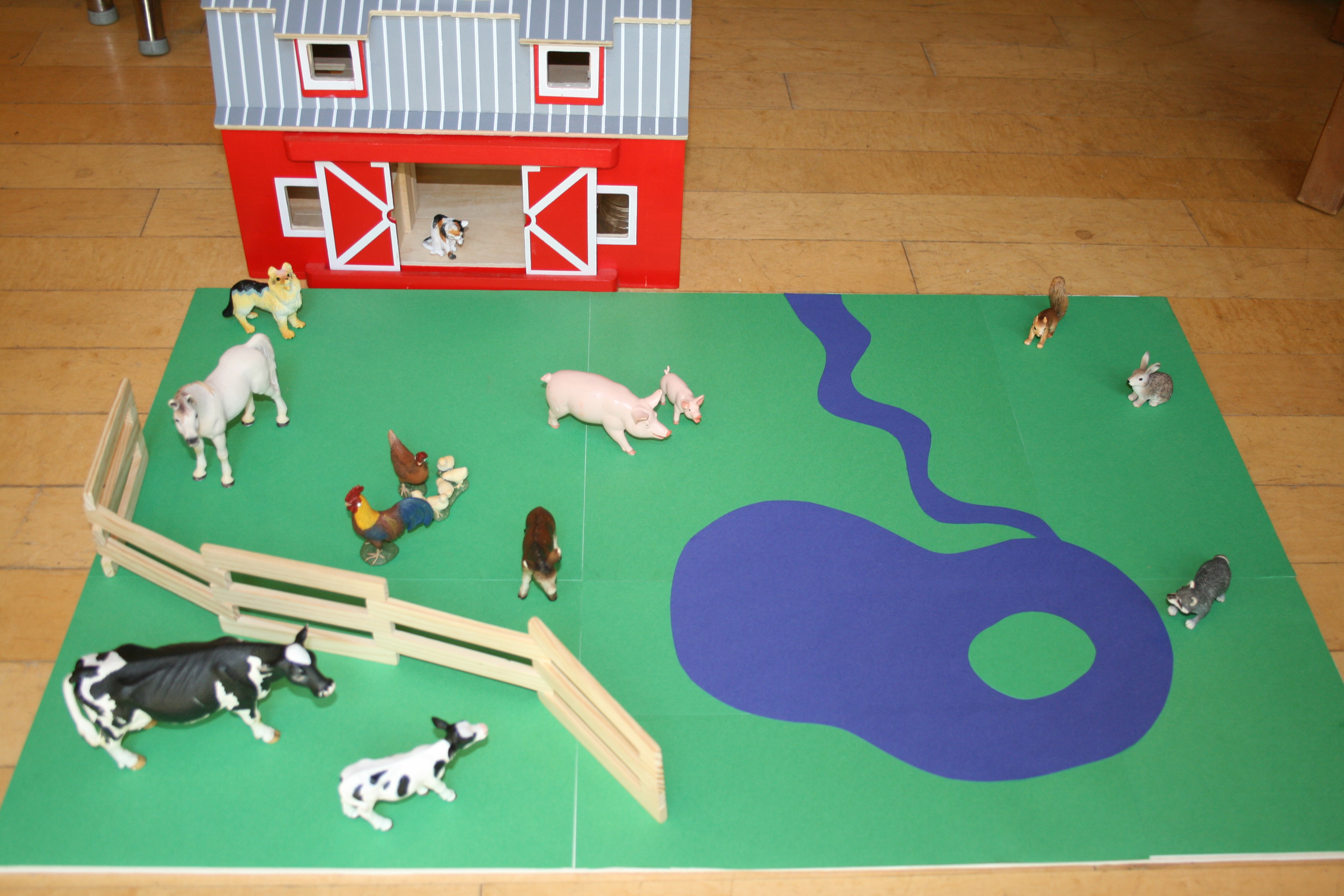
One Foam Board

5 sheets of 12×12 cardstock (4 green, 1 blue)

A pair of scissors

A gluestick

A papercutter helps!


Just glue the green down first covering most of the board. Cut out your lake and/or river and glue everything down.


Add some animals and you’re done!

Five Steps to Independent Play

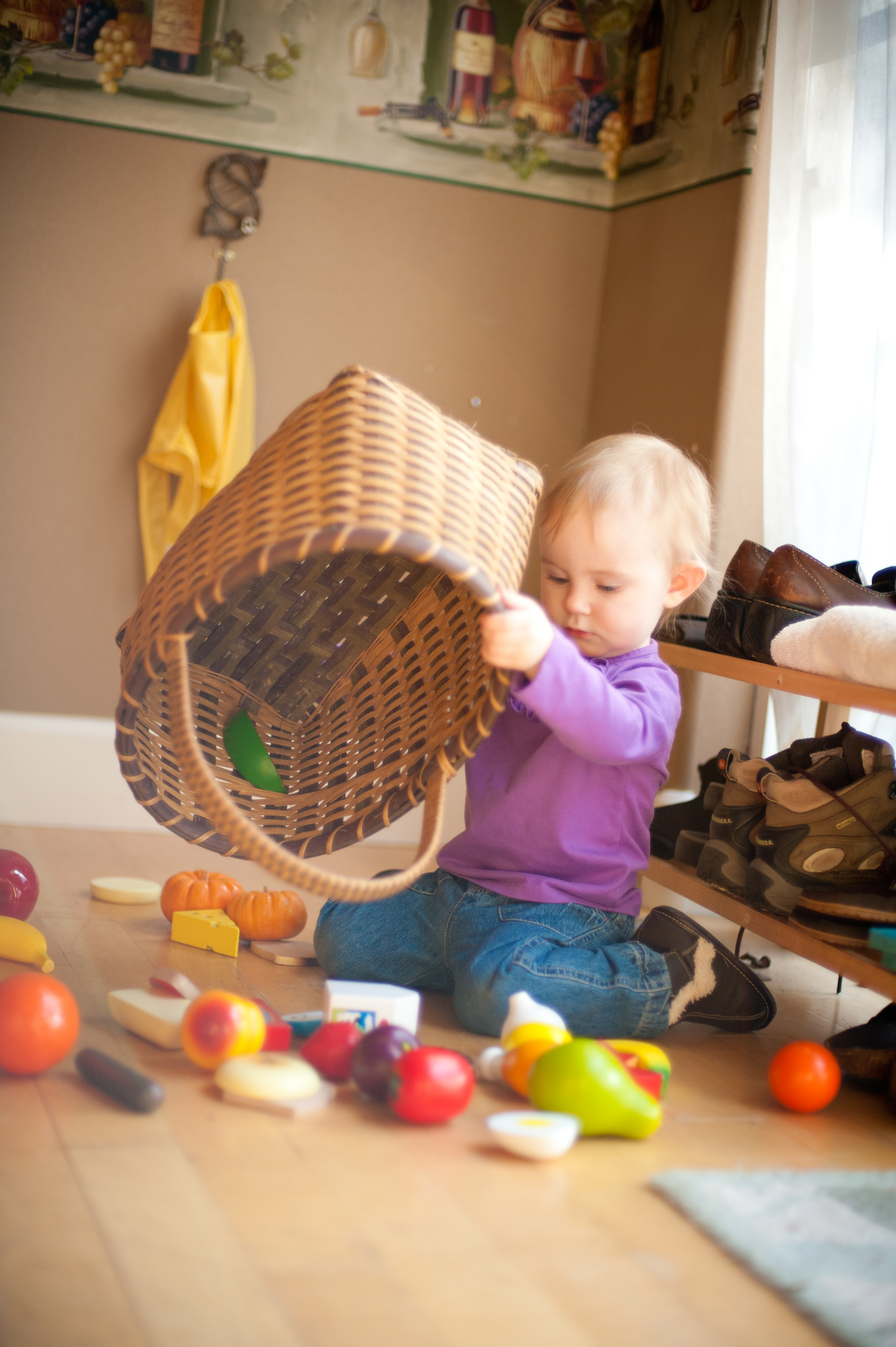
Independent play can be elusive when our kids are accustomed to being entertained, read to, or otherwise catered to, but things don’t have to stay that way. You can create an environment that entices your child to engage in hours of independent play with minimal supervision and virtually no need to guide or direct them. But there are some essential steps to take to make your foray into independent play a success.

Here are my five steps to independent play:

1)     Provide a safe space- First things first; if you aren’t absolutely certain that your child is safe, you’ll never be able to allow her to play alone in the other room. Safety is probably the most consistent barrier to independent play that I’ve observed in the homes of my friends, colleagues, and clients. On the other hand, when you know that your child can’t possibly pull the bookcase over on him or get into the medicine cabinet, you’ll be amazed at how much easier it is to let them do their own thing.

Here’s a list of potential hazards to be sure you’ve handled:

  • Drowning- children can drown in just a few inches of water at the bottom of a bucket. Coolers with melted ice, bathtubs that didn’t get drained, and even toilets can be a drowning hazard.
  • Strangulation- any cord longer than 12 inches can be considered a strangulation hazard. Be sure that all blinds cords are up and out of reach and that children don’t have access to ropes, ribbons, or strings that are longer than 12 inches.
  • Fire/Electrical- covers on all electrical outlets and knob or other safety covers on your stovetop are an important precaution.
  • Choking- Small items that can cause choking should be removed until children are at least three years old.
  • Falling furniture- Heavy dressers and bookcases cause injury to children every year. Be sure your furniture is bolted to the wall, especially if you have a climber (and even if you don’t).
  • Chemicals, medications & plastic bags- Cleaning chemicals, all medications (even over the counter) and plastic bags should all be out of reach or in a locked or childproof drawer or cabinet.

2)     Provide fascinating materials- what is your child deeply interested in? If you’re not sure, find out! When children are provided with materials that spark their interest, they will explore, experiment, and play for long periods of time. However, if they still have those same five books on the shelf that never get touched, it might be time to rotate something new into that unused space. Check out my homeschool blog for ideas of inexpensive and DIY materials that can provide hours of learning.

One more note on this, don’t assume that a very young child won’t be interested in complex topics or information. You’ve seen my daughter showing off her geography knowledge. She also loves to learn about birds and frogs from my adult field guides and photo books. My friend’s two-year-old son is obsessed with hockey, and I know a six year old who loves medieval history! Don’t underestimate your child’s interests.

3)    Provide ample opportunities & invite your child to play alone- I know you’re busy and you’ve got all sorts of fun and exciting activities to do, but take a moment to consider the trade off that happens when you over-schedule. Without a lot of unstructured time at home, your child doesn’t have the opportunity to develop skills in dealing with boredom or engaging in an independent self-directed activity. Instead, he’s looking over his shoulder expecting to be told what to do next. And by actively inviting your child to play alone, you’re actually supporting him in problem solving and creativity.

4)   Stop interrupting your child when he’s engaged in independent play- this is a tough one, even for me. I often forget that my daughter’s activities are just as important as my own agenda. But take time this week to notice all the moments when you’re actually interrupting your child’s concentration. Notice all the times when she’s playing alone and you’re bothering her with requests to put on her shoes and get out the door.

OK, now that you’ve noticed how often you interrupt your child, try to reduce your interruptions. Sometimes all it will take is finding one more thing you need to do and waiting for your child to seek you out. Other times you may have to restructure your day or skip that trip to the park you had been planning. Just remember that by allowing your child to come to a natural conclusion of independent play, you’re cultivating a long attention span, an ability to make clear choices about what to do next, and a bunch of other benefits I’m forgetting about right now.

5)    Make yourself less available & invite your child to do his work- this last step can be a tough one, especially if you’re the involved parent that I know you are. But if we want our children to develop their own skills in independence, decision-making, and engaging in meaningful self-directed work, we MUST take a step back and allow our kids to figure things out on their own sometimes. Check out this blog I wrote about how to set a clear boundary between your work and your child’s and check out that novel from the library that you’ve been meaning to read. Having a book is always a great way to remove your attention if you’d like to stay in the same room with your child. And since you’re not texting or on the computer, you’re modeling the importance of reading too! I also find that children are less likely to be distracted by my activities if I’m reading a book, rather than checking email. An open computer can be an irresistible invitation to a child.

I hope these suggestions have been helpful and I would love to hear about your own adventures in encouraging independent play. Please share your thoughts or stories in the comments below! And thanks so much for participating in our community!

Warm hugs, Shelly

Spending Time in Nature is Essential to Wellbeing

There is something magical about the land we were on last weekend. The babbling brooks, the rock lined trails, the sound of the wind through the trees. Birdsong, fire pits, drums, and dirt all found their way back into my heart and into the rhythm of our lives. I had almost forgotten how much it nurtures me to spend time in nature.

Sure, we were cold, wet and uncomfortable some of the time. There were times when my husband and I wished for our climate controlled home and we definitely missed our hot tub during the cold cold nights. But it felt good to lean on the trees for support or to sit on a rock to rest. It was nice to look up into the sky and remember that rain helps the plants to grow and that the sun is their food. And after a while I found myself bounding through the forest, enlivened and excited so much that I wanted to race from place to place through the forest.

At first my daughter wanted to hold my hand as she navigated the trails, but after a few days she too was ready to move along the trails all by herself and at her own pace. I loved watching her joy as she fell down and got back up over and over again. I had an indescribable feeling of happiness when she let go of my hand and walked over the stone bridge spanning the rushing stream all on her own.

In college I took an environmental psychology class and I learned so much about how nature affects the human body. Did you know that the simple act of watching a movie of nature scenes can actually lower your blood pressure?! The natural world brings a sense of calm and purpose to the human body that we just can’t get spending all of our time in high-rise skyscrapers, driving our cars on the freeway, or being plugged in to our many modern devices.

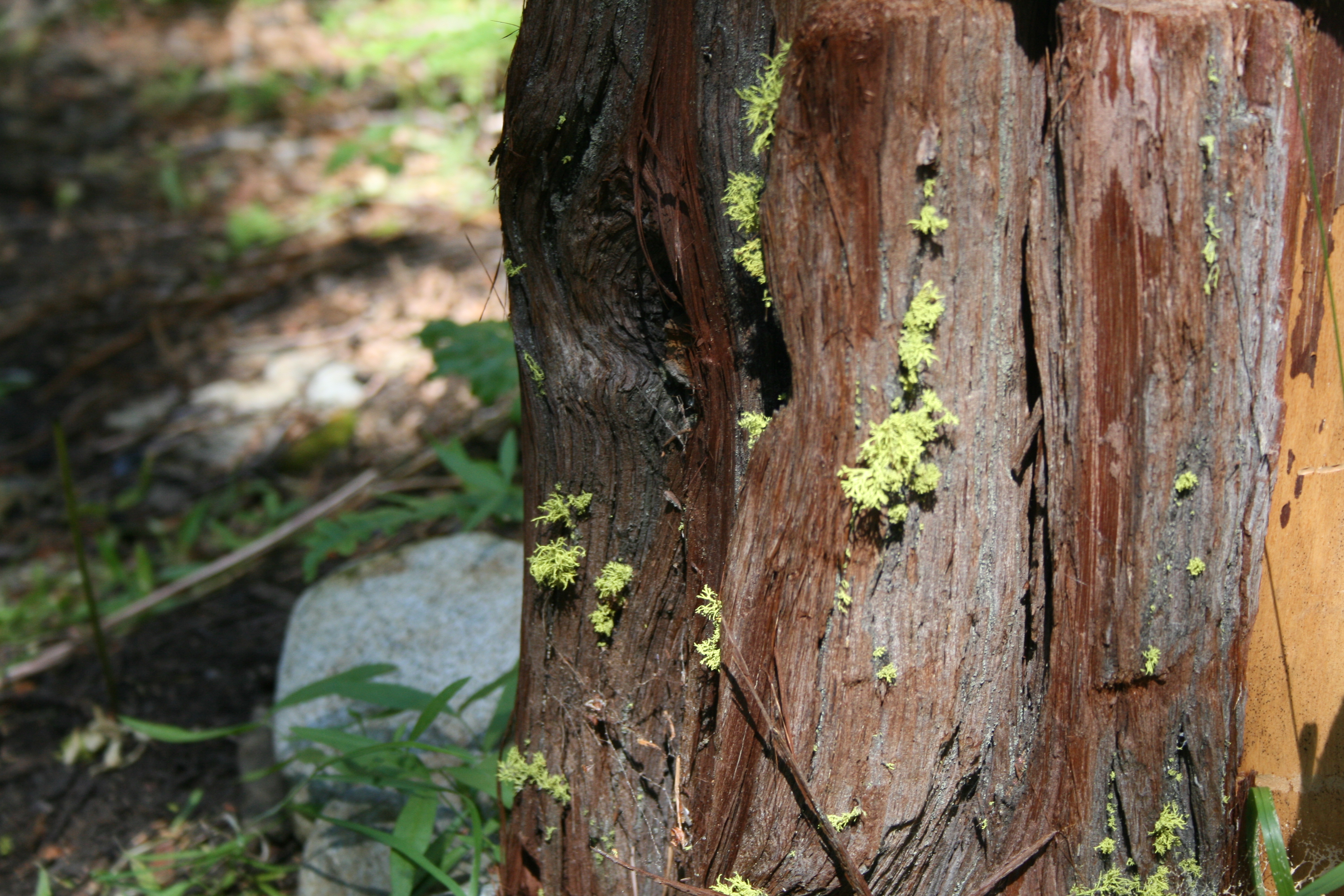
The sounds of wind and water are calming too. In fact, spending time in nature is a sensory experience that includes and involves all the senses. Heat, cold, dry, wet, rough, smooth, high pitched bird song, the sound of our feet walking on pine needles, the low hoot of an owl, the smell of the plant we just walked by, the taste of the dirt or the ashes from the fire or the edible plants and herbs that surround us. The warmth of the sun on your skin, the sight of a small rodent or an especially green patch of moss, these are the things that remind our nervous system we’re safe and it’s OK to relax and enjoy life.

Have you ever noticed that whenever anything is written about colors and their psychological effects it is purported that blue is a soothing and relaxing color. It occurred to me this weekend that some of the most soothing things in nature, water and sky are beautiful shades of blue. That makes me wonder, which came first, the soothing effects of the color blue, or the feeling of relaxation that comes over us when we see things that are “sky colored.” I’m guessing it’s the latter.

After that environmental psychology class I was inspired to bring nature inside and I began to create natural rock fountains and altars filled with shells, rocks, crystals, and woodcarvings to adorn my living space. And while I do think that having reminders of nature indoors is soothing, I’m pretty sure I had things backward. We need to spend more time in nature. We need to get dirty. We need to smell wood smoke and hear the sounds of rushing water. These things are as essential to our wellbeing as food and shelter. Sure we can live a completely indoor life, but what kind of a life would that really be? I think it would be missing an essential component of sensorial experience and it would definitely be missing the kind of joy and aliveness I felt this past weekend.

Maria Montessori said that the first five years of life were all about gaining facility with our senses and I must agree. Learning to see, hear, taste, touch, and smell with facility can impact us in large and small ways throughout our lives. So why not take advantage of our oldest and most complex teacher, nature?

Julia and I have been reading a portion of Henry Wadsworth Longfellow’s poem “Hiawatha” together and looking at the beautiful illustrations by Susan Jeffers. This book has captured my imagination since I was a child. I’ve always fanticized about living as the Native American’s did before the New World was discovered. I don’t want my daughter to learn bird species and wildflowers from a book. I’d like her to be like Hiawatha and experience these things firsthand, learning the smells, colors, and sounds that embellish their scientific names. Last weekend was a great start, but we need even more time in nature.

What are your plans this summer (or winter if you’re in the southern hemisphere) for getting out into nature? Do you think it’s a priority to experience nature first hand? Please share your story with us!

And have a wonderful week, Shelly

First Sink and Float Activity

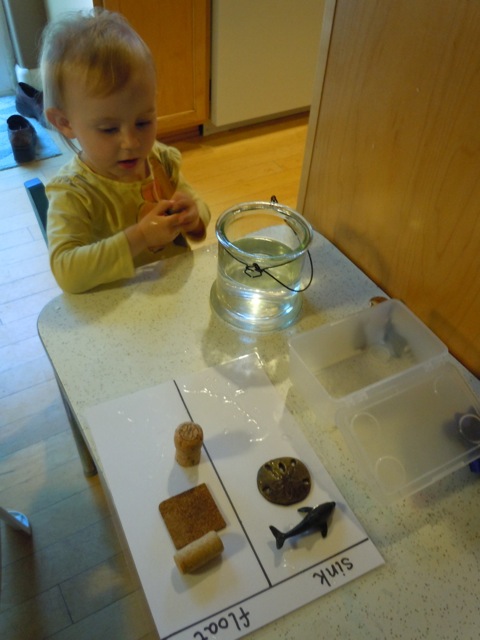
Julia’s first sink/float activity!

I simply wrote sink and float at the top of a piece of card stock, drew a line down the center and then laminated it.

Then I collected some items that sink and some that float. I poured the water into the bucket for her and she had a blast testing each item and putting them on her chart in the appropriate location.

After introducing this yesterday, she woke up and immediately wanted to do this work again. It’s a hit!

Encouraging the Daddy Love: How to manage a strong parental preference for mom and help your child bond with daddy, too

Disclaimer: For the ease of writing this article, I’ll be writing it to moms who are well bonded with their children and who want strategies to help their child or children bond with dad more deeply. Please know that I fully acknowledge that your family could consist of two moms, two dads, or a dad who is more bonded than a mom. I love all configurations of family so please interpret my words as needed to apply to your family. And for all those single parents out there, I’ll write something special for you soon too!

Attachment parenting, extended breastfeeding and co-sleeping are all wonderfully nurturing to the bond between mother and child, but sometimes dads feel left out of this bonding time. They can’t breastfeed for one thing, and some dads work outside the home and aren’t able to co-sleep for various reasons. I know many dads who feel sort of silly for even noticing that they feel jealous of the connection between mom and child. Most dads will tell you that they’re not sure whom they’re more jealous of, the child who now gets the attention they used to get from their wife or their wife who is more strongly bonded to the baby or young child.

Sure, everyone says that kids and dads have an easier time connecting when children are a little bit bigger and can rough house with daddy, but why wait? I’d like to offer you a few tips we’ve used at home to encourage the bond between father and daughter. I’ll tell you right up front, most of these tips are about taking a step back and allowing dad to engage more with your baby or child. So, here they are:

1)     Daddy day- whether your husband has a flexible schedule or not, one on one time with your child is the best way to encourage a strong bond. Even working dads can have a weekend date with their child. The key here is to make sure it’s time spent away from you, Mom. Family time is wonderful, but when the preferred parent is hovering nearby ready to swoop in at any moment, children are apt to rely on the stronger bond, rather than forging new ground in their connection with their dad. I would also recommend that dads take their child or children out on an adventure. Being in a new environment can create a shared memory that will be more salient for a child than just sitting around the house or watching a movie together.

2)    Bedtime routine switch-up- Allowing dad to take over the bedtime routine can be another great time for bonding. When children are about to go to bed they’re tired and vulnerable which can actually help bonding happen. If you have been doing bedtime all on your own and your child isn’t ready for an abrupt change to the bedtime routine, you can introduce dad into the routine slowly. First he reads one of the stories, then you leave the room for a moment and come right back. And after a few weeks Dad is either involved in the whole routine or doing the whole thing on his own. By the way, this can be a wonderful break for you if you’re a stay-at-home mom. So, if dad and child are willing, live it up!

3)    Remove yourself, Mom- There might be times throughout the day when opportunities arise for dad and baby to bond, but you tend to swoop in and take over simply because you’re used to doing things a certain way. Resist the urge, Mom! When we notice these moments of connection between our child and husband, it’s our job to nurture and protect those moments, not to interrupt them! Take a breath, and step into another room, allowing their connection to grow in your absence.

4)   Love up your hubby- Children imitate adult behavior, so if your child rarely sees you offering affection to your wonderful husband, he might not even realize that hugs and snuggles with dad can be so much fun. Modeling love and affection for your child helps them to realize that dad is an integral part of your family and great to snuggle with. So spread the love.

5)    Be busy- “Sorry honey, I can’t help you right now, can you ask daddy instead?” Without avoiding your child outright, there really are moments when you’re unavailable for your child and instead of waiting for your help, they can learn to seek support from dad. You can encourage this by reminding and inviting them to seek out dad often throughout the day. Or even asking them leading questions like, “Isn’t there a game that you and Daddy like to play that you could ask for while I’m making dinner? I heard he does a really good ‘this little piggy.’”

I hope these tips are helpful for you, but there’s one last thing. Don’t keep your efforts to help your husband bond with your child a secret from him. If he doesn’t know what you’re up to, he’s apt to feel confused, put upon, or boxed in to your plan. On the other hand, if you can have an open discussion about it, the two of you can create a plan together and your efforts are much more likely to pay off.

If you’re not sure how to start the conversation you might say something like, “I’ve noticed that Jack has been asking for ‘Mommy, Mommy, Mommy’ lately and I’m curious how you’re feeling about your bond with him. I just read a great article about how to encourage a stronger bond with Daddy. Would you like to take a look and try some of these things out?”

All right! So there you have it, tips to help attachment parenting moms encourage a strong bond with dad. Please let me know if this is an issue at your house and how you handle parental preference by leaving a comment below.

Thanks so much for being here and have a great week!

Warmly, Shelly