Watch what you say because your baby really is listening

The past few weeks my husband and I have been trying our hardest to remove some of the more colorful language from our vocabularies so that our baby’s first words aren’t profanity. Not that we curse all that much, but knowing children as I do, I know that it only take a few exposures to a word for kids to learn them, especially during the time when they’re busy expanding their vocabularies at a phenomenal rate at around 18 months old. So we’ve been saying funny things like “fire-pants!” and “rats!” or even my husband’s famous “son of a bench!”

The truth is, recent research shows that children can learn a new word after just ONE exposure and they’ll remember that word for weeks and even months, even if they haven’t heard the word since! The study itself was pretty interesting. I read about it in my new favorite book “The Scientist in the Crib” by Gopnik, Meltzoff, and Kuhl. In the study they brought 18-month-old children into the lab, showed them an apple corer and said, “Look! A dax.” Children remembered the name of the “dax” for several months even with no further exposure to apple corers in the mean time.

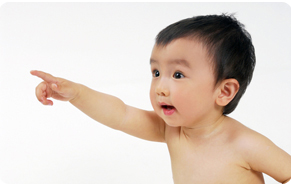
The process kids are going through at around 18 months when they enter their naming explosion is called “fast mapping” and that’s when your little one starts pointing to everything in sight and asking you to name it. “Whatsat?” they’ll ask repeatedly, as you well know. They also start naming everything they can and they want you to repeat things over and over again. It can be a little annoying. But when we dig in to what kids are actually doing during this time, it becomes fascinating and amazing. Continue reading “Watch what you say because your baby really is listening”
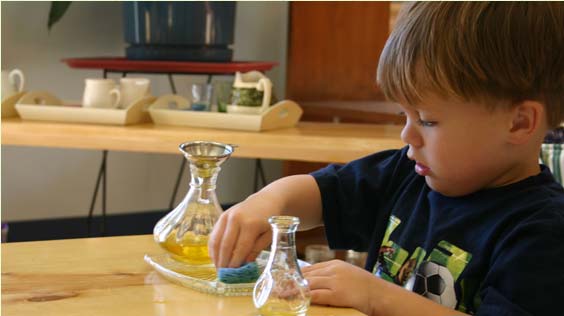
Autonomy is the holy grail of childhood

In my work with young people there are some needs that come up again and again.  The need for play is a great example.  Kids need lots and lots more play than we need and they let us know about their need in ways that are sometimes difficult for us.

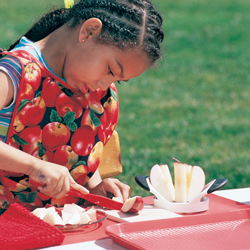
But the unmet need that I notice most in young children is the need for autonomy.  Children desperately need to be able to do things on their own and to choose their own path and luckily for you, there are simple things you can do around the house to support your child’s autonomy.

First, take a tour through your home in your mind.  Starting at the front door, do kids have a place to put their coats and shoes when they get home?  Is the place for coats and shoes easily accessible?  For children under five years (and for older children and even adults) the easiest place to put a coat is on a hook near the front (or back) door.  And to put shoes on and take them off, a child-sized bench to sit on is quite useful.

As you move through your home in your mind, consider whether your child has access to the things she needs.  Can she reach toys and books in the living room?  Art supplies, dishes, water and a snack in the kitchen?  Is there a stool in the bathroom that makes using the toilet and washing hands easy?  Can he reach the towel to dry his hands?

Each room of your home should have an activity for your child available in case he wants to be in the same room with you, and in case he doesn’t!  Continue reading “Autonomy is the holy grail of childhood”

Focus on the process, not the product

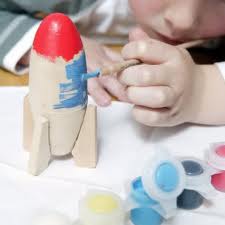
As many of you know, for the five years after college I was a preschool teacher in Montessori classrooms.  I was very intrigued my Maria Montessori and her methods, but what struck me most was her philosophy.  There are quite a few key Montessori philosophies that I subscribe to, but today I want to share one that’s near and dear to my heart.  Montessori said, “It’s the process, not the product.”

What she meant is that for young people, it’s the process of learning that is to be enjoyed and savored.  Too often we put the emphasis on our kid’s paintings, drawings, or little cut out shapes, but we forget that it’s the experience of painting, drawing, and cutting that matter most to our child’s development.

For children, it’s easy to enjoy the process because they haven’t yet been conditioned to value product over process.  You can see evidence of this in that many three or four year olds will spend time creating a piece of artwork only to forget it at school or toss it aside when it’s finished.  We are the ones who teach children to value their art by featuring it on the refrigerator or espousing it’s many wonderful qualities.  But is our value of product over process something we really want to teach our kids? Continue reading “Focus on the process, not the product”

The dangers of praise

Although we tend to think of praise as beneficial to kids, recent research has shown that certain kinds of praise are actually detrimental to young people.  When we tell kids they’re “good” the unintended effects are that children begin to fear being seen as “bad”.

Personally, I think all kids are good all the time.  They’re just easier or more difficult for us to deal with based on their behavior, but that doesn’t make them “bad”, just more challenging for us.  But if we tell kids they’re good or talented or smart, the surprising consequence is that they tend to freeze up and become afraid of being seen as bad or un-talented or stupid.

In one study I read, kids were divided into two groups.  Each group was given an easy puzzle to solve.  After they completed the puzzle one group was told, “You’re so smart!” and the other group was told, “Wow, you tried really hard on that!”.  Then they were offered the opportunity to redo the easy puzzle or to try a more challenging one.

The kids who were told they were smart chose the easy puzzle more often, probably fearing that if they failed, they wouldn’t be praised as “smart” anymore.  On the other hand, the group who were told they tried hard were eager to challenge themselves and often chose the more difficult puzzle.  After all, even if they failed, they would still get praise for trying, so there’s nothing to lose! Continue reading “The dangers of praise”

Busy bodies

One afternoon when I was about six or seven I saw my mom sitting in the living room staring off into space.  “Wacha doin’?” I asked.  “Nothing.” She replied calmly.  “Nothing?!” I thought, NOTHING??!!!  How could someone not be doing a thing?  That was impossible.  Hmmm.”  As I looked at her she seemed peaceful and happy and whole, so I figured that maybe, just maybe, not doing anything was an all right thing to do.

The older I get, the more I try to be like my mom in that moment.  Not the checked out staring off into nothingness part (although that’s kinda nice sometimes), but the part of her that is able just to sit, and contemplate life, and enjoy the present moment.  The more years I get under my belt, the more I appreciate just being.  And the less I think that it’s the “doing” that will define me in other people’s minds (or in their memory of me once I’m gone).  Not that doing is a bad thing; in fact I quite like doing things.  But remembering just to be; And to be peaceful and joyful as I go about my daily life.

This is a foreign concept to kids, or at least it was to me as a kid.  I just wanted to learn new things and grow and reach out in every way I could.  To just sit and breathe was the last thing on my mind.  You see, the thing is, kids are busy bodies.  I’m not sure exactly what it is about being young that makes us want to figure everything out as quickly as possible, or even gives us the notion that anything ultimately CAN be figured out.  But regardless of what drives them, young people are notoriously busy “getting into things”. Continue reading “Busy bodies”