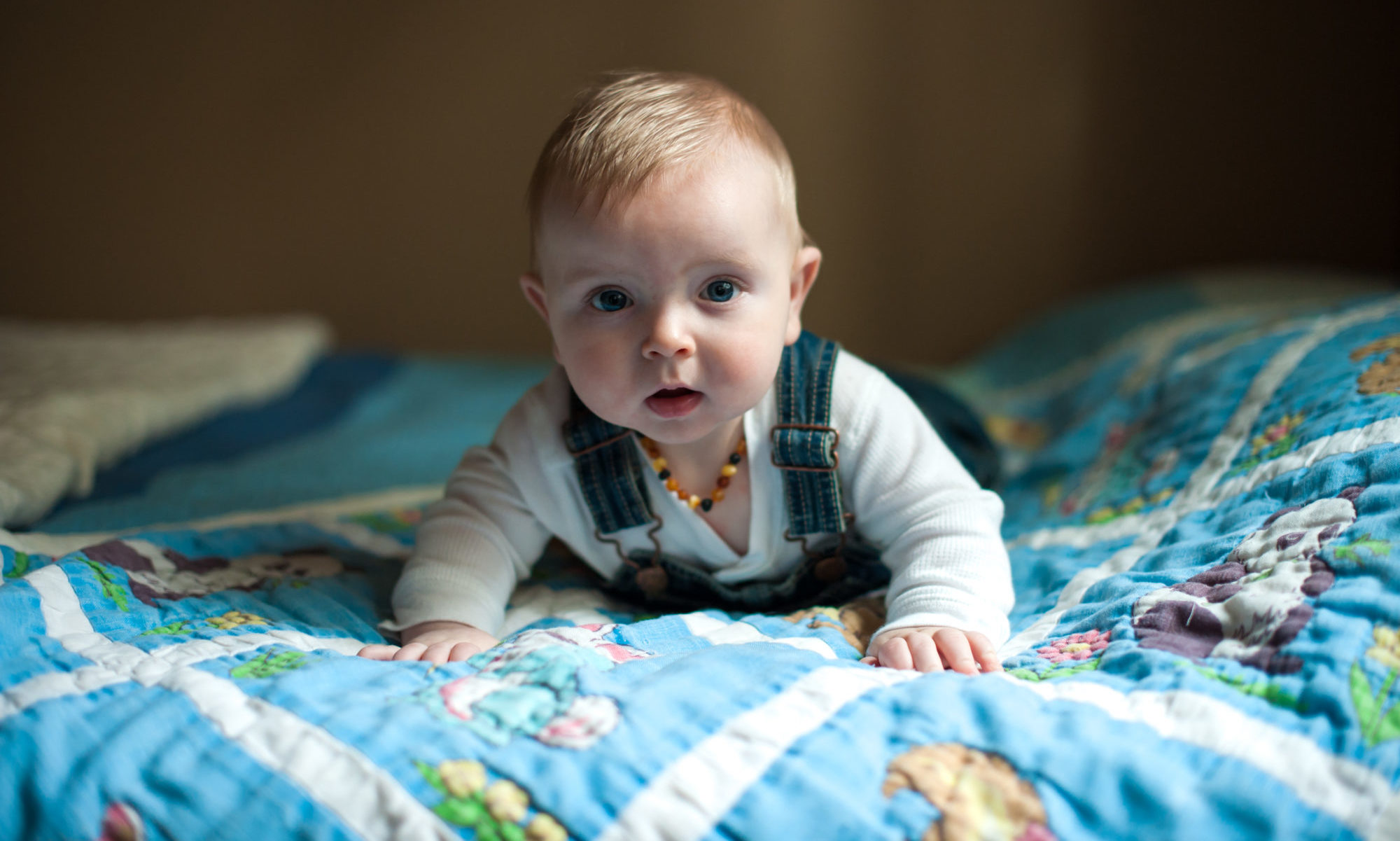
A Special Letter to My Soon to Be Born Baby

Lowres-4-croppedWhen I was a teenager I was flipping through my baby book and I saw a letter my mom had written to me before I was born.  It was sweet and heartfelt and at that moment I knew on a deeper level how very wanted I was and how special I was to my mom even before she met me for the first time.   It has always been important to me that I make a conscious choice to become a parent and that I wait until I’m really ready to take on the responsibilities of parenthood.  So here I am, just two weeks away from my “guess date” and I’ve decided to write a letter to my baby to welcome him or her.

I notice that the closer I get to giving birth, the more my thoughts are turning inward.  I’m beginning to focus on the center of my universe more than ever before.  I’m preparing my nest, connecting with my husband, and enjoying the quiet alone times.   So, rather than sharing some new parenting tip or technique, this week, I’m just sharing from my own heart.  I’m glad to know that I can share so personally here along with all the other ways I share.  And I hope you enjoy this special blog.  So, here’s my letter to my about to be born baby.

Dear Baby,

Wow, you’re almost here and we are so excited to finally meet you.  Your dad and I have been waiting for you for 9 long months and pretty soon we’ll get to see you, touch you, and gaze into your beautiful eyes.  I’m especially looking forward to holding you in my arms and nuzzling your sweet smelling head.  Let’s spend hours together just cuddling, nursing, sleeping, and enjoying life together.

I can’t wait to be your mama.  I’ve been preparing for motherhood since I was a young girl and I feel so ready to welcome you into my life.  I’ve studied everything I could about how to be a good parent, how to help you learn and grow, and how to be the best example I can be for you.  I’ve even practiced by taking care of lots of other babies and kids, but really it was all for you.  Taking care of you and teaching you how to take good care of yourself sounds like the most fun and rewarding thing I could possibly do in my life.  Thanks for helping me fulfill my life’s purpose. Continue reading “A Special Letter to My Soon to Be Born Baby”

Sleep deprivation is no joke!

A_Very_Sleepy_Mom_Carrying_Her_Screaming_Baby_and_a_Bottle_Royalty_Free_Clipart_Picture_091013-003989-741053About a year ago I read an interesting article in a magazine about a rat study that showed that rats that were deprived of sleep died sooner than rats that were deprived of food.  Wow, I knew sleep was important, but I had no idea that going without it could actually kill animals faster than going without food would.

Sleep deprivation makes a huge impact on all sorts of brain functions.   Recent studies have shown marked negative impacts on mood, cognitive performance and motor function in people who are sleep deprived.  One study I read stated that “profound neurocognitive deficits accumulate over time” in people who are deprived of sleep.

If you’re a parent, I know you’ve experienced sleep deprivation on some level.  It’s starting for me during the last month of pregnancy.  And I know my sleep will be disrupted for many months to come as I breastfeed through the night.

Even when your kids are older, they wake up in the middle of the night vomiting or they wet the bed or they have a nightmare they can’t shake.  And although it decreases as your kids get older, you’re likely to have some sleep deprivation when your kids are teenagers too, as you wait up for them or worry about them when they’re out at night.

So the question I propose is, what can we do about it?  How can we mitigate some of the effects of sleep deprivation so that we can feel good, keep our wits about us, drive safely, and cook dinner without cutting or burning ourselves?

I have a few ideas.  First, take naps.  I don’t know about you, but in order to feel good about taking naps I had to work through a lot of beliefs that napping is “lazy” or “unproductive”.  Now that I’ve seen the sleep deprivation research, I know that taking naps is neither lazy nor unproductive.  And if it keeps me in a good mood and helps me have better motor coordination, I’d say it’s a pretty good solution to missing sleep at night.

So now you’re thinking, “That’s great, but who can find the time?!”  Well, I’d say, it’s just like anything else in life, if it’s a high priority, you’ll make the time.  And if you’re grumpy with your kids and you’re noticing that you can’t think straight, I think napping could become a high priority pretty quickly.  You can nap when your kids nap, or take turns with your partner.  Or, you can all nap together as a family.  If you have kids who don’t want to nap, set them up with some quiet activities that they can do nearby and get some rest, or call a friend or sitter to come over and hang out with your kids while you nap. Continue reading “Sleep deprivation is no joke!”

Creating the emotional state you want, it’s easier than you might think!

eva_summersaultToday I want to share something I learned from NLP (otherwise known as neuro-linguistic programming) called a “state change”.  We’re always in some sort of emotional state, whether happy, sad, excited, or frustrated.  And often it feels like we’re at the whim of our emotions.  When I’m frustrated it seems like there is no way to transform the frustration into something else.  But there is!  We can consciously create a “state change” in ourselves and often in others, pretty much any time we want!

Sounds too good to be true doesn’t it?  Well, I assure you, I’ve used this technique countless times with kids and with myself and it really works!  But, how does it work?  Well, here’s the thing, the body and the emotions are directly linked to each other.  When we feel sad, we look down, hunch our shoulders, pout and stay still.  On the other hand, when we feel happy and excited, we throw our shoulders back, look up, smile and move our bodies!

The trick is realizing that the conversation between the body and the emotions is a two way street.  Not only does our body reflect how we’re feeling, but our feelings reflect how we’re holding our bodies!

Try this the next time you’re feeling down.  Find a brightly lit room, look up at the ceiling, smile your biggest smile and think about something you love.  Now how do you feel?  It’s almost impossible to continue feeling sad when your shoulders are back, you’re looking up, smiling and thinking of something you love or enjoy!  You can try the opposite too (although it’s less fun).

Sometime when you’re feeling great, try hunching your shoulders, looking down at the ground, and thinking about something really sad.  You’ll almost immediately start to feel sadness.

So, how can you use this two way street to your advantage?  You can actually tell your emotions what to feel by holding your body in a certain way!  Continue reading “Creating the emotional state you want, it’s easier than you might think!”

The development of will

Time OutWhat’s it like to be a 2-4 year old? (an excerpt from my soon to be released ebook!)
As an infant and young toddler your child saw himself as an extension of you.  He had very little sense of distinction between himself and his parents.  In fact, if you think about it you can understand why this would be so.  Just as we lift our own hand to our mouth if we want to put some food in it- your hand has automatically put food in your baby’s mouth every time he’s been hungry since his birth!  When he needs something, you provide it, so in a way, and in his mind, you’re an extension of him.

Now that he’s older he’s developing more complex language.  He’s learning to distinguish between “yours” and “mine”.  Well if there’s a “yours” and a “mine” there must be a “you” and a “me”.  Now your child begins to see himself as a separate entity with desires, hopes, dreams, and thoughts all his own!  Wow, what an exciting discovery.

A Stronger Will: Unmet needs for choice

Along with the discovery of self, your child is feeling stronger desires than ever before and she’s discovering her personal power.  She’s realizing for the first time that she can affect the outcome of a given situation.  Sure, when she was a baby, she realized that she could move a ball from here to there- but now she’s discovered that she can affect your behavior and have some control over the social dynamics in your home.  This is a huge step in social development.  She’s gone from a helpless being, who is happy to do whatever you want- to a willful child with a mind of her own.  And this is ultimately a good thing- although the transition can be extremely difficult for us.  Sometimes we just want that sweet little baby back (and that’s completely normal)!

If you consider your job as a parent to be raising a capable, independent, and contributing adult, then you can see this phase as a milestone toward that goal.  Now that your child has an ego, strong desires, and a stronger will she can really get things accomplished that she never could before.  Now is a wonderful time to help her develop a sense of responsibility by giving her more freedom coupled with, you guessed it, responsibility.

Easier said than done, right?  Continue reading “The development of will”

Following the child: How child directed games and activities can create connection, learning, and mutual cooperation

kids_playing_aqerThis week I watched a fascinating video about baby led breastfeeding.  It showed newborn, days old, and months old infants maneuvering themselves into a good nursing position with very little help from their mothers.  Babies were deliberate in their movements bobbing and clearly searching for the nipple.  And, when they found it on their own, many mothers reported that the latch was more comfortable than it had been when they had tried to help their babies find the nipple.  What an incredible innate ability babies have!

Watching newborn infants lead the way at breastfeeding reminded me of one of the foundations of Maria Montessori’s groundbreaking educational philosophies; follow the child.  Montessori asserted that children have an innate desire to learn and if we follow their lead, they will enjoy learning, retain more information, and continue to seek out even more knowledge.

But following the child doesn’t just work to help kids develop their intellect, it also helps them to find their power and leadership skills.  When we allow children to be in charge and take the lead, they will often surprise us with their creativity and take us in directions we never expected.

For instance, kids who are feeling powerless and frustrated about it will often make up games than involve enslaving their brothers, sisters, parents, or other adults.  It’s how they work out their frustrations about being a kid and how they learn to understand what it’s like to be in charge.

I’ve found that by allowing children to lead the way during some specifically designated child led play-time, kids become better able to cooperate and connect for the rest of the day.

I’ve even had experiences where I wasn’t sure why a child was grumpy or defiant and when I allowed the child to lead the play, I soon discovered what was really bothering them.  Kids have an amazing ability to work out their emotional challenges through play, but they have to be allowed the time, space, and attention to do so effectively. Continue reading “Following the child: How child directed games and activities can create connection, learning, and mutual cooperation”