
How can I keep my independent two-year-old safe?

My friend Mindy had a recent challenge with her two-year-old son. She wrote:

Shelly, We have a big challenge. I like to leave our doors open to the backyard, so Thomas and the animals (we have two dogs and a cat) can go in and out as they wish.

Today Thomas crawled under the automatic gate into the front yard!

Then he came around to the front door and played a game out of it. But I’m terrified he is going to go near the street or in it, or someone is going to snatch him. I really can’t watch him well enough now that I have Tabitha (3 mo.) to ensure he won’t do it again, and there is no way to alter the gate to prevent his tiny little body from going under it. What do I do?
Continue reading “How can I keep my independent two-year-old safe?”

How Rocking, Spinning, and Swinging Your Kids Helps Them Pay Attention

Ever wonder why we have the impulse to rock babies to help them calm down?

Studies show that rocking, spinning and other physical movement through space helps children’s brain development and their ability to pay attention, by stimulating the vestibular (inner ear) system.

And here’s the thing, this works with both infants and older kids. It can also be a really fun way for you to cut lose and play with your kids.

So, the next time your little guy is about to lose it, check with him about whether it sounds fun, and then spin around with him in your arms, or take him to a nearby swing-set.

Even hanging upside down can produce vestibular stimulation. Just make sure he’s enjoying it, and not getting dizzy or upset. It never hurts to ask, “Is this okay?”

Believe it or not, when we get lots of motion through space (like on a swing, dancing, or spinning) it actually helps our senses work better. With some well-timed rocking or spinning, stimulation, your little dude could be settling down with his dinosaurs for some sustained play time.

In other words, you may get to shower today! Hooray!

So here’s the deal with vestibular stimulation: Continue reading “How Rocking, Spinning, and Swinging Your Kids Helps Them Pay Attention”

Five Keys to Getting Kids to Help with Clean-up

Ever wonder why you can’t get your kids to help clean up?

I know, it seems like a nice idea and all, but how the heck do you actually get kids to want to and enjoy helping with clean up?

At first, I didn’t think it was possible either. But it turns out, I was grossly underestimating young people.

In fact, during my first year as a preschool teacher in a Montessori school, my limited ideas of the kids’ cleaning capabilities were completely blown out of the water!

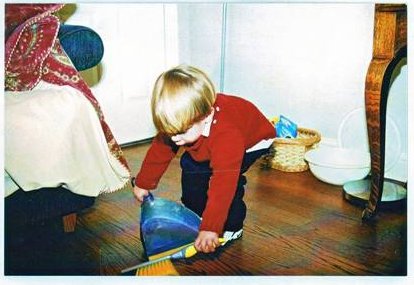
I looked around the classroom and saw three-year-olds sweeping, mopping, dusting, and helping each other clean up messes!

Three year olds. No kidding!

Now here’s the kicker: Not only were these young people happily cleaning up after themselves and each other, they also felt proud of their accomplishments and were internally motivated to continue!

So, how can you get your kids to help you out around the house? Continue reading “Five Keys to Getting Kids to Help with Clean-up”

Give yourself a Valentine’s Day gift—feel better by expressing YOUR feelings.

What are you feeling right now?

Recognizing how you feel can be challenging. In fact, I’ve been working on it for the past ten years.

I think of it as an act of self-love.

This Valentine’s Day give yourself the gift of tuning into your emotions.

I’ve been on a journey toward more and more emotional awareness over the last decade. And now, not only am I more aware of what’s going on inside me, I’m often able to tune in to others, and offer nurturing and support.

In my teens and twenties, I had become a master of stuffing my emotions. I’d feel an emotion welling up in my throat, but then I’d swallow it down and put on a happy face.
Continue reading “Give yourself a Valentine’s Day gift—feel better by expressing YOUR feelings.”

Six quick steps to a happier family

Are you tired of tantrums?

Give your kids an alternative

Get more connected by Guessing Feelings

By guessing your child’s feelings, you can help her learn a new way to express herself… verbally!

Even if your guesses are wrong, your child will respond to your efforts to tune into her. When young kids have tantrums, they’re frustrated, low on creativity, and can’t figure out another way to express how strongly they feel.

Remember that tantrums won’t necessarily disappear, just because your little angel is able to say, “Mommy, I’m mad!”

He will have more options, however, and if you can catch him early enough, you might be able to head off some tantrums before they start.

Here are six steps to help you use Guessing Feelings to help create more emotional connectedness for your whole family:
Continue reading “Six quick steps to a happier family”