
The Number One Most Important Thing You Can Do For Your Kids

When my daughter and I were traveling to Illinois to visit family, we spent time in several airports.

There was a moment when we had just gotten off of one of the planes and we were using the bathroom. A mom and her 6-year-old daughter were in the next stall and the tone of voice that the mother used literally made me want to crawl out of my skin. I wished my daughter had never heard anyone use that tone and my heart went out to the young girl who was on the receiving end of her mother’s wrath.

Essentially the mom was having a tantrum and was directing her anger and frustration at her child. It hurt my heart to listen to the way she spoke to her daughter. Where was the respect and compassion?

Look, I get it, sometimes we all get frustrated and lose it with our kids. I guess I just hope that we can notice ourselves getting upset and have the wherewithal to process those feelings on our own, rather than dumping them on our kids, at least some of the time.

I know not everyone shares my values. Not all adults want to treat young people with complete respect and offer them as much love and compassion as possible. But I’m sure grateful that you do.

Maybe that mom in the airport hadn’t yet processed her own childhood trauma and so she was repeating the pattern with their own kids. Right now I’m feeling very glad that I have chosen to actively process mine and to forge a new parenting path for myself.

So what’s the number one most important thing you can do for your kids?

Heal your past and become more available for connection.

I’m curious, have you unpacked your own childhood? Do you know what happened to you growing up and why things were the way they were?

I recently remembered one of the core concepts of “Parenting from the Inside Out” by Siegel and Hartzell. The research they wrote about showed that the greatest predictor of a healthy attachment between parent and child had nothing at all to do with the child.

His sex, personality, disposition, and even attachment style were essentially irrelevant to his ultimate connection with his parent. Instead, the attachment between parent and child had everything to do with the parent and how well he or she had processed their own childhood. Yep, that’s right,

Our own ability to process our childhood predicts how connected we’ll be with our kids.

Siegel writes about how having a “cohesive narrative,” which means being able to make sense of our past and creating a story for ourselves about what happened, why, and how we’ve emerged as a result of our past experiences is actually the most important predictor of attachment. When moms (and dads) have a cohesive narrative they end up being far more connected with their kids. And that’s better for the parents AND the kids.

To give you a more personal example of what this “cohesive narrative” might look like, I’ll share a story from my own life.

When I was five my parents divorced and a year or so later my dad and I moved from Champaign, IL to Collinsville, IL about a 3 ½ hour drive south west. I stayed with my dad for the school year and my mom drove down for every other weekend visits. I also stayed with my mom in Champaign for the summer. As a child I made up a story that my dad “took me away from my mom.” And even though I loved and appreciated my dad, I was angry with him for taking me away.

I held on to that story for many years, into adulthood and looking back I can see that that particular story was one of the things that kept me emotionally distant from my dad.

As an adult, I decided that perhaps my story about what had happened was incorrect, or at least incomplete, so I sat down with my dad and asked him about it. I was terrified to have the conversation, fearing that he would get angry and defensive, so I learned some Nonviolent Communication skills, practiced with a friend, and processed my own pain so that I could go into the conversation with an open and curious energy, instead of blaming or shaming my dad.

During the conversation I got a whole new perspective on what was happening for my dad at the time when he decided to move. I realized that his intention was to move closer to his family for additional support. I learned about some things that were happening in his emotional and financial life that impacted his decision, and I finally understood that while the result was that we moved away from my mom, that wasn’t the driving factor in his choice to move.

Whew! Now instead of seeing his choice as an attempt to hurt me, I saw it as a desire to provide and care for me. And that utterly transformed my narrative and my relationship with my dad. I’m much closer with my dad now than I was during my teens and twenties. In fact, almost as soon as I changed my narrative and began to see things more from his point of view, our relationship became closer.

And I think my connection with my daughter is a testament to the inner work I’ve done to be able to come up with a story of my life that makes sense and brings me clarity and understanding. Do you have a cohesive narrative of your life? Are there experiences you had in childhood that still feel traumatic to think about?

If so, my invitation is to take a closer look at those experiences this week. Now is the time to heal your past and connect even more deeply with your child as a result. It doesn’t matter if your child is an infant or a teenager. You still have time to deepen your connection. And who knows, you might even get a closer relationship with your parents out of the deal.

I hope you’ll share your story with me too and allow this community to support you and help you heal. If not for yourself, do it for your kids. They deserve the best version of you that’s humanly possible.

Have a healing, freeing, super connected week, Shelly

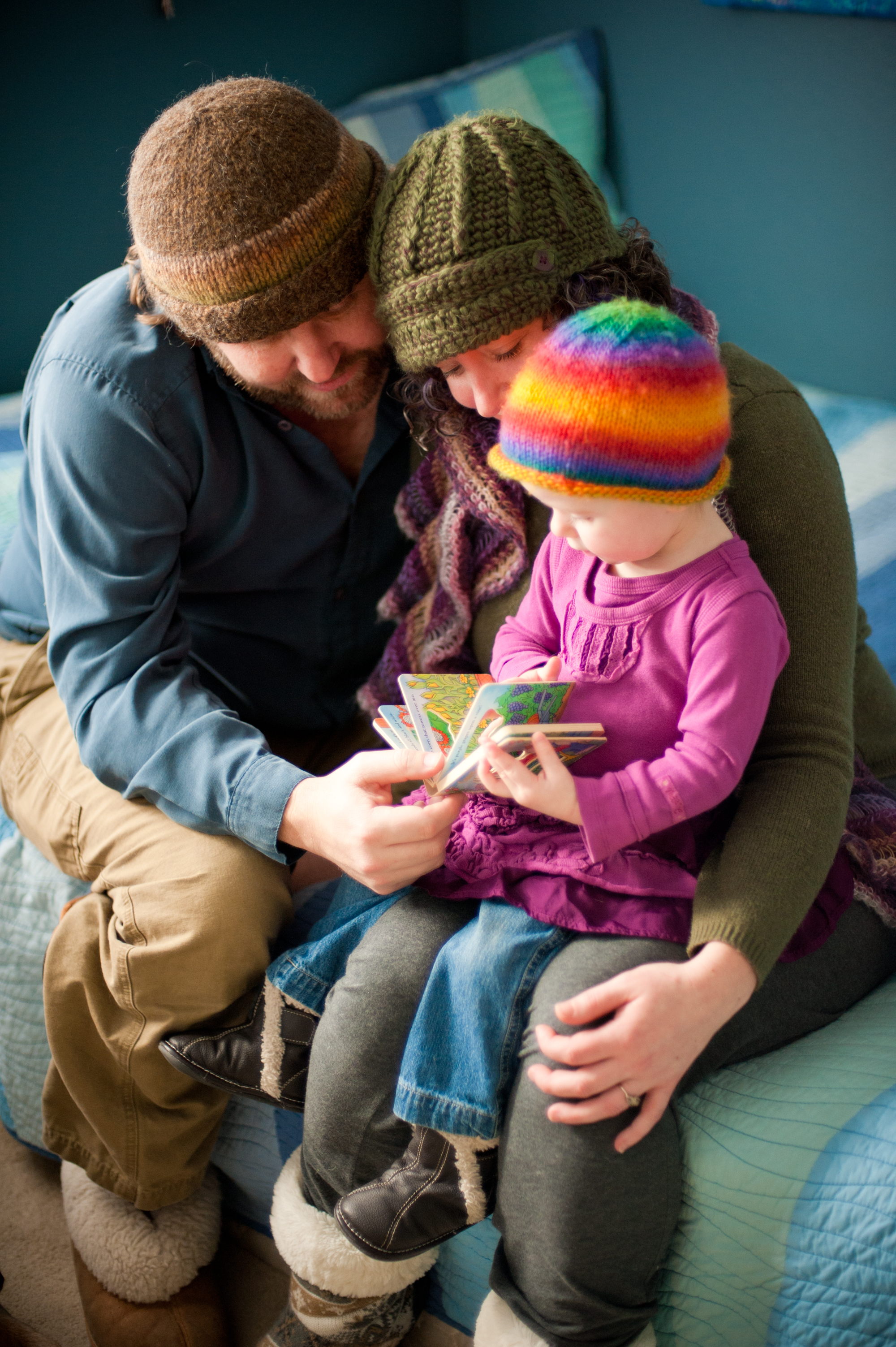
Photo by DIONNA RAEDEKE

The Secret to Improving Your Child’s Attention Span

The way to help children improve their attention span is counter-intuitive. You might think that giving children tasks that require their continued attention would help. Or maybe challenging them to accomplish long and complex sequences will help memory and cognition, improving attention span. But the current research is showing something counter to what we might think.

In fact, research shows that allowing kids to have unstructured playtime can actually improve their ability to focus on a task. In the book “Nurture Shock” by Po Bronson I learned about a kindergarten program which encourages children to choose a character to play in an imaginary play scenario that lasts for several hours. Researchers found that the children who were able to remain in character did better on later academic tests than children who were taught their letters and numbers instead of engaging in imaginary play.

The real take away here is that imaginary play and unstructured playtime are tools that children use to learn real life skills that will benefit them forever. It might seem like “child’s play” to us, but to them, this type of play involves acting out potential scenarios, doing scientific experiments, and using critical thinking skills.

So what’s the secret to improving your child’s attention span?

Offering them big chunks of unstructured time to explore their own interests and engage in imaginary play.

Our daughter Julia wakes up at about 6:30am every day of the week and lately I’ve been helping her get to the bathroom and then climbing back into bed with my husband on the weekends. For several weekends in a row Julia has happily played by herself and allowed us to sleep in.

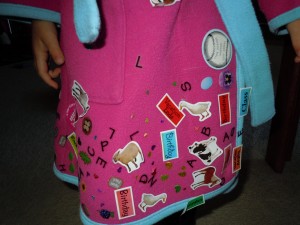
One morning she found the box of stickers and this is what she did:

The Secret to Improving Your Child's Attention Span

DSCN2130


I was impressed and here’s why. Not only did she use her fine motor skills to get each of the tiny stickers off of the sticker paper and on to her robe independently. She focused on this task for well over an hour without interruption. She put over a hundred stickers on her robe one by one. And she’s not yet three years old. I think we’re on our way to a very well developed attention span!

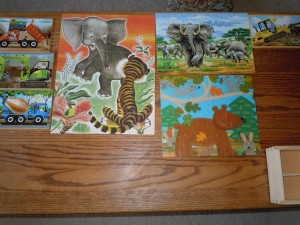
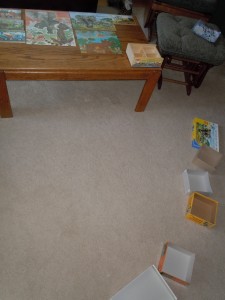
The following weekend she impressed me even more. Here’s what she did while we slept:


DSCN2141

DSCN2140

I love the way that she displayed her finished puzzles and the fact that she also lined the boxes up on the floor was interesting too. And just for the record, this is four 12 piece puzzles, two 24 piece puzzles and a 35 piece puzzle. And she didn’t wake us up for help even once.

So what does your child like to do when given uninterrupted alone time?

When Julia was smaller she would spend up to an hour looking at books in her bedroom. Sure there was a huge pile of books on the floor afterward, but she had entertained herself for an hour…with books! And we did work on putting them away together, so now, she happily puts away most anything she plays with.

Just a quick disclaimer here, safety is very important any time you’re allowing young children to have time alone without direct supervision.

Please make sure that the environment is free of hazards whenever you leave your child alone.

There’s one more secret to helping your child expand his attention span, remembering not to interrupt his work. Again, while it might just seem like meaningless play to us, children are engaged in the work of becoming the adults they hope to be. When we remember to respect their time and attention by refusing to interrupt when they’re engaged or by simply waiting for them to approach us, we’re helping them learn more independence and encouraging their natural urge to go deeply into the subject at hand.

If every time a child becomes engrossed in something he gets interrupted and asked to do something else instead, he’s not as likely to develop a deep and long lasting desire to dive in to his own interests. Instead, he may become overly attuned to the needs and desires of the people around him, believing that it’s more important to do what others require of us than it is to develop our own driving interests.

Oh, one more thing I forgot to mention, screen time does NOT count as independent play. In fact, excessive screen time has been linked to shorter attention spans and an inability to focus on real world tasks. So, if you’re in the habit of using the screen to get some time to yourself, I hope you’ll consider some other options.

So this week your challenge, if you choose to accept it, is to allow your kids to have some extra alone time, unstructured playtime, and wide swaths of time when they’re not interrupted. You might be as surprised by the results as I was when I woke up to that table full of puzzles.

Have a great week, Shelly

What to do When Kids Ask Why? Why? Why? Why? Why?

The “Why” stage has hit. My daughter cannot seem to stop herself from repeatedly asking why. Almost every kid I’ve known goes through this at some point and if you’re anything like me, you find this incredibly irritating. “Why,” you ask? And I remember the long ago voices of my parents tightly saying, “Because I said so!”

I used to hate that answer but now I think I understand it a bit better. The repetition that I found so comforting and habit forming as a child, is just really very annoying as an adult.

So here’s the approach I take. I like to consider the underlying need that’s being expressed by the question. I think that when kids repeat the question why, they have a need for information. If you think about it, repeating the question why is actually a pretty easy way to get more information about a given topic. But it’s still super annoying. So what can we do about it?

I try to teach my daughter new strategies to meet that need for information.

I give her various options by modeling different ways to ask for what she wants, for instance:

“Can you please tell me more about that?”

“What else?”

“I want to know more!”

or, “Do you have a story about this?”

By helping my daughter to expand her repertoire of ways to get further information about a given topic, I’m addressing her desire, and helping her to get that need met more often. Adults will happily continue to give her more information as long as they’re not irritated by the way she’s asking.

And, by taking this approach, I also feel far less irritated, simply because I’m aware of the underlying need behind her behavior. When I see this behavior as an attempt to learn more, I have a lot more patience for her repetitive questions.

There’s something else I like to do when kids repeatedly ask “Why?”

I give them far more information than they could possibly want on the topic at hand.

I deluge them with details, use large vocabulary words, and talk about the overall processes at hand. This does two things, first it meets a child’s need for information and second, it assumes they’re smart enough to figure out the level of detail I’m providing. My dad is a pro at this approach. By the time I was three I already knew tons of information about how to lay a foundation and use a plum line.

Both of these will support a child’s further learning and growth and I find this to be a fun game to play, rather than an irritation. How much do I really know about why the sky is blue? And exactly why does the water go down the drain? What happens to our trash after the truck picks it up at the curb? And how does our food get to the grocery store?

If you don’t know the answer to your child’s questions, do some research together! The best way for children to grow a voracious appetite for learning is to witness their parents continuing to learn and grow. I’ve noticed that children love to imitate adults and they especially appreciate it when we show our vulnerability and limitations.

Kids feel more connected to us when they realize that we’re all in the same boat, learning and growing together. So instead of getting frustrated by the way they’re asking, let’s try teaching them some new strategies and helping them to figure out ways to learn and do research on their own.

As a child, whenever I didn’t know the definition of a word or how to spell it, my mom always had the same answer, “Look it up!” I didn’t like her response so much then, I would have rather had her tell me how to spell it, but now I feel empowered by my ability to discover the answers to my questions.

The internet is an incredibly useful tool sometimes! And if you don’t want your kids to have the screen time, offer them some analog reference materials. If they’re older, you might even want to assign them a research project complete with a report and presentation at the end. You may be surprised at how much fun it can be for an older sibling to teach the whole family about his area of interest.

After all, the summer is a wonderful time to continue to do research and experimentation. Who says science projects can only happen at school?

If none of these strategies seem to be working in the moment, I like to turn the questions right back around and ask my child what she thinks. “Why do you think it’s that way?” or “Do you have a theory about why that might be?” or even, “Can you tell me what you know about this topic?” By asking a question in response, I’m inviting my child to think about what she knows and how she can share what she knows.

After all, teaching someone else is one of the best ways to learn something.

So there you have it, my simple strategies for how to get rid of the incessant repetition of the question “Why,” and a little bit of inspiration to help your kids continue to learn and discover, even though school’s out.

I hope you’re having a lovely week, Shelly

I’m Not Pregnant Anymore

Ouch. We’ve had a miscarriage. Our baby died. And even though I know that one in four pregnancies end in miscarriage, that doesn’t make this any easier. If you’re squeamish or don’t want to read the details of my experience, read no further. I’m about to share exactly what happened from my perspective.

I thought I was at the end of the first trimester, so when the nausea went away at 13 weeks, I just thought it was because I was transitioning into the second trimester. But then I had a tiny bit of spotting. At that point, I got worried.

That night I had one of the most vivid dreams of my life. In my dream, I went to the bathroom and a tiny dead baby came out. I held it in my left hand. It was in the fetal position, about two inches long and I stood, staring at it and thinking, “Oh my God, my baby is dead.” When I woke up, I was SO RELIEVED. “It was only a dream! Oh my goodness, everything’s OK, it was just a dream.”

Unfortunately for us, it wasn’t just a dream.

But we didn’t know that yet.

We decided that with so little bleeding we’d wait to get an ultrasound and just check for a heartbeat. But there wasn’t a heartbeat. Then again, it’s the first trimester and lots of people can’t hear a heartbeat with the doppler but still have a healthy baby. So we decided to try to hear the heartbeat again in a couple of days. But there was no heartbeat again.

At this point I was a bit more worried, but I knew that it didn’t make sense to freak out yet, since we didn’t have all the information. My midwife mentioned something about making sure the dates were right and in retrospect I think I was probably measuring small. I should have been 13 weeks pregnant. But last week I said to my mom, “I don’t think I’m growing.” As it turns out, I was right.

On a Friday morning my husband and I went in for the ultrasound. We were hopeful and in good spirits. He was joking around as usual and helping me release my tension through laughter. We saw the baby on the screen. But it wasn’t moving. Kevin said, “That looks like a baby!” And I said, “And it’s not moving. I wish it would move.”

The technician did a close up of the baby and I knew there should be a heartbeat visible, but I just kept hoping that I had missed something. And then the technician had to break the news to us. I felt so bad for her. She pointed to the baby’s heart and said, “See right here? This is where we should see a heart beating. But there’s no heartbeat.”

I immediately started crying.

I’m crying again writing this. It was a devastating moment. Our baby had died. The technician was clearly unsure how to help. She ran out of the room and called my midwife.

It turns out, they think our baby died at 10 weeks 3 days gestation. That’s just three days after we heard a healthy heartbeat and announced our pregnancy to the whole wide world. I purposely waited to tell everyone until I thought we were safe from miscarriage, but I guess we were the unlucky 2% of people who hear a healthy heartbeat and still lose the pregnancy.

My heart goes out to anyone who has lost a second or third trimester baby or a child. I cannot even imagine the pain of that. It’s really so much easier that we lost our baby so early. But it still totally and completely sucks.

When we got home from the ultrasound we had to tell my mother in law, who was shocked and our 2 ½ year old daughter who seemed bewildered by all of our tears.

Since I should have been at 13 weeks 3 days, my body was clearly not getting the message that the pregnancy was no longer viable. I called my OB to find out what to do next. She prescribed some medication and we sent Julia to her grandparent’s house for the day.

After about 6 hours the medication took effect. The first thing that came out was the entire amniotic sac, completely intact. It was the size of a small grapefruit. I put it into a bowl because I was horrified by the thought of flushing it down the toilet.

I had been warned not to look at my baby. You can never erase the images you’ve seen. But I felt I needed to see it. I wanted to know for sure that it was dead. I wanted to see how far it had developed. And besides, I had already had that incredibly vivid dream. I was pretty sure nothing would be more disturbing that what I had seen in my dream.

I cut open the amniotic sac and looked at the tiny baby inside. It was so small, just about an inch and a half long. It wasn’t moving. Its eyes weren’t completely developed. It’s little arms and legs were so tiny and it just had buds where the fingers and toes were starting to grow. It was less developed than the baby in my dream. It all became so very real in that moment.

I wrapped our baby in some cheesecloth, went outside and buried it in the back yard.

I’m sure it must be illegal, but my OB didn’t give me any instructions about how to dispose of the tissue. So I did what my heart told me to do. And I wondered what other women do and whether they were curious if they’d broken some law about proper disposal of human tissue. But the truth is, even if I’d known the proper legal procedure, I still would have done the same thing.

And then I sat on my daughter’s potty in the middle of the living room floor and watched movies with my husband until the worst of the bleeding was over.

Kevin told Julia that the baby had died and later when I asked her if she knew why we were feeling sad she replied, “The baby died. Now it can’t nurse.” She has mentioned the baby several times since and is asking questions about death and dying.

A couple of nights ago, just before she drifted off to sleep she whispered, “Mama, how did the baby die?” I was surprised by her question since lately she’s been asking, “why” a lot. I took a deep breath and answered her as honestly as I possibly could, “The baby’s heart stopped beating. When people die, their heart stops beating.”

She does seem a little bit concerned that she could die too, and the hard truth is, she could. We all could. Life is fragile. But I remind her that her heart is beating strong and she’s a healthy kid. Death is a difficult concept to understand at her age. And I’m sorry that it has hit so close to home already.

Even in the midst of my sorrow it’s difficult to stay sad for very long. Julia is such a vibrant and energetic little being. She is such an incredible gift and a blessing. I know how lucky I am to have her.

And the outpouring of love and support I’m experiencing is incredibly heart warming. I keep getting messages from dear friends who I haven’t talked to lately. And Facebook messages and little notes, cards, and emails. I was gifted with three bouquets of flowers. And yesterday a friend stopped by my office on her birthday just to give me a hug. I don’t mean to brag, I’m just saying that even as this difficult event is occurring in my life, I’m pretty sure that

I’m still the luckiest person I know.

In a way, I feel like I’ve been admitted entry into some sort of club, the “childbearing women who’ve experienced a loss” club. And there are lots of us. I definitely know that I’m not alone. And I know that I can handle this and I do feel connected to all the women who’ve gone through this before. And again, I know I’m one of the lucky ones.

I’m young enough and healthy enough to try to get pregnant again. I have a wonderful, loving, supportive husband who adores me and is the best dad ever. My daughter completely blows my mind on a daily basis. I have an incredible family and extended family support system and a freaking amazing group of friends.

So the only real bummer is that I’m not pregnant anymore and that I have to tell everyone. People don’t know what to do or say, and that’s OK. There’s really nothing anyone can do except offer love and support. I’m a little worried about going through the first trimester all over again (morning sickness was brutal this time), but who knows, maybe it’ll be easier next time. Our plans for a winter baby are dashed, at least for this winter.

Maybe I’ll go get that tattoo I’ve been thinking about. And I’ll stain my front porch. And hooray! Now I change the cat litter again 😉 We can turn the hot tub back up to 102. I can drink a beer. But somehow none of that is much consolation. I think I’ll just keep enjoying my husband, my daughter, and connecting with friends and family. For me, it’s the connections that make life wonderful.

Thanks for being here and listening to my story. Warm hugs, Shelly

12 Easy Ways to Help Kids Unplug

I’ve been reading Dr. Laura Markham’s book, “Peaceful Parent, Happy Kids” and this week as I read about helping children cooperate, one of her suggestions really stood out. Dr. Laura recommended that if you’re not getting enough connection and cooperation, you might want to try unplugging.

This is not just some thought, idea, or wild theory about how to reconnect with your kids and support their healthy development. The American Academy of Pediatrics recommends no screen time for children under 2 and limited screen time for kids over two. Their website claims that the average amount of screen time for today’s children is a whopping 7 HOURS per DAY. Whoa. That’s more than half of a typical child’s waking hours in a day!

There is an increasing body of research that shows that excessive screen time can lead to attention problems, social delays, and an increase in violent behavior. But I’d argue that even much smaller amounts of screen time deprives kids of what they most need, our attention.

Interaction with a live human being is clearly what human babies and young children need more than anything else. In fact, babies deprived of human contact die, even if they’re provided with adequate food, clothing, and shelter. Freedom to explore their world in a physical and sensory way is also crucial to healthy development. So, how can we help kids avoid media when screens are so prevalent and so unbelievably addictive?

If you don’t think that screen time is addictive, just try to go a whole day with your smart phone turned off. I bet you’ll reach for it at least 20 times. We check Facebook, phone messages, texts, emails, watch videos and that’s even before the television, movies, or cable comes on. Today’s society is deluged with screens and young children are not immune to the draw.

Lately, almost every morning, my daughter asks her Dad in a super sweet voice, “I was wondering if we could watch videos on the iPad?” This is an activity that they enjoy together, recording and then watching themselves on video. But it’s clearly becoming her go-to activity with Daddy.

Is your child in a similar media rut? Perhaps they’re asking for movies or television on a daily basis, or maybe they want to play computer games. I’m not saying that these activities are bad for kids altogether, but I do think that they should be kept in the “occasional” category, rather than as staples of our daily life.

So how can we help our kids break the habit? Often it’s as simple as offering an alternative and helping them engage in something different long enough to forget about their desire for screen time. Here are 12 ideas to get you started:

1) Model what you want—

If you want them to stay off of media, then you have to do it too. Show them how to live a life of personal real-life connections, instead of web connections.

2) Schedule play dates—

Building in person social connections is hugely important for kids of all ages. Establish a “no screens during play-dates” rule and help the kids come up with ideas for how else they can spend their time together.

3) Offer books, games, puzzles, and other diversions—

And participate WITH your kids if they’re not engaging in these right away. Once they’re absorbed, you’re welcome to return to your own activity.

4) Do an art project—

You could go on a nature hike and collect interesting items, then bring them home and create a collage. Or just bring out the paint! Ask the kids to agree to help clean up the mess too, the clean up might be half the fun!

5) Rough and tumble play—

Physical play is a great way to reconnect and to get out the day’s frustrations in the form of laughter. Remember to let your child be the more powerful one for the most giggles.

6) Gardening—

Getting out into nature, even if it’s just the back yard can be rejuvenating for kids and adults alike. Spend some time outdoors every day. And better yet, plant a food producing plant and enjoy the moments of discovery when flower turns to fruit. Harvesting and eating food they’ve grown themselves is a great way for kids to learn about food production and the life cycle of a plant.

7) Make up a silly song—

Stimulate your child’s creativity by using a familiar tune and making up new silly, rhyming lyrics.

8) Play a brain teasing game—

Riddles, mental puzzles, alliteration games and mysteries are really good for brain plasticity and developing problem solving skills.

9) Read aloud—

No matter how old your kids are, reading aloud can be a wonderful family activity. If you start a chapter book today, I guarantee that in a week or so, your kids will be begging for the daily chapter.

10) Exercise—

Riding bikes, canoeing, running, playing sports, swimming, and skiing can be excellent family activities that will get the whole family outside and physically active. Instilling the habit to move while kids are young can translate to a healthier lifestyle for decades to come.

11) Puppetry and theater—

Do you have a child who seems to need endless attention from you? Set him up with some puppets or assign him the task of writing a play to perform for you and you’ll be amazed at the creative results. Provide costumes, or the means to make their own to add even more depth to the performance. This is a fantastic play date activity.

12) Science experiments—

Head over to your local library and check out a book on science experiments for kids. Look through it yourself and copy a few items that you’d be willing to supervise or that don’t need much adult intervention. Help your kids collect the materials and watch their minds expand as they learn about mass, volume, weather, chemistry and more!

So, hopefully after reading through these initial ideas, you’re brimming with even more ideas of your own! Isn’t it amazing how creative we can be when we take screen time off the table? Hopefully you’re already doing a bunch of these, and if not, I hope you’ll try some. Then, leave a comment to let me know how it’s going. If you’re not feeling more free from technology and MUCH more connected with your kids after these, I’ll be shocked. But even if these particular ideas don’t work for you and your family, I bet you can come up with a few activities that will work great and will keep you all connected to each other, instead of to your various devices.

Have a fabulous week! Warm hugs, Shelly