Autonomy is the holy grail of childhood

In my work with young people there are some needs that come up again and again.  The need for play is a great example.  Kids need lots and lots more play than we need and they let us know about their need in ways that are sometimes difficult for us.

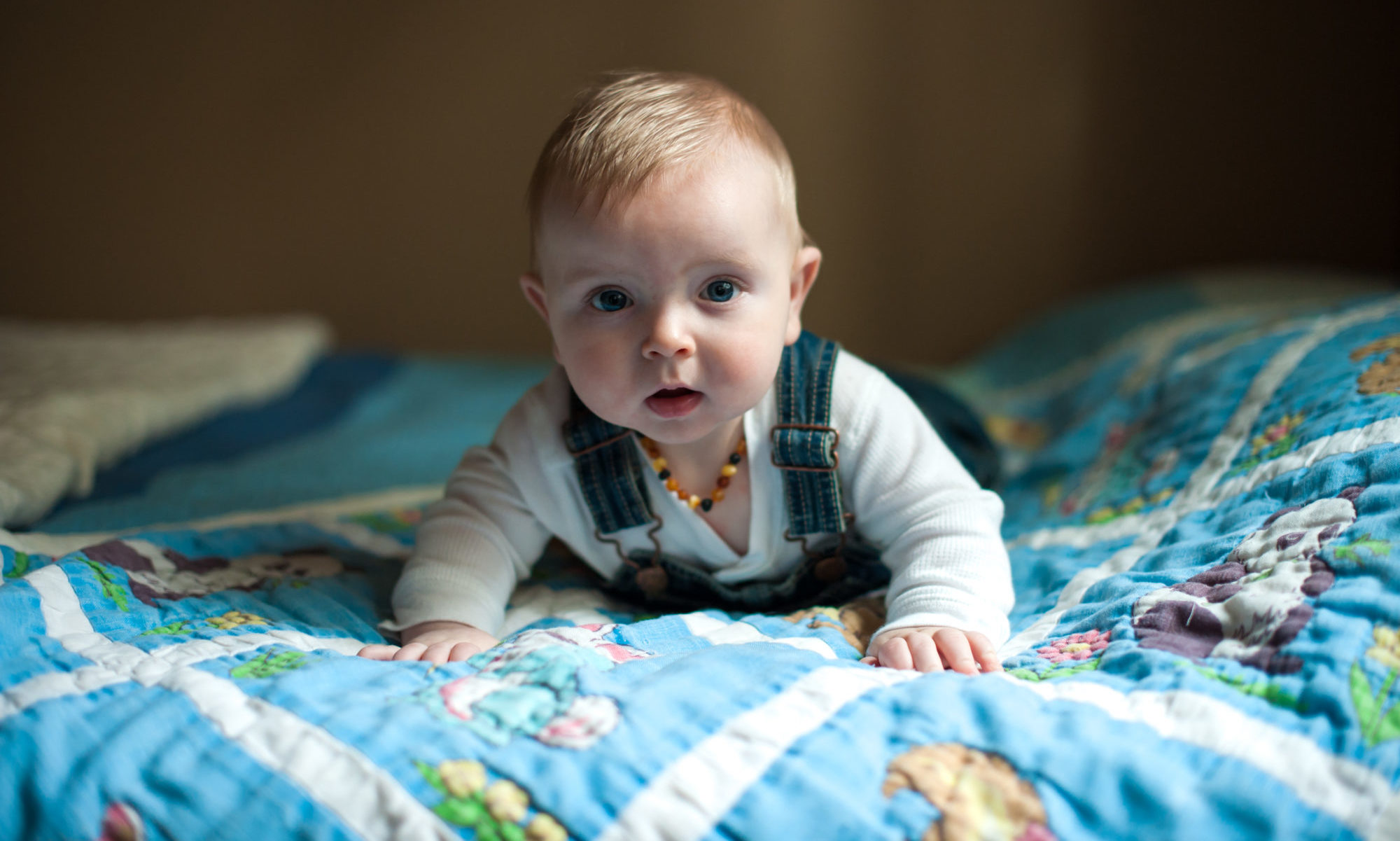
But the unmet need that I notice most in young children is the need for autonomy.  Children desperately need to be able to do things on their own and to choose their own path and luckily for you, there are simple things you can do around the house to support your child’s autonomy.

First, take a tour through your home in your mind.  Starting at the front door, do kids have a place to put their coats and shoes when they get home?  Is the place for coats and shoes easily accessible?  For children under five years (and for older children and even adults) the easiest place to put a coat is on a hook near the front (or back) door.  And to put shoes on and take them off, a child-sized bench to sit on is quite useful.

As you move through your home in your mind, consider whether your child has access to the things she needs.  Can she reach toys and books in the living room?  Art supplies, dishes, water and a snack in the kitchen?  Is there a stool in the bathroom that makes using the toilet and washing hands easy?  Can he reach the towel to dry his hands?

Each room of your home should have an activity for your child available in case he wants to be in the same room with you, and in case he doesn’t!  Continue reading “Autonomy is the holy grail of childhood”
Focus on the process, not the product

As many of you know, for the five years after college I was a preschool teacher in Montessori classrooms.  I was very intrigued my Maria Montessori and her methods, but what struck me most was her philosophy.  There are quite a few key Montessori philosophies that I subscribe to, but today I want to share one that’s near and dear to my heart.  Montessori said, “It’s the process, not the product.”

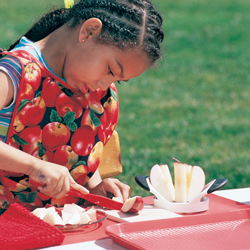
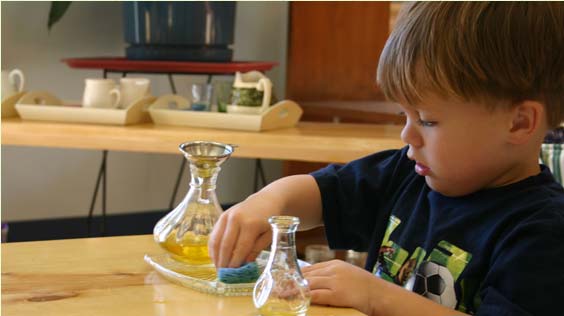
What she meant is that for young people, it’s the process of learning that is to be enjoyed and savored.  Too often we put the emphasis on our kid’s paintings, drawings, or little cut out shapes, but we forget that it’s the experience of painting, drawing, and cutting that matter most to our child’s development.

For children, it’s easy to enjoy the process because they haven’t yet been conditioned to value product over process.  You can see evidence of this in that many three or four year olds will spend time creating a piece of artwork only to forget it at school or toss it aside when it’s finished.  We are the ones who teach children to value their art by featuring it on the refrigerator or espousing it’s many wonderful qualities.  But is our value of product over process something we really want to teach our kids? Continue reading “Focus on the process, not the product”

The dangers of praise

Although we tend to think of praise as beneficial to kids, recent research has shown that certain kinds of praise are actually detrimental to young people.  When we tell kids they’re “good” the unintended effects are that children begin to fear being seen as “bad”.

Personally, I think all kids are good all the time.  They’re just easier or more difficult for us to deal with based on their behavior, but that doesn’t make them “bad”, just more challenging for us.  But if we tell kids they’re good or talented or smart, the surprising consequence is that they tend to freeze up and become afraid of being seen as bad or un-talented or stupid.

In one study I read, kids were divided into two groups.  Each group was given an easy puzzle to solve.  After they completed the puzzle one group was told, “You’re so smart!” and the other group was told, “Wow, you tried really hard on that!”.  Then they were offered the opportunity to redo the easy puzzle or to try a more challenging one.

The kids who were told they were smart chose the easy puzzle more often, probably fearing that if they failed, they wouldn’t be praised as “smart” anymore.  On the other hand, the group who were told they tried hard were eager to challenge themselves and often chose the more difficult puzzle.  After all, even if they failed, they would still get praise for trying, so there’s nothing to lose! Continue reading “The dangers of praise”

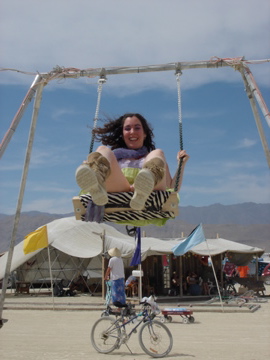
How Rocking, Spinning, and Swinging Your Kids Helps Them Pay Attention

Ever wonder why we have the impulse to rock babies to help them calm down?

Studies show that rocking, spinning and other physical movement through space helps children’s brain development and their ability to pay attention, by stimulating the vestibular (inner ear) system.

And here’s the thing, this works with both infants and older kids. It can also be a really fun way for you to cut lose and play with your kids.

So, the next time your little guy is about to lose it, check with him about whether it sounds fun, and then spin around with him in your arms, or take him to a nearby swing-set.

Even hanging upside down can produce vestibular stimulation. Just make sure he’s enjoying it, and not getting dizzy or upset. It never hurts to ask, “Is this okay?”

Believe it or not, when we get lots of motion through space (like on a swing, dancing, or spinning) it actually helps our senses work better. With some well-timed rocking or spinning, stimulation, your little dude could be settling down with his dinosaurs for some sustained play time.

In other words, you may get to shower today! Hooray!

So here’s the deal with vestibular stimulation: Continue reading “How Rocking, Spinning, and Swinging Your Kids Helps Them Pay Attention”