
Want a Kid Who Loves Math? Five Things NOT to Do and What to Do Instead

Do you want to raise a kid who loves math? Here are my top tips to produce the results you’re wanting.
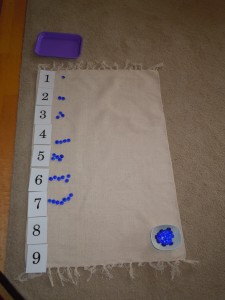

1. I did NOT pressure my kids to do math or to excel in math

  •  Instead, we played all sorts of strategic games like checkers, connect 4, chess, Pente and the like. These games build executive functioning skills like planning ahead, waiting patiently, adjusting to unexpected challenges when opponents move, and ultimately, problem solving skills. Spending time in our cerebral cortex practicing these skills in a low stakes game is much more effective, and more fun than trying to learn all of this on the fly as we move through our unpredictable lives.

    2. I did not drill them or force them to memorize facts.

  • Instead, I sent them to Montessori preschools, and implemented Montessori learning concepts at home. Later I helped found a public Montessori elementary charter school so that they and others could experience the beauty of a Montessori elementary program. We emphasize hands on materials for mathematical understanding. Beginning with counting and ordering objects by size in preschool and kindergarten, we move on to understanding place value, operations, fractions, time, and money work all with manipulatives for concrete understanding. Once that understanding is demonstrated through practice with the material, and then we move to more and more abstract materials and very large numbers, typically introducing the concept of one million in 2nd or 3rd grade. Students are moved to paper and pencil operations as they become proficient in the mathematical skills.

    3. I did not expect them to love everything I love.

  • I did imagine that my daughter would love to ride her bike, but she prefers running. I thought my son might enjoy climbing, but he loves mountain biking, and soccer. I learned quickly that wanting a child to enjoy something they don’t is a fruitless effort. Instead, I learned to follow my child’s interests, and to nurture in them their own sparks of curiosity. I certainly never expected either of them to have the love and aptitude for mathematics that they both share. My husband and I are more science nerds than math geeks, but we’ve never shied away from sharing our own scientific interests and curiosity with our kids. Now that they are 10 and 14, we can discuss topics in a new and in-depth way that allows us to see into our children’s thought processes.

    4. I did not tell them how important math is.

  •  Instead, I showed them everyday applications for math by asking them to help me figure out how long it would take us to do all the tasks on a list or calculate how much longer until the library opened. I allowed opportunities for fun facts about math or life driven applications of math to genuinely interest me and I allowed them to join me in that interest, or not. I often spoke my own process out loud and as my children learned and grew, we could talk with each other about how we each took different mathematical routes to get to the same result. Discussing mathematical concepts that are interesting is a great way to get kids to love math. 
  •  It was helpful that I knew that names of the Montessori math materials at school because I could say things like. “You know the multiplication bead board? I think we could use that to solve this problem. Multiplication is sets of numbers, remember?” And my kids would instantly respond, “Oh yeah! Like 4×2 is 4 twos or 2 fours.” It’s quite remarkable how much math we use in our lives. We use math for baking, accounting, construction projects, hanging art, scheduling appointments, staying within a budget, and so much more. Now my daughter loves to bake, so she loves math even more!

    5. We do not have off limits topics with our kids.

  • Our children are human beings that deserve respect, and not to be protected from life, or death. We are extremely fortunate to have had such little tragedy in our lives so far (our kids ACES scores are lower than ours!), but we have always had an open dialogue about everything from death and dying to sex and our reproductive systems. We talk about dark, sad and difficult things like drug addiction, war, and cancer as well as inspiring and exciting things like new projects to help reverse some of our damage to the natural world. We answer their questions and tell them the truth as we understand it when there’s not a simple answer. I think this communication style is a big part of the reason our kids still talk to us about their lives. I’m certain that having this with my own mom is the only reason I felt safe to call her to come pick me up from a high school party where there was drinking.

    All of these choices have contributed to a home in which talking about academic topics is the norm at home. Yesterday I overheard my kids discussing some of their favorite novels and some of the unresolved plot lines and inconsistencies in many fictional stories, especially science fiction. The night before my kids were discussing pi and why it is an irrational number. 

    I hope you found this information useful in your own parenting journey!

Pre-parenting 101 Agile Parent Podcast!

Hey there! I recently had a lovely conversation/interview with John and Jahaira about their plans to get pregnant and become parents. We talked about early childhood development, sustaining a nurturing relationship with a partner before baby arrives, parent/child dynamics, mindset, and cultivating critical thinking in very young children. Also, we had fun and discussed how we might handle it if we were to see a child being spanked in a public place. Their podcast will be ongoing, so I hope you’ll check it out!

You can listen on itunes here:

https://itunes.apple.com/us/podcast/pre-parenting-101-shelly-birger/id952485811?i=334079282&mt=2

or on Sound Cloud here:

https://soundcloud.com/agileparents/pre-parenting-101-with-shelly-birger-phillips

Or you can go directly to John and Jahaira’s website and listen here:

http://www.agileparents.com/1/

Have a great week! Warmly, Shelly


4 Secrets to Mindful Giving During the Holidays

Guest Post by Megan deBoer

As parents, we are often filled with conflicting desires during the holidays: we want to satisfy our children’s wishes, we want to make the holiday magical, we want to create our own family traditions all without causing financial stress and unwelcome credit card bills.  And so we try to plan…

Yet despite our best planning, there can come a moment during the whirlwind and heightened emotions of the holiday season when we find ourselves making impulsive, reactive, and unconscious spending choices.  We can be swept up in the mood, the beautiful display, the “deal!” and the hectic pace of it all.  It is easy to loose our bearings.

I have found that in moments like these I need some grounding.

To ensure that you are making mindful choices, run the following assessment when considering the purchase of a gift.  If the questions cannot be answered on the spot, it is important to pause, put the item on hold, possibly leave the store, and give yourself the time – and space – to come to a decision that feels right.  You haven’t said no yet, you are simply exploring a new process of mindful spending!

Assessing a mindful GIFT

GENEROUS–

Is this gift Generous in spirit?  Thoughtful giving is a true art.  The amount spent does not reflect your generosity by itself.  Young children are easily delighted with something that engages their imagination.   Our adult value scale does not apply.

INTENTION–

What is my Intention in giving this gift?

  • Is this something I always wanted as a child but never received?
  • Am I worried that if my child doesn’t receive X that they could experience disappointment?  Is that uncomfortable for me to imagine?  Will I experience disappointment if I cannot give this to my child?
  • Is it uncomfortable for me to compare my gift to what others will be giving?  To what their friends will receive?  To what I have given in the past?
  • Am I afraid that what I have already gotten won’t be ‘enough’?
  • Will this gift satisfy a long awaited wish for my child?
  • Will this gift inspire my child – who they are right now – and add joy to their life?

FAIR –

Is the cost of this gift Fair to our family’s resources?  Does it fit into my spending plan?  If not, is there a creative way that I can give this gift (or an alternate) responsibly?

TIME —

Will my child have the necessary Time – and space – to enjoy this gift?  Our children are given gifts from many family members – for birthdays and holidays.   It can be overwhelming for them to receive more gifts than they can actually enjoy in their available time.

We can justify most spending – especially to our children – if we craft the right story to tell ourselves.  But giving mindfully means we give generously, with clear intention, in a way that is fair to our resources, and honors the time and space our children must have in order to receive and enjoy the gift.

Our gifts have the amazing ability to become a symbol of our love in tangible form. Sometimes they feed our souls and sometimes our bodies, like the Manly Man edible arrangements a friend of mine received last year. Our gifts can also hold unintended and unconscious messages.  Our unconscious spending does not serve us, or our children, in the way we may hope.

This season, give mindfully and trust that your love is the purest gift – in tangible or intangible form.  Exaggerate the magic, the mystery, and the endurance of love in your celebrations.  Share your own joy abundantly with your children and spouses in the traditions that give meaning to you – this is a gift that your children will pass to your grandchildren, and all the children who will come after them.

May you have a joyous holiday season, mindfully celebrating and sharing all the joy you have in your life!

Megan deBoer is a certified Financial Recovery? Counselor, and mother of two rapidly growing girls.  She supports couples and individuals across the country as they craft a healthy relationship with their money.  Visit TendedWealth.com to find out more.

7 Destructive Parenting Myths

As a parent coach, I hear all sorts of thoughts and ideas that just don’t hold up to the current research on child-development and attachment, but some of these myths have been handed down from generation to generation for so long that we can forget to question them. Here are the 7 parenting myths that bother me the most:

1.    Kids Can’t Be Trusted

In my work as a preschool teacher, I’ve worked with hundreds of children and I’ve never met a child who wasn’t trustworthy. Children will rise to our expectations of them and I’ve noticed that when I expect them to follow through on their commitments and do what they say they will, I get excellent results.

If you’ve been thinking that your child isn’t trustworthy, ask yourself how you can support the innate trustworthiness inside every child. You could try making it easier for your child to keep his commitments by setting up systems that remind and help, instead of blaming or shaming him when he makes a mistake. After all, everybody makes mistakes, it’s a huge part of learning!

2.    Discipline Equals Punishment

I sure wish these two words weren’t as conflated as they are in our culture. Punishing children is both inappropriate and ineffective. Discipline on the other hand is absolutely essential. Self-control, self-discipline, and self-determination are the result of appropriate and compassionate discipline.

Discipline means setting clear boundaries, and being flexible within those boundaries. It does not need to include threatening, coercing or constantly forcing our will upon our kids. And it certainly doesn’t require overt or covert physical or emotional punishments.

Yes, time-out and counting to three can be used as punishment. The tone of your voice and the energy you’re projecting can make a huge impact on how your communication will be received. I’ve seen moms use innocuous phrases to threaten and just the other day I realized that something I said to my daughter could have been a threat if I’d used a different tone.

I think that mutual respect is the key to effective discipline. So this week, check in with yourself about the kind of energy your projecting and do your best to express your highest intentions, rather than getting stuck in the muck of using threats, coercion and punishment to get kids to do what you want.

3.    Breastfeeding is Embarrassing

Breastfeeding is one of the most important and beautiful gifts we can give to our infants, if we’re able. It is not embarrassing or sexual in any way to nurse a baby or toddler. Breastfeeding is without a doubt the best nourishment for babies. It also provides the bonding and comfort that infants need in order to develop healthy relationships and emotion regulation skills. How is any of that offensive? Yes, breasts are involved. In fact, news flash: breastfeeding is the PRIMARY FUNCTION of breasts.

Sure you can try to use a cover, but my daughter would never accept a cover, she found it far too distracting. Yes you can try to nurse at home, but sometimes your baby will be hungry when you’re not at home. Yes, cars are more private, but less comfortable, and there were times when I nursed in a car that I felt like I was hiding. I think it’s time to normalize breastfeeding again. Surely an all natural food source should not be denied to our children because other people are uncomfortable with the sight of a breast.

4.    Co-sleeping Means No More Sex

Without getting too graphic, let me just say that I have co-slept with my daughter for the past three years and my husband and I are having the best sex of our marriage. And no, we DO NOT have sex in the bed when our daughter is there.

Instead, I’ve co-slept with her in HER bed and we’ve reserved our bed for adult time, except for the occasional morning family snuggle. There are lots of ways to arrange co-sleeping. None of them need to involve sex in bed with a child present and all of them allow for lots of fun sexy adult time in places other than where your child is sleeping.

5.    It’s Inappropriate to Show Emotion In Front of Kids

I feel really sad when I think about this one. It’s crucially important for children’s emotional development and wellbeing that the adults around them model emotion regulation and emotional vulnerability. This lets kids know that they’re not alone in their emotional experiences and it helps them learn how to cope with their own big feelings.

Unfortunately when we hide our emotions from our kids, they end up feeling invalidated and learn to suppress their emotions too. Since I had to re-learn how to feel my feelings after decades of repressed emotion, I’m really hoping my daughter doesn’t have to go through the same process.

I do think it’s important to be responsible with our emotions when we’re with our kids. And to me, that means showing and sharing my emotional experience without directing my feelings AT my child or blaming her for my experience. It also means reassuring my daughter that she’s not the cause of my upset and telling her about what’s going on for me in peaceful language that’s developmentally appropriate.

Studies have shown that children can handle exposure to intense emotion without long-term negative effects, as long as they also experience a de-escalation and resolution of the emotional outburst (Nurture Shock by Po Bronson).

6.    Stay at Home Moms (or Dads) Don’t Work

Um, excuse me, but stay at home parentss are some of the hardest working people I know. In fact, often times I’m grateful for the diversion of working for cash because one, it’s painful how little our culture values homemakers’ work and two, being with young people all day every day is enough to make anyone lose their marbles. When I get to work with adults doing coaching I get paid for my time AND I get an adult social interaction out of the deal.

When I’m home alone with my daughter, I giver her attention and do the laundry and the dishes and clean the house and cook and clean up the kitchen after a meal and play with her and put her to sleep for her nap and rush around doing more cooking and cleaning and straightening and sorting until she wakes up and then I do an art project or create an activity or take her to the park or a museum but before we leave I pack a bag with extra clothes and snacks and water and alternate shoes depending on the activity and a sun hat and it. Just. Never. Stops.

And by the end of the day I’m completely exhausted and the house is a mess again and I didn’t earn a dollar. But I did get time with my daughter, some of which was fun and some of which was weirdly frustrating. And now I’m ruminating about the tone of voice I used that wasn’t kind and the thing that stranger said to my kid. Any of that sound familiar?

Let me just say it one more time in case I wasn’t clear, stay at home moms are the hardest working people I know. Your complete dedication to your children astounds me. I am in total awe that you can be with them from 6am to 8pm day in and day out without a break and without completely losing it 80% of the time. I commend you, appreciate you, and I want you to know, I see you. Even in the moments when you’re not with your kids, you’re thinking about them, planning things for them, and preparing to be your best for them. All I can say is WOW. And THANK YOU. Your children benefit immensely from your devotion and I’m so grateful for the work you do.

 7.    Taking Care of Ourselves Is Selfish and Hurts Kids

Quite the opposite actually, we ought to be the adults we hope our children will become. If we want our kids to take good care of themselves, guess what? We have to model the kind of self-care that will help us maintain a healthy and happy life. That means we MUST have friends. We need social interaction in order to be well and enjoy life as social beings. We also need time alone.

It is absolutely crucial that we do the things that make us happy and at ease so that our kids can experience that joy and ease too. Spending time in nature contributes to wellbeing by lowering your blood pressure.

I highly recommend that every woman participate in some type of women’s circle. Ideally you’d have a group of women that you feel comfortable sharing with and who you view as chosen sisters. The women’s circles I’ve participated in have been so incredibly supportive and life affirming. Every single time I participate in a women’s circle I’m glad I went.

Although I’m sure there are plenty more destructive parenting myths, these are the seven that I most want to dispel. On a more positive note, never forget that your connection with your kids is the most important part of parenting. As long as you’re reaching out for it, open to it, and working to repair any damage that’s been done, you’re doing a fantastic job as a parent and as a compassionate, caring, human being.

Have a fantastic week, Shelly

Guest Post: Finding Contentment in the Midst of Chaos

Guest Post by Heather Chauvin

I used to believe that parenting was this ‘life sucking’ transition where you no longer can do anything for yourself and only give give give.

That parenting model wasn’t working for me.

I had no idea what I was getting myself into but I knew something needed to change.

The scariest part of it all was, “how do I change?”

It was about 4 years ago when I was introduced to the concept of ‘mindfulness’. I’m not talking about going to yoga everyday or sitting on a cushion meditating for an hour in the morning. I’m talking about mindfulness as a lifestyle. Becoming aware of HOW my personal beliefs affected my thoughts, actions and my reality.

I was miserable and it was affecting my children (and my marriage).

Happiness. Confidence. Passion. Excitement. Energy. I so badly wanted all of these things, not only for myself but also for my overly anxious child. But how do you get all of these things while raising awesome kids?

How To Change Old Habits And Find Contentment During Chaos

1) Let go.

The mind plays tricks on us and paints unrealistic expectations of what life ‘should’ look like. When we listen to these expectations and we do not meet them, we get overwhelmed, frustrated, angry and sometimes guilt consumes our thoughts. Let it go. Let go of the unrealistic expectation that your house needs to be cleaned, your child need to act a certain way or that you can’t take a nap during the day. Your body needs sleep, take them often!

2) Be curious, not judgmental.

I’m a huge fan of goals but don’t take them too seriously. Life isn’t meant to be planned to ‘perfection’, there is no such thing. Expect the unexpected, always question ‘why’ and don’t settle for the cultural norm.

3) Take action.

Leadership was one of skills I didn’t know I was missing 4 years ago. I was so use to being miserable and expecting someone else to ‘fix’ my problems that I had to recondition myself to take action (if I wanted something to change). You always have a choice. Are you going to take action or wait until things progressively get worse?

4) Breathe.

You have lungs for a reason, use them. Often times our mind starts spinning and we don’t know where to start. Stop what you’re doing. Feel what you’re feeling and breathe through the discomfort.

Parenting is a journey just like anything else. There is no right or wrong. Every child is unique. Every family is different. Trust that you know what you’re doing and keep at it until you find relief and can wake up everyone with a smile on your face

BIO:

Heather Chauvin is a mental health and self-esteem expert who has made it her mission to enhance the lives of women and children through conscious living. Heather has a Bachelor of Social Worker Degree and wide variety of continuing education certification in the mental health and holistic sector. Heather also carries a decade of experience working with many diverse populations locally and abroad. Heather leads dynamic training programs that teach both adults and children to succeed in life and accomplish anything they put their minds to.  Her unique life experience and professional trainings gives Heather a one-of-a kind approach to personal growth and development. You can find her at http://heatherchauvin.com/