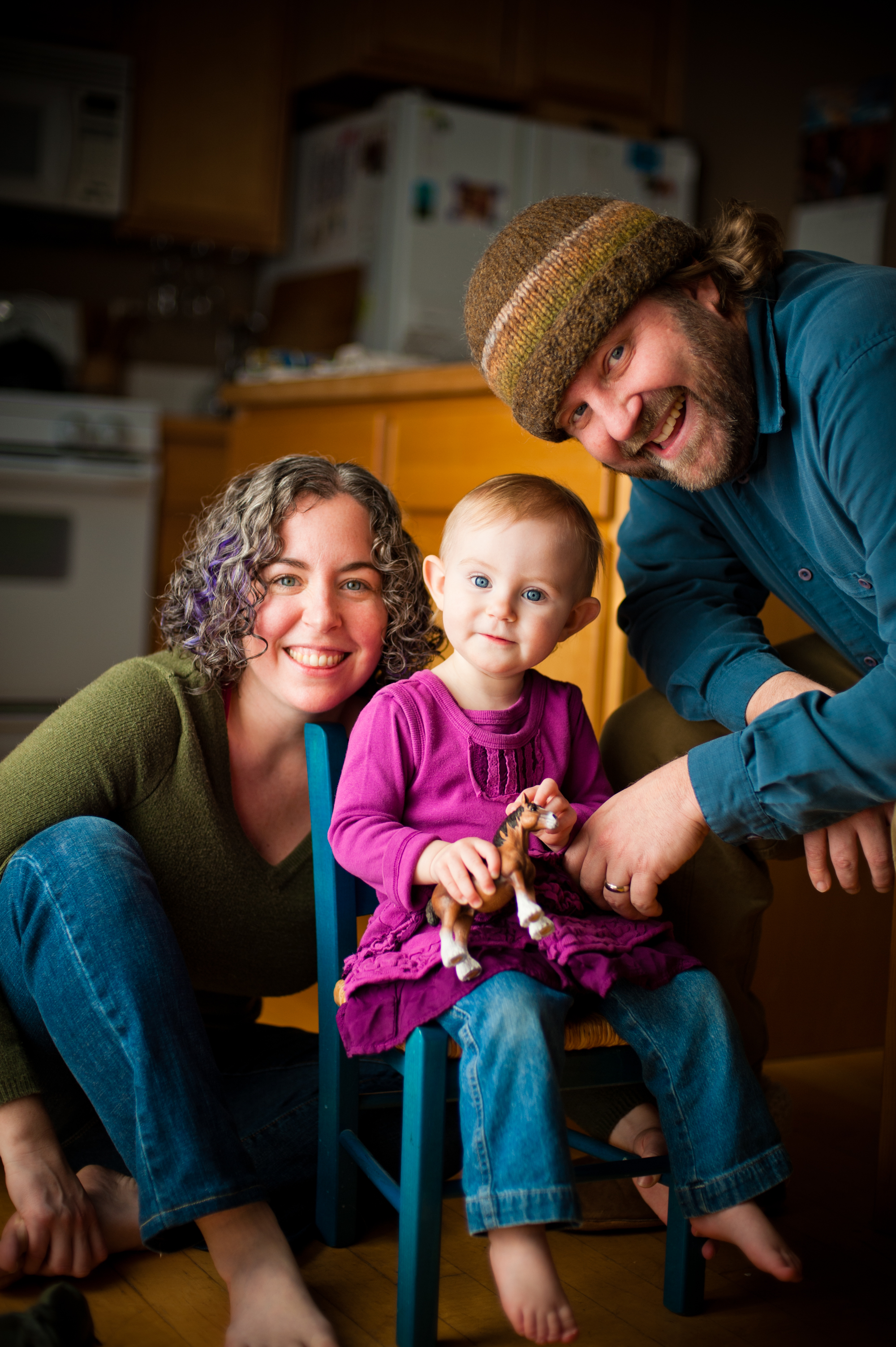
My child is scared of so many things…

Wow–that was an experience–recording my first video blog! Apparently I have a bunch of technical things to learn. Let’s see how much better my second one gets.

But enough about me. Karin, one of our readers, had a question about responding to her child, who gets scared of lots of different things. I loved thinking out loud about this. Here’s my response:


This is just a beginning. You can hear Shelly and I talk at length on a broad range of topics involving feelings, ours and our children’s, in our new audio program, Perspectives on Feelings.

Please let us know what you think!

Warmly,

Jill

What to do when they’re being demanding

Our first video blog!

Hey there!  I’m so excited about my very first Awake Parent video blog!  In today’s blog I’m answering a question from my friend Marcella, who’s having some challenges with her stepson.  Sometimes he has a “demanding attitude” and Marcella is ready to transform this irritating behavior.  Oh!  And prepare yourself for our new audio program “Perspectives on Feelings” which will be available in August!  More info coming soon about that. First, a quick video on dealing with a demanding attitude…

I would love to know what you think of my video blog.  Please leave your feedback and comments below so that we can offer you the best, most helpful parenting blog ever.  And, if you’d like to share about your own experiences, we’d love to hear them.  Lastly, if you have a specific question you’d like us to write about or record a video on, please email us!

Love and hugs,
Shelly

Listen to your body

I’ve been wanting to be a mom for as long as I can remember. And I’ve prepared in all sorts of ways for my future children. After I graduated from college I realized that I wasn’t very patient, so I went to work at a preschool (yeah, I love a challenge). I knew that 3 year olds were difficult for me to be with, so I headed straight for the 3-4yo classroom to practice patience and learn how little people learn best. More recently I was a nanny for several amazing boys, practicing newborn care, learning to handle sibling rivalry, and generally practicing for motherhood.

But now that the time for motherhood is getting closer, I’m getting a whole new education. I’m learning about my body. I had no idea how much I didn’t know about my own body, its cycles, its hormones, its fluids. I’m realizing now that my body is constantly speaking to me about all sorts of things all the time.

I’ve started reading “Taking Charge of Your Fertility” by Toni Weschler and this book is like the bible of the female body. Did you know that just by charting your waking basal body temperature you can know almost immediately if you’re pregnant? I mean, WELL before you miss a period. You can also know when you’ve ovulated, when you’re experiencing menopause, and how long your actual cycle is (instead of assuming it’s the average 28 days).

All this knowledge can really inform and educate us, and I can’t believe that it took me so long to discover it! It leaves me wondering, what else have I been missing out on? I’ve been so focused on child development, conscious parenting, and personal growth, that I’ve forgotten about my own body!

Sound familiar? Are you so wrapped up in the lives of your kids, your husband, and your best friend that you’ve forgotten something as simple as connecting with yourself and your own body? Well, I’m here to remind you to take a moment and check in. Maybe that looks like recording your basal body temperature and the position of your cervix, or maybe it’s just getting back to that yoga class. It could be as simple as taking the time to prepare yourself a healthy and delicious snack, instead of eating the leftover cookies in the bottom of the diaper bag.

I’m better about tuning in to my body than I used to be. When I was a preschool teacher I was constantly fighting off a cold or flu of some kind. I felt pressured to go to work even when I wasn’t feeling well because the administrators always had a hard time finding a sub. So, I would push myself and push myself until I collapsed. I was usually out for several days at that point.

Now that I’m self-employed, I’ve learned to listen to my body more. When I feel my immune system kicking in trying to fight something off, I take a break, I rest and pretty soon I feel better. I haven’t had a full-blown cold or flu in several years now. And I owe it all to listening to my body.

The same goes for injuries. I used to injure my shoulder or back or neck at least once a month because I thought I could lift more than I could safely, or I thought I “should” be able to carry the groceries all in one load. I was in too much of a hurry to listen. But then I’d pay the price. I’d be laid up for days, unable to use my arm or popping pain pills. Now I check in with my body every time I’m about to lift something heavy. “Is this OK?” I’ll ask. Don’t laugh, I actually have this conversation inside myself and sometimes my body says, “Stop! Don’t do that, find another way.” And again, with the guidance of my intelligent body, I haven’t felt the need to take any pain medication stronger than ibuprofen in over six years.

Now, I’m not saying that pain medication doesn’t have its place. You might hear your body say, “please give me some relief!” My point is not whether to take medication or not, it’s just to listen to the innate wisdom of your amazing body. By doing this, we also model this kind of awareness for our children. We can ask the same questions of them, and really listen and tune in. (More on that in another blog!)

So, take some time today and everyday to check in with your body. Remember, it’s trying to tell you something right this very minute, but we have to take the time to listen. I’d love to hear about your own experiences of tuning in to your body. What works? What hasn’t worked? And why do you think it’s important to take time to check in?

Sending big hugs, Shelly

Five keys to Conscious Parenting

The word “conscious” is bandied about quite a bit these days.

As a culture, it seems many of us are reaching toward greater awareness, trying to “wake up” and, if not transform, at least be aware of where we are in relation to where we want to be.

I Googled “conscious parenting” just for the fun of it, and aside from the giddiness of finding our site second on the list (thanks, Colin!), I was interested to see so many people using the phrase.

I thought of how so many of my friends are, or have been in therapy. The main issues I hear people dealing with are their pasts, especially their relationships with their parents, and how those past events impact the present: People say things to me like, “My dad never really listened to me;” or “My mom imposed her will on me so much, I never learned who I was;” “No one ever asked me how I was doing;” “My parents divorced, and I never found out what really happened;” “One of my parents drank, the other tried to cover it up;” Or in extreme cases, “I was hit/neglected/abandoned/sexually abused.”

Whether mild or extreme, we probably all know someone who had things happen to them in the past that they don’t want to repeat in the present. One of my favorite quotes is from Pam Leo, who said, “Let’s raise children who won’t have to recover from their childhood[s].” But aside from managing not to repeat some our parents’ biggest mistakes, how do we know we’re getting where we want to go?

Here are what I see as some of the keys of Conscious Parenting, things we can keep in mind when we wonder if we’re on the right track:

1. A sense of overall forward motion.  I may not be better at this today than yesterday, but six months from now, you’ll see a general upward trend in the graph of my parenting skill. Sometimes I might need to step back from the moment to see this.

2. The occasional pause to reflect. Rather than just keep moving, I actually stop and reflect, with compassion, on what’s happening.

3. An open mind and heart. I may have said or done thirty-seven things today I wish would have been different, and, I will listen to how this has affected others, and acknowledge those messages. I am human; I am doing my best; I am open to hearing how I have impacted those around me.

4. Doing what we can, ceasing to stress about what’s beyond our control. This insight is at the heart of much stress management thinking, and is also the message of the serenity prayer that is the credo of Alcoholics Anonymous. If we focus on what’s possible, and let go of what’s out of our reach, suddenly everything seems more manageable, more peaceful and less stressful. Try it!

5. Appreciate ourselves, our children, and everyone who contributed in any way to making us who we are. I appreciate myself as a parent, recognize no one can do this job perfectly, and choose to hold myself in a positive light, just as I strive to do with my children. Gratitude, when we remember and choose to feel it, has a way of putting everything else into a more calm and manageable perspective.

Full disclosure: This post may really be a message to myself. Four days ago, my son’s dad moved out. Because I had so much time to prepare, and because we lived together for a year and half after we ended our marriage, the transition has been just about as smooth as it can be. I feel surprisingly light. The family I made didn’t turn out as I planned, and I still feel some sadness about that. I also feel grateful for how we’re arranging ourselves in the aftermath. Yes, there were many things I couldn’t control.

But I am no longer “going through a divorce.” I am on the other side. I am embracing a new phase. And so is Cainan—he’s beside himself with joy that his new brother is finally in the same city. Like so many children (consciously or not) he wants to bring everyone together—and he does! When I stay focused on appreciating everyone, including myself, in this new phase, life looks pretty darn bright. It took a lot to get here, and I embrace that, too.  Today, anyway.

How about you, what helps stay conscious about being the kind of parent you want to be?

Please share your thoughts below.

Warmly,

Jill

The power of your attention

Working in a Montessori Preschool classroom wasn’t easy, but I love kids and I found a way to enjoy myself in the midst of 25 3-5 year olds. One of the most useful tools I had was the power of my attention. I noticed everything–and the kids respected me for it. And, I didn’t just offer up copious praise at the drop of a hat either. When I gave appreciation for something, the kids knew I really meant it.

I required levels of cooperation, consideration, and polite manners in the classroom out of necessity. If I let things go too far in a certain direction, I could have a room full of upset kids and no way to console them all. I was there to help the kids maintain order, and have a constructive day of fun and learning.

As a teacher, a lot of my job was to be a leader, an example, and a director for the kids in my charge. Directing can seem forced or authoritarian, if you feel anxious about it, but I’ve found that when I’m calm, centered, and clear about my direction, children often seem relieved and excited to contribute in the ways I’ve suggested. Structure can actually provide freedom, knowing someone else is providing direction and containment.

When it’s time to clean up I feel open and unconcerned as I let the kids know that there are several things that I’d like to see happen in the next hour: First, I’d like all the tables to be scrubbed, then I’d like the floor to be swept, and finally I’d like every child to look around the room for three things that are out of place and replace them to their “homes.” I ask for volunteers, get them easily and the children quietly go to work. Now I observe the children, and without interrupting their fun, insert helpful comments or warnings about possible spills or dangers. But I trust them to complete the tasks easily and independently.

Now, suppose a child is resisting, and I REALLY want this specific child to help. My most successful strategy is to clearly explain what I’d like to have happen, make a clear request and then put my attention on something else–that way the child doesn’t feel pressured, but is able to go about starting the task, without being stared down (sometimes your attention can be overwhelming for kids!).

Maybe she’s not quite ready to start the work, she’s still feeling resistant. So in five minutes I might go up to her and say quietly, “Hey, I just want to remind you about the sweeping- I’d really like that to happen before story time, do you think you’ll be able to get to it? Is there any help or support you need to accomplish the task?” By offering our help, sometimes we can get to the heart of the resistance. I’ve heard, “I can’t do it!” a LOT of times, which to me sounds like, “I need some help and reassurance!” So, remember to be patient and tune in to the underlying reasons why Julie might not want to clean up her mess.

The most visceral experience I’ve had of the power of my attention was one day at circle time. I was sitting at the front of the room and waiting patiently for the children to sit down and quietly fold their hands in their laps for circle. As I looked around the room I saw a few children who weren’t sitting and were instead bothering their neighbors, talking loudly, and moving around the room. I felt flustered, frustrated, and out of control and I began to ask them each to sit down.
“Frank, please sit down, I really want to read the story!”
“George, can you please stop bothering Nate?”
“Lucy, please put down the pencil.”
But the more I focused on the kids who were contributing to chaos, the more chaos ensued. Pretty soon half the kids in the class were running around the room talking loudly.

And then I had an “Aha!” moment. I realized that I had been focusing on what I didn’t want! I looked at the children again, but this time I only paid attention to the kids who were sitting quietly and ready for circle time. I offered my heartfelt appreciation to them.

“Jose! Thank you SO much for sitting so nicely on the line! I really like the way your legs are folded and your hands are placed in your lap. Thank you for showing me that you’re ready for the story.” And, “Sophia, it looks like you’re ready for story time too, I’m especially appreciating how careful you’re being to keep your hands to yourself, thank you!” As soon as I shifted my attention to what I wanted, the energy of the room changed. And within a minute I had all 25 kids sitting quietly on the line, ready for circle time.

I’ve never forgotten the lesson those kids taught me. When I pay attention to what I’m enjoying, I get more of it! But the reverse is true too–when I pay attention to what frustrates and annoys me, I get more of that.

So, this week, I invite you to focus on the positive, pay attention to what you appreciate and let the other stuff slide by–if only for one week. But most of all ENJOY yourself!

I’d love to hear about your experiences of the power of your attention, please leave your comments in the box below.