5 Ways Bringing Montessori Home Makes Life Easier

There are lots of reasons why I love Montessori education. It’s respectful, holistic, intellectually and socially stimulating, and child-directed. But one of my favorite things about Montessori is how much easier it is to be an adult spending time with children in a Montessori environment than it is in most any other environment. Here are the top five reasons why bringing Montessori philosophies into your home will make your life much easier.

1)   Cooperation and community mindedness are built in

In the Montessori classroom the children are a community. Everyone works together to keep the environment clean and organized. That means that when someone accidentally spills hundreds of tiny beads all over the floor, all the children in the immediate area gather around and help clean up the mess. Each child is also responsible for cleaning up his or her individual work before choosing a new activity.

By bringing these simple rules and philosophies into your home, you’ll help your child experience consistency, learn responsibility, and best of all, your floor won’t be completely covered with 25 different toys at a time.

Instead, your child will learn to get one or two items out at a time and then joyfully put his work away before getting out something else. Establishing these rules does take a little bit of extra work for you at the beginning, but once your kids are in the groove, it won’t take much effort from you to keep the toys off the floor and on the shelf where they belong (note: you do have to provide the shelf).

2)   Cleaning and cooking skills develop early

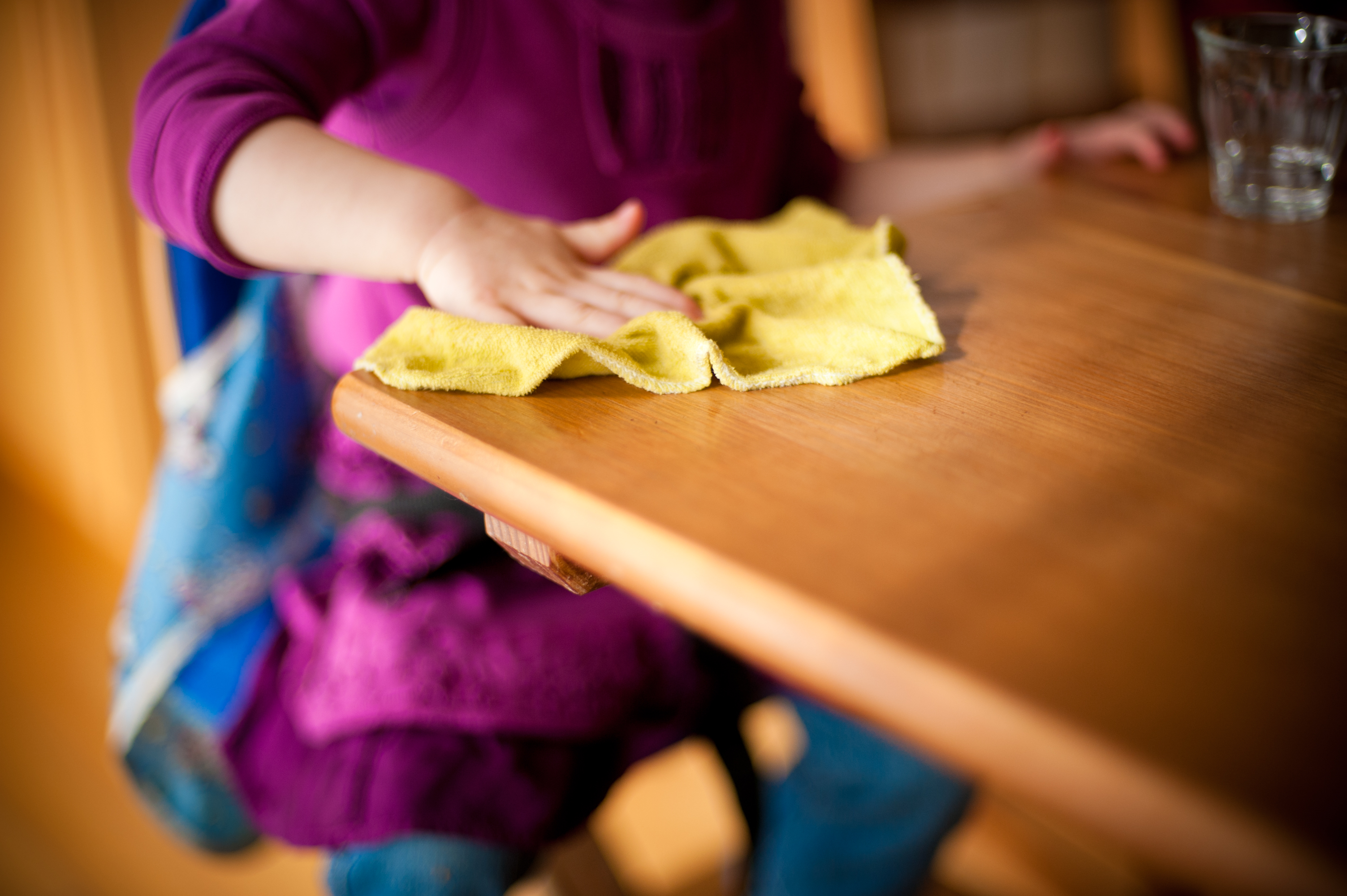
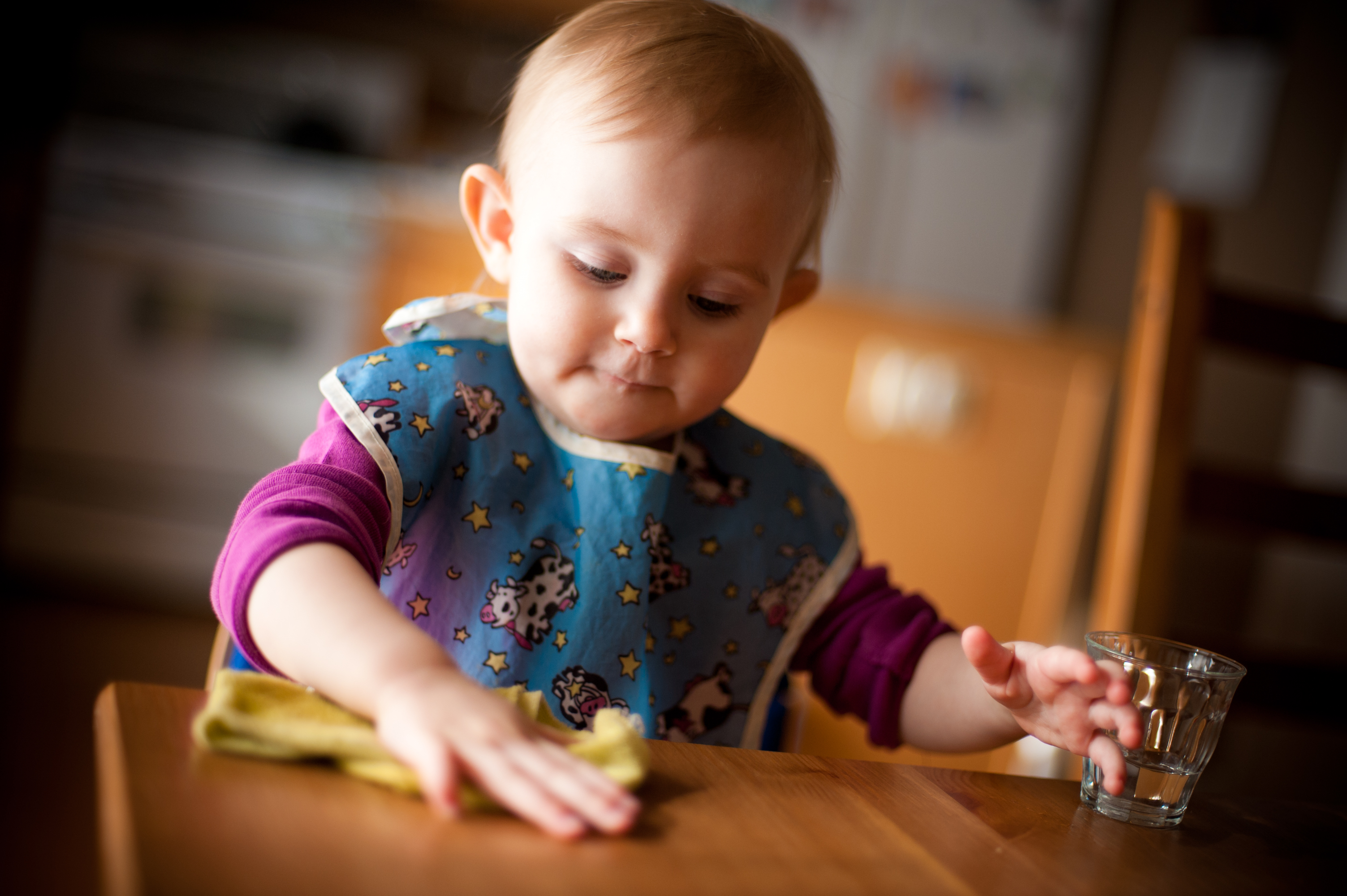
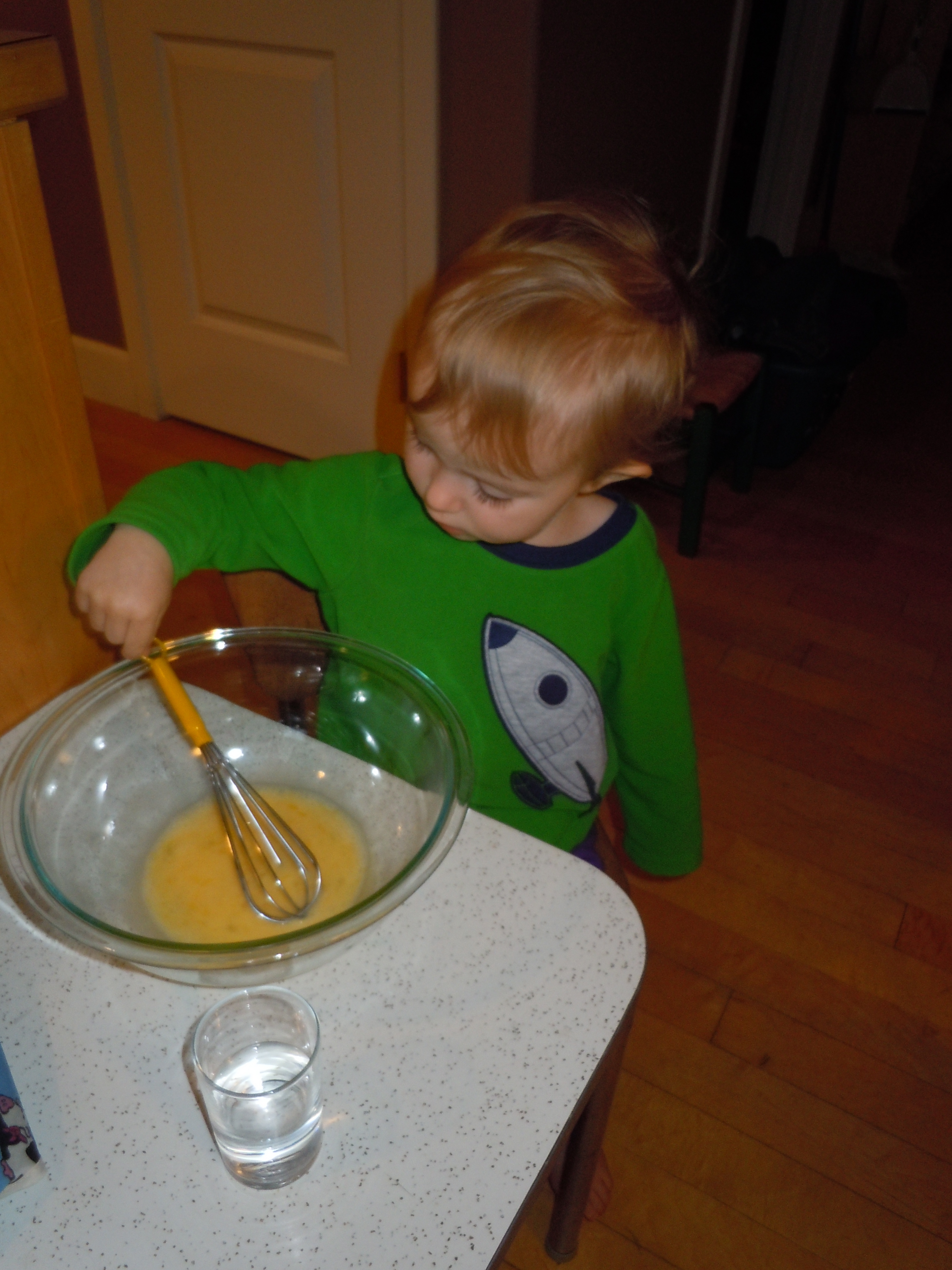
Children also learn to sweep, dust, mop, wash a table, and use a sponge at Montessori school.  They also learn to pour, use tongs, cut vegetables, peel an egg, and much more. These skills easily translate to home, all you need to do is invite your child to participate in household tasks and before you know it, you’ll have an awesome little helper on your hands.

Child sized cooking and cleaning tools help kids engage in these tasks easily. And as long as you’re modeling joyful cleaning and cooking yourself, your kids will happily join in the fun. We have a child-sized duster that gets tons of use at our house.

3)   Self directed play and learning give you a breather

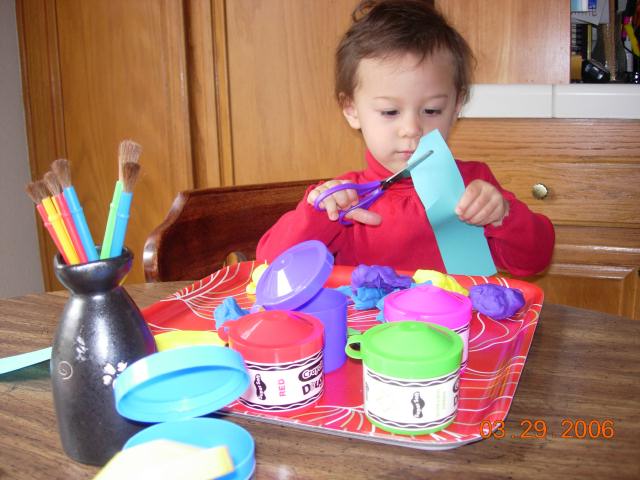
One of my favorite things about Montessori education is its emphasis on self directed, individual work. By providing a shelf full of choices and a rug or table to contain her work, my daughter will happily choose activities and play independently for hours a day.

Yes, some kids will have more or less success with independent play. There is definitely a personality aspect to attention span and willingness to explore the environment alone, but these skills can always be developed further through practice. And wouldn’t it be nice to be able to sit back and read a novel while your child occupies himself?

4)   Care of the self is commonplace

Young children love to develop skills that allow them to be more autonomous and independent, especially when it comes to self-care like washing, brushing, dressing, and using the toilet. Montessori practices encourage these efforts by providing low mirrors, child sized tools, stools, hooks, and other aids to help children become successful at these important tasks as early as possible.

That frees you up to focus on other things while giving your child a healthy sense of accomplishment. So, instead of washing your child’s face, give her a cloth and ask her to go look in the mirror and wash her own face. Encourage your toddler to learn to undress and your older child to dress himself. Some of these tasks may be challenging at first, but overcoming challenge is an incredibly useful skill for kids. And just imagine how much time and effort you’ll save when your child consistently puts on her own shoes and coat!

5)   Peace education promotes harmony

Peace education is an important part of the Montessori philosophy. Maria Montessori worked tirelessly for world peace in her lifetime. By introducing the concepts of peace, effective conflict resolution, and empathy for others, children build social and emotional skills that will benefit them for their entire lives.

By bringing these ideas home, you can encourage sibling harmony, inner peace, and practices that will promote a peaceful home. For instance, there is no yelling in the Montessori classroom, instead, teachers approach children individually to remind them to use a quiet voice. This promotes a peaceful environment that is more conducive to learning and concentration.

Most classrooms also have a peace table, peace rug, or other such space specifically designated for meditation, conflict resolution, and other peaceful activities. At our house, we have a lavender filled eye pillow that is our “peace pillow.” If one of us feels agitated, we lie down, put the eye pillow over our eyes, and breathe deeply as we relax. By modeling this practice for my daughter, I’m teaching her useful emotion regulation skills by modeling a healthy response to stress.

All five of these Montessori ideas will bring more peace, ease, and cooperation to your home. I would love to hear whether you use any of these practices in your home and what benefits you’ve noticed.

Have a wonderful week!
 

DIY Montessori Three Part Cards

In Montessori education, three part cards are used for all sorts of things. They can be used to teach a wide variety of information using a basic form that can be reproduced easily. Let me be clear here, three part cards are intended to be used with children who are reading. If your child isn’t yet reading there are things you can still do with certain parts of the cards, such as producing two matching sets of picture only cards for a memory or matching game. But for the most part, three part cards are meant to increase the vocabulary and scientific understanding in children who can already read.

That said, several months ago Julia showed interest in reading and began to sight read a few words. So of course, I started making three part cards. And I’m completely addicted. They are SO MUCH FUN to make, and provide hours of learning and entertainment for my daughter. And on top of all that, I’m actually learning some things I didn’t know before.

So now I’ll tell you what the three parts are, give you a couple of links for further exploration, and then I’ll show you how I made my own…

Three part cards are sets of cards containing:

1)     A control card with a picture AND a word

2)    A card with just a picture &

3)    A card with just a word

Cards are placed in a tray or box so that the control cards are upside down and used at the end of the activity to check your work. Cards with images are placed on a table or rug, and their corresponding word cards are matched up. Here’s a better description of how to give a Montessori three part cards lesson to your child: Scroll down to “How do we use it?”

http://www.montessoriprintshop.com/Use_Montessori_Nomenclature.html

Alright, so how do we make them? First, decide if making them yourself or purchasing them ready made is the best choice for you. Here are the things you’ll need to make your own:

1)     Cardstock

2)    A color printer (or photo stickers)

3)    A laminator and laminating sheets

4)   A paper cutter is helpful, but scissors also work

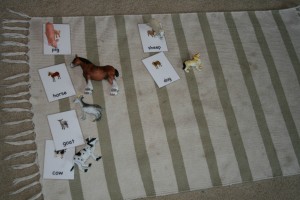
Assuming you have all these items, there are a couple of easy and fun ways to go about creating your three part cards. If you don’t want to use a bunch of ink and you want photo quality images, I’d recommend using photo stickers. I made these farm animal three part cards as Julia’s very first set. I initially introduced the control cards as simple flash cards and we played a matching game with the animals from her play farm:


Now she uses them as traditional three part cards and matches up the cards with their words, checking her work with the control cards.

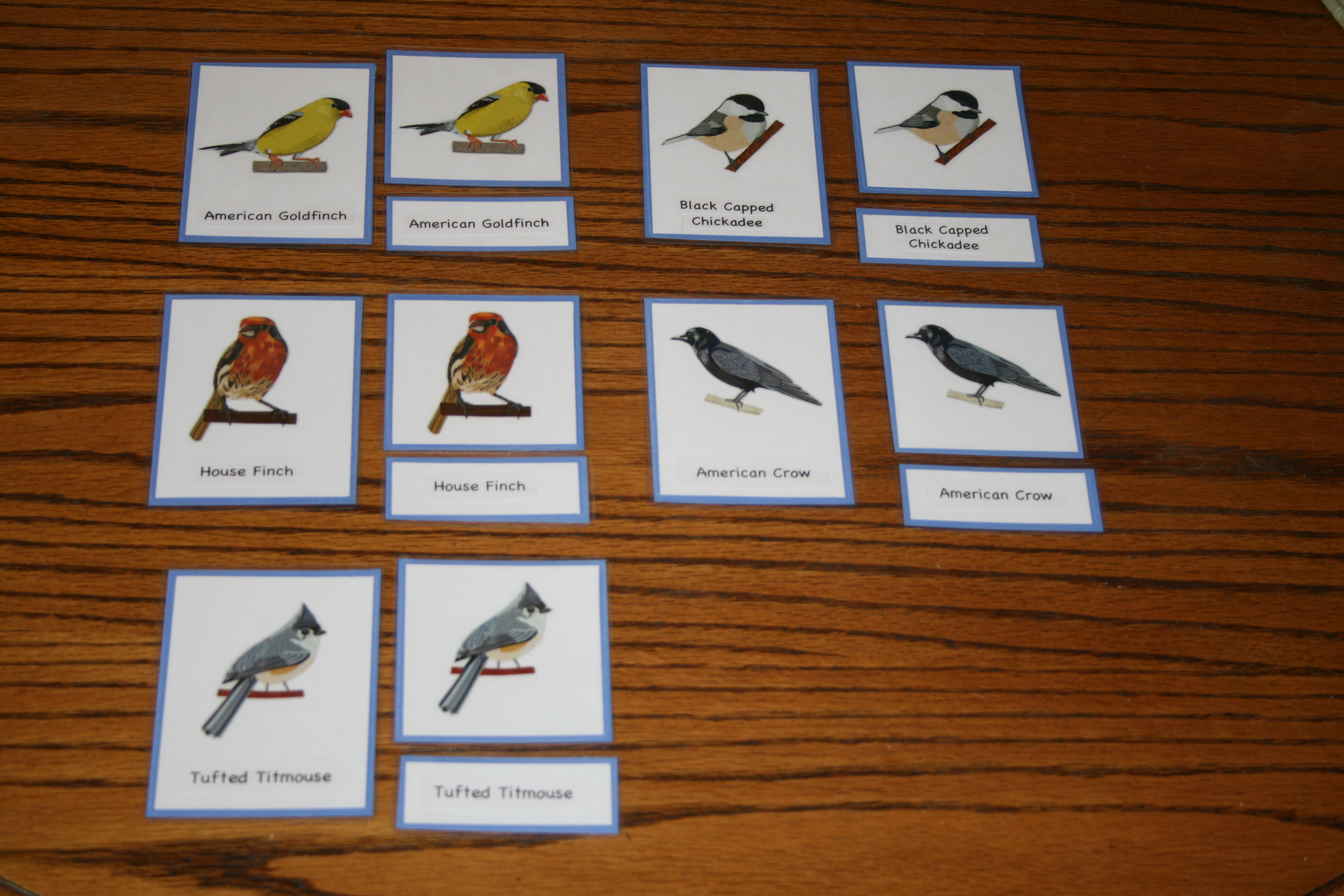
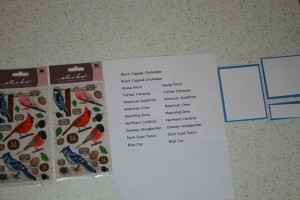
Then, more recently I was at Michael’s and I found some beautiful bird stickers, so last week I made these:


The words will be harder for her to read, so I read them for her and she’s already learning new bird species!

And then, when I decided to go with a geography theme for Julia’s upcoming 2nd birthday, I found this great resource with free continent three part card printables, flags of the world printables, and more!

A huge list of free three part card printables:

http://thelittlelist.wordpress.com/2011/05/07/free-montessori-nomenclature-three-part-cards/

One more resource for photo three part cards:

http://www.1plus1plus1equals1.com/MontessoriPrintables.html

Country Flag card printables:

http://www.homeschoolcreations.com/Geography.html

This is another great how to create three-part cards resource:

http://www.montessoriprintshop.com/Prepare_3-Part_Cards.html

If you’re anything like me, you won’t be able to stop once you’ve started. Maybe we can start a three part cards support group or something! Please let me know if this article was useful for you by leaving me a comment.

And have a wonderful week, Shelly

Why We Montessori (my new school just opened!)

About six months ago I realized that Julia is ready for preschool. She loves to go to story time at the library, enjoys social interactions, is absorbing information at a phenomenal rate, and is beginning to test the rules and boundaries, all indicators of readiness for greater social challenges. So I went and visited a hand full of preschools in my area. Most of them wouldn’t admit a child under three years old and since Julia isn’t quite two yet my choices were somewhat limited to a few Montessori toddler programs with pretty steep price tags.

I’ve worked in Montessori classrooms for years and while I loved the programs I visited, I balked at the price. Then I visited some programs that were not Montessori and I was again reminded why I love the Montessori classroom so much. The chaos, clutter, and lack of clear boundaries that I observed at some of the other schools I visited re-inspired me to continue to use Montessori philosophies to teach Julia at home. The only problem was that I don’t have any other children, so there’s no mixed age classroom and a distinct lack of peer interactions.

So I decided to open a Montessori-Inspired preschool and toddler house here at home two mornings a week. This was my first week of class with just one new student, but I was already impressed by the children’s immediate ability to engage with their work, follow my rules and directions, clean up after themselves, and innovate new and interesting ways to explore the environment. My new school is already a success!

Now Julia is getting the social interaction she’s been craving and she is already more physically adventurous after watching her new friend climb jump and play. Hooray! Plus, now I have an even better excuse to spend my evenings creating learning materials. Yes, I really am that much of a Montessori geek. Three part cards are rocking my world right now. More on that in a future post, but for now I’ll just say it’s wonderful to be back in a Montessori classroom.

Here’s a list of a few of my favorite things about Montessori vs. Traditional preschool environments:

Montessori Traditional
Peaceful, quiet, and focused on individual exploration; children are engaged in meaningful learning and expanding their interests and attention spans. Chaotic and loud; children are running around like maniacs with few opportunities for sustained attention.
Lots of choices and children are each doing their own thing, which emphasizes awareness of ones own interests, needs, and desires. The whole group does things together which emphasizes herd mentality and going along with the group.
Mixed ages means children can both learn from one another and teach one another. Varied social experiences and celebration of each child’s unique skills and expertise are the norm. Same ages grouped together means children have little experience navigating social interactions with older and younger children. A child’s only mentor is the teacher.
Clear rules, boundaries, and expectations about the use of materials and the need to put activities away so that the next person can use them creates a culture where cleaning up is just a matter of course. Children end up enjoying cleaning and often choose cleaning activities for fun! Undefined expectations about how to use toys and materials can lead to destructive behaviors as children search for the boundaries. Children are given free reign to create a huge mess and then inconsistently asked to help clean up at the end of the day but never develop a deeper care for their environment.

So, there you have it. Just a few of the reasons that a Montessori or Montessori-Inspired environment is the only one my daughter will be in. And to those of you out there who choose Waldorf for your kids, I’m curious about how you would include the Waldorf philosophies and practices in my chart. I don’t know much about Waldorf but from what I do know, the philosophies sound interesting and aligned with my heart, but my observations of Waldorf in action have been less than stellar. I would love to be converted to a Waldorf lover (although I think Montessori education will always be my first love). So, please leave me a comment to teach me more about why Waldorf is another great choice for conscious parents!

And have a fantastic week. Love, Shelly

Your Work/My Work

In the Montessori classrooms I’ve worked in, there are usually twenty-four children between three and six years old and just two adults. Each child has free choice of hundreds of possible activities in the classroom, and in order to maintain peace and order, we HAVE to create some rules and boundaries.

One of the rules is that we respect one another’s work. We don’t touch each other’s work, we don’t walk on someone else’s work rug, and we don’t clean up after each other. Each person is responsible for getting out, completing, and putting away their own work.

Several months ago I taught a class to parents of Montessori students and when I described the reverence and care we have for our work, a mother perked up. “Oh!” she said, “So THAT’S why my son gets so upset when I clean up his toys, he’s always complaining that I’m not respecting his work, but I didn’t understand why until now!”

I believe strongly in Montessori philosophies and use many of them as guidelines in my home with my daughter and now that she’s approaching two years old I’m beginning to understand what a huge difference this has made in the peace and order of our home.

First, I do my best to respect her work and often ask her to clean up after herself, before offering any help. So when she leaves something out, she can reasonably expect it to be there when she gets back. This provides stability in her mind and encourages her sense of order. She knows where she can find her things and she knows that there is no magical clean up fairy.

As an aside, I actually did think that something like a clean-up fairy existed when I was a young child. I had no concept of my preschool teachers staying after school to clean up, or of my mom and dad picking up after I was in bed. I just thought things magically reappeared in their original locations!

Of course, I’m happy to help my daughter clean up if she needs support, but I don’t make a habit of going around behind her and cleaning up after her.  As a result, I overheard her with her books yesterday. She was looking at the pages and talking about the content of the book and when she got to the end of the book she said, “Back” and put the book back on the shelf!

But here’s the real kicker. I also ask her to respect MY work. That means that she understands that my work is important and I’m committed to its completion. So when my daughter asks me to play with her I will often respond with, “Sure! I would love to play farm with you, but I’d like to finish my dishes work first, so you can go get started without me, or you can watch me finish my work, and then I’ll join you!”

One of the things I love about this is that she’s learning that life is filled with “work” that people enjoy and want to complete before moving on to new tasks. This promotes the concept of follow through while it also helps her to delay gratification while she waits for me to join her in her chosen activity.

I know without a shadow of a doubt that my daughter understands that her wellbeing is my top priority. And, I also want her to know that my own wellbeing is hugely important to me as well. The order of my environment helps me to feel peaceful and relaxed so that when I do sit down to play with her I can completely focus on her, rather than constantly thinking about my enormous to do list and only giving her my partial attention.

I’m sure I’ll write another post about organization and it’s psychological impact on us, but for now I’ll just say, it’s OK to let your child know that you have work to do when you’re at home. If we model respect for their work, they’re bound to learn to respect ours too. And when we honor and respect one another’s work, peace and love have plenty of room to thrive.

So, how do you balance playtime with work time at your house? I would love to learn some of your secrets to success in this area! Please share a comment below.

And have a fantastic week, Shelly