Make your life easier, give kids their own drawer

When our daughter started to crawl we did what most parents do, we dashed around the house “baby proofing” everything in sight.  We moved dangerous things up or to cabinets that could be locked or secured.  I installed latches on cabinets containing cleaning products.  But as I looked around our home and imagined putting latches on every cabinet and drawer in the house, I got overwhelmed.

And then it hit me; maybe I didn’t actually have to install all those latches!  Of course, I realize that I might need to add a few as my daughter grows and gets into things more, but I came up with a solution that is working well and has caused the least work for everyone.  I gave my daughter her very own drawer.

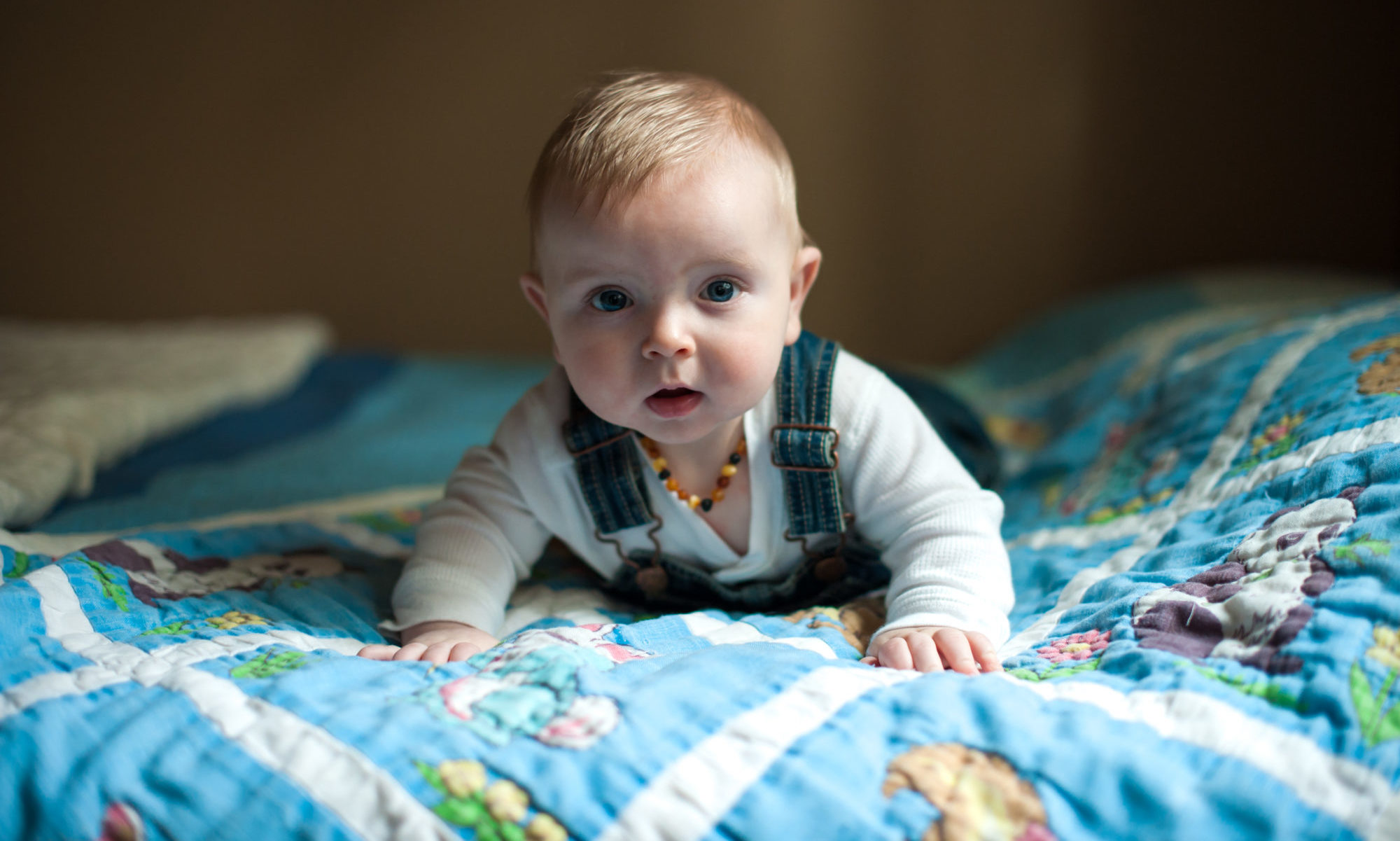
As soon as she opened the bottom drawer in the kitchen for the very first time, I grabbed a bag, threw its original contents inside, and then tossed a few of her toys in the drawer.  I included some kitchen items like a metal spoon, a set of measuring spoons, and a plastic cup.  And voila!  She took to it like a bee to honey.

Now, whenever I’m cooking or we’re hanging out in the kitchen, she crawls right over, opens up her drawer and plays with her “kitchen toys.” She hardly even seems to notice that there are other cabinets and drawers nearby!

Office shelf

But I didn’t stop there, I gave her a drawer in the master bathroom and she occupies herself masterfully while my husband and I take our morning showers.

We have also designated the bottom two shelves of the living room bookcase to the little one, and in true Montessori form, I leave new and exciting toys on those shelves to encourage her exploration. She even has two shelves in my office that will have her “work” on them for years to come.

Sure, we also have a basket of toys in the kitchen, living room, and her bedroom too.  But she seems to enjoy her drawers even more, and I don’t have to look at the stuff inside when she’s finished, I just close the drawer!  Of course, the next step will be to teach her to close the drawers herself.  And after that, we’ll begin putting toys into the drawer and closing it when we’re about to leave the room.

Living room shelf

If you have an older child who doesn’t yet have any designated kid’s activity areas in the common rooms, I highly recommend you clear some space for your younger family members.  Then, stock their shelves and drawers with interesting activities that you’ll rotate when they lose their appeal.  And if you also provide a rug and/or a child sized desk or table that they can work at, you’ll be helping your child set up great work habits and helping yourself get some peace and quiet.  Because, when kids know where to look for an activity that they can explore on their own, they’ll go back to it again and again, and you’ll actually get some adult work done!

I would love to hear about your own solutions to support your child’s freedom and independence at home.  Please leave me a comment!

Have a fantastic week, Shelly
What we can learn from Chinese mothers

Have you heard about the new book out that purports that Chinese mothers are better than western mothers?  I haven’t read the book, but I did read an article about it and I was horrified to say the least.  In the article I read there was a story of the author berating, cajoling, threatening, and punishing her child in order to get her to learn a piano piece.  The child did in fact master the piece, so the author says that her parenting was effective.  I disagree.  I think it’s wonderful that her child overcame a challenge and learned a difficult piano piece, but I disagree with HOW the mother went about the lesson.  I don’t think it’s ever OK to mock your child or call him names, even if your intent is to motivate.

But there was something in the article that I did agree with. The author said that overcoming a challenge provides a boost in confidence for young people.  I agree entirely.  She also wrote about the fact that Chinese mothers are willing to spend hours and hours tutoring, drilling, and helping their children with challenging lessons.  And I began to wonder, are we western mothers willing to do the same?  Would I sit down with my daughter for as long as it took her to learn her multiplication tables?  To be perfectly honest, I had to answer “maybe.”

As I considered the subject further I realized that I do know lots of parents who I think rely too heavily on computers and television to teach their children.   What if we were to take our American ingenuity and work ethic and apply it to the job of teaching our kids?

Your challenge this week is to get down in the trenches with your child and really support him in the skill or ability he’s most struggling with.  Continue reading “What we can learn from Chinese mothers”

How to foster an emerging sense of order

Between 2 and 4 years old most young people begin to develop their sense of order.  This is the time when your child will become exasperated if you say the wrong word during story time or if you move her artwork or put away his toy before he was finished playing with it.  It can be a difficult time for parents and caregivers alike, because in the past your little one didn’t even notice when you put away his toys.  Now everything starts to become a negotiation because along with a sense of order, a stronger will and resulting tantrums also mark this stage of development.

This sensitive period for order can be challenging, but there’s no fighting against human development, and if you think about it, you wouldn’t want to anyway.  This is actually the perfect time to teach your child how to put away toys, straighten her room, and help out in the kitchen.  But in order to capitalize on your child’s innate desire to learn and this sensitive period for order heed this advice:  Attention to detail is the key to getting the most cooperation from your child during this time.

Let me illustrate further; Paying attention to minute details and showing your child all the tiny steps involved in tidying, cleaning, and putting things away create more interest and better results.  For instance, if you would like to teach your three year old to fold and put away his socks follow these steps slowly, carefully, and methodically (and wait until you have your child’s attention before moving on to the next step):

1)     Take newly dried clothes out of the dryer while they’re still warm

2)    Put them in a pile on the bed and invite your child to feel the warmth and play in the pile a little bit.

3)    Ask your child if he would like to play a sock folding game.  If yes, continue, if no, try another time.

4)   Ask your child to help you find two matching socks. Continue reading “How to foster an emerging sense of order”

Watch what you say because your baby really is listening

The past few weeks my husband and I have been trying our hardest to remove some of the more colorful language from our vocabularies so that our baby’s first words aren’t profanity. Not that we curse all that much, but knowing children as I do, I know that it only take a few exposures to a word for kids to learn them, especially during the time when they’re busy expanding their vocabularies at a phenomenal rate at around 18 months old. So we’ve been saying funny things like “fire-pants!” and “rats!” or even my husband’s famous “son of a bench!”

The truth is, recent research shows that children can learn a new word after just ONE exposure and they’ll remember that word for weeks and even months, even if they haven’t heard the word since! The study itself was pretty interesting. I read about it in my new favorite book “The Scientist in the Crib” by Gopnik, Meltzoff, and Kuhl. In the study they brought 18-month-old children into the lab, showed them an apple corer and said, “Look! A dax.” Children remembered the name of the “dax” for several months even with no further exposure to apple corers in the mean time.

The process kids are going through at around 18 months when they enter their naming explosion is called “fast mapping” and that’s when your little one starts pointing to everything in sight and asking you to name it. “Whatsat?” they’ll ask repeatedly, as you well know. They also start naming everything they can and they want you to repeat things over and over again. It can be a little annoying. But when we dig in to what kids are actually doing during this time, it becomes fascinating and amazing. Continue reading “Watch what you say because your baby really is listening”

Autonomy is the holy grail of childhood

In my work with young people there are some needs that come up again and again.  The need for play is a great example.  Kids need lots and lots more play than we need and they let us know about their need in ways that are sometimes difficult for us.

But the unmet need that I notice most in young children is the need for autonomy.  Children desperately need to be able to do things on their own and to choose their own path and luckily for you, there are simple things you can do around the house to support your child’s autonomy.

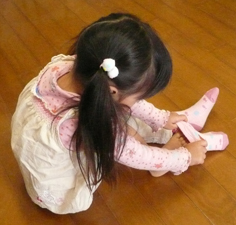
First, take a tour through your home in your mind.  Starting at the front door, do kids have a place to put their coats and shoes when they get home?  Is the place for coats and shoes easily accessible?  For children under five years (and for older children and even adults) the easiest place to put a coat is on a hook near the front (or back) door.  And to put shoes on and take them off, a child-sized bench to sit on is quite useful.

As you move through your home in your mind, consider whether your child has access to the things she needs.  Can she reach toys and books in the living room?  Art supplies, dishes, water and a snack in the kitchen?  Is there a stool in the bathroom that makes using the toilet and washing hands easy?  Can he reach the towel to dry his hands?

Each room of your home should have an activity for your child available in case he wants to be in the same room with you, and in case he doesn’t!  Continue reading “Autonomy is the holy grail of childhood”