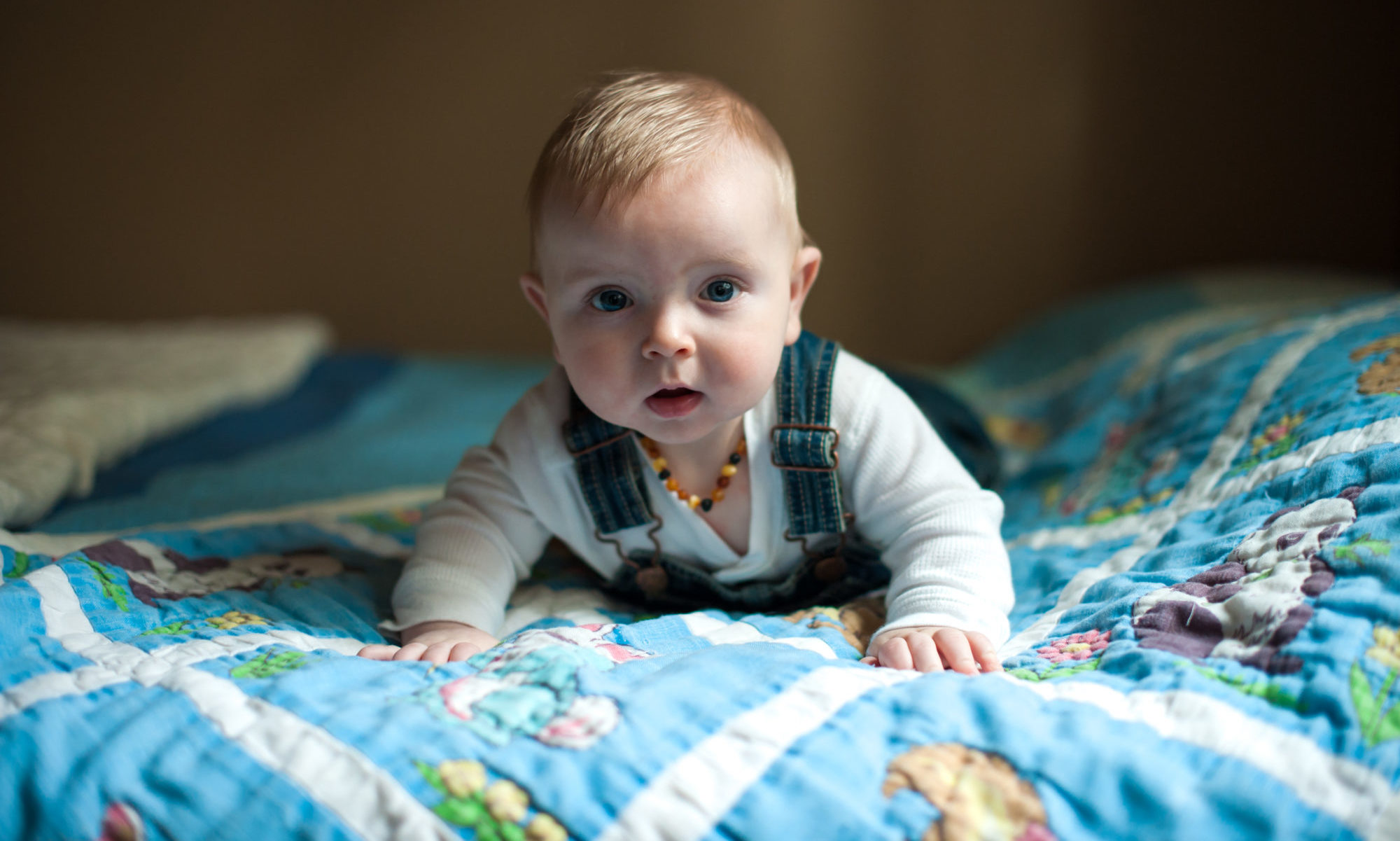
Video: Reduce Tantrums With This Tip

Here’s one last video with content from my new eBook “Cracking the Kid Code: Discovering the secret to having a happy child, family and home.”  This time I wanted to share one of the most important pieces of information that parents often forget.  That children really do want to do it themselves!

What are your children excited about doing all by themselves right now?  Tell me now!

A new take on discipline

What do you think of when you hear the word “discipline”?  When most people think about parenting and discipline they probably think of punitive discipline like time out, yelling, spanking, or taking away privileges.

I don’t want my daughter to be afraid of me or of the punishment I might hand down.  So I’ve chosen the most peaceful parenting I can possibly muster.  But if punitive discipline is out, does that mean I’m a total softie and my kids walk all over me?  Definitely not.

In fact, setting clear and consistent boundaries is one of the best ways to help your child feel secure.  In the Montessori schools in which I worked, we practiced a logical or natural consequences approach to setting boundaries with kids.  And it really worked!  Children understood why we did things a certain way and they were usually happy to cooperate.

Somehow setting boundaries was easier when it was my job to be completely respectful of the child.  Now that I think about it, it was much easier not to swear when I was a preschool teacher and my job was on the line.   But now that I’m a parent, I slip up sometimes.  It’s a much different challenge to be respectful of a child 24 hours a day than it is for six or eight hours a day five times a week.

Today I’d like to explore a different kind of discipline, the kind of discipline that allows us to complete a difficult task or to master a new skill.  Lately I’ve been thinking that by developing interests and practicing one or several disciplines myself as well as encouraging my child to do the same, the need for any other kind of discipline could simply melt away.  Maybe I’m crazy and my daughter just hasn’t hit her “difficult” period yet, but this sure seems to be working for us so far.

By encouraging her to develop her own interests and explore them independently, my relationship with my daughter becomes more about facilitating and supporting her desires, rather than circumventing them or redirecting her.  Oh, trust me, there are plenty of opportunities to redirect her.  But the more I’m able to just go with her flow and allow her to explore what she’s interested in, the more confident she becomes and the more she enjoys learning.

We’re setting up a positive loop.  She seeks out something interesting and explores it, she enjoys what she learns and then she seeks out something new and interesting again.  And we’re also building our connection because she understands that I deeply care about her and want her to explore her interests and fulfill her purpose in life.  So really, she’s developing self-discipline!

That way, in the times when I do need to set a firm boundary for safety or for some other reason, she knows that I’m not just trying to punish her.  I’m actually making choices based on what will give her the most freedom she can safely have.

So what do you think?  Can we reduce the need for “discipline” by supporting our children to develop their interests and practice self-discipline?  I would love to hear your take on my idea.  Please leave me a comment!

And have a fantastic week, Shelly

Open and close activities are a big hit!

Have you ever noticed how much young children love to open and close things? And how they’ll repeat the opening and closing action again and again? If you think about it, we open and close things all the time in our daily lives, so why wouldn’t children want to learn this important skill? One of the things that continues to surprise me about open/close activities for children is how many times they’ll repeat the action. I’ve seen kids absorbed in this work for well over thirty minutes at a time.

In the Montessori classroom we always had an open and close activity that the kids would gravitate toward, so I knew my daughter would enjoy learning to open and close things. But I had no idea just how MUCH she would enjoy it! We currently have an Open/Close activity in my office and every time my office door is open, my daughter makes a bee-line to it, takes the objects out of the box and begins to open and close them again and again and again.

Here’s a video I took last week…

My 13mo. old daughter doing her open/close activity from Shelly on Vimeo.

One of the great things about this activity is that it can grow with your child. Right now I have a couple of small metal tins, a small jar with a lid, and a plastic container with an attached lid in the activity for my 13 month old. But when she’s 3 years old, we’ll have a coin purse with a zipper, a box with a latch, and some other more challenging items.

Even if your child is 7 or 8 years old, you can find fun things to put in an open/close activity. Most 8 year olds I know LOVE figuring out how to lock and unlock padlocks or even the front door of their house. Of course you’ll have to decide what you’re comfortable with.  Learning to open and close plastic baggies and food containers can be a fun challenge too.  Remember diaries with locks?

So, the next time you get annoyed that your little one is emptying your purse out on the floor of the restaurant, remember, he’s just trying to learn about opening, closing, and containment. Oh, and he’s probably also looking for a toy or a treat too and I’m guessing he’ll find one!

Consider creating an open/close activity to keep at home, or a portable one for when you’re out and about. You can offer a lunch box filled with containers or an old purse you’re willing to give to your child. Begin collecting small items that have unique and interesting closures.

Once you have a few items compiled, arrange them in a basket or box and display the activity in an accessible location. When your child shows interest in the new “work,” sit down together and demonstrate opening and closing each item before allowing her to explore the activity on her own.

For added interest for your older child, include a small car, animal, doll, or action figure inside each container. For your reader, label the containers and invite your child to put the appropriate item back into the container when he’s finished playing.

We are having so much fun at our house with our open and close activity. I would love to hear about your experience with this fun work! Please share a comment below. And have a great week! Warmly, Shelly

How I Became an EC Mom

OK, so for those of you who don’t know, EC stands for elimination communication. Yep, you guessed it; this blog is about peeing and pooping, so if you’re the least bit squeamish on that topic, read no further! A friend of mine asked me to share about our EC journey, so here it is:

The first time I heard about elimination communication it sounded completely insane to me. I heard wild stories of families who NEVER used diapers and I pictured an entire house covered in plastic drop cloths with some pretty gross repercussions. Sure, if we were living outside and could just hold our babies away from our bodies like I read about in “The Continuum Concept,” I could imagine not using diapers. But I live in a house, and it really bothers me when my dogs or cats fail to go in their designated locations, so why would I allow my child to just pee and poop all over the place? At that moment I decided that EC was not for me.

But after my daughter was born, I read a really great article in Mothering magazine (Oh how I wish they were still publishing!) about elimination communication. In the article the author described lots of different ways that families could go about practicing EC to various degrees. Some families used diapers some of the time, and other used them most of the time but also watched for signals from their child that it was time to go. Through the article I was introduced to the idea of “catching” my child’s pee and poop and that’s when it happened. I became an EC mom.

A good friend of mine had given me TONS of great baby gear hand me downs, so I dug out the small Baby Bjorn potty you see in the photo. When my daughter was about a month old I took off her cloth diaper and sat her up on the potty. She didn’t seem to like the feeling of the cold plastic on her toosh, so I grabbed a pre-fold, cut a hole in it and put it between her butt and the potty. That one sacrificed cloth diaper made all the difference! After that, my little one was happy to sit on the potty whenever I thought to try. But, she didn’t actually go in the potty yet. That was OK with me though, I just wanted her to get used to sitting on the potty and wasn’t attached to achieving any specific goals yet, I think this is key in proper potty training. Looking back at my baby calendar I see that she had her first poop on the potty at 8wks and her first pee at 10wks old!

After my little one had some better muscle control and was able to sit in her Bumbo (around 4 months old) I put the potty in front of the mirror in her room and sat with her for up to 10min. at a time. She loved her potty time! We would make faces, look at books, and talk about increasing our intrathecal pressure, complete with grunting. and bearing down together. At that point she would occasionally go during potty time. We were making progress!

I still wasn’t able to see any signs from her or predict when she would need to go, but we just tried a little potty time here and there when the mood struck me. And then we introduced solid foods at 6mo. Whoa! Suddenly my daughter’s poops became solid and then I noticed that she seemed to go at around the same time, during the morning between wake up and her first nap. After some experimentation I narrowed it down and caught a poop! I was so happy not to have to scrub that cloth diaper that I became determined to catch more.

At some point during her sixth month, I realized that I always pee when I wake up in the morning, so she might need to as well. I tried putting her on the potty first thing after we woke up in the morning and magic happened. She peed AND pooped that first morning and has almost every morning since. I was elated! I had suddenly gone from soaking, scrubbing, sunning, washing and drying poopy diapers to simply dumping the poop in the toilet and getting on with our day!

Now we put her on the potty after she wakes from sleep and a couple more times throughout the day and she almost always pees. She clearly knows what the potty is for (and has since around that six month mark) and although she will hang out for up to thirty minutes if needed, she more often goes within five to ten minutes and then waits for me to wipe and re-diaper her. Yesterday, for the very first time, she finished her business and then stood up.

I know that a lot of EC parents talk about the importance of noticing the cues and the deep connection they feel with their child about these important bodily functions, but for us, EC is more about practicality and ease.

I also like the notion that I’ll never have to “potty train” my child. Sitting on the potty is just something we do every day already. And just for the record, I don’t think our version of EC is something we could only do because I’m a work from home mom. We’ve taken our potty to Grammy’s house and even on vacation with us! All of my daugher’s grandparents and babysitters have used the potty with her seamlessly.

The next step in our journey will be to teach my little one how to signal when she needs to go. So, I’ve begun signing “toilet” every time I say the word potty. No luck yet, but given our success so far, I’m not too worried. I’m pretty sure that she’ll put two and two together in no time.

So, how many of you have gone on your own EC journey? I would love to hear how it went or is going. Please share your stories with us!

And have a wonderful week, Shelly