The magic question

Are you wanting more ease and cooperation from your kids this week?  I have a magic question that will get you exactly that.  One great thing about this question is that it also works well with other adults.   Another wonder of this magic question is that when people ask you this question you feel honored, cared for, and free to say yes or no.

This question empowers you and your loved ones to communicate openly, honestly, and freely.  It can even help you learn more about your children and their motivations.  OK, are you ready for it?  The magic question is, “Would you be willing to ____?”  Variations on this question might be “Would you?” “Could you?” or “Will you please?”

But a huge part of the magic of the question is that it’s a true request.  When you ask, “Would you be willing to help me carry in the groceries?” you’re actually asking for help, not demanding it.  So be careful with the variations unless you’re sure you’re truly asking.  Sometimes our demands can be subtle and veiled, but they’re demands none-the-less.

It’s easy to fall into the trap of demanding and ordering kids around, especially when they’re resistant and uncooperative.  “Brush your teeth” “Put on your shoes, we’re leaving” and “Stop hitting your sister” are the kinds of demands most kids experience daily.  If you’ve fallen into the habit of making lots of demands of your kids, you’re not alone.  The problem is that the more we demand, the less kids want to cooperate.  And the less kids cooperate, the more we demand.  It’s a vicious cycle, but you have the power to change the dynamics substantially, just by asking the magic question and being OK with whatever the answer is. Continue reading “The magic question”

The simpler the better

Hey Everybody, I’m back!  My beautiful daughter is nearly 2 months old and I’m excited to be back in touch with you all.Before I go on, a special thanks to all my guest bloggers. You all really helped me out and provided great content for our awakeparent
community!

OK, so you know the principle of Occam’s razor?  It’s the one that states that the simplest explanation is usually the correct one.  Well, so far, it’s been showing up in my world as a new parent.  Here are some examples:  1) Which is simpler, that my husband purposely hid my fork from me or that I inadvertently tossed it into the sink and forgot about it? 2) Which is simpler, using a host of stain fighting concoctions to get the poop stains out of my cloth diapers or just putting them out in the sun for an hour? 3) Which is simpler, applying lots of special creams to my baby’s butt to get rid of diaper rash or just letting her little toosh get some air a few times a day?

I’m finding it absolutely amazing how time and again, the simpler solution is the better one!  It reminds me of a book I read years ago called “The Simple Living Guide” that offered lots of simple, easy solutions to all aspects of our ever more complicated lives.  If I recall correctly the author even wrote about things like getting rid of stuff so that you’d have less to organize and keep track of.

I love the principle of simplifying on many levels.  Continue reading “The simpler the better”

The development of will

Time OutWhat’s it like to be a 2-4 year old? (an excerpt from my soon to be released ebook!)

As an infant and young toddler your child saw himself as an extension of you.  He had very little sense of distinction between himself and his parents.  In fact, if you think about it you can understand why this would be so.  Just as we lift our own hand to our mouth if we want to put some food in it- your hand has automatically put food in your baby’s mouth every time he’s been hungry since his birth!  When he needs something, you provide it, so in a way, and in his mind, you’re an extension of him.

Now that he’s older he’s developing more complex language.  He’s learning to distinguish between “yours” and “mine”.  Well if there’s a “yours” and a “mine” there must be a “you” and a “me”.  Now your child begins to see himself as a separate entity with desires, hopes, dreams, and thoughts all his own!  Wow, what an exciting discovery.

A Stronger Will: Unmet needs for choice

Along with the discovery of self, your child is feeling stronger desires than ever before and she’s discovering her personal power.  She’s realizing for the first time that she can affect the outcome of a given situation.  Sure, when she was a baby, she realized that she could move a ball from here to there- but now she’s discovered that she can affect your behavior and have some control over the social dynamics in your home.  This is a huge step in social development.  She’s gone from a helpless being, who is happy to do whatever you want- to a willful child with a mind of her own.  And this is ultimately a good thing- although the transition can be extremely difficult for us.  Sometimes we just want that sweet little baby back (and that’s completely normal)!

If you consider your job as a parent to be raising a capable, independent, and contributing adult, then you can see this phase as a milestone toward that goal.  Now that your child has an ego, strong desires, and a stronger will she can really get things accomplished that she never could before.  Now is a wonderful time to help her develop a sense of responsibility by giving her more freedom coupled with, you guessed it, responsibility.

Easier said than done, right?  Continue reading “The development of will”

Following the child: How child directed games and activities can create connection, learning, and mutual cooperation

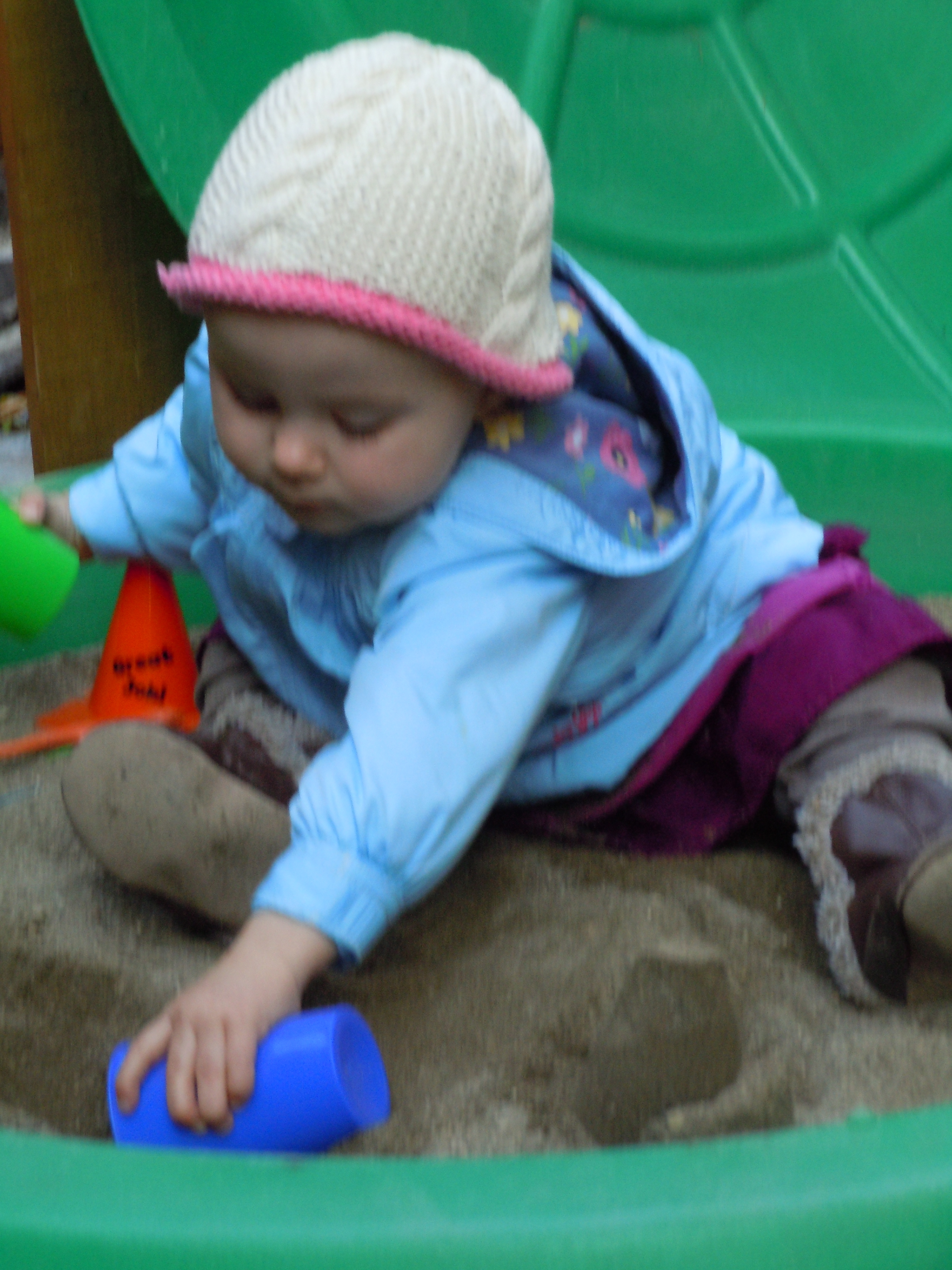
kids_playing_aqerThis week I watched a fascinating video about baby led breastfeeding.  It showed newborn, days old, and months old infants maneuvering themselves into a good nursing position with very little help from their mothers.  Babies were deliberate in their movements bobbing and clearly searching for the nipple.  And, when they found it on their own, many mothers reported that the latch was more comfortable than it had been when they had tried to help their babies find the nipple.  What an incredible innate ability babies have!
Watching newborn infants lead the way at breastfeeding reminded me of one of the foundations of Maria Montessori’s groundbreaking educational philosophies; follow the child.  Montessori asserted that children have an innate desire to learn and if we follow their lead, they will enjoy learning, retain more information, and continue to seek out even more knowledge.

But following the child doesn’t just work to help kids develop their intellect, it also helps them to find their power and leadership skills.  When we allow children to be in charge and take the lead, they will often surprise us with their creativity and take us in directions we never expected.

For instance, kids who are feeling powerless and frustrated about it will often make up games than involve enslaving their brothers, sisters, parents, or other adults.  It’s how they work out their frustrations about being a kid and how they learn to understand what it’s like to be in charge.

I’ve found that by allowing children to lead the way during some specifically designated child led play-time, kids become better able to cooperate and connect for the rest of the day.

I’ve even had experiences where I wasn’t sure why a child was grumpy or defiant and when I allowed the child to lead the play, I soon discovered what was really bothering them.  Kids have an amazing ability to work out their emotional challenges through play, but they have to be allowed the time, space, and attention to do so effectively. Continue reading “Following the child: How child directed games and activities can create connection, learning, and mutual cooperation”

Stimulating young minds

Learning doesn’t just happen at school. You can stimulate your child’s mind at home with these simple activities:

Sometimes when kids seem to need a lot of extra attention, are bugging you constantly to watch TV and movies, or are generally in your face 24/7, they might actually be asking for more intellectual stimulation.   When kids get bored, they turn to you for help, but they might not know exactly what they’re wanting.

If you think this might be what’s happening in your household, I’ll give you some ideas and examples of simple things you can do to stimulate your child’s mind, support more independence, and encourage self-directed activities.

First, consider your child’s favorite things.  Does she love dinosaurs, dolls, horses, or art?  Does he enjoy cooking or playing in the sandbox?  These preferences can inform which kinds of activities your child will enjoy right now.  Let’s say she’s into dinosaurs.  She loves to play with her dinosaurs and sometimes corrects you when you call them by the wrong name.

So, how can you create an engaging, self-directed activity that will build on your child’s knowledge and encourage her to learn even more about dinosaurs?

If you have a book in which dinosaurs are classified into carnivores and herbivores, you can create a fun activity that she can do on her own.  If you combine her basket of dinosaurs and the book about carnivores/herbivores, add a green piece of construction paper on which you will write “Herbivores” and a red piece of paper on which you will write, “Carnivores” you have a fun game!  Just show her how to set out each piece of paper, choose a dinosaur from the basket, look in the book to check whether this dinosaur is a carnivore or a herbivore, put the dinosaur on the appropriate piece of paper and then choose another dinosaur!

When she has classified all of her dinosaurs she can come get you and you can discuss her reasoning.  Be careful not to correct your child’s work at this point.  The idea is to encourage self directed activity that is intellectually stimulating and if she thinks she’s going to get a “bad grade” at the end, there’s no motivation to do the activity again.  However, if you sit with her and ask questions like, “Wow, I’m confused, I thought a stegosaurus was a carnivore, how did you know it’s an herbivore?” then she gets to teach you, and teaching is an even more stimulating way to learn something.

Another idea for a pre-reader is to make small paper signs that say things like door, mop, sink, book, ball, table.  Put tape on the back of each and then invite your child to find the items and tape the signs on.  Pretty soon, your child will begin to recognize words even before he’s able to read!

You can also adapt this activity by using a basket of miniature items and laminated cards with words on them for beginner readers.  Easy words like dog, cat, and hat can be matched up with a tiny toy dog, cat, or hat.  Kids love these types of matching games and they learn while they play!

To make this game easier for a child who’s not reading yet, create sets of cards.  First, create two matching cards each with a sticker, picture or drawing of a cat and write the word cat below.  Now cut the word off of the second set of cards.  Now you have three sets of cards- a control set with pictures and words, a set with pictures only and a set with words.  Show your child how to match up the control set with the other sets.  Again, remember, it’s not important that they get it right, it’s just important that they’re engaged and having fun with it!  I find that it helps to do this activity at a table or on a small rug on the floor so that their workspace is contained.

I hope that some of these ideas have sparked your creativity and your desire to stimulate your child’s mind.  Please write to me with your thoughts, other ideas, questions, and stories about how these activities work for you!

Big hugs, Shelly