
Forced Apologies Undermine Conflict Resolution Skills

Remember what it was like when you got into a squabble with your siblings or friends and at the end there was the inevitable, “Say you’re sorry” and you half-heartedly responded, “I’m sorry” and then the two of you were supposed to “make up” and play together again as if nothing had happened?

I don’t know about you, but I felt angry and frustrated when this happened to me as a child. And I never really meant it, even when I said it. And the other kid knew that I didn’t mean it. They didn’t mean it either. And it took a while before we were able to actually let it go and be true friends again.

Now as an adult I see that forcing children to apologize when they’re not really sorry actually undermines their internal drive for social cohesion and conflict resolution. I want children to actually empathize with one another, understanding the impact that their words or actions might have had upon another. And then I’d like them to genuinely apologize because they want to. If they’re not ready to apologize, that doesn’t mean they need to be isolated and “think about what they’ve done.”

On a deep level I trust that all children have positive intentions behind their actions. Even when I don’t understand the intentions, they might. I also trust that children want to live in peace and harmony as much as possible. So, while siblings might fight, they also rely on one another for companionship and nobody enjoys the uncomfortable silences and hurtful words that accompany holding a grudge for a long period of time.

Ultimately, apologies are a tool for reconnection when we’ve done or said things that have created a rift in our relationships with others. So why not teach children to use this tool when and where they see fit?

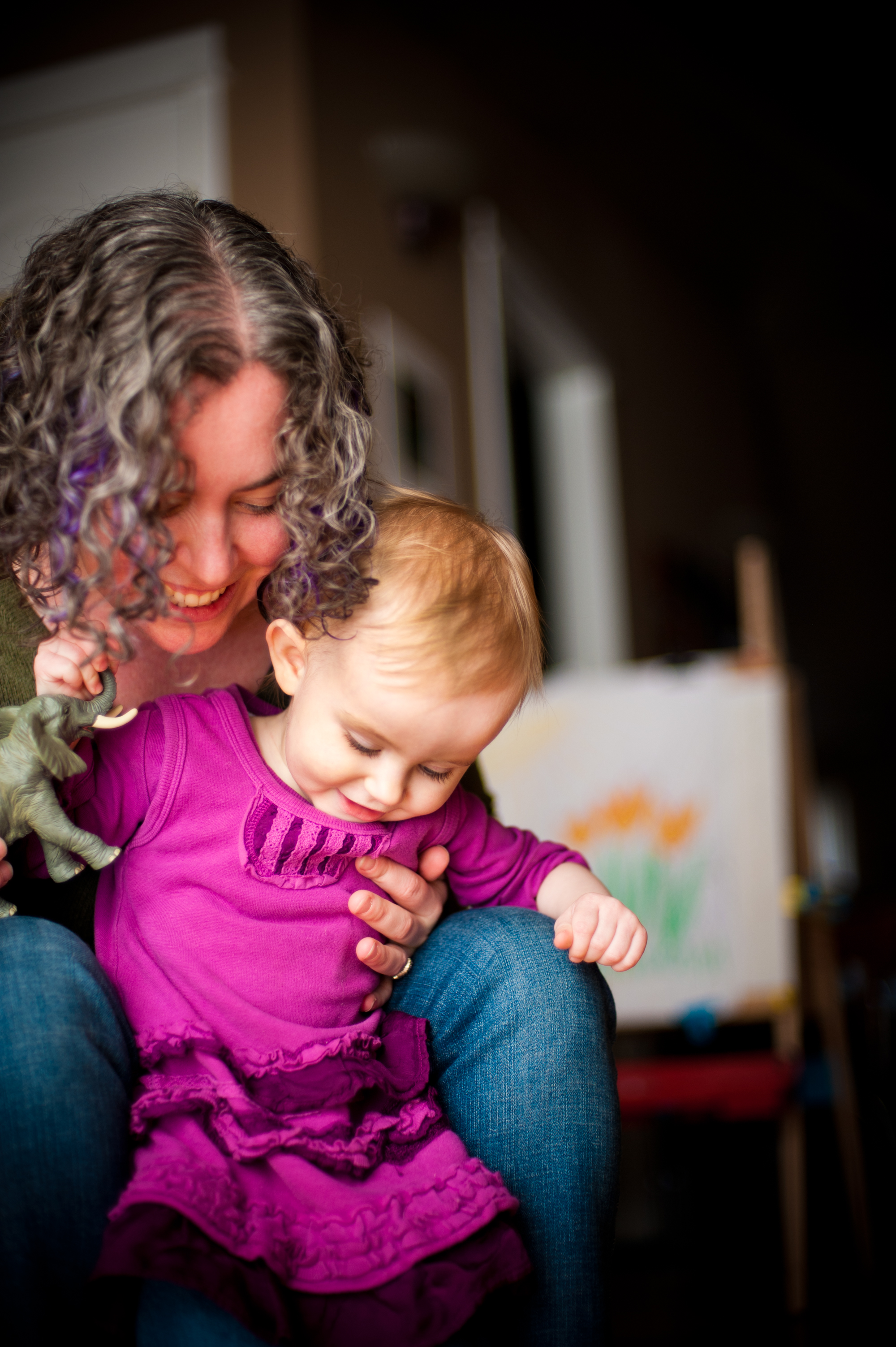
Just the other day my daughter was sitting on my lap. She got excited and head butted me in the face. “Ouch!” I cried out, “You just head butted me. Ow, that really hurts.” Although I’ve never taught her to or asked her to say she’s sorry, she immediately apologized for inadvertently hurting me. And then she offered to kiss the spot that hurt. I was so touched by her genuine apology! And I knew for sure that she wasn’t giving me some canned or memorized speech. Even at two years old, she knows how to repair any damage caused by her actions.

On the other hand, when we ask children to apologize prematurely we are actually devaluing the process of working through conflict. We’re sending the message that we ought to just quickly apologize, even if we don’t feel sorry as a way to smooth over the incident. We’re also inadvertently teaching kids that conflicts should be avoided, rather than used as an opportunity to connect further and get to know each other better.

So this week, rather than asking children to say they’re sorry, let’s try trusting that they already know what to do. Let’s talk with them about how they feel, how they think they’ve been hurt or wronged, validate their feelings, and share new and different perspectives with them.

“Huh, I wonder why he said that to you. Do you think he might have been having a bad day?” or “Well, I guess you could retaliate by not inviting her to your birthday party, but what about talking with her about how you feel about what happened?”

I’ve consistently seen four year olds effectively work through conflicts by talking with each other. It often sounded like this,

“I didn’t like it when you pushed me, that hurt my body.”

“Oh, I didn’t mean to, I wanted you to move because you were blocking the road.”

“Next time, please tell me to move instead of pushing me”

“OK, I’m sorry I hurt your body, does it still hurt?”

“Yes”

“I will go and get an icepack for you.”

“OK, thanks!”

Sure, we had been working with these children for months on how to communicate their needs and desires clearly and how to listen to another person who is upset. And we modeled nonviolent communication and repair strategies often. But with some modeling and guidance, I think all children can learn to resolve their conflicts peacefully.

How are your kids doing with the important task of conflict resolution? Do they need you to intervene whenever they have a disagreement? Or are they able to share their feelings with one another and empathize with others? And how much do they tell you about the social dynamics at school and in other social groups?

I hope you’re having a great week and I can’t wait to hear from you!

Warmly, Shelly

More Compassion for Other Moms

Parenting is one of those topics that we all feel very strongly about. I mean, our kids and their well-being is at stake, right? So, of course we’re going to be opinionated about what’s OK and what’s not OK. The problem with this is that it alienates other moms who, after all, are just like us, trying to do their best to care for and support their kids.

I think we can connect with other moms and dads and support them even if their parenting style is different from ours. Well, maybe not if it’s TOO different 🙂 but you know what I mean. I am an attachment parenting, cloth diapering, elimination communication, extended breastfeeding, Montessori at home, work from home mom who uses positive redirection and gentle discipline rather than punitive discipline. But does that mean I can only be friends with parents who are exactly the same as me? No way!

I have plenty of friends who breastfed a little or not at all (for various reasons), or who use disposables or who give their kids a time-out once in a while. And, although they might not talk about it much, I’m sure I have friends who yell at their kids. In fact, *gasp* I get frustrated and yell sometimes too! And I think that’s really the key to having compassion for other moms.

Being able to put myself in another person’s shoes, allows me to understand why they might choose to do things differently. I wish more moms would practice compassion with each other. Because, really, we’re all doing the best we can from where we’re at in every moment. We are all using whatever parenting tools we have access to. We have different schedules, different resources, and sometimes even different cultural beliefs.

The truth is, we actually have no idea how sleep deprived or hungry or stressed out that mom at the grocery store is when she stuffs a candy bar in her child’s face just to shut him up. And we don’t know what happened BEFORE the huge tantrum the little girl in the next aisle is having. I guess I just wish we could all take a breath and remember that no matter what’s happening, we’re all doing our best.

Because criticizing, judging, and shaming other moms is NOT helping. Do we really think that a mom is going to stop spanking her kids because we shame her for it? I don’t. I think that a lot of moms who spank are simply out of other ideas and resources in that moment. Many of them would LOVE to figure out a better way to help their child, but they aren’t able to think. Instead, they just need the behavior or the screaming or the hitting to STOP, so they do what their parents did to them. They spank. I can understand the impulse, even if I will never engage in the same behavior.

So, if you have a friend or family member who is a little bit different from you or who treats her child in a way you don’t like, try CONNECTING with her instead of judging her. Get CURIOUS about what’s happening for her and try to understand where she’s coming from. Nonviolent Communication by Marshall Rosenberg is an excellent resource for developing compassion and understanding. Go to http://www.cnvc.org to find out more about NVC.

And for now, just take a moment to try to understand someone you’ve been judging. Consider the possibility that they really are doing their best. And remember that none of us is perfect; we’re all just doing what we need to do to move from this moment into the next. Let’s choose to help and support each other to continue to learn and grow, rather than shaming each other for making a different choice. Let’s make a pact to have MORE COMPASSION FOR OTHER MOMS! Because when we can show compassion and understanding to people who are different from us, then we are REALLY modeling love and peace for our children.

Oh, and one more thing. When our children see us accepting others who are different from us, they also learn that it’s OK to BE different. Children will feel much more secure in our love for them when they see that we are able to be kind and caring to those with whom we disagree.

What do you think about this? Please leave a comment below and let’s talk more about this hot topic! Warmly, Shelly

News flash: It’s OK to fight in front of the kids (as long as you also do this)

Did you know it could actually be beneficial to kids to see their parents fight? Well, it’s not actually the fighting itself that is beneficial, but if children witness their parents having an argument and then resolving the conflict, they are just as happy as they would be watching their parents have a friendly discussion!

I know, I’m just as shocked as you are. I bought into all that stuff about not letting the kids see you fight, just like everyone else. But the problem with taking your argument into the other room is that children are left knowing their parents are upset, but they have no idea how the situation was resolved. On the other hand, if they can witness the conflict AND it’s resolution, children are learning how to resolve conflicts, which is a pretty important skill for everyone.

Now I don’t mean to suggest that it’s good for kids to watch a conflict go unresolved. Children derive their sense of emotional security from the relationship between their parents (or the relationships between their primary caregivers). In fact, in “Nurture Shock” by Po Bronson, I read of a study by Dr. E. Mark Cummings from Notre Dame, in which he showed that the quality of the parents’ relationship had even MORE of an impact on the child than the direct relationship between parent and child! So when there’s tension in the air, you can be assured, they feel it. And it bothers them. And it isn’t good for them.

But the truth of the matter is that married couples typically have anywhere between 2 and 8 conflicts every single day. Granted, some of them are large and some are small, but clearly, kids are being exposed to these conflicts even with our best efforts to shield them from our arguments.

Instead of wasting precious energy keeping our kids away from our conflicts, let’s learn to consistently resolve them peacefully, so that our children can learn much needed conflict resolution skills and we can relax and live our lives WITH our kids, rather than attempting to hide our arguments from them. Studies are showing that arguments can actually get quite heated, and as long as they are resolved, children are happy, calm, and well adjusted.

So, how are your conflict resolution skills? A little rusty perhaps? If so, I highly recommend “Nonviolent Communication” by Marshall Rosenberg. The NVC skill set has completely changed my experience of conflict.

I used to be terrified of upsetting anyone and walked on eggshells around my more firey and expressive friends and family members, but now I see a conflict as an opportunity to get closer to my loved ones. By checking in about what has upset someone, I get to know them even better than I did before!

As with any technique or model, even NVC can be used violently, so if you do learn and practice it, be sure to check in with yourself about what your intentions are in every interaction. But if you genuinely want to reconnect after an argument, NVC is one of my favorite tools.

The one other thing that has made the biggest difference for me in my ability to reconnect and resolve conflict is willingness to be vulnerable and share what’s on my heart. I think any two people can reconnect if they’re willing to feel their hearts and share what’s happening for them in a responsible way (read no blaming or shaming).

So, have you had any big (or small) arguments lately and then resolved them in front of your kids? If so, I would love to hear all about it! Please leave me a comment.

And have a Happy Thanksgiving! Warm hugs, Shelly

Playing with power

Well, it has happened.  My sweet baby is already becoming a willful toddler.  The past week or so has been filled with frustrating moments for her and for anyone near her.  She has begun to whine.  She is clinging to us like she thinks we’ll disappear if we’re out of her sight.  And of course, she’s also starting to walk.

Learning to walk and talk are HUGE developmental milestones for a baby and with the new development comes an equally big emotional response.  Tears and frustration abound as we humans learn new skills and reach new levels of development.  And it’s not just babies who experience the emotional ride of learning new skills.  Children and adults of all ages have the same big feelings.  When we reach a goal, there’s often a big emotional high and an accompanying let down.

So, what do we do with those feelings of sadness and anger that go along with new accomplishments?  We can try to ignore them or shove them aside, but that sure hasn’t been working at our house.  I’d rather embrace the feelings and provide a safe space for my daughter to fully express all that she’s going through.

Amazingly, just last week, my little one learned how to roar like a lion and wow, it’s a really ferocious roar!  So my mom and I began to play a game with her where we pretend to be frightened by her roar.  She LOVES it!  It’s really one of the first times I’ve seen her expressing and enjoying her power, she completely lights up.  She roars again and again while we cower in mock fear.  “Oh no!  Don’t eat me!  I’m so scared,” can be heard often at our house these days.  Here’s a short video of the game:

Then last night it was bedtime.  And you guessed it, she didn’t want to go to bed.  I could tell she was getting agitated and she started to test my husband by hitting him.  She knows that hitting people isn’t allowed, but she wasn’t sure how else to express the anger and frustration bubbling up inside her.

So I redirected her hitting to the stuffed animals on her bed.  Before we knew it, my husband, daughter, and I were all throwing and hitting and jumping on the stuffed animals yelling, “Take that!” and “Aaarrgghh!”  We all had a blast and each of us got an opportunity to express any unexpressed anger or frustration.  I can’t even tell you how satisfying it was to slam that pink elephant into the wall.  It was truly liberating.  The best part was that after the anger release, she was tired and ready to wind down to sleep.

So the next time anyone at your house is whining or getting agitated, try playing a power game.  Sometimes, just having an appropriate outlet for anger, frustration, or powerlessness is all a child really needs.  And when offered a healthy way to release those feelings, kids can easily return to their usual kind and cooperative selves.

Wish me luck with the rest of toddler-hood, I have a feeling I’m going to need it!

Have a great week, Shelly

Back to school separation anxiety

School is starting! What an exciting and stressful time. You’re probably rushing around purchasing school supplies and wondering how your child will separate at the door. Or maybe school has already started and your child is in the throws of separation anxiety, completely freaking out when you leave. Be assured, the transition can and will go smoothly, it’s just a matter of time and technique.

Transitions are almost always challenging for young people and that goes for both large and small transitions. Moving from bath time to bed can produce a lot of upset, so it makes sense that starting back to school (or starting school for the first time) would also cause some emotional ripples.

First, know that you are not alone. When I taught preschool there were always a few children in every class who had a difficult time separating at the beginning of the year. But after several weeks, everyone was transitioning joyfully.

Now, I’ll give you the same information and advice I gave the parents in the classroom that helped to resolve the upset quickly and fairly easily.

The most important thing about a morning school separation is that it is QUICK and that the parent is calm, comfortable, and relaxed. The more you can leave your own feelings of sadness, upset, and anxiety at home, the better your child will do.

I don’t mean to imply that you won’t HAVE upsetting feelings, just that you’ll do your best to experience and work through those feelings AWAY from the door of your child’s classroom. So, when you’re at the door, you’re projecting calm confidence, trust, and warmth. This is HUGE.

Why quick? The more time you spend helping your child get his things into his locker, making sure he has his lunch, asking the teacher about the schedule for the day, and giving him multiple hugs and kisses, the more time he has to recognize that you are uncomfortable (or that he is). Also, when your child sees you in and around his classroom, he begins to wonder why you can’t just spend your day at school with him. After all, you are one of his favorite people in the whole world, so why wouldn’t he want you to stick around?

What your child may fail to realize is that school is an opportunity for her to branch out socially and become more independent. It’s a growth opportunity and having a parent present could actually undermine her motivation to reach out to new friends.

But, when new friends and teachers are the only choice available, you’d be surprised how quickly children can acclimate and enjoy the new environment. Often, the kids who have the greatest separation anxiety are the same children who bond to the teachers and other kids quickly. The classroom becomes a new base of operations and they easily rely on their new community for the help and support they need. This is a very important skill.

Do you remember a time from your own childhood when you felt unsure, afraid, and you wanted to cling to someone or something familiar? Giving your child a keepsake, a slap bracelet, a hand stamp, or some other reminder of you can be a great way for your child to remain connected to you, even as she stretches her wings socially. But don’t go too crazy, leaving elaborate notes in her lunch every day. Take your cue from your child, what does she ask for and need?

Acknowledging your child’s feelings can help too, but again, be brief. Something like, “Honey, I know you’re feeling worried and that’s OK. I think some other kids are feeling the same way. If you need help, you can ask your teacher. I bet you’ll have a great day. I love you and I’ll see you at 3:00,” should be sufficient. And you can always talk more after school.

Next, if your child is having a difficult time separating, talk to his teacher and ask about their policy on separation anxiety. Some schools will call you if your child is inconsolable for longer than half an hour or so. Or it may be OK for you to call to check in. I always loved giving worried parents the news that their child was happily playing and working just minutes after they had left the room.

You’ve chosen to put your child in preschool, private, or public school for a host of reasons, so take a moment to ground yourself and feel into those reasons. You know what is best for your child, now it’s time to trust, let go, and enjoy the ride.

Have a wonderful week, Shelly