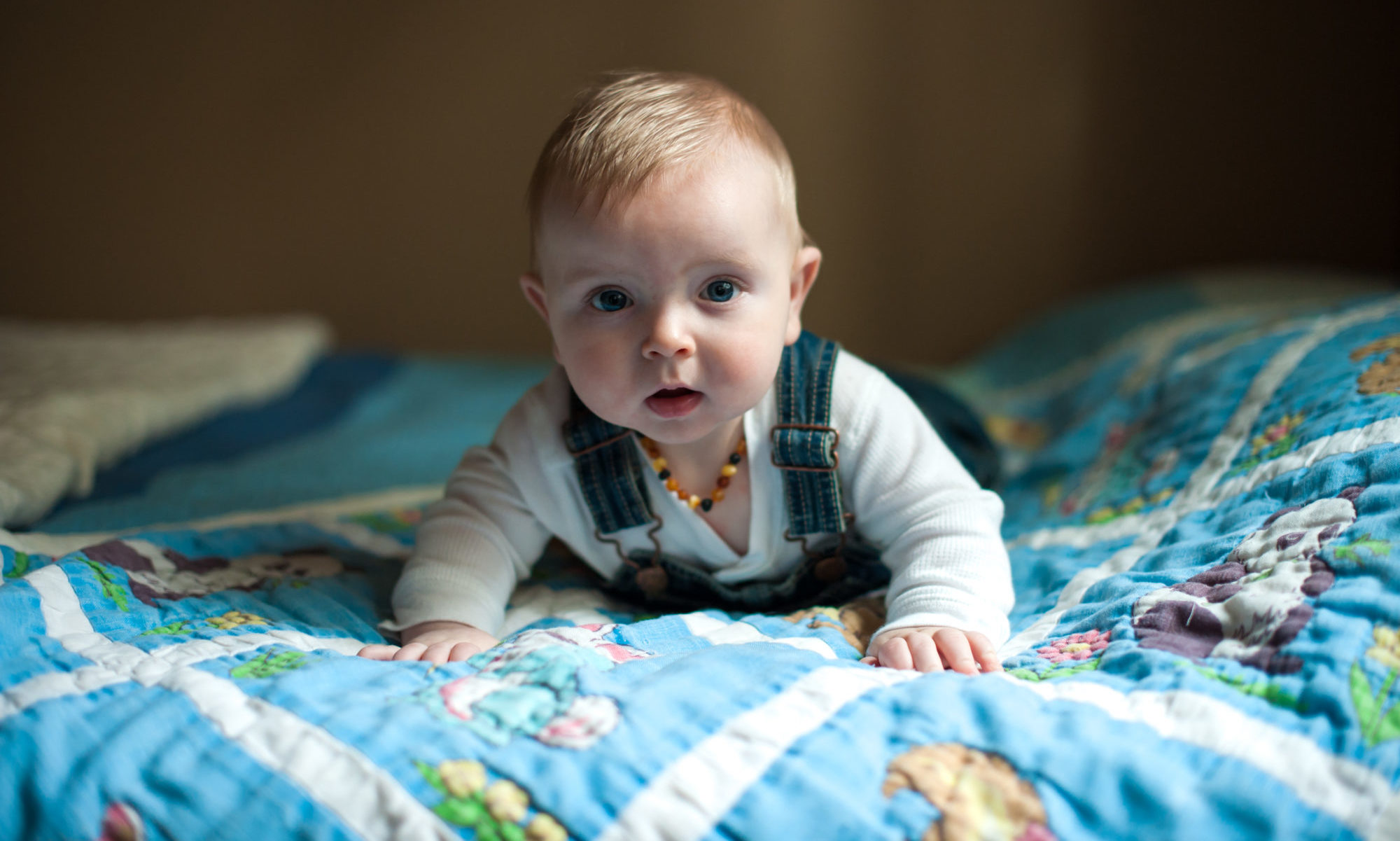
Why rough housing is good for kids

I get a lot of questions from concerned parents about rough housing, wrestling, and other physical play. Dads want to know if it’s OK to wrestle with their kids, and moms are concerned that somebody will inevitably get hurt. Often it seems that physical play of this sort does end with the younger or smaller child in tears. But as I was doing research for my thesis in 2007 I ran across some studies that changed my mind about so called “rough housing.”

One study in particular stands out in my mind. It was conducted on a playground where researchers observed boys playing a tackling game. Researchers thought that they would find the game to be violent and detrimental to kids, but they actually found just the opposite. They observed that in playing this seemingly violent game, rarely did anyone get hurt, and when someone did get hurt, the other boys reacted with caring and compassion toward their fallen playmate.

And, after failing to find what they were looking for, the researchers changed their tack and began to look for behaviors that showed kindness and caring, such as a pat on the back, a hug, or helping one another get up. They quickly realized that the vast majority of the interactions between the kids on the playground were those kind and caring gestures!

In fact, they further realized that it was because of the seemingly violent nature of the tackling game that kids were given more opportunities to offer a helping hand or a hug than they would have otherwise. So that’s when I realized, that with some clear ground rules, wrestling between kids or between kids and adults could actually be a really joyful and beneficial activity for everyone involved.

So the next time your child runs to you crying, “My brother hurt me!” you can see it as an opportunity to nurture and comfort your child (which builds your connection) AND as an opportunity to show an older child how to take even better care of his younger sibling (which will build their connection).

Now, I’m not recommending that you force your older child to offer disingenuous nurturing, rather, that you model for your children how to care for one another. I also think it’s useful to keep in mind that there have likely been lots of other moments when the older sibling did take care of the younger one, that you might not have seen. Of course, the opposite can also be true.

So, if you’re not sure what’s really going on between your kids, take some time to observe them together and keep a tally for yourself. How many times did they touch or hug in a loving way? How many times did they touch in a hurtful way? What was your favorite moment? Why? What kinds of things did they say to each other? Ideally, you would tuck yourself away in a corner and seem to ignore them, so that they can play normally, forgetting that you’re even in the room.

But do be careful not to allow your preconceived notions or biases to show up in your observations. An observation should be completely neutral and without judgment, such as “Carl jumped on the bed and Henrietta fell off,” rather than “Carl viciously knocked Henrietta off the bed.”

I mentioned ground rules earlier and here are the ones I like for wrestling and rough housing at my house:

1) We stop if someone gets hurt and help them

2) We stop when someone says stop

3) We only use our bodies and pillows (no hard objects)

4) We stay on the carpet or bed

I’m so curious, have you found rough housing to be a connecting activity at your house? What are your ground rules? Please share your wisdom with us!

And have a wonderful week, Shelly

It’s OK to cry

“Dagny III” by Christee Cook

Have you ever noticed that when a child cries, often the first things out of our mouths are things like, “You’re OK” (minimizing their experience) or “Oh no! Don’t cry!” (asking them to deny their experience) or even, “What’s wrong?!” (asking them to think about and describe the upsetting event).

None of these acknowledge the child’s feelings or provide an open, loving environment in which a child can fully feel and express his emotions. I know, it’s an unconscious reaction we have all had at one time or another, but this week it’s time to shine the light of awareness on the way we speak to an upset child.

So, if we could choose exactly how to respond, how would we? We might say something like, “I see you’re upset, do you need a hug?” or “Wow, that was really scary, wasn’t it?” or one of my personal favorites, “It’s OK to cry.”  We might even choose just to sit with them and witness their emotional expression.

I especially wish more boys were told that it’s OK to cry, because after all, it really is OK! In fact, people who are in touch with and at peace with their emotions will fare better in life than those who deny or stuff their emotions.

Studies have shown that holding in emotions like anger, frustration, and resentment, can have long term negative effects on heart health. So, by encouraging kids to acknowledge and express their emotions, we’re helping to ensure a long and healthy life for them both physically and emotionally.

On the other hand, it can be uncomfortable for us to listen to a child who’s crying, wailing, or raging. But I think that’s because we all have our own withheld emotions that we’re fighting to keep hidden. If we felt free to express our emotions as they came up in the moment, we might not feel quite so uncomfortable when our children cry or scream. I’ve certainly found this to be the case in my own life.

For a long time I was uncomfortable with sadness. I didn’t acknowledge my own, and I definitely didn’t want to be around others who were upset. I did everything I could to soothe, redirect, or even ignore any sadness that I came into contact with. And then something shifted for me.

I was hanging out with some close friends of mine, and one of our friends just started to cry. I was a little bit uncomfortable, but I was more fascinated with how unashamed she seemed about her sadness. Pretty soon the crying turned into wailing and I realized that except in movies, I had never actually seen anyone wail! I was moved to tears myself and I came away from the experience realizing that expressing sadness could be deeply moving and beautiful.

I’ll never forget how my friend looked afterward. She was so open, beautiful, free, and light. I had never seen her look so gorgeous and so at peace. So I decided that sadness wasn’t actually something to be avoided at all costs. I realized that in fact, crying could be a relief and a release. And I began to allow my own tears to flow more freely.

I like to imagine my emotions like a big pipeline. When I was holding them in, my pipe was clogged and just a trickle of emotions was getting through. But after practicing to express and celebrate my emotions as they arise, I’ve opened up my pipeline and now all my emotions can travel through it with ease. Now I feel everything with more intensity and I love it!

I am able to cry in an instant, if I’m moved to, but I can also laugh more authentically and have even experienced tears of joy (which I used to think was a bunch of hooey).

Wouldn’t it be amazing if our children never had to go through the process of suppressing their emotions and then rediscovering them? What if they could feel and express their feelings without interruption for their entire lives?  I sure hope for that for my daughter.

So this week, pay special attention to how you automatically respond when a child is upset. Then make a conscious choice about how you WANT to respond and practice it. I would love to hear your thoughts and experiences, so please leave me a comment below.

Have a wonderful week, Shelly

P.S. If this topic is dear to your heart, check out my audio program Perspectives on Feelings for a more in depth discussion of holding space for big emotions.

Building trust by telling the truth

As I listen to my daughter playing in her baby pool for the first time, with her Grammy watching over her, I feel so grateful for every experience we get have together.  And I can finally understand some parents’ almost pathological need to protect their children.

There are all sorts of dangers both seen and unseen in our world today and it can be overwhelming when we focus on what could go wrong.  A simple pool of water can become scary.  But sometimes we take the job of protecting our children too far.  By being honest with our kids, they may experience some pain, but they’re sure to fare better in life than they would otherwise.

When I talk with parents about being more honest with their children I hear all sorts of objections.  “Are you sure it’s appropriate to tell my child that?!” and “I don’t want to burden him with my feelings.”  But I think it’s a very slippery slope to withhold information from our children in order to “protect” them.  It actually seems to do just the opposite.  It hurts our kids when we don’t tell them the truth and they end up learning that they can’t count on us.

As a child, one of the things I admired most about my mom was how brutally, really, honest with me she was.  Granted, she didn’t offer a bunch of unsolicited information, but when I asked her a frank question, I knew I could count on her to answer honestly.

When I was five or six I asked my mom what the worst word in the world was.  And, after asking me to promise never to use it, she leaned down and whispered the “f word” into my ear.  I was shocked and in awe of my moms commitment to honesty.  And until I was a teenager, I never used it.  I was just curious, and I wanted to be prepared in case someone else used “bad words” in my presence.  Obviously it was a pivotal moment for me, considering I still remember it so vividly.

My mom was also very honest about sex, even when I was very young.  By the time I was 4 years old, I knew exactly where babies came from and I knew the scientific names of both male and female body parts.  As a teenager, talking to my mom about sex was easy because we’d already been talking about it for 10 years!  We had built a foundation of truth and trust that I knew I could rely on.

I’m so grateful for that foundation now, because as I got to know other girls and young women in my teens and twenties, I realized that my mom’s honesty was really quite rare.  Most of my friends’ moms had never talked with them about contraception or their monthly moon time, and as a result many of my friends were confused about the facts, unprepared to protect themselves from STDs and pregnancy, and several of them ended up with unwanted pregnancies.

I want my daughter to be informed and well prepared for life on her own.  So I think I’ll take my mom’s approach and be truthful with my child about her body, sex, and even my own feelings.  I want her to have that same foundation of trust and a deeply ingrained knowledge that no matter what, she can count on me to be honest with her.

I can only hope that by talking with her about challenging topics now, when she’s young, it will make it that much easier for us to talk about the tough stuff when she’s a teenager and young adult.

I’m curious, what’s your experience with being brutally honest with your children.  Have you seen benefits from being committed to the truth?  Have you experienced the pain of disconnection when you weren’t honest?  Please leave me a comment and share your story below.

Have a fantastic and vulnerably revealing week, Shelly

Attune to your child…some of the time

Attunement:  it’s a word that gets thrown around a lot in the world of parenting and psychology, but what does attunement really mean?  Attunement is an innate ability that almost all humans have to internally and externally match the experience of another person with whom they’re connecting.  When we see someone crying, we easily and naturally feel sadness ourselves.  When we are with someone who just found out that they won a big contest, we feel excitement too.

But attunement is not simply empathy for another person’s emotional experience.  It’s an energetic matching game.  We may feel the sadness, but we’re not really attuning unless we’re matching the physical and non-physical energy of the person we’re with.  Attunement is the ultimate connection.  It’s a joining and sharing of an experience, an experience of oneness.

I often feel this oneness while nursing my daughter or in playful moments when she’s on the changing table or when we’re rocking in the rocking chair and she relaxes, resting her whole body against mine.  Connection through attunement is incredibly important for secure attachment to happen.  And, the oneness can’t happen all the time.  In fact, it would feel awfully strange to even attempt to experience attunement for an entire day.

We need connection, and we need separation too.  In fact, it’s the dance between connection and separation that makes our human experience so rich and dynamic.  We may experience a beautiful moment of attunement and later we’ll each go off by ourselves to have some solitude.  It’s an ebb and flow like so many other things in life.  And each part is just as important as the other.

Right now I’m reading a really interesting novel told from a five-year-old boy’s point of view.  The thing I find so fascinating about it is how accurate the author is about the details of the thoughts and emotions the little boy experiences.  The boy has a favorite spoon he calls “meltedy spoon” and when I read the words “meltedy spoon” I am instantly transported back into the classroom with 3-5 year olds.  What a perfect example of really attuning to the mind of a five year old.

This week, pay special attention to the moments of attunement that you share with your child and then consciously allow your child to separate from you when he’s ready.

Instead of hovering over him at the park, intruding on his playtime, bring a book and let him have his own experience.  Then, after an especially fun moment, he might just run over to you and excitedly share what happened.  That’s your opportunity to put the book down, make eye contact, feel the excitement in your own body and attune with him.  Maybe you’ll even be inspired to jump up and run around with him for a while.

But again, as soon as you notice him going off on his own, resist any urge you might have to follow, and go back to your book instead.  By allowing your child to determine the length of the cycle between attunement and separation, you’re reassuring him that you’re available when he needs you, but you’re not going to interrupt his flow.

If, on the other hand, your tendency is to encourage your child to play on her own more often so that you can do your adult activities, then your challenge this week is to really stop, drop what you’re doing, and attune to your child when she reaches out for connection.  Remember, that means matching her energy.  So, if she’s slow and methodical, you’ll practice slowing down too.  And if she’s giggling and gasping for breath, see how much you can feel what that must feel like.  Pay attention to any sensations in your body as you practice attuning with your children.  Often, we can find new levels of empathy when we’re willing to try to step into our children’s shoes more fully.

I would love to hear about your own experiences of attunement and separation.  Is the natural ebb and flow easy or difficult for you?  Does your timing match up with your child’s?  And how do you feel when you notice your child coming toward you or moving away from you?

I hope you’ll all have a fantastic week, Shelly

The truth about separation anxiety

OK, I’ll admit it, when I was a preschool teacher I used to shake my head at the moms who had such a hard time leaving their child.  It seemed obvious to me that by prolonging their goodbyes and furrowing their brows they were only escalating their child’s separation anxiety.  If they would just leave swiftly, their child would settle in and enjoy the day much sooner!

Now that I have my own child, I definitely have more compassion for those moms.  It’s so hard to leave sometimes!  And when your little one is clinging to you and asking you to stay, I imagine it’s almost impossible to walk away.

But as my daughter and I have our first experiences of separation anxiety, I’m realizing that right now, I’m actually more upset than she is!  And after seeing lots of young kids freak out when their moms leave them at preschool, I know that I had better get a handle on my own separation anxiety now, so that I don’t transfer my upset to my beloved child.

So, I picked up Elizabeth Pantley’s “No-Cry Separation Anxiety Solution” and I am really enjoying it.  Pantley says that separation anxiety for both parent and child is completely normal and natural and that it’s actually an indication of a strong and healthy attachment.  Whew!  What a relief!

OK, so now that I know that my upset is caused by my deep love for my child, I can relax a little bit and give myself some compassion.  I dearly, deeply love my daughter and want what’s best for her.  And intellectually I know that what’s best for her is to form and maintain ongoing relationships with several trusted adults and some peers.

But emotionally, sometimes I just want her all to myself.  There, I’ve said it.  So now it’s time to take stock.  And actually, I’m already making great progress in sharing her with other adults.  Her Grammy comes over twice a week, she has a Daddy day every week, and she spends several hours each week with our good friend who is a childcare professional.  She is starting to go on outings without me and so far it’s going well.

So in the moments when she needs me, I think it’s OK to go to her.  I’ve also been giving her more time by herself while I’m home and if she calls out  for me I simply call back, “Hey sweetie, I’m in here folding some laundry.  I’ll see you in a minute.”  If she gets upset, I go to her immediately, but often, just knowing that I’m nearby is enough to calm her.

Now that I think about it, I bet some of my separation anxiety comes from my own early childhood experience of going from my mom’s house to my dad’s house and back again every week.  No matter how happy I was to reunite with the parent I missed, I also had to say goodbye to a parent I loved dearly.  Hmmm, isn’t it amazing how our own experiences can color our experiences with our children?

I’m so curious, what have your experiences been with separation anxiety?  What helped you the most?  In Pantley’s book she shares a great idea about a magic bracelet that you fill with your love and send with your child to school or daycare.  I love that idea!  I also remember a children’s book about a mother raccoon (I think) giving her child a kiss on the palm that he got to take with him.  I think it’s so important to help children understand that our love stays with them even when they’re far from us.  And I guess I need to reassure myself that my daughter’s love stays too, even when she’s at her Grammy’s for the afternoon.

I hope you’re having a fantastic week.  Love, Shelly