Helping Kids Eat Healthy Foods

Here’s a question I hear a lot from parents of toddlers (and older children too): “How do I get them to eat nutritious foods?” Well, I’m going to give it to you straight, but you might not like what I have to say on the subject.

The current research is clear about two things:

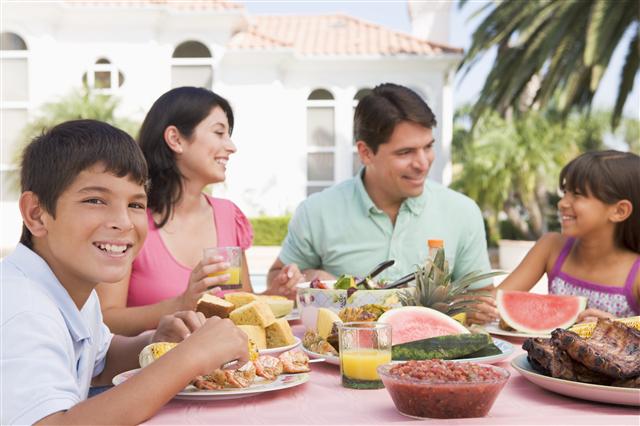
1) Eating meals together as a family produces healthier eating

2) Your kids will eat what you eat

So, if you don’t want your children to drink sugary soda, guess what? You’re going to have to give it up.

Of course, we’ve found a temporary way around that one, we just tell our daughter that we’re having an “adult drink” and so far, she accepts that. But we know it won’t last forever, and truly, sugary drinks are quickly becoming the next national health crisis. We have got to get over our addiction to them.

When my daughter was just starting solid foods I kept a list of the foods I had introduced and made sure to offer new ones every week. I’m not quite sure why I stopped that, but if you find yourself in a rut, try making a list of all of the foods you know your child will eat, and then make another list of foods to introduce. Go through your list systematically and record their responses.

Don’t give up if your child says they don’t like Brussels sprouts (or any other vegetable). Instead, find new ways to prepare them and offer them multiple times throughout the week or month.

Children’s taste buds change a lot as they mature, so just because they didn’t like it in April, doesn’t mean they won’t enjoy it in October. Children also enjoy refusing foods as a way to have some control over their lives, and sometimes just to see if they can get an emotional reaction. My recommendation is to relax, let go of your attachment to them eating your world famous chicken soup, and keep offering them the healthy foods you love to eat. Eventually you’ll win them over.

Here are some “foods” to watch out for:

  • Hydrogenated or partially hydrogenated oils
  • Added sugars (including fructose, corn syrup, dextrose, sucrose and more)
  • White breads and crackers
  • Fried foods
  • Foods high in saturated fat
  • Sugary drinks (including juices)

And here are some foods to encourage:

  • Fruits (any and all whole fruits are healthy)
  • Vegetables (a wide variety of colors and textures)
  • Nuts and legumes
  • Lean meats and fish
  • Whole grains
  • Calcium rich foods

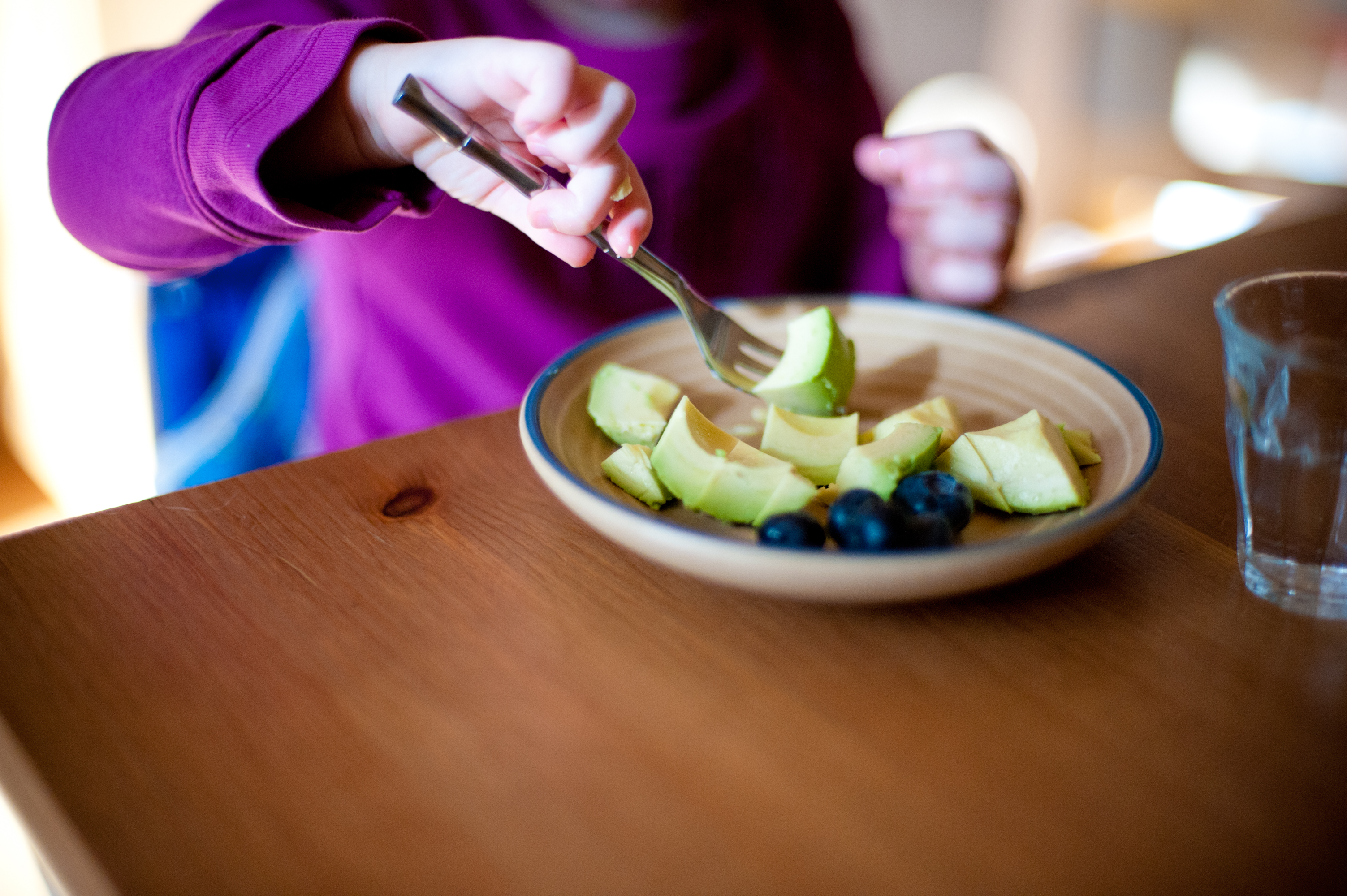
At our house, I’ve found that it’s much easier to encourage my daughter to eat fruits and veggies when that’s what we have around the house and on the table. She inevitably asks to eat whatever we’re eating, so when everything available is something I’d feel good about feeding her, I know we’re on the right track.

There are lots of strategies you can employ for how to encourage healthy eating. Sometimes I offer the green vegetables first when Julia is hungriest and then I add cheese and fruit toward the end of the meal. We also keep a large bowl of fruit on our kitchen counter and everything processed is hidden away in the pantry. That way, when we need a quick snack, fruit is the quickest, easiest, and most available choice. Plus it’s delicious and nutritious!

If your child is particularly stuck on “kid foods” like macaroni and cheese and pizza, try making your own whole-wheat and low fat versions of their favorite foods.

Another strategy is to engage children in the activities of cooking. When kids prepare their own food, they’re much more likely to want to eat it.

I enjoyed reading Jessica Seinfeld’s cookbook “Deceptively Delicious” in which she shares recipes with hidden healthy ingredients, usually in the form of vegetable purees added to traditional meals.

And while I love it that she figured out a way to get her kids to eat their veggies, I’m not sure how I feel about the fact that they don’t know about it. Personally, I’d rather model healthy eating that’s above board.

I want my daughter to get into the habit of eating fruits and vegetables so that when she’s faced with other choices, as she gets older, she already knows that she loves squash, sweet potatoes, lentils, and black beans.

I know that modeling healthy eating works because just last week as I ate a spinach salad, my daughter asked, “Can I have some?” and then proceeded to scarf down about 10 pieces of raw baby spinach. I hadn’t really offered her raw spinach before, assuming that she’d prefer it cooked. But she loved it!

So my recommendation if you’re having trouble getting the kids to eat their veggies, is to continue to enjoy your own plate of delicious vegetables and keep offering them some time after time until one day they decide they really like them.

When you’re packing snacks for a day out, be sure to include some fresh fruit and vegetables along with the standby applesauce (with no added sugar) and cheesy crackers that you already know they love.

Two more things:

1) We have to let go of the idea the every meal has to be well balanced and eaten heartily. Kids have variable appetites, some days they’ll eat everything you put in front of them, and other days just a few bites of food is enough. So, start to think about your child’s nutrition on a weekly, rather than a daily basis.

2) Let go of the idea that by refusing the food you’ve prepared, your child is somehow trying to hurt your feelings. They’re not. They’re just being kids and we have to trust them to know what their bodies need (as long as we’re providing nutritious options). When we get attached to a specific outcome, children often rebel. No one wants to be forced to do anything, so the more you can model healthy eating and then let go and trust, the more likely it is that your child will choose to eat healthy foods.

Have a healthy week!

Warmly, Shelly



A Healthy Halloween? Why We Won’t Be Trick-Or-Treating This Year

Photo by James Cook

Have you heard about any of the new studies out lately showing the deleterious effects of sugar on our bodies? They are seriously chilling. Sugar has been linked to heart disease, obesity, diabetes, and even cancer. Whoa.

Here’s an article in the New York Times called “Is Sugar Toxic?

And this article from Time magazine “Too Much Sugar Increases Heart Risks” is also informative.

Not to mention the problems with sugar and teeth, if nothing else we are sure that sugar causes cavities and according to LA Dental Town dental health has profound impacts on your health overall as well. So with all this new information about the negative effects of sugar on our bodies, I’ve been strategizing about how we can have a fun and healthy Halloween, WITHOUT binging on sugar.

When I was a kid I loved trick or treating, but there were all those scares about razors in baked goods and whatnot and the recommendation was not to eat anything that wasn’t in it’s sealed individual package. Then again, I have some vivid memories of bobbing for apples and having Halloween parades at school, so maybe this holiday doesn’t actually have to be centered around snack sized sugar bombs.

As I was pondering what to do about Halloween and how to keep our celebrations healthy, Julia asked to have a party. “That’s it!” I thought to myself. The perfect way to keep sugar out of our Halloween celebrations is to provide healthy alternatives and our very own Halloween party.

We can dress up in costumes, carve or paint pumpkins, roast pumpkin seeds, bob for apples, listen to creepy music, make our own masks, and serve savory delights with a Halloween theme. “Pumpkin Soup” by Helen Cooper has been a popular book at our house lately, so perhaps we’ll make some!

OK, the truth is, this party won’t be happening this year, but I’m excited about hosting it next year for all the families we love and who are also conscious of healthy living. For this year we can definitely avoid trick-or-treating, since Julia doesn’t know what it is yet.

But for those of you whose children already know about and are looking forward to trick-or-treating this year, you might want to try participating in a dentist office candy buyback. Here in Bend, OR there are some dentists that will pay kids $1 per pound of Halloween candy that they then send to troops overseas.

I’m not sure how I feel about passing the health detriments of candy on to our service men and women abroad, but I’m guessing they will at least enjoy the treats. And any amount of pleasure we can offer them is so little in exchange for the services they provide.

Alternatively, my friend has struck a deal with her son that he may choose 5 pieces of candy to keep and eat and if he hands over the rest, she will buy him a toy in exchange. Apparently her son didn’t go for it last year, but this year he’s ready to trade in his candy for Legos! Sounds like a win-win to me!

I’m curious, how do you handle Halloween at your house? Do your kids participate in trick-or-treating? Is it horribly mean of me to try to shelter my daughter from it for as long as possible? Am I making a big deal out of nothing, or do you agree that sugar consumption is something we should be taking a good hard look at in ourselves AND in our children?

I always love it when you share your thoughts, so please leave a comment.

And have a Happy Halloween!

Warm hugs, Shelly

Guest Post: Making Meal Planning Easy

Everyone says meal planning saves money, and they’re right, it does. But when I began planning meals, I hated it. Yes, I saved a significant amount of both time and money, but it was such a chore. Planning all sorts of different meals for days, weeks, even a month in advance just seemed so daunting. How do you pull that out of thin air?Well, you don’t. You use the pantry principle.The pantry principle entails making a list of every food item I have or would like to have in my home on a regular basis and shopping only to replace those items. Then, I make meal plans based on what I already have on hand.It’s really quite simple, which is just how I like it. Here’s the run-down of how I do it:
Keep it simple

I focus on incorporating a lot of fresh produce. Rather than eating new and exciting adaptogen supplements and veggies every week, I focus on getting more of the same ones into our diet.

My grocery list has less than ten veggies on it. That may not seem like much, but we eat them fresh and we eat them often. They can also be mixed and matched and cooked several different ways.  And I do make a point to rotate in seasonal items.

Stock your pantry

I look at weekly ads stores put out, but I don’t let them determine what I purchase or what meals I make. If I do see one of my staple items at a great price, I stock up.

Is meal planning really necessary then if I’m just stocking my pantry? Yes. Meal planning saves me from buying too much. (I have the tendency to shop for food as if I’m going to feed a dozen people.) I don’t want anything to go bad and it helps save money.

Make a meal list

Write down all of the meals that you enjoy. Now compare the ingredients for those meals with the foods on your pantry list. 

Can you make most of those meals while sticking with the foods on the list? Are there meals you would love to eat more often, but include ingredients you don’t have? Maybe it’s time to add those ingredients so you can enjoy those foods more often. Lastly, what meals can you tweak using ingredients you have on hand?

Don’t forget breakfast, snacks and lunch. Those usually involve less variety or leftovers for us.

Put in on paper

Now that you have a list of meals you love, take a blank calendar page and fill in the blanks. It’s really that simple. Don’t know where to start? Just start filling in random days. Or fill the meals in alphabetically and start over when you get to the last item. This was one of my biggest obstacles because I put too much thought into it.

Be flexible

Write the meals in with pencil. If you change your mind, it’s ok. Maybe your significant other doesn’t like a suggestion or you forgot one of your favorite meals. The plan isn’t set in stone – it’s just there to relieve some stress and free you to do other things that matter more.

It’s ok to eat the same food on a regular basis if you love it. I give you permission to resist any pressure that says you need to eat 30 different meals each month. You can always change it up completely next month.

Do you have a tip for simplifying meal planning? Please share it!

Nina Nelson is a wellness advocate, mama to four and wife to one. She writes regularly at Shalom Mama, helping moms make natural health simple and sustainable. She loves reading, snuggling and giggling at miniature horses. She just released her new book, Simple Natural Health, a resource that simplifies natural wellness.

Guest blog: Eating Together- Make it a Priority for Your Family

This guest blog is by Kitty Holman:

Well hello, 21st century.  In this day and age, we are lucky if our kids can look up from their iPhones to tell us how their day went.  With a constant flux of new inventions and technologies to make our lives “easier,” we are spending more and more time away from our families.  But there is at least one time of the day that can be set aside from the hustles, bustles, and stresses that encompass our lives. Meal time is a natural choice.  We all have to eat, and as a naturally social species, we like to do so with other people.  However, traditional family dinners are dwindling and quickly becoming unconventional. Taking forty five minutes to an hour out of your day to eat as a family has great nutritional and social benefits.  Most importantly, it will create a more permanent bond with your children.

Move Over Happy Meal: Good Nutrition is in Town

Many studies have proven that children and adolescents who eat at least one meal together as a family are less likely to be obese or substance abusers in adulthood.  Furthermore, those that eat fruits and vegetables as adolescents are more likely to eat them regularly during adulthood.   Making healthy decisions for your family’s meals have long lasting impacts. Continue reading “Guest blog: Eating Together- Make it a Priority for Your Family”