Sharing Gratitude: Acknowledging each family members’ contributions

It’s amazing what a little appreciation, acknowledgment and gratitude can do.  You can go from feeling hum-drum or bummed to feeling completely ecstatic in a few short moments if you only take the time to practice gratitude.  Gratitude is like this magic potion that reminds us of all we have to appreciate in life–and there is a LOT to appreciate.

I have some friends who share gratitude with one another every time they sit down to share a meal together.  Others use gratitude as a way to connect at the beginning of their monthly family meeting.  I even know some parents and kids who say what they’re grateful for each night before bed.

I’ve found that when I feel appreciated and acknowledged, I am more willing to contribute, I feel more engaged in my relationships, and I’m just generally happier.  So, do kids feel any different?  I don’t think so.  I think we all respond well to being appreciated and acknowledged.  But it depends on how.  For instance, compliments like, “You have pretty hair.” usually don’t impact me in the same way that true acknowledgment does.

Here’s the difference:  A compliment is really just a positive judgment which might feel good at the time, but then it also leaves room for negative judgments which we can feel afraid of.  An acknowledgment is different. Continue reading “Sharing Gratitude: Acknowledging each family members’ contributions”

Four ways to keep old friendships alive after kids

This post is part of our Whole Life Parenting series.

I was talking with a friend the other day, who marveled at how her whole friendship landscape had changed after having kids. She said, “I have three kinds of friends now: Those who no longer call me, those who treat me exactly the same as before I had kids, and those who now have kids of their own, so they get it.”

Sure, we might find the rare childless friend who actually gets how much support parents need and how little we get, who says, Hey, I was just going to read a good book tonight, why don’t I come over and babysit so you can have a night out? Or, the kid-at-heart who calls and spontaneously suggests you and your family hop on out for a jaunt to the zoo or seaquarium.

But mostly, after we become parents, our old friends keep going on about their business, and we either follow along, or drop out of their consciousness.

How do we keep those friendships alive, and nurture the parts of us old friends remember and reflect back to us? No matter how much we love our families, no one will ever elicit quite the giggles and nostalgia that a friend from ten, fifteen or twenty years ago will.

Here’re some ways to keep breathing life into those precious relationships:

1) Tell your childless friends about the reality of your life. Suggest things to do that you love in ways that now make sense for you.

“I would love to go on that four-day, seven hundred dollar spa retreat two states away, but I can’t afford the money or the time away from my family. How about a pedicure Sunday morning?” Some of my friends have responded by turning their own events into child-friendly ones and inviting other families with children. This makes it so much easier!

Continue reading “Four ways to keep old friendships alive after kids”

Serve-yourself snack gives you more freedom

In the Montessori classroom we have a LOT going on. Twenty-four kids are doing individual and group activities, the head teacher is demonstrating activities, and the assistant teacher is available to help kids when they need a hand.

So, when it comes to serving snack, the more the kids can help themselves, the better. This is true at home too. I mean, how many times have you been happily folding a load of laundry when your three year old whines, “Mommy, I’m huuuunnggrryyy.”

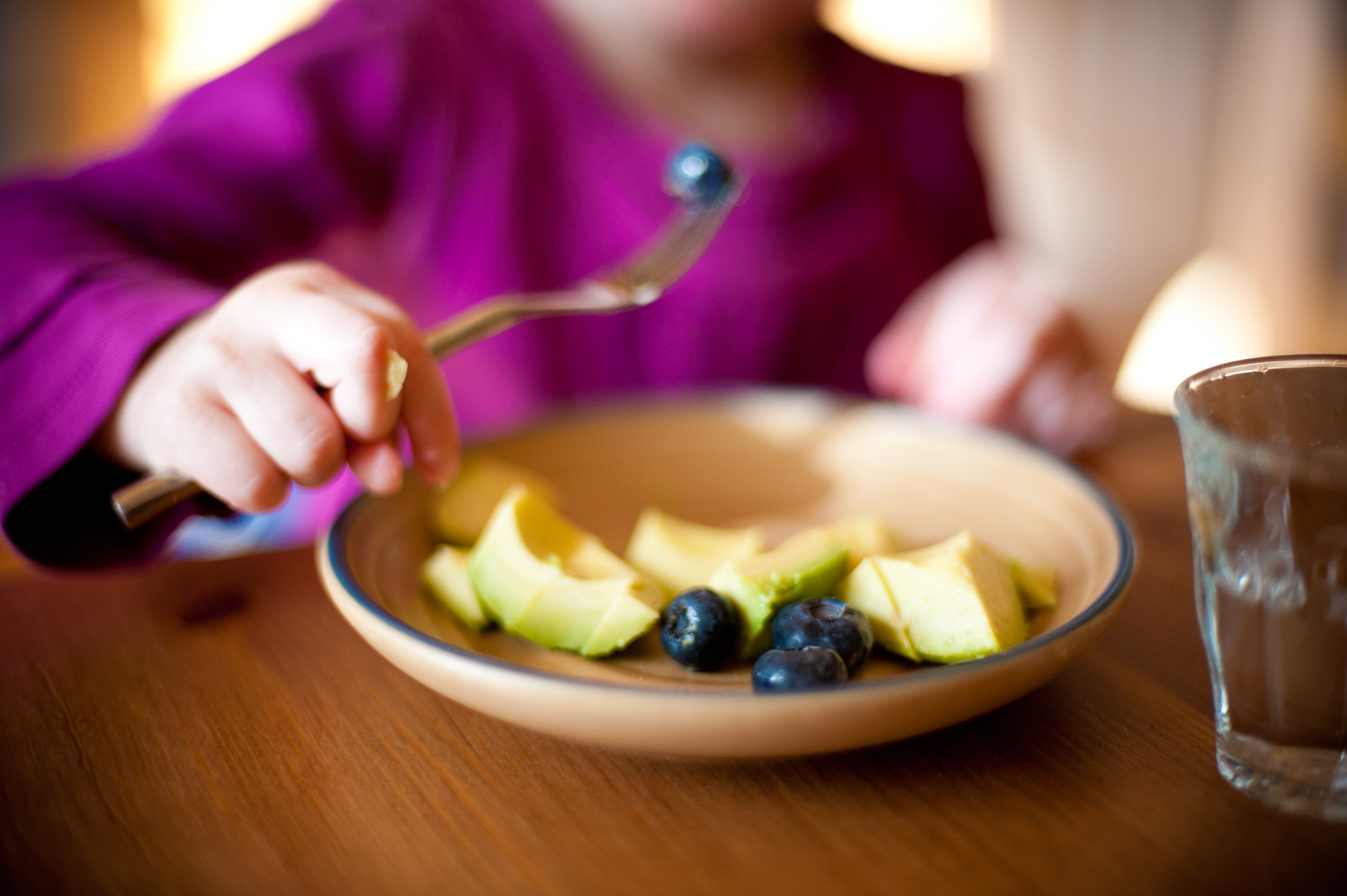
Here’s the solution! If you put out the necessary ingredients for a healthy snack on a child-sized table at say 9am every morning (or at 3pm if your kids are more hungry in the afternoon) your children can serve themselves whenever they’re hungry. This promotes independence while ensuring that your kids are eating a nutritious snack AND you don’t have to get up from your own work to serve them. Continue reading “Serve-yourself snack gives you more freedom”

Parents: Eight ways to party like it’s 2009!

This article is the fifth in our Whole Life Parenting series, which offers practical tips to meet the needs of both parents and children.

Not too long ago, I went to the party of some friends. Small children buzzed, hooted, rolled, walked, cried and ran around throughout the whole party. The host said, It’s amazing how the parties have changed over the years as this group of friends has had children. We’ve just opened up into a kid-friendly space.

This, I think, is the key to having a great time at party when you have kids around—think of it as a kid-friendly space where you also get to have some grownup time—more mindful grownup time, perhaps than before you had kids, but grownup time nonetheless.

Here are eight ideas for creating parties that meet both young people’s needs and adult needs:

1. Cluster ages, mix genders. Try to invite clusters of kids close to the same age, and a mix of boys and girls. An odd child out can wind up getting left out of the social activity, or not treated as warmly as the others. Kids close to the same age will organize themselves into self-directed play. Mixed ages can also work well when older kids help supervise the younger kids, and younger kids get to look up to the older kids as role models.

2. A little bit of kid-friendly goes a long way. If you plan an activity or two just for the kids, one or two adults can supervise while the others get to interact with each other. For example, last Chanukah, I had the kids cut out cookies. After I baked them, I put the cookies and decorating supplies in a big tray, and the kids occupied themselves decorating the cookies while the grownups got to schmooze.  We always keep a kid-sized table with a box of art supplies and paper in the living room, plus a barrel of toys, so our young visitors can entertain themselves if the grownup talk gets too boring.

3. Rotate supervising grownups. Depending on the ages of the kids, you might be able to get away with rotating the supervising grownup. This often happens naturally, but it can’t hurt to ask ahead of time if folks would be willing to take a short shift supervising the kids so it doesn’t all fall on one parent.

4. Find an enclosed space, whether natural, or human-made. An open space, such as a park in a valley, or a field surrounded by a fence or forest, can provide kids with an exciting play environment, as well adults with peace of mind that the kids won’t encounter traffic.  And sometimes it’s just nice to get out of the house and commune with nature while you socialize.

5. Create a staggered party. I have held and attended a number of these. Basically, the set up is, create some specifically kid-friendly time for part of the time, followed by a transition time, followed by grownup time.  For example, you might have a weekend barbeque with 4:00 p.m. to 6:30 p.m. as designated child-friendly time, and set up your space according to some of the ideas above. Let the focus be on the kids during this time, so they can get play hard, eat well and get ready to go home. 8:00 p.m. could begin the adults-only time, and the intervening period can serve as transition. This way, guests can choose to come to either one or the other party segment, or get a taste of both by staying for the transition. Some guests might even choose to take their child home and then return.  Others might put their child to bed in an extra bedroom and continue to party!

6. Set up separate kid space. Though this doesn’t work equally well in every space, some families are fortunate enough to have a space big enough where kids can hang out separately from the adults. I went to a party where a friend had converted her attic into a playroom, and her babysitter hung out with the kids while we parents had some adult time downstairs. We all chipped in for the babysitter at the end.  Babysitting can also be a great way to get older kids involved, who might otherwise be bored or tempted toward something not good for them. It’s also a chance for them to earn a bit of money.

7. Plan a party with activities both kids and adults can enjoy. Costume parties with dancing, pumpkin carving, barbeques, henna or face-painting, music and food are all things people of walking and talking age can join in, at least on some level. There are lots of ways to cut loose without a drop of alcohol, so adults can have fun while still keeping a clear head for the kids.


8. Revel in the freedom of kid-friendly space. When we put kids at the center of our consciousness, tune into them, and follow their lead, we actually get a chance to drop some of the adult rules. We get to be silly, get muddy, act nonsensical, run around and maybe even get more exercise than we would if we “acted our age.” This kind of permission can renew our spirits in ways we might not even realize we missed if we don’t take the opportunities.

As a parent, you don’t have to give up having parties, and not all your parties need take  children into consideration all the time. Certainly, life with children will never be the same as before you had kids, but with a little planning, vision and intention, you can enjoy your children, and have social time with adults.

How have you been partying, if at all? Please let us know in the space below.

Party on,

Jill

Nine ways to exercise with children

Have you been lamenting your lack of exercise? Thinking back on the days when you used to get to go to the gym, or run around your neighborhood or swim laps at the pool? Kid time is sometimes almost all our time—and the kind of “running around” we do with them doesn’t always feed our body’s need for vigorous (or gentle) and sustained exercise.

Here are some of the ways I’ve found to bring exercise back in, with activities that you and your kids both enjoy, and that give you the added benefit of that exercise you’ve been craving to round out your life, keep you physically fit, and elevate your mood. You can adapt these suggestions to your mobility level.

1. Go for a long walk outdoors. People who walk in nature report that they feel happier after a walk in the woods than they did when they started. Find a trail where you can both walk, or where you can walk and push a stroller, or where your child can run, or scoot on a scooter (a great way for them to develop coordination). A brisk walk can revitalize your and your child’s circulatory system, and a controlled dose of sunshine will do you both some good. If it’s cold, bundle up. If it’s raining, throw on ponchos.

2. Play chase. Pretend you can’t catch your child, so they can feel powerful. Then run away from them and let them “catch” you. Before you do, you might be able to run several laps around them. Depending on how long their energy lasts, you might be able to get in a good aerobic workout.

3. Go for an actual dedicated run with your child around a local track.  If you have an infant or very young child, you might be able to run pushing a stroller.  Or, if your older child runs slower, you can run circles around them, and make a game out of it. In this case, your goal will be to keep up your own pace. You can talk with them beforehand about your goals, for example, “I want to run for twenty minutes. You can run with me, let me run around you, follow on your scooter, or stay on the side where I can see you and play with your toys and books.” Did I mention it helps to bring toys and books almost anywhere? Continue reading “Nine ways to exercise with children”