

12 Ways to Encourage Failure and Why You Definitely Want to Do it

Now why in the world would I suggest that you’d want to encourage your child to fail? Well, current research is telling us interesting things about which character traits are associated with lifelong achievement and success. It’s also showing us that these “traits” are not simply inborn, but can be actively taught.

Character traits like grit, perseverance, and tenacity turn out to be much higher predictors of accomplishment than test scores, grades, or even IQ. It turns out that even smart kids who lack these skills often end up leaving college without a degree or have a difficult time holding down a job. On the flip side, even children who aren’t academically gifted can achieve great things if they have the drive and tenacity to keep reaching toward their goals.

So, how do children learn something like perseverance? They learn it through experience. About six months ago I noticed that if my daughter wasn’t able to do something on the first try, she would throw herself down and cry in frustration, refusing to try again. “I can’t do it,” she’d intone through her tears.

For a while I wasn’t sure how to respond to her upset. I didn’t want to encourage her to stuff her feelings of frustration, but I also knew it was important for her to learn to persevere. And then I read, “How Children Succeed: Grit, Curiosity, and the Hidden Power of Character” by Paul Tough. What an enlightening read!

After absorbing a bunch of new information, I decided to offer some reassurance and to encourage Julia to keep trying, even when she didn’t succeed initially. I said things like, “Just keep trying and eventually you’ll succeed,” and “Everyone makes mistakes.” After a few weeks, I knew these messages were getting through to her because one day she failed at a task and instead of the usual meltdown, she calmly announced, “Sometimes you have to try more than once before you succeed.”

So I decided to make a list of quick and easy ways to encourage failure.

Here it is:

1) Acknowledge and challenge, “Wow! You did it! Want to try something even harder?”

2) Encourage, “I know you’ll succeed eventually if you just keep trying.”

3) Offer a demonstration, and then let them try “Would you like me to show you how? OK, now you try.”

4) Suggest a new strategy, “When I get frustrated, sometimes it helps me if I walk away and try again later.”

5) Share your observations, “I see that you’re using your right hand to hold it and your left hand to push it through.”

6) Ask for a lesson, “Hey, I noticed that you’re able to do ______, will you please teach me how?”

7) Discover their strategies, “How did you decide to do it that way?”

8) Present a problem, “I need your help to figure this out, how do you think we should go about solving this?”

9) Remind them of past challenges, “Hey, remember when you were littler and you couldn’t climb up the jungle gym? And now it’s super easy for you!”

10) Help them keep track of their accomplishments, “Hey, you can do it now! Do you want to add this to your list of accomplishments?”

11) Remind them that circumstances can alter the outcome, “I know you were able to do it last week, but right now you’re hungry and tired and that makes things more difficult. I’m sure if you try it again after a snack and a rest you’ll have better luck.”

12) Celebrate the failures,Hooray, you failed! That means you’re trying something really challenging. I feel so proud when I see you trying something difficult. You’ll always learn more if you continue to challenge yourself.”

Do any of these seem foreign to you? If so, you might have some work to do on your own relationship to failure. Remember, when Thomas Edison invented the light bulb, he tried 10,000 things chemical compositions that didn’t work, before he found the one that did. Here’s what he said about his so-called failures. “I have not failed. I’ve just found 10,000 ways that won’t work.” Now that’s the epitome of grit, perseverance, and tenacity.

And no matter what your child ends up doing, these character traits will serve her well. So this week, see how many of these 12 you can implement with your kids. And then watch as they develop more resilience and tenacity before your very eyes.

Have a fantastic week, and even if you don’t, find a way to learn and grow from the challenges you face! Warm hugs, Shelly

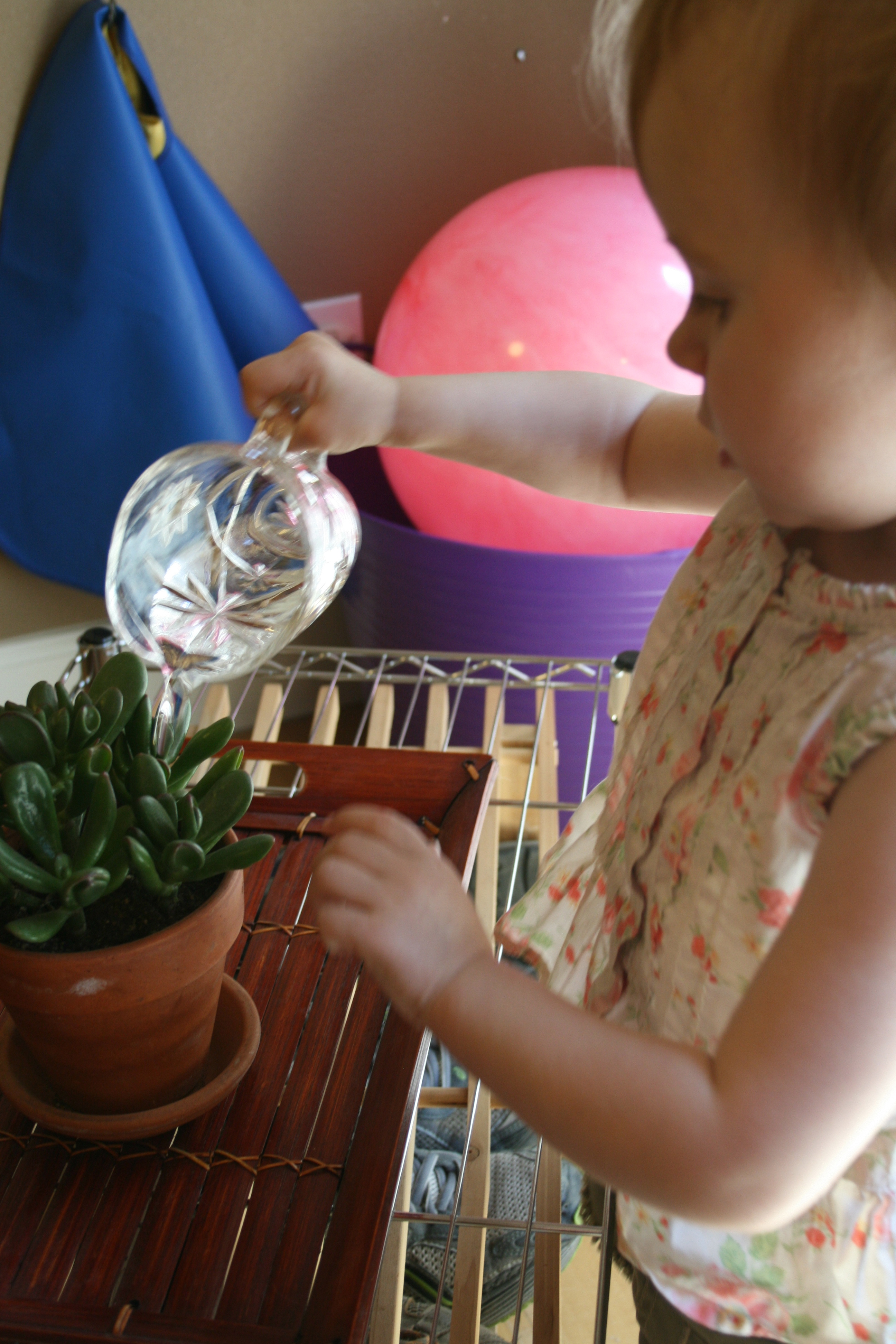
Photo by Suzette Hibble
I Trust You

I’ve been working on my new eCourse that will be available this spring and so I’ve been thinking a lot about my parenting values, my priorities, and the ultimate messages I want my daughter to receive both verbally and non-verbally through my parenting.

Of course I want her to know she’s loved and cherished and that she can do anything she puts her mind to. I want her to know she’s valuable and capable and that her opinion matters. And as I pondered these things there was one message that kept showing up.

I trust you.

I want my child to know that not only is she wise and capable, but that I actually recognize that she knows what she’s doing. Yes, she’s just two and a half years old, and I want her to know that I trust her to make wise decisions and to take care of herself, and that I support her in taking appropriate risks and reaping their rewards. I want her to know that it’s OK if she falls on her face, we all do that sometimes, and we learn and grow as a result.

I want her to trust herself.

So the other day when she was sorting the silverware, a task she joyfully takes on almost every time I ask, I cringed when she kept asking me to confirm whether the spoon was large or small or whether the fork was in the right spot. “I trust you.” I responded. “You can decide if it’s large or small. Just put it where YOU think it should go.” She happily resumed her task, finished up and went into the other room to do something else.

But later, I worried about her need for reassurance and her fear of making a mistake. I wondered if she’s getting too much feedback from adults about how “right” or “wrong” she is. I fretted that perhaps because I’ve taught her the difference between a sphere and an ellipsoid, I may have inadvertently taken away her ability to discover those things for herself.

Later, after all the worry had dissipated, I just knew on a deeper level how dedicated I am to trusting my child and how committed I am to nurturing self-trust in her. I remembered all the times I’ve refused to offer her an evaluation and asked her to tell me what she thinks instead. I recalled a few times when she’s asked me a question and I’ve simply responded, “You know.”

I remembered a time at the playground when she refused to climb up, worried she might fall. And then a subsequent trip when she tried to climb up and did fall (even though I was spotting her). She cried, got back up and tried again, finally succeeding. I remembered the look on her face. It looked like the success was even sweeter after her previous failure.

I know that’s often the case for me. Overcoming fear and putting in effort gives me a greater sense of purpose. And maybe that’s what they’re meant to do. It’s the things I’m not willing to try, because I’m afraid of failure that most plague me. It’s the times I notice that I’m playing it safe that disappoint me. Because I think we’re all bound for greatness, except when we get in our own way or we’re too afraid to step up.

So I want my daughter to trust her instincts and go for what she wants, recognizing a potential failure as just another stepping-stone to success. Because after all, as long as we persevere, that’s really all failures ever are.

And when she has a question, I want her to look within and know that she’ll always find what she needs there. Sure, she can look something up or ask a teacher. But ultimately, I want her to know that HER truth is what matters most. I want her to know that no matter what others might say, she can trust her inner knowing.

In fact, I want that for everyone! So this week, let’s all trust ourselves more and let’s remind our children that they’re trustworthy. Let’s also take a look at our words and our actions to make sure that we’re sending the message loud and clear that we trust our children. And if there are things that you’re doing that seem to fly in the face of that message, look within and decide for yourself whether you still need to do those things. Maybe there’s a way that you can trust and let go even more than you are already. Or maybe not. Either way, I trust you.

Have a wonderful week, Shelly

Hooray for Mistakes!

I’ve been reading a very interesting book about exactly why intrinsic motivation is so important for children AND for adults. It’s called “Mindset: The New Psychology of Success” by Carol S. Dweck and in it Dweck describes two opposing mindsets we all experience.

She refers to the first as the “fixed mindset.” This is the voice in our heads that tells us that we have a fixed amount of talent, intelligence, or skill at a certain task and there’s nothing we can do to change it. This mindset also associates effort with a lack of natural talent. This is the part of you that thinks you’re just not a fill in the blank kind of person. “I’m not artistic.” Or “I’m just not very playful.” Are examples of the fixed mindset.

The other mindset is called the “growth mindset.” When we’re in the growth mindset we believe that we can learn and grow and become better at anything that we put effort into. The effort becomes part of the fun as we develop our skills and reach for our goals.

Interestingly, when we tell children things like, “good job” we’re inviting them into a fixed mindset. Our focus is on the outcome, rather than the effort or the journey of discovery. And, once we’ve labeled them as “good” or “smart” or “talented” children in the fixed mindset suddenly have something to loose if they fail. So, they stop trying at all. Not exactly the result we were wanting when we offered the praise in the first place.

On the other hand, when we focus on the effort, “Wow, you really put a lot of effort into that!” we’re inviting them to see effort as a part of the learning process (which it is!). In this mindset, children will experiment, try harder and harder puzzles, and get excited about learning new stuff. Now, that’s what we’re wanting for our kids, right?

The thing I’m finding most interesting is that people in the growth mindset often celebrate their mistakes, rather than sinking into a hole of despair about them. And that one choice, to celebrate our mistakes rather than getting down about them, makes a HUGE difference in our overall ability to learn something new.

This is true for children and adults alike. So as I’m reading this book, I’m thinking, I know a lot of moms who are in a fixed mindset about mothering. We think that we should already be good at it, or that we’re just naturally bad at it and there’s not much we can do about growing our mothering abilities.

But I’m here to tell you that even if you’ve been doing all sorts of things you don’t want to be doing with your kids, you CAN change. You absolutely can learn and grow as a parent. And from over here in the growth mindset, that learning is half the fun of parenting!

So this week, instead of beating yourself up for the thing you said or the tone you used or the way you treated your child, imagine that there really are new skills that you’re discovering through these incidents. Try to figure out what those skills and next steps might be and then get excited about learning them!

If you’re yelling, you can learn to manage your emotions more effectively and come to your children with more composure more of the time. That doesn’t mean you won’t fail. But from this mindset, every “failure” is another step closer to success!

If you’re experiencing power struggles, or whining, or tantrums, or any number of parenting challenges, you can see these things as new opportunities, rather than as a life sentence.

The belief that things can change is a powerful belief, and it’s one that I use often, especially when I feel stuck in a situation I don’t enjoy. So, what is it that you’d like to learn this week? What would you like to change? How do you want to grow and stretch yourself?

I can’t wait to hear all about what you’re up to!

Sending warm hugs, Shelly

Seven Strategies to Transform Challenging Moments

Sometimes I wish my child wasn’t such a perfect reflection of my emotional state. I was grumpy yesterday and how did my daughter respond? By not listening, not helping, and saying no to everything. I knew that she was just responding to my own “no” energy, yet I somehow couldn’t pull myself out of my funk and become more of a “yes.” Instead, I just simmered in my “everything’s wrong” mentality and watched my child’s behavior become more erratic, clingy, defiant, and reactive as the day wore on.

Usually I can shift things when I feel us heading toward the downward spiral of negativity, but yesterday, not so much. I did finally decide to take the dogs for their walk and being outside in the sunshine, getting some exercise and watching the dogs frolic did help lift my dark mood.

And then I realized that I have bunches of strategies for how to anticipate and transform challenging moments and I can usually use them with creativity and ease. But it seems that at the times I most need them, they’re nowhere to be found.

So this week I’ve decided to write down seven strategies for how to shift things when everything seems to be going downhill. Here they are:

1)    Notice any patterns— He usually melts down in the afternoon around 4pm. She typically freaks out when it’s time to leave the park. He often asks for candy when we’re in the check out line. She wants to watch videos whenever her uncle comes to visit. As you begin to notice the patterns, you might be surprised to learn that your child associates things that seem completely separate to you. This information can be golden if you’re trying to change things up.

2)   Identify what doesn’t work— If you’re unclear what doesn’t work for you, it’s unlikely a change will occur. On the other hand, if you know for certain, exactly what is not working, an alternative will likely come to mind. Don’t be afraid to let your child in on this information. “You know, I’m starting to dread going to the grocery store with you because the last few times you’ve had tantrums. It’s fine with me that you have big feelings, we all do. But I don’t enjoy sitting on the floor in the grocery store while you scream. Do you think we could try something different today?”

3)   Make a plan for a similar future incident— When I was a nanny, one of my charges started biting his brother. I knew that if it had happened once, it was likely to happen again, so his mom, dad, and I came up with a plan to redirect his biting to an inanimate object. We followed up by watching for warning signs, identifying patterns and being on alert at certain times of day.

4)  Take a break— Sometimes the best thing to do is to walk away, take a break, take some deep breaths and focus on myself for a minute or two. Often I find that when I take the time to really reflect on what’s going on for me and I can give myself some empathy or reach out to a friend or loved one for connection, I’m able to shift my energy and my daughter responds in kind.

5)   Be dramatic— I couldn’t seem to get the kids to help clean up their work. I was asking nicely (sort of) and trying to turn it into a game (but my heart wasn’t really in it). Then I finally realized that I could completely freak out about how awesome it was that my student had put a single toy into the basket. “Wow! That’s so COOL! Thank you SO MUCH!!! I LOVE it when you help me out!” Big hugs and cheers ensued. Pretty soon, all the toys were in the basket. Wild, over the top enthusiasm worked here, and I’ve also had success with pretending to faint, running away screaming, or otherwise acting out my internal experience dramatically. It feels good to express myself and it’s fun for kids to see unexpected behavior from the adults in their lives.

6)   Act it out— Children respond incredibly well to puppetry, acting, storytelling and the like. If you’re experiencing a consistent issue with a child, often the best thing to do is to act it out and explore each person’s experience through role-playing and storytelling. Warning: you have to be over the heat of your emotion about the incident or this will come across as lecturing, rather than playing. So take some time, think it over and when you have compassion for your child’s experience, try this one out.

7)   Notice the difference— “Hey, remember how we were working on asking nicely by saying please and then saying thank you when you get what you’ve asked for? Well, I’ve really noticed your efforts. In fact, I was very surprised yesterday when you asked for the sidewalk chalk. You said please without even being reminded!

So, do you use these strategies already? Are there others that work for you that I’ve forgotten to include? I love it when you share your stories, strategies, and ideas with us all. Please let us know what you think by leaving a comment below.

And have a great week, Shelly


Sometimes what kids need most from us is nothing at all

I think one of the most challenging lessons I’ve learned as a teacher and as a parent is when NOT to intervene. It is actually excruciating for me to hear a child struggling and not rush over to help. But sometimes doing nothing is actually the best thing we can do for a child. When we sit back, shut up, and allow our children to experience their struggle fully, they also get to experience the joy of conquest and the knowledge that they can rely on themselves to work through a challenge.

If you know me at all, you know that I’m not suggesting we allow our children to experience constant struggle. Emotional upset is counterproductive to learning overall. However, there are moments when we all rush in too quickly, offer too much coaching, or otherwise deflate the attempts our children are making to learn something new.

It’s human nature to want to help a younger, smaller, struggling human. But what message are we sending when we constantly intervene on behalf of our children?

Rushing out the door, we put the coat on our child because it’s faster than waiting for him to do it himself. We feed our toddlers by spoon because “she eats more this way.” We help an older with his homework so that we can all enjoy pizza and a movie together.

And the underlying message our kids are receiving is, “You aren’t able to do it yourself. You need my (older and more capable) help. And struggling is not OK.” And then we wonder why our kids eventually stop trying to excel and just do the bare minimum that’s required of them.

I think that the message that children are incapable is being ingrained in them from infancy. On the contrary, the infant’s brain is arguably the most intelligent thing on Earth. Even tiny infants are capable of incredible feats of deduction, learning and memory. They just have a hard time moving their bodies and communicating verbally.

But as soon as we see them as the intelligent and capable beings they truly are, it’s actually quite amazing how much they really CAN communicate. And, by the time they are walking and talking, children are capable of all sorts of interesting and helpful tasks when given the opportunity to learn and perform those tasks.

OK, so let’s say we’re all on the same page here and we agree that even very young children are incredibly intelligent and capable. Now what? Now, it’s our job to bring more awareness to whether, when, and how we step in to support their learning. Offering our unsolicited fear as in, “Wait! Stop! Don’t do that! You might fall/spill/trip” is NOT helpful. Neither is too much verbal information ABOUT the given task. Instead, what children need is a safe place to EXPERIENCE and EXPERIMENT with the things they’re inspired to learn about.

Here’s a video of my daughter playing with her new farm toy. As you’ll see, she gets frustrated, but I don’t say or do anything. In fact, when I see her turn her head toward me (later in the video) I avert my eyes so as not to disrupt her play with eye contact.

Here are my top five rules for how to support my daughter in her quest for autonomy:

1)     If she’s frustrated, take a breath, relax my body and if the frustration continues remind her to ask for help when she needs it. “I’m available to help you if you need me.” There’s a “but I trust you can do it on your own” attitude inherent in my tone of voice.

2)    Bite my tongue when I have advice, suggestions, or negative feedback about how she’s doing a new task. Remain neutral if there’s something that MUST be communicated. For instance “I see some water spilled here,” with a flat tone of voice.

3)    Offer LOTS of opportunities for new activities. Notice which ones she gravitates toward and consider other similar activities. When she’s engaged in an activity, DON’T INTERRUPT with words, actions, or eye contact.

4)   Remember that all messes can eventually be cleaned up. Don’t cry (or yell or roll my eyes) over spilled milk (or paint, or mud, or broken eggs)

5)    Invite her to do it. Show her how to do it. And invite her to do it again.

I’m so curious how you handle this at your house. Do you feel you intervene too much or too little? And what are your rules to support your child’s exploration and learning?

I hope you’re having a fantastic week. Warm hugs, Shelly