How to be in charge and stay connected

As part of launching our Perspectives on Feelings audio program, Shelly and I asked for your questions related to feelings, so we could get a discussion going around the topic. You might have seen our video blogs the last few weeks.

I’m giving the camera a rest and going back to the old familiar keyboard this week. One of you asked, “My son’s a wiggler. Sometimes I need to use force to put him in diapers, into a car seat, or other places. What do you recommend?”

Here are some things to keep in mind:

As the parent, you are in charge. As much as we try to create opportunities for autonomy, ultimately, you need to get the family from Point A to Point B. Your child relies on knowing this, and even if they fight you, they get a sense of comfort from you knowing that you’re in charge—this is probably even part of why it seems they’re testing you—to find out if they’re really in a stable container.

There are many ways to be in charge.  What happens before, during and after you exert force to make something happen, makes all the difference in how your child experiences it, and how your connection is impacted.

Before:
If you can think of it and remember to do so, giving your child two or three heads-ups before something happens will help them shift internally to prepare for it, so it’s not as much of a surprise. For example, “In five minutes, we’re going to get in the car to go to Grandpa’s, and I’m going to need to put you in the carseat.”

If you encounter resistance when it’s time to make the transition, here’s one trick that even works with my especially willful child:

“Do you want to go now, or in two minutes?”
(They’ll probably answer “in two minutes!”)
“Okay, we agree–yay! I’ll be back in two minutes to collect you”

This gives them a measure of autonomy. Remember, when they fight you, it’s not you they’re fighting—they’re fighting for their sense of autonomy, and to test the boundaries. It’s through this back-and-forth that they develop a feeling for who they are, and a sense of self-confidence. The more you can weave contained opportunities for autonomy into your everyday activities, the more cooperation you’ll get, because your child will pick up on your respect of him, and respond accordingly.

Okay, but what about when they’re all out, full-on fighting you? And you need to get out the door? Here are some more ideas:

During:

Here’s how to make the most of a situation where you need to exercise your will over theirs:

1)      Give the heads-ups, as above.

2)      Say what you need, what exactly what you’re going to do, and offer one last out: “I really need to get out the door because…I’m going to give you until three to come with me, then I’m going to pick you up and take you.

3)      DO IT LOVINGLY!!!  This is the most important. I understand you might feel frustrated and powerless—I often do! And we’ll address expressing your own big feelings to your kids soon. There are times when you might need to sound authoritative to get a response—just try to remember the love if you can.

4)       As you begin to interact, however, pay attention to your tone. There’s a huge difference between, Get in this car or I’ll haul you away with a crane! And Okay, sweetie, here we go, up, up and away, my little airplane! With the latter, you might even get a giggle.

After

Once you’ve decided on a course of action and enforced it, your child may have a lot of feelings: frustration, fear, anger, relief. If you can at least acknowledge and reflect back those feelings, you’ll add to the trust and connection between you.

Here’s the secret: You can listen to your child’s feelings without giving in. Conversely, you can be in charge and set the limits you feel comfortable setting, and still lovingly allow your child to have their feelings about how things are.


Let us know how it goes!
Warmly,


Jill

The power of your attention

Working in a Montessori Preschool classroom wasn’t easy, but I love kids and I found a way to enjoy myself in the midst of 25 3-5 year olds. One of the most useful tools I had was the power of my attention. I noticed everything–and the kids respected me for it. And, I didn’t just offer up copious praise at the drop of a hat either. When I gave appreciation for something, the kids knew I really meant it.

I required levels of cooperation, consideration, and polite manners in the classroom out of necessity. If I let things go too far in a certain direction, I could have a room full of upset kids and no way to console them all. I was there to help the kids maintain order, and have a constructive day of fun and learning.

As a teacher, a lot of my job was to be a leader, an example, and a director for the kids in my charge. Directing can seem forced or authoritarian, if you feel anxious about it, but I’ve found that when I’m calm, centered, and clear about my direction, children often seem relieved and excited to contribute in the ways I’ve suggested. Structure can actually provide freedom, knowing someone else is providing direction and containment.

When it’s time to clean up I feel open and unconcerned as I let the kids know that there are several things that I’d like to see happen in the next hour: First, I’d like all the tables to be scrubbed, then I’d like the floor to be swept, and finally I’d like every child to look around the room for three things that are out of place and replace them to their “homes.” I ask for volunteers, get them easily and the children quietly go to work. Now I observe the children, and without interrupting their fun, insert helpful comments or warnings about possible spills or dangers. But I trust them to complete the tasks easily and independently.

Now, suppose a child is resisting, and I REALLY want this specific child to help. My most successful strategy is to clearly explain what I’d like to have happen, make a clear request and then put my attention on something else–that way the child doesn’t feel pressured, but is able to go about starting the task, without being stared down (sometimes your attention can be overwhelming for kids!).

Maybe she’s not quite ready to start the work, she’s still feeling resistant. So in five minutes I might go up to her and say quietly, “Hey, I just want to remind you about the sweeping- I’d really like that to happen before story time, do you think you’ll be able to get to it? Is there any help or support you need to accomplish the task?” By offering our help, sometimes we can get to the heart of the resistance. I’ve heard, “I can’t do it!” a LOT of times, which to me sounds like, “I need some help and reassurance!” So, remember to be patient and tune in to the underlying reasons why Julie might not want to clean up her mess.

The most visceral experience I’ve had of the power of my attention was one day at circle time. I was sitting at the front of the room and waiting patiently for the children to sit down and quietly fold their hands in their laps for circle. As I looked around the room I saw a few children who weren’t sitting and were instead bothering their neighbors, talking loudly, and moving around the room. I felt flustered, frustrated, and out of control and I began to ask them each to sit down.
“Frank, please sit down, I really want to read the story!”
“George, can you please stop bothering Nate?”
“Lucy, please put down the pencil.”
But the more I focused on the kids who were contributing to chaos, the more chaos ensued. Pretty soon half the kids in the class were running around the room talking loudly.

And then I had an “Aha!” moment. I realized that I had been focusing on what I didn’t want! I looked at the children again, but this time I only paid attention to the kids who were sitting quietly and ready for circle time. I offered my heartfelt appreciation to them.

“Jose! Thank you SO much for sitting so nicely on the line! I really like the way your legs are folded and your hands are placed in your lap. Thank you for showing me that you’re ready for the story.” And, “Sophia, it looks like you’re ready for story time too, I’m especially appreciating how careful you’re being to keep your hands to yourself, thank you!” As soon as I shifted my attention to what I wanted, the energy of the room changed. And within a minute I had all 25 kids sitting quietly on the line, ready for circle time.

I’ve never forgotten the lesson those kids taught me. When I pay attention to what I’m enjoying, I get more of it! But the reverse is true too–when I pay attention to what frustrates and annoys me, I get more of that.

So, this week, I invite you to focus on the positive, pay attention to what you appreciate and let the other stuff slide by–if only for one week. But most of all ENJOY yourself!

I’d love to hear about your experiences of the power of your attention, please leave your comments in the box below.

Serve-yourself snack gives you more freedom

In the Montessori classroom we have a LOT going on. Twenty-four kids are doing individual and group activities, the head teacher is demonstrating activities, and the assistant teacher is available to help kids when they need a hand.

So, when it comes to serving snack, the more the kids can help themselves, the better. This is true at home too. I mean, how many times have you been happily folding a load of laundry when your three year old whines, “Mommy, I’m huuuunnggrryyy.”

Here’s the solution! If you put out the necessary ingredients for a healthy snack on a child-sized table at say 9am every morning (or at 3pm if your kids are more hungry in the afternoon) your children can serve themselves whenever they’re hungry. This promotes independence while ensuring that your kids are eating a nutritious snack AND you don’t have to get up from your own work to serve them. Continue reading “Serve-yourself snack gives you more freedom”

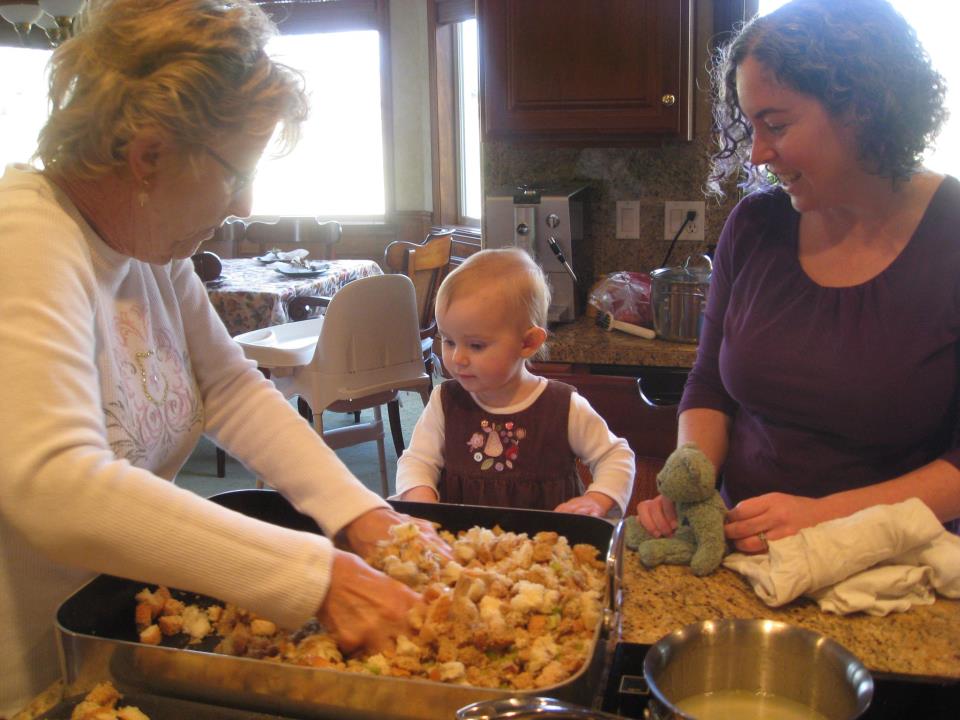
Cooking with kids: How preparing food for ourselves and our families contributes to everyone’s well-being.

I used to despise spending time in the kitchen. I didn’t like doing dishes, I didn’t know how to cook, and I preferred microwave meals to home cooked ones. Wow! Have things changed. Now I buy lots of fresh organic produce, free-range meats and eggs, and I enjoy coming up with new interesting creations and cooking traditional foods. And for some reason I want to put cumin on everything.

Thinking back, I can identify a couple of things that produced the shift for me. First, I read “Peace is Every Step” by Thich Nhat Hanh. There’s a passage where he talks about enjoying the present moment even in the mundane activities of life like washing dishes. I immediately began to ENJOY doing dishes! I luxuriated in the warm soapy water and felt a deeper sense of accomplishment than I ever could have anticipated from the simple act of doing dishes.

And then I moved in with my husband to be (we’re getting married in 6 weeks!). As soon as I moved in with him I noticed a strong desire to learn to cook welling up in me. I wanted to feed us delicious, nutritious foods.

So, I began to learn the art of cooking. It feels a little funny to be writing about cooking since I’m still so new at it, Jill is the real chef of the two of us. But what I do bring to the table is the ability to modify cooking activities into interesting and age-appropriate activities for kids of all ages.

Think of your child as the apprentice chef in your kitchen. Continue reading “Cooking with kids: How preparing food for ourselves and our families contributes to everyone’s well-being.”

I had kids eating lima beans like they were candy.

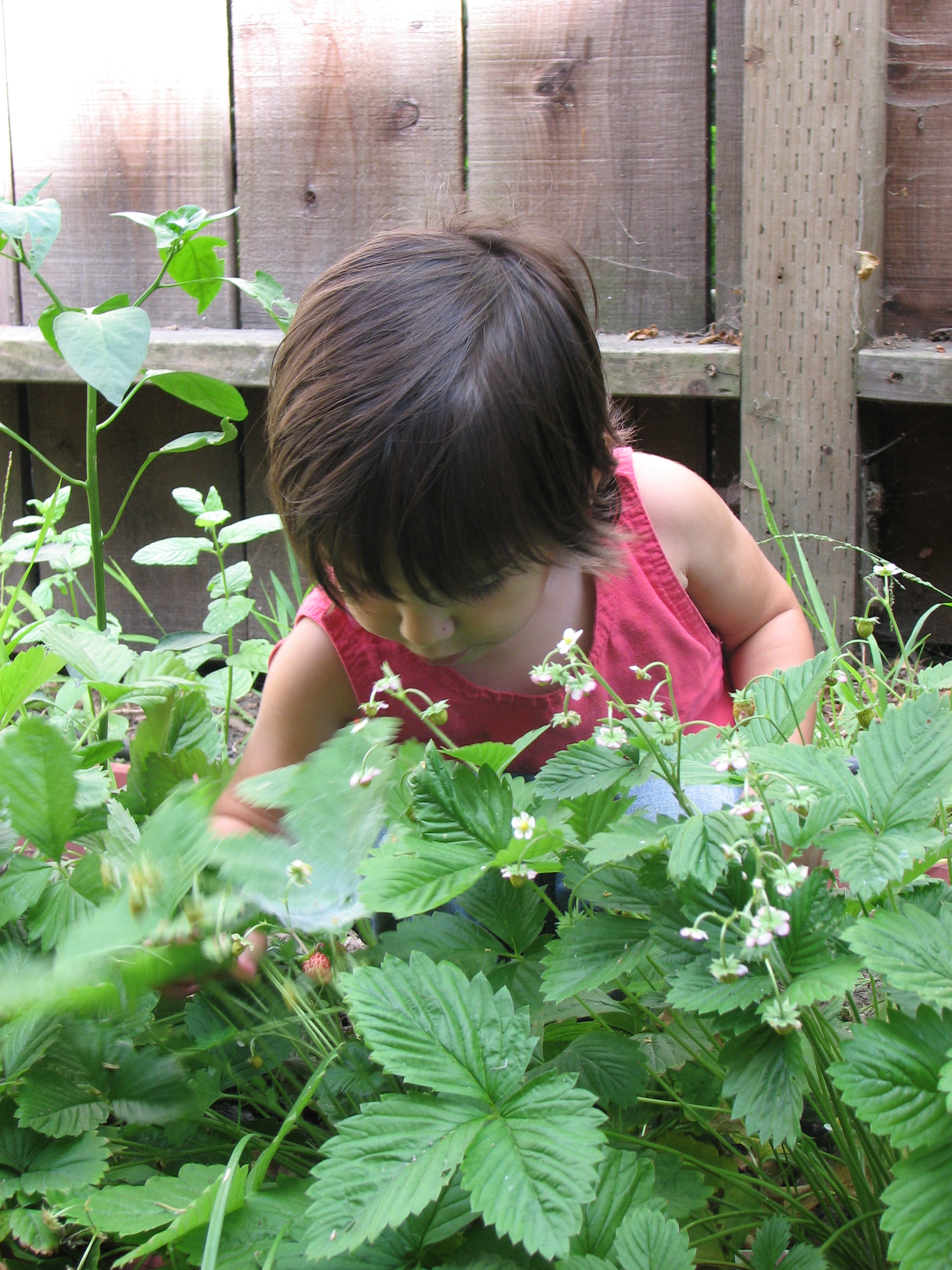
I guess I just like watching things grow.  There’s something about planting a seed, watching it grow, bloom and produce fruit that gives me a sense of comfort.  I enjoy watching the progression from cotyledon to true sets of leaves, then pollination, and fruit.  I like tending my plants daily, making sure they’re well watered.  I even like watching the leaves wither and the seeds fall to the ground.  It’s the cycle of life, the ever-turning wheel of almost constant change.

I like to nurture things (and I’m guessing you do too!)  And I’ve found there are quite a few children who, if allowed, can become devoted to growing a bean plant (which will sprout in a wet paper-towel for goodness sake) or daisies, or pumpkins, or all three and more.

By fostering their interest in gardening you can enjoy time together tending the vegetables.  This can meet your needs for peace, nurturing, and beauty while it meets your child’s needs for learning, discovery, and understanding where food comes from.

I’ve seen children hunting and cataloguing insects and birds they find in the garden.  Digging for worms to examine.  And I’ve seen them clamoring over a newly ripe lima bean, deciding among themselves some of the time and coming to me to mediate other times– who gets to eat the delicious bean today?  I’m not kidding you– in our garden, at Berkeley Montessori School, the ripening of the lima beans was Shangri-La.

We grew carrots, lettuce (but sometimes the deer or rabbit ate it), kale, lots and lots of flowers.  Flower arranging was one of the most popular activities in our classroom.

Don’t even get me started about apple season.  We ate apples, cooked with them, watched the squirrels eat them, and used them in art projects.  I wish every child on earth could have an apple tree.

When I was little, we had a cherry tree.  It was my sweet delight, my haven, and a source of some concern, what with cherry trees growing out of people’s ears— or at least that’s what they told me would happen if I swallowed the pit.

I did eat so many cherries I gave myself a stomachache, but then I learned my limits, and just ate a few less. I can never remember anything more than curiosity and gentle suggestions from my mom that perhaps I’d had enough cherries.

Maria Montessori said that all children have an innate desire to learn and grow.  I’ve seen that truth so clearly in my years working with young people.  They’re voracious learners.  The just need some stimulation– something to tend to– you know, a job (or their “great work” as we liked to call it).  Otherwise known as a purpose.  A garden can be just the motivation some kids need to take interest and responsibility.

So, this thing keeps happening in everything I write lately– I start off on one topic- gardening, and I end up on another– a child’s purpose.  But then again, for your child this could be the same thing…  I mean if my purpose is to nurture and support families, couldn’t his just as easily be to grow things?

So, here’s what I’m really saying– grow a garden if you and/or your child would enjoy that.  And whether or not you grow a garden this summer, help your child find a new way to grow into his purpose– whether his purpose is to learn new skills, tend a garden, take care of animals, or whatever!  If it lights him up, encourage him.

In a couple of weeks I’ll write more about how to encourage your child’s desire to cook and prepare food!  You might not be the only one who loves to prepare nutritious and delicious meals for your family.

With love, Shelly

Oh, and I’d love to hear what you think.  Please leave a comment in the box below.  Thanks!