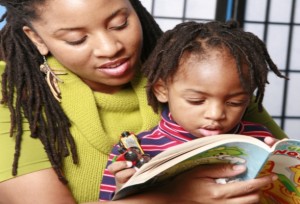
Sleep more, learn more

Wow, this week has been all about sleep research.  I’ve been reading “Nurture Shock” by Po Bronson & Ashley Marryman and whoa, the new sleep research is startling!  I also watched a Nova special on sleep, and then last night my husband and I watched an episode of Star Trek Next Generation where the whole crew suffers from sleep deprivation due to lack of REM sleep.

It’s all pretty interesting stuff, so here’s what I’ve learned so far…

1)     We dream in all stages of sleep, not just REM sleep and scientists think that REM sleep dreams are specifically designed as practice to help us figure out how to handle emotionally difficult situations.

2)    Children today get an hour less sleep per night than children did just 30 years ago.

3)    Just 15 min. of extra sleep at night has been shown to give kids higher cognitive functioning, better test scores and better grades in school.

4)   A LOT of the symptoms of both ADHD and clinical depression are identical to symptoms of long-term sleep deprivation.

5)    A lack of sleep causes chemical changes in the body that may be the underlying cause of the obesity epidemic here in the US.

6)    Sleep is crucial to learning and if allowed to sleep in between lessons, subjects show marked improvements in newly learned skills.

7)    While adults only spend 4% of sleep in the slow wave stage of sleep, Children spend almost 40% of their sleep there.

Clearly, there’s a LOT going on regarding sleep and the optimal functioning of our amazing brain.  From our own experiences we know that sleep is crucial to learning.  Haven’t you ever learned something new and then gone to sleep and dreamed about it all night long?  Well, the research bears out this intuitive knowledge that sleep is crucial to learning.

So, why are kids getting less sleep?  Well, I have some theories.  First, screen time and bright lights at night have been shown to disrupt our circadian rhythms, so kids are having a harder time falling asleep because they’ve recently been exposed to bright lights or screens.  And then there’s the fact that so many working parents are working such long hours that they barely get to see their kids in the evening.  So parents are keeping their kids up later so that they can have some time together during the week.  And children don’t seem to be complaining.  Obviously they will try to stay up as late as we will let them, not realizing the long-term consequences of sleep deprivation.

So, as conscious, aware parents, we have got to put our children’s long-term health and well-being above our momentary desire for fifteen more minutes with them at the end of a long day.  Now that we have this new, proven knowledge of the importance of sleep, it’s our job to take action.

We need to reclaim the “lost hour” and boy will we be glad when we have.  After taking a good hard look at the research, I’m convinced that by putting sleep first, we’ll all end up with happier, more focused, higher functioning, and better adjusted kids.  And what could possibly be more important than that?

Have a restful week, Shelly

Spinning and swinging for fun, focus, and emotion regulation

The vestibular system is responsible for balance, focus, and even plays a role in emotion regulation. But the best way to activate the vestibular system is by moving through space. So, if your child is having trouble with focus or emotion regulation, try encouraging movements like spinning and swinging and you’ll notice a huge change.

At Montessori school, we used the swings to help kids focus at least several times a week. I even activate my own vestibular system by doing somersaults whenever I’m feeling socially anxious. (So if we’re at a party together and I sneak into a back hallway for a moment, you know what I’m up to.) The thing is, it really works! After a few forward rolls, I feel so much happier and better able to engage and be social. If you don’t believe me, I challenge you to try it for yourself.

But I’m not writing this to help adults with their social anxiety, rather, I want young people who get labeled as “out of control” or informally called “adhd” to have solutions to anxiety, aggressiveness, or lack of focus that are easy, fun, and free of negative side effects. So, the next time you see your kids spinning in circles, remember that they’re self-regulating and it’s really good for their brains. Plus, it’s just fun and it feels good to spin around in circles!

For months now my daughter has enjoyed shaking her head back and forth. She’ll shake her head and then look up and smile. I usually join her just because it’s fun, but now I’m remembering that shaking our heads or moving our heads through space in other ways is actually crucial to brain health and wellbeing. The vestibular system needs input!

And, now that we humans spend less time running through the forest and more time sitting in front of screens, it’s even more important that we consciously choose to activate those systems.

So, your homework this week is to dance, wiggle, spin, jump, cartwheel, and swing with your kids. It’s good for everybody’s brain and it’s a great strategy to teach your child for times when he’s feeling worried, bored, or disconnected.

Have a fabulous week! Warmly, Shelly

The Importance of Time Away From Your Kids

I know I’m usually sharing all sorts of ideas for activities with kids or ways to handle conflict lovingly, but today I want to talk about the importance of taking time AWAY from your kids.

We all need alone time but I hear from a lot of parents that they feel guilty when they take time away from their kids.  Let me allay your fears.  Yes, you are your child’s biggest influence and the people they most need to connect with, AND it’s absolutely healthy and good for them to develop relationships with other adults.

If you have a nanny, babysitter, aunt, uncle, or grandparent who loves your children, please give them the opportunity to have a closer relationship with your kids by going away for the weekend, having a date night, or going to a yoga class.  It’s good for you and it’s also really good for your kids.

When young people have the opportunity to develop strong bonds with people other than their parents, they become more well rounded, better able to adapt, and they’re exposed to new ways of thinking and new ways of doing things.  This all provides variety and learning that you can’t give to your kids otherwise.

A study recently came out showing that children who had two parents who participated in their upbringing, specifically, kids who had a relationship with their fathers as well as with their mothers had higher IQ’s than kids who only had a mother in their lives.  In fact, researchers could tell who had had a father’s influence during childhood when they looked at the IQ scores of people in their 20’s!

What can we infer from this study?  Well, I for one, think that if two parents are better than one parent, then even more caring adult influences are likely to benefit your child too.

Maybe I’m biased, because after my parents divorced and remarried, I ended up with four loving parents who cared for me, connected with me, and shared their world-views with me.  I even spent a couple of school years going over to my grandparents’ house after school, so I had the opportunity to develop a strong bond with my grandma and grandpa.

As a kid, I loved getting new perspectives and ideas from the adults in my life and I often tried to emulate the best qualities I could find in each of them.  As a result, I think I turned out to be a pretty great, well adjusted, and compassionate person.  I also got the idea that I was a pretty lovable and likable person, because I had a bunch of wonderfully supportive adults who enjoyed my company.

OK, now that I’ve convinced you that it benefits your child to spend time away from you, what about the benefits to you?!  When you get time away you’re able to look at things from a new perspective.  You might get some new insights into a recurring dynamic at home, or you might just relax and enjoy yourself, allowing yourself to let go and stop being responsible for another human being for a moment.  Ahhhh, that feels pretty good.

The other thing that happens when you take time and space from your kids, whether it’s a weekend away or a few hours every afternoon, is you actually miss them!  And that’s a VERY good thing for you and for your kids.  When you get the space you need and you find yourself longing for reconnection with your kids, I guarantee the quality of your interactions when you reconnect will be much better.

On the other hand, if you’d rather force yourself to spend all of your free time with your kids, feel guilty for even wanting some space, and then build castles of anger and resentment, I guess that’s a valid choice.  It just seems like a lot less fun for everyone.

So, this week’s challenge is to foster your child’s relationship with another adult by taking time for yourself.  Try really pampering yourself and see how much you can enjoy it.  Really let go of any residual guilt you may have felt in the past and relish your alone time this week.

Have a wonderful week.  Warm hugs, Shelly

Read it again please! The importance of story time

bigstockphoto_Story_Time_588Reading to your kids is a crucially important part of your job as a parent.  And sometimes story time can begin to fall through the cracks of our busy lives.  So this week, I’m writing about the many reasons story time is such an important part of parenting.  I’m hoping to re-inspire you to commit to a daily story time for your kids whether they’re one-year-old, six, or twelve.

My parents all helped to teach me a love of reading that has enriched my life immensely.  My mom and dad read to me every night before bed when I was very young.  My step-mom read me “Little Women” over the course of several months when I was nine.  My mom read chapter books to my brother and me as my step-dad drove us miles and miles on our family vacations.  And in junior high and high school when I showed an interest in science fiction, my step dad turned me on to Douglas Adams.

Let’s explore how reading to your children at various ages supports their growth and development:

As a baby and toddler, your little one is picking up language skills at a phenomenal rate.  Reading to young people helps them increase their vocabulary, understand the parts of language, and learn the rules of English (if that’s your primary language).  There is nothing else you can do that has more of an impact on your child’s future ability to read and learn than a daily story time.  I recommend at least 30min. a day of reading together even with children as young as five or six months old.

When you point to objects and name them, your toddler can quickly learn to identify many more objects than he can verbalize.  Try asking your pre-verbal little one to point to the ball or shoe and you’ll be amazed at how much he can comprehend, even before he can speak.

As your child grows, story time becomes a bonding, connected time that your child can count on.  The emotional security that can grow from taking the time to sit down and read together is truly priceless.  It lets your child know first that she’s important to you and second, that reading and learning are fun.

And by pointing to the words on the page as you read, you’re helping her learn to recognize words.  Before you know it, she’ll be sight reading several words just because she’s had the repetition of hearing the word and seeing it on the page so many times before. Continue reading “Read it again please! The importance of story time”

Working with the child mind: Saying what you DO want gets the best results

42-15618349It’s easy to get into a pattern of saying things like, “Stop!”, “No!” or “Don’t do that” with kids.  They’re constantly experimenting with both the physical world and with social boundaries.  As a result they have a tendency to do things we don’t approve of or enjoy at least some of the time (and often a LOT of the time).

How we handle these moments can make a huge impact on a child and on what they’ll choose to do the next time.  Because their subconscious mind is actually more developed than their conscious mind, kids have a hard time hearing negatives. Instead, they tend to focus on the real content of what we’re saying, rather than the positive or negative we’ve tacked on to it.  So for instance, when we say, “Don’t pee in your pants” kids hear “Pee in your pants” and when we say “Stop hitting your brother” kids hear “Hit your brother.”

When we realize that kids hear and understand differently than adults do, it’s much easier to have compassion for their behavior.  Often times, they’re not consciously intending to be defiant, they simply aren’t processing all of what we’re saying and they’re compelled to do the very thing that we’re putting so much energy and attention toward.

So while we try to focus on the positive in our everyday lives, it’s all the more crucial that we do so with young people.  Rather than, “Don’t fall” try saying, “Be careful” or “Watch your step” and instead of “Stop hitting” try “Remember to be kind to others” or “Let’s use our hands for loving kindness.”

Children respond incredibly well to positive reinforcement of the behaviors we most want.  When we can remember to let them know that we appreciate and enjoy what they’re doing, kids are easily able to do even more of those things.  But when we forget and begin to tell them about all the things they do that frustrate and upset us, young people are compelled to do more of those things, simply because that’s where the focus and attention is. If you want to find out more about the power of your attention, check out my former blog on just that subject. Continue reading “Working with the child mind: Saying what you DO want gets the best results”