

How Inviting Rebellion Makes Your Life Much Easier

Rebellion. It’s often seen as a dangerous and incredibly irritating part of parenting. But the truth is that rebellion is a crucial part of human development. I know, I know, it’s super annoying when the first thing out of your child’s mouth is “NO!” and you’re trying desperately to find non-violent ways to get your child to perform the necessary tasks of daily life.

And the key to my sanity during this time has been two fold.

First, recognize that rebellion is actually a good thing.

Whaaat??? Yes, that’s right. Rebellion means your child realizes that he’s an individual with his own desires, which are separate from yours. While that might be uncomfortable for us, it’s quite a milestone for our kids. They’re learning to assert themselves and to take a stand, even when it might not be popular. The practice they’re engaged in now, rebelling against you, could help them resist peer pressure later, which is something we all want our kids to be able to do.

The second realization which has made my life MUCH easier during this transition to more independence and autonomy is simply this:

what we resist, persists.

When I’m doing all I can to force my daughter to do what I want despite her arguments, she will resist me. In a way it’s her JOB to resist me. How else can she establish herself as separate from me?

So I’ve implemented a strategy that magically meets everyone’s needs. I invite the rebellion. I create opportunities for my daughter to “rebel” in ways that actually help me out. Her resistance suddenly becomes useful, rather than annoying. I protest loudly about how much I DON’T want her to put on her shoes, climb into her carseat, go to the bathroom independently, or put away her toys. I go over the top, whining, yelling, and carrying on.

My daughter loves this. She knows that it’s a game, but it still seems to meet her needs for rebellion because she gets to say, “No! I’m going to do it MY way.” And she delights in my moans and groans about how I’m not getting what I want. She feels powerful and in charge of herself and she thinks it’s hilarious to see me bumbling and fumbling and inept.

The fact that we both understand that this is a game makes it SO MUCH easier for me too. Because struggling to get her to do something she doesn’t want to do is really quite painful for both of us. And it often leads to tears when I give up on convincing her and instead force her into compliance. While it does happen sometimes, I find that using force almost never leaves us feeling more connected afterward. We inevitably have the, “Mommy, you hurt my feelings,” conversation and I end up apologizing and lamely trying to justify my actions.

So instead, I’ve been practicing strategically giving up my power. My daughter still knows that I’m in charge and that if I feel it’s necessary, I can force her to do things like give me the scissors. Although there is a limit to how long we can rely upon our greater size, strength, and cunning to overpower our kids.

I’d rather cultivate a strategy that allows her to feel powerful and free, even as she’s doing the very things I want.

I don’t see this as tricking her, since we both know it’s a game. Instead, it’s helping her to exercise her rebelliousness in a healthy and productive way. I’m engineering the game so that it’s a win-win.

Children long to be powerful and independent, which is a good thing, since they’ll go from infants to adults in a mere 18 years. And by the way, when they’re teenagers they’re likely to rebel again. Will we be able to invite the rebellion and create win-win opportunities then too?

There are lots of ways to play games that allow your child to be the powerful one. And I find that playing power games meets children’s needs for power and rebellion so that much of the time they’re far more cooperative and compliant.

Here are a few ideas to get you started:

1)   Oh no, don’t take my hat! Give me back my hat!

2)   Rats! I don’t have anyone to help me carry this to the car. How will I get this to the car? I can’t carry it myself because I’m not strong enough…

3)   Oh gee, I forget what happens next. I wish someone would help me remember what we do before we leave the house. I keep forgetting!

4)   Gosh, I really don’t want to read stories tonight. But if you get ready for bed quickly, I’ll HAVE to. Oh please don’t MAKE me read! Ut oh, she’s already got her pajamas on.

So here’s your challenge for the week. Identify a consistent power struggle or a time when your child is likely to rebel and plan a couple of possible power games or new strategies that you could employ that would meet everyone’s needs. How can you invite the rebellion?

Then, write to me here in the comments section to let me know how it goes! I would LOVE to hear about your journey.

And have a fantastic week. Warmly, Shelly
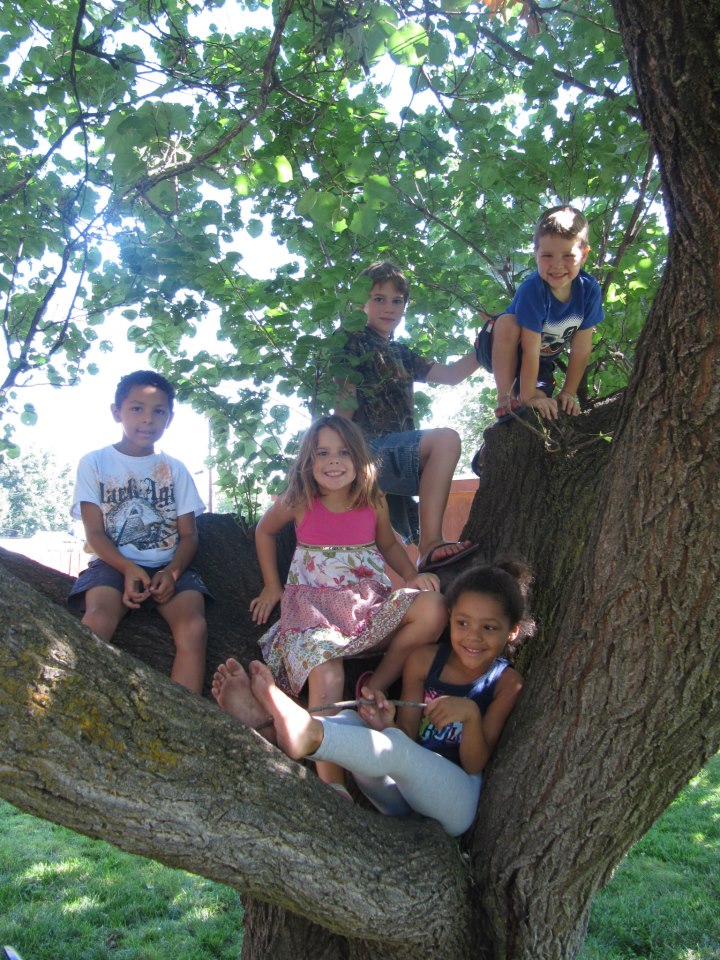
5 Reasons to Encourage Your Kid to Climb a Tree

There are lots of reasons to encourage kids to climb trees, but many of them can begin to seem unimportant when faced with the possibility of our beloved child falling out of one. Besides the fact that kids just love it, here are my top five reasons, backed by science, to support tree climbing despite its inherent risks.

1)   Being Outside Reduces Stress

Many studies over the past 20 years have shown that spending time in nature reduces cortisol levels, lowers blood pressure, increases resilience, and supports cognitive function. And climbing trees is a great way to help kids engage in an outside activity that is fun and challenging.

By encouraging this type of outdoor play and discovery, you’re putting your child into an environment that she has evolved to enjoy and appreciate.

2)   Connecting With Nature Is Good For Us and the Planet

Helping your child develop a personal relationship with nature has lots of benefits both to your child and to the environment. We humans are funny. When we care about something deeply, we’ll work incredibly hard to preserve it. So, by helping your child connect with nature, he is better off because of all of the benefits mentioned above and the environment is better off because your child will work hard to preserve the nature he loves so dearly.

Working with children showed me that when kids understand the direct implications of their impact on the environment, they’re motivated to reduce their carbon footprint and are easily able to change their habits to live in more harmony with nature. For instance, after learning about landfills, many children become recycling activists in their homes and schools. And after a trip to a local water treatment facility where we got to engage in hands on demonstrations, I saw a marked improvement in water conservation efforts and interest in overall watershed health.

3)   Climbing Trees is Good for Physical Development

As I began to write this article I spoke to a local 7 year-old boy. I asked him, “what’s your favorite thing about climbing trees?” and he responded immediately, “Climbing!” Kids love the challenge of deciding where to put their feet and hands, and the exhilaration of getting high up into a tree. There’s a physical challenge and a huge sense of accomplishment that goes along with tree climbing. I wish more kids were encouraged to climb trees.

Developing hand/eye coordination, muscle strength, and the ability to assess their own safety are all skills that benefit kids. And they’re the same skills that are often found lacking in today’s screen focused world.

4)   Taking Risks Helps Kids Learn Their Strengths and Limitations

By challenging themselves physically, kids learn their strengths and limitations quickly. They know when it’s easy, when it’s hard, and when they start to feel unsafe. It’s important for children to have the experience of pushing themselves and knowing when to step back and play it safe. You may be surprised to find that children have quite a strong sense of self-preservation when they’re allowed to exercise it.

Yes, this does require us to step back, stop saying, “be careful!” and allow our kids to explore without us hovering and monitoring their every move. I know it can be difficult, and if you really have a tough time with it, I’d recommend sending the kids out with their dad (or other masculine role model). I’ve found that in general dads are much better at letting kids take physical risks than moms are. As much as super child safe playground like those made by sites like https://www.softsurfaces.co.uk/ are good for the really little ones, there comes a time where the little ones need to grow up and learn to make mistakes and scrape their elbows and knees a little.

Even so, it’s still important to develop this ability for yourself, mom. Eventually we’re going to have teenagers on our hands and if we don’t allow our kids to take calculated risks now, they won’t be prepared for the life and death decisions they’ll be required to make once drinking and driving enter into the picture.

5)   Spending Time in Nature Encourages Scientific Discovery

Are your kids curious about birds, bees, squirrels, and raccoons? Spending time outside climbing trees is a wonderful way to encourage scientific interests. Maybe they’ll discover a next and get to watch baby birds being fed by their parents. Or perhaps they’ll discover a new species of beetle, never before catalogued.

By encouraging kids to climb trees, you’re really encouraging them to explore the natural world in all it’s glory. How does a plant grow? Where does a tree get its nutrients? What does decomposition look like? And what happens if a bird’s nest is disturbed?

Children are natural scientists and will create experiments, hypotheses, and conclusions about everything in life. Why not encourage them to conduct some of their research in the canopy?

So, let’s all go out and climb a tree! And let’s make sure our kids get the opportunity to spend time outdoors, climbing trees, playing, making up songs and stories, coming up with wild theories, and just forging a relationship with this wonderful, wild, beautiful world we live in.

Have a great week, Shelly

12 Ways to Encourage Failure and Why You Definitely Want to Do it

Now why in the world would I suggest that you’d want to encourage your child to fail? Well, current research is telling us interesting things about which character traits are associated with lifelong achievement and success. It’s also showing us that these “traits” are not simply inborn, but can be actively taught.

Character traits like grit, perseverance, and tenacity turn out to be much higher predictors of accomplishment than test scores, grades, or even IQ. It turns out that even smart kids who lack these skills often end up leaving college without a degree or have a difficult time holding down a job. On the flip side, even children who aren’t academically gifted can achieve great things if they have the drive and tenacity to keep reaching toward their goals.

So, how do children learn something like perseverance? They learn it through experience. About six months ago I noticed that if my daughter wasn’t able to do something on the first try, she would throw herself down and cry in frustration, refusing to try again. “I can’t do it,” she’d intone through her tears.

For a while I wasn’t sure how to respond to her upset. I didn’t want to encourage her to stuff her feelings of frustration, but I also knew it was important for her to learn to persevere. And then I read, “How Children Succeed: Grit, Curiosity, and the Hidden Power of Character” by Paul Tough. What an enlightening read!

After absorbing a bunch of new information, I decided to offer some reassurance and to encourage Julia to keep trying, even when she didn’t succeed initially. I said things like, “Just keep trying and eventually you’ll succeed,” and “Everyone makes mistakes.” After a few weeks, I knew these messages were getting through to her because one day she failed at a task and instead of the usual meltdown, she calmly announced, “Sometimes you have to try more than once before you succeed.”

So I decided to make a list of quick and easy ways to encourage failure.

Here it is:

1) Acknowledge and challenge, “Wow! You did it! Want to try something even harder?”

2) Encourage, “I know you’ll succeed eventually if you just keep trying.”

3) Offer a demonstration, and then let them try “Would you like me to show you how? OK, now you try.”

4) Suggest a new strategy, “When I get frustrated, sometimes it helps me if I walk away and try again later.”

5) Share your observations, “I see that you’re using your right hand to hold it and your left hand to push it through.”

6) Ask for a lesson, “Hey, I noticed that you’re able to do ______, will you please teach me how?”

7) Discover their strategies, “How did you decide to do it that way?”

8) Present a problem, “I need your help to figure this out, how do you think we should go about solving this?”

9) Remind them of past challenges, “Hey, remember when you were littler and you couldn’t climb up the jungle gym? And now it’s super easy for you!”

10) Help them keep track of their accomplishments, “Hey, you can do it now! Do you want to add this to your list of accomplishments?”

11) Remind them that circumstances can alter the outcome, “I know you were able to do it last week, but right now you’re hungry and tired and that makes things more difficult. I’m sure if you try it again after a snack and a rest you’ll have better luck.”

12) Celebrate the failures,Hooray, you failed! That means you’re trying something really challenging. I feel so proud when I see you trying something difficult. You’ll always learn more if you continue to challenge yourself.”

Do any of these seem foreign to you? If so, you might have some work to do on your own relationship to failure. Remember, when Thomas Edison invented the light bulb, he tried 10,000 things chemical compositions that didn’t work, before he found the one that did. Here’s what he said about his so-called failures. “I have not failed. I’ve just found 10,000 ways that won’t work.” Now that’s the epitome of grit, perseverance, and tenacity.

And no matter what your child ends up doing, these character traits will serve her well. So this week, see how many of these 12 you can implement with your kids. And then watch as they develop more resilience and tenacity before your very eyes.

Have a fantastic week, and even if you don’t, find a way to learn and grow from the challenges you face! Warm hugs, Shelly

Photo by Suzette Hibble

4 Keys to Setting Boundaries That Get Respected WITHOUT Using Bribes, Threats, or Punishment

My daughter is about to turn three and her willfulness is definitely growing, as is her ability to reason and negotiate for what she wants. I wish I could say that this means that conflicts and tantrums are even further reduced, but on the contrary, it seems that her new negotiating skills simply fuel the fire of emotional upset when she doesn’t get her way.

I’ve noticed that gentle discipline is often misunderstood and mistaken for permissive parenting, however, the two are definitely not the same. Permissive parenting involves avoiding setting any rules or boundaries and definitely avoiding maintaining any. But setting clear rules and boundaries are a hallmark of gentle discipline. That’s because children desperately need rules and boundaries in order to feel safe and secure. In fact, they need rules and boundaries in order to BE safe.

Since children aren’t born with a clear understanding of all of the potential dangers we face in our modern lives, it’s crucial that we teach them rules about how to be safe in parking lots and crossing the road, as well as how to form solid bonds with other people and what to do if they get into a situation where they’re feeling worried or afraid.

I guess I was naïve to think that we’d escape completely unscathed by tantrums. I had forgotten that the threes and fours can be even more challenging than the twos when it comes to willfulness and pushing back against rules and boundaries.

But in my experience, the strongest push-backs come when we’re unclear about exactly where the boundary is. In fact, almost as soon as I’m completely clear, testing behavior is greatly reduced.

So, the first key to setting boundaries that get respected is, you guessed it:

1) Be completely clear about exactly what the boundary is and why.

When we set a rule like, “We always hold hands in the parking lot,” it’s clear to us why it’s so important as we have visions of a toddler running into oncoming traffic. There is no wiggle room here, it’s a dangerous situation and we’re determined to keep our kids safe.

We have a rule at home that we always sit while we’re eating. This is to prevent choking and to keep Julia at the table, focused on eating, rather than grabbing a bite to eat while she’s playing. This is an essential rule for us because we have dogs and cats who would like nothing better than to eat her food if she were to walk away. It also helps us keep the food in the kitchen so that I’m not cleaning up spills on the carpet.

Since I have a very clear understanding of why we have this rule, it’s easy to enforce and rarely causes any conflict. If Julia walks away from her food, I assume she’s finished and clear it away. And she knows that’s our policy, so there’s no need for any further testing.

But what about rules and boundaries that aren’t quite so clear?

On the other hand, we have a guideline that we take our shoes off when we come into the house. This one doesn’t have any huge consequences for me, so I’m more lax in enforcing it. And as a result, it gets tested.

Just the other day, my daughter tried to wear her shoes to bed. I said, “Absolutely no shoes on the bed,” (I’m clear on that!) and she pushed a little farther, saying, but it’s OK to wear shoes in the house.

A few days later, she looked over at me as she climbed onto the couch with her shoes on. She was looking for clarity about the boundary, and I provided it. “I don’t mind if you wear your shoes on the couch as long as they’re not too dirty. But no shoes on the bed, remember? And I REALLY like it best when we take our shoes off when we’re inside so that we can keep the dirt near the door.”

As I said, this is more of a guideline than a true rule, and she’s now clear about where the true boundary is, no shoes on the bed, ever.

The next key to setting boundaries that get respected is to:

2) Lovingly enforce the boundary, making it almost impossible for your child to break the rule.

Young children have very little impulse control, so if you make a rule like, “No touching the sharp knives,” and then put the knives within reach, guess what? They won’t be able to help themselves. And truly, it’s not developmentally appropriate to expect that they should.

Instead, set the boundary and then HELP your child to follow the rules by putting the knives out of reach.

If you want children to follow the rules without bribes or threats of punishment, then you need to give them an incentive.

3) Tell them why the rule exists and how you feel when it’s broken

When kids understand that rules exists to help keep them safe, healthy and happy and to maintain peace at home, they’re more likely to cooperate and work within the boundaries. That’s because children have an innate desire to be in connection with their parents and to live in a loving and peaceful environment.

So, if a rule isn’t getting respected, feel free to tell your kids how upset and frustrated you feel. “This rule exists to make our lives easier, and when you forget to put your dishes away and the dogs knock them down and break them, I feel upset because I have to clean up broken glass, someone could get cut, and we have less dishes to use next time.”

If you have any trouble with this, try using an NVC format when talking about your feelings with kids.

My final tip to setting boundaries that get respected is:

4) Reduce the number of rules as your child matures

In fact, reduce the number of rules, no matter what age your child is. Unless you’ve been practicing permissive parenting and failing to set any boundaries at all, you’re likely erring on the side of “more rules are better.” However, this makes it hard for kids to remember and follow all of the rules.

I find it’s much more effective to set just a few hard and fast rules and then to follow my own internal reference system about when things are OK and when things are not OK with me. It’s all right to let a child know that usually that’s fine, but right now you’re just not able to deal with the noise or the mess or having them help you cook.

When children know that there are just a few rules that are always in place, they’re able to remember them and work within those boundaries. But when the number of rules gets, ehem, “unruly,” kids have a really hard time keeping it all straight. Plus, they begin to feel micro-managed and then they lash out in frustration at not having enough freedom and autonomy.

So, your homework this week if you choose to accept it, is to sit down and write down your top 3-5 rules and boundaries. The ones you absolutely MUST have in order to maintain peace and safety. And remember, the most important rule of parenting is to maintain a healthy connection with your child, so if any of these rules seem to undermine connect, re-think them pronto.

I would love to know whether you found this article helpful and I always enjoy your contributions through comments. Please share your thoughts and stories!

And have a wonderful week, Shelly

Terrified of the Terrible Twos? How About Terrific Twos Instead!

Yes, it is true that two-year-old children don’t have much impulse control or emotion regulation skills and that coupled with their very strong preferences has given them a bad reputation as irrational and explosive. I’ve been told all sorts of things about “the terrible twos,” especially when I was a nanny and again as I prepared for motherhood. But it really doesn’t have to be this way. Tantrums and other toddler behaviors that are difficult for us are actually just a signal that a child’s needs aren’t fully being met. Luckily, we CAN meet those needs and enjoy far less of those pesky behaviors.

A couple of years ago I saw an amazing documentary film called, “Edison’s Day” which is about a 20 month old boy whose parents are both Montessori trained. Their whole home is set up to accommodate the budding independence of toddlerhood.  And their son Emerson is clearly thriving as he’s included in meaningful work, helpful tasks, and independent activities throughout his day. If you want to be completely inspired by what a toddler can accomplish if given the opportunity, definitely watch “Edison’s Day.”

I’ve done my best to set up my home in a similar way and have always encouraged my daughter Julia to develop independence as well as nurturing her ongoing cooperation in every possible moment.

And with a few adjustments to your home environment, the way you handle transitions, and your daily routines, you can have terrific twos just like Julia and Edison have! Here are some tips to get you started:

1)   Track your child’s ability to communicate and offer help.

Sign language, guessing what he wants and verbalizing for your child, and helping a child to simplify a sentence can all support toddlers in gaining the confidence to communicate their needs. “You want the cup? Can you sign ‘please’? OK!”

2)   Set up a leaving home and arriving back at home routine

complete with low hooks, a bin or basket for shoes, and a playful but consistent attitude. “We put our shoes away when we come inside.”

3)   Warn toddlers of an impending transition with plenty of time for them to get on board.

“We need to go to the grocery store. Would you like to go now or in 5 minutes? Is there anything you’d like to bring with you?”

4)   Empower your child with the skills and knowledge of the daily routine, self-care practices, and household tasks.

Toddlers are FAR more capable than we might think, so invite your child to try new things and try not to do things for them if they’re capable and willing to do it themselves.

5)   Establish a few very clear rules, post them publicly, and ask everyone in your child’s life to help you maintain those boundaries.

Also, offer an acceptable alternative if your child breaks a rule. “It’s not OK to throw books, but here’s a ball you can throw instead!”

6)   Establish a consistent daily routine and ask your child to anticipate what happens next.

“Do you remember what we do after we take off our shoes and coat?…That’s right! We go to the bathroom.”

So, why do these things make such a huge difference in the life of a two year old? For young people, routines create security. So the more predictable the daily routine is, the more likely your two year old will know what to expect and feel comfortable and prepared for what’s next.

And then there’s their budding independence. The “I do it,” stage. The more we can embrace and nurture a toddler’s autonomy, the happier and more relaxed they will be. That’s because a toddler’s main goal in life is to grow up and become a capable adult. They want to be just like us, so let’s help them learn how!

Have a fantastic week, Shelly