The Top Ten Things I’ve Learned About Getting Organized

I used to resist organizing. I’d put it off until my drawers were overflowing and my closets bulged. But at some point, often at the worst possible moment, I’d be forced to handle the clutter that had built up beyond recognition.

I’ve turned a corner in this regard. I actually enjoy organizing and re-organizing now! And having a few days “off work” seemed like a great opportunity to re-organize some areas of my home that had been neglected of late.

So, the pantry got an overhaul last weekend and so did a strangely shaped cabinet in my kitchen. Now both are more usable, more pleasing to look at, I know what I have and I’ve gotten rid of the stuff I was keeping but no longer needed. It’s amazing how much space can be taken up by things that we rarely use, but that we still think we need to keep around. For me, a huge part of organizing is letting go of the things I think I need, but don’t actually use.

Whew! I’m so glad I tackled that pantry (thanks to my wonderful husband for the inspiration). What a nice feeling to start the New Year with! Next up, my office! Ha! That’s a joke, I’ve been working on organizing my office for at least a year. And, yes it’s far better than it has been in the past. Maybe I should add an organized office to my 2013 vision!

Do you enjoy organizing? Or do you experience it as a constant battle? Do you dread doing it with the kids around? Or is it fun to include them in the process?

I used to do all my re-organizing when my daughter was asleep because I was afraid she would take things from various piles, carry them around the house, or just need my attention while I was in the midst of my project. I still tend to do more organizing when she’s otherwise occupied, but now I’m no longer afraid of what will happen if she’s around while I’m moving things around.

I figure it’s probably good for her to see behind the curtain a little bit and start to understand that there are things that need consistent revisiting in order to keep our home tidy and accessible.

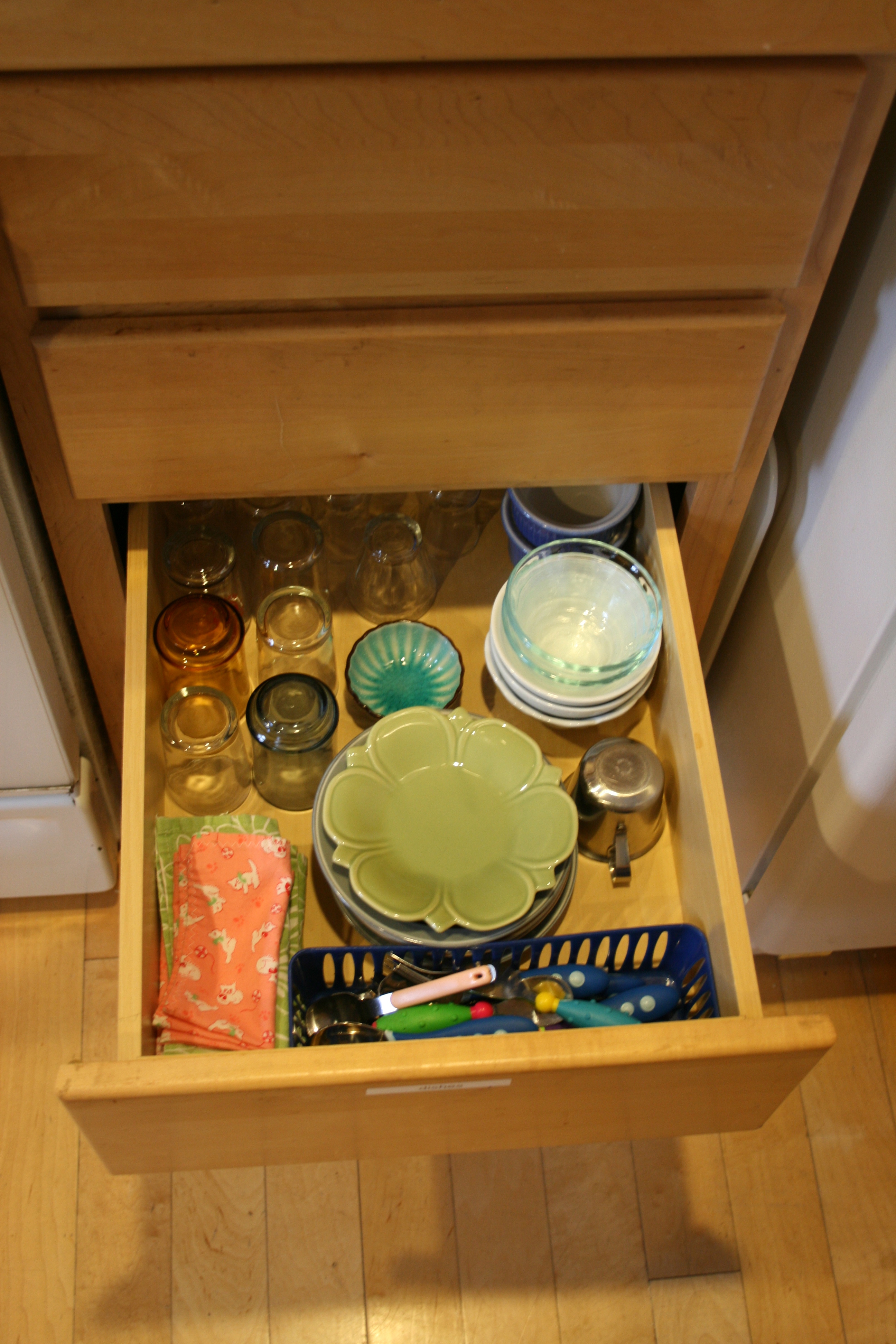
At almost two and a half, Julia is now responsible for putting her clean breakable dishes into her kitchen drawer after they come out of the dishwasher. She does this task with gusto each and every time I ask, but it’s only possible because we’ve kept her drawer well organized and it’s not overstuffed with items that are rarely used.

Here’s what I’ve learned about staying on top of organization lately.

1)   It’s never ending.

2)   I need empty bins, baskets and buckets to dump things into at the beginning of any reorganization attempt.

3)   I need bins, baskets, and buckets to hold ongoing in-process items like “giveaway” “to be filed” and “to be fixed.”

4)   I MUST have systems for dealing with things like junk mail, personal items, things that are broken and need fixing etc.

5)   It’s never ending.

6)   A place for everything and everything in its place is a fantasy right now (albeit one of my favorites), but I will achieve it. I WILL ACHIEVE IT.

7)   Keeping things from coming INTO my house is probably even more important than having a system for dealing with things once they’re here.

8)   Asking my daughter, husband, mom, and whoever else is willing to HELP me is crucial. I don’t have to do it all myself.

9)   It’s my job to set the expectations and to let my family members know when it’s time to straighten up (without throwing a fit by huffing around the house complaining about what a pit it is).

10)   It’s never ending, so I might as well enjoy the process.

I recently read “Getting Things Done” by David Allen and I realized that there are all sorts of ways that I’ve been undermining my own efforts to organize. Now I’ve got a clear plan and I’m chipping away at my bad habits bit by bit.

Do you know what’s keeping you from having the tidy and organized home you dream about? Or are things just fine as they are? I would love to hear about your own journey of staying organized at home. Please share a story or comment below!

And have a fabulous day, Shelly

 

Seven Strategies to Transform Challenging Moments

Sometimes I wish my child wasn’t such a perfect reflection of my emotional state. I was grumpy yesterday and how did my daughter respond? By not listening, not helping, and saying no to everything. I knew that she was just responding to my own “no” energy, yet I somehow couldn’t pull myself out of my funk and become more of a “yes.” Instead, I just simmered in my “everything’s wrong” mentality and watched my child’s behavior become more erratic, clingy, defiant, and reactive as the day wore on.

Usually I can shift things when I feel us heading toward the downward spiral of negativity, but yesterday, not so much. I did finally decide to take the dogs for their walk and being outside in the sunshine, getting some exercise and watching the dogs frolic did help lift my dark mood.

And then I realized that I have bunches of strategies for how to anticipate and transform challenging moments and I can usually use them with creativity and ease. But it seems that at the times I most need them, they’re nowhere to be found.

So this week I’ve decided to write down seven strategies for how to shift things when everything seems to be going downhill. Here they are:

1)    Notice any patterns— He usually melts down in the afternoon around 4pm. She typically freaks out when it’s time to leave the park. He often asks for candy when we’re in the check out line. She wants to watch videos whenever her uncle comes to visit. As you begin to notice the patterns, you might be surprised to learn that your child associates things that seem completely separate to you. This information can be golden if you’re trying to change things up.

2)   Identify what doesn’t work— If you’re unclear what doesn’t work for you, it’s unlikely a change will occur. On the other hand, if you know for certain, exactly what is not working, an alternative will likely come to mind. Don’t be afraid to let your child in on this information. “You know, I’m starting to dread going to the grocery store with you because the last few times you’ve had tantrums. It’s fine with me that you have big feelings, we all do. But I don’t enjoy sitting on the floor in the grocery store while you scream. Do you think we could try something different today?”

3)   Make a plan for a similar future incident— When I was a nanny, one of my charges started biting his brother. I knew that if it had happened once, it was likely to happen again, so his mom, dad, and I came up with a plan to redirect his biting to an inanimate object. We followed up by watching for warning signs, identifying patterns and being on alert at certain times of day.

4)  Take a break— Sometimes the best thing to do is to walk away, take a break, take some deep breaths and focus on myself for a minute or two. Often I find that when I take the time to really reflect on what’s going on for me and I can give myself some empathy or reach out to a friend or loved one for connection, I’m able to shift my energy and my daughter responds in kind.

5)   Be dramatic— I couldn’t seem to get the kids to help clean up their work. I was asking nicely (sort of) and trying to turn it into a game (but my heart wasn’t really in it). Then I finally realized that I could completely freak out about how awesome it was that my student had put a single toy into the basket. “Wow! That’s so COOL! Thank you SO MUCH!!! I LOVE it when you help me out!” Big hugs and cheers ensued. Pretty soon, all the toys were in the basket. Wild, over the top enthusiasm worked here, and I’ve also had success with pretending to faint, running away screaming, or otherwise acting out my internal experience dramatically. It feels good to express myself and it’s fun for kids to see unexpected behavior from the adults in their lives.

6)   Act it out— Children respond incredibly well to puppetry, acting, storytelling and the like. If you’re experiencing a consistent issue with a child, often the best thing to do is to act it out and explore each person’s experience through role-playing and storytelling. Warning: you have to be over the heat of your emotion about the incident or this will come across as lecturing, rather than playing. So take some time, think it over and when you have compassion for your child’s experience, try this one out.

7)   Notice the difference— “Hey, remember how we were working on asking nicely by saying please and then saying thank you when you get what you’ve asked for? Well, I’ve really noticed your efforts. In fact, I was very surprised yesterday when you asked for the sidewalk chalk. You said please without even being reminded!

So, do you use these strategies already? Are there others that work for you that I’ve forgotten to include? I love it when you share your stories, strategies, and ideas with us all. Please let us know what you think by leaving a comment below.

And have a great week, Shelly


Why We Montessori (my new school just opened!)

About six months ago I realized that Julia is ready for preschool. She loves to go to story time at the library, enjoys social interactions, is absorbing information at a phenomenal rate, and is beginning to test the rules and boundaries, all indicators of readiness for greater social challenges. So I went and visited a hand full of preschools in my area. Most of them wouldn’t admit a child under three years old and since Julia isn’t quite two yet my choices were somewhat limited to a few Montessori toddler programs with pretty steep price tags.

I’ve worked in Montessori classrooms for years and while I loved the programs I visited, I balked at the price. Then I visited some programs that were not Montessori and I was again reminded why I love the Montessori classroom so much. The chaos, clutter, and lack of clear boundaries that I observed at some of the other schools I visited re-inspired me to continue to use Montessori philosophies to teach Julia at home. The only problem was that I don’t have any other children, so there’s no mixed age classroom and a distinct lack of peer interactions.

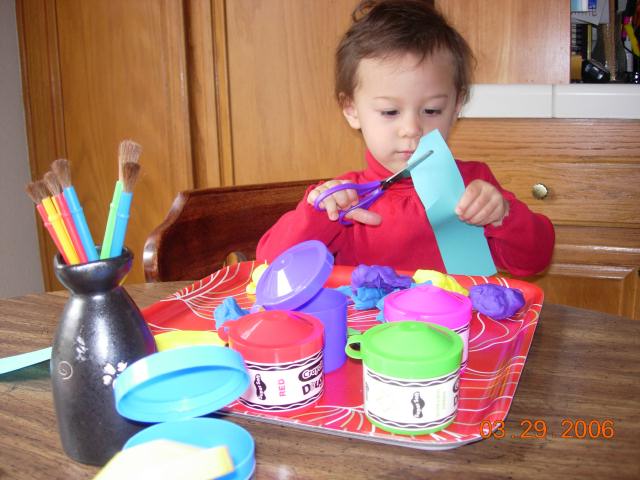
So I decided to open a Montessori-Inspired preschool and toddler house here at home two mornings a week. This was my first week of class with just one new student, but I was already impressed by the children’s immediate ability to engage with their work, follow my rules and directions, clean up after themselves, and innovate new and interesting ways to explore the environment. My new school is already a success!

Now Julia is getting the social interaction she’s been craving and she is already more physically adventurous after watching her new friend climb jump and play. Hooray! Plus, now I have an even better excuse to spend my evenings creating learning materials. Yes, I really am that much of a Montessori geek. Three part cards are rocking my world right now. More on that in a future post, but for now I’ll just say it’s wonderful to be back in a Montessori classroom.

Here’s a list of a few of my favorite things about Montessori vs. Traditional preschool environments:

Montessori Traditional
Peaceful, quiet, and focused on individual exploration; children are engaged in meaningful learning and expanding their interests and attention spans. Chaotic and loud; children are running around like maniacs with few opportunities for sustained attention.
Lots of choices and children are each doing their own thing, which emphasizes awareness of ones own interests, needs, and desires. The whole group does things together which emphasizes herd mentality and going along with the group.
Mixed ages means children can both learn from one another and teach one another. Varied social experiences and celebration of each child’s unique skills and expertise are the norm. Same ages grouped together means children have little experience navigating social interactions with older and younger children. A child’s only mentor is the teacher.
Clear rules, boundaries, and expectations about the use of materials and the need to put activities away so that the next person can use them creates a culture where cleaning up is just a matter of course. Children end up enjoying cleaning and often choose cleaning activities for fun! Undefined expectations about how to use toys and materials can lead to destructive behaviors as children search for the boundaries. Children are given free reign to create a huge mess and then inconsistently asked to help clean up at the end of the day but never develop a deeper care for their environment.

So, there you have it. Just a few of the reasons that a Montessori or Montessori-Inspired environment is the only one my daughter will be in. And to those of you out there who choose Waldorf for your kids, I’m curious about how you would include the Waldorf philosophies and practices in my chart. I don’t know much about Waldorf but from what I do know, the philosophies sound interesting and aligned with my heart, but my observations of Waldorf in action have been less than stellar. I would love to be converted to a Waldorf lover (although I think Montessori education will always be my first love). So, please leave me a comment to teach me more about why Waldorf is another great choice for conscious parents!

And have a fantastic week. Love, Shelly

Your Work/My Work

In the Montessori classrooms I’ve worked in, there are usually twenty-four children between three and six years old and just two adults. Each child has free choice of hundreds of possible activities in the classroom, and in order to maintain peace and order, we HAVE to create some rules and boundaries.

One of the rules is that we respect one another’s work. We don’t touch each other’s work, we don’t walk on someone else’s work rug, and we don’t clean up after each other. Each person is responsible for getting out, completing, and putting away their own work.

Several months ago I taught a class to parents of Montessori students and when I described the reverence and care we have for our work, a mother perked up. “Oh!” she said, “So THAT’S why my son gets so upset when I clean up his toys, he’s always complaining that I’m not respecting his work, but I didn’t understand why until now!”

I believe strongly in Montessori philosophies and use many of them as guidelines in my home with my daughter and now that she’s approaching two years old I’m beginning to understand what a huge difference this has made in the peace and order of our home.

First, I do my best to respect her work and often ask her to clean up after herself, before offering any help. So when she leaves something out, she can reasonably expect it to be there when she gets back. This provides stability in her mind and encourages her sense of order. She knows where she can find her things and she knows that there is no magical clean up fairy.

As an aside, I actually did think that something like a clean-up fairy existed when I was a young child. I had no concept of my preschool teachers staying after school to clean up, or of my mom and dad picking up after I was in bed. I just thought things magically reappeared in their original locations!

Of course, I’m happy to help my daughter clean up if she needs support, but I don’t make a habit of going around behind her and cleaning up after her.  As a result, I overheard her with her books yesterday. She was looking at the pages and talking about the content of the book and when she got to the end of the book she said, “Back” and put the book back on the shelf!

But here’s the real kicker. I also ask her to respect MY work. That means that she understands that my work is important and I’m committed to its completion. So when my daughter asks me to play with her I will often respond with, “Sure! I would love to play farm with you, but I’d like to finish my dishes work first, so you can go get started without me, or you can watch me finish my work, and then I’ll join you!”

One of the things I love about this is that she’s learning that life is filled with “work” that people enjoy and want to complete before moving on to new tasks. This promotes the concept of follow through while it also helps her to delay gratification while she waits for me to join her in her chosen activity.

I know without a shadow of a doubt that my daughter understands that her wellbeing is my top priority. And, I also want her to know that my own wellbeing is hugely important to me as well. The order of my environment helps me to feel peaceful and relaxed so that when I do sit down to play with her I can completely focus on her, rather than constantly thinking about my enormous to do list and only giving her my partial attention.

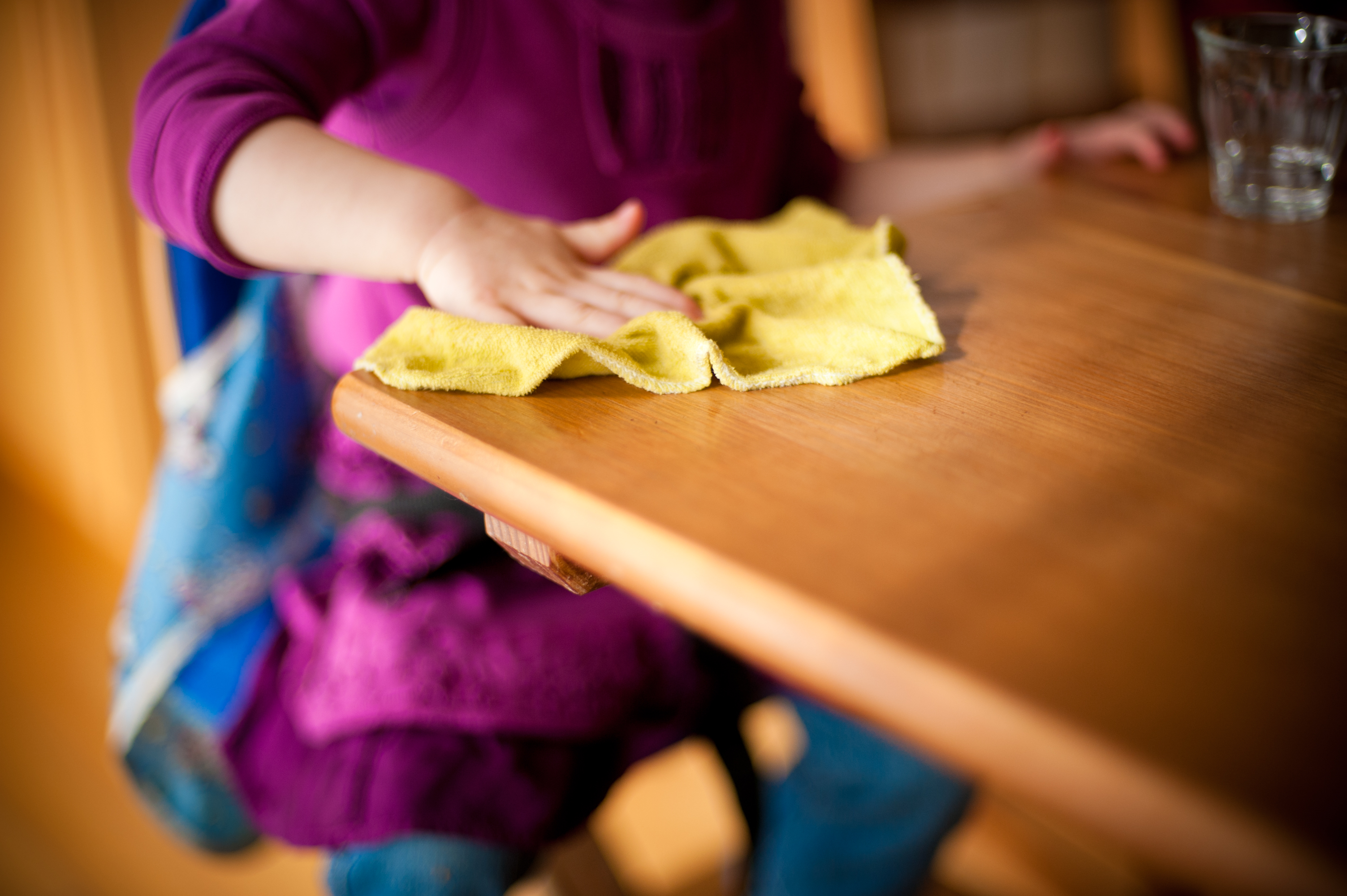
I’m sure I’ll write another post about organization and it’s psychological impact on us, but for now I’ll just say, it’s OK to let your child know that you have work to do when you’re at home. If we model respect for their work, they’re bound to learn to respect ours too. And when we honor and respect one another’s work, peace and love have plenty of room to thrive.

So, how do you balance playtime with work time at your house? I would love to learn some of your secrets to success in this area! Please share a comment below.

And have a fantastic week, Shelly