
Why Family Rituals Create Confident Kids

Have you ever noticed how young children like to do things the same way day after day? Let’s say you just happened to make a joke at the beginning of lunch one day, so they remind you of the joke every day for the next two weeks. Sound familiar? Or, you cut the crust off of their bread once, so now they MUST have their crust cut off every time.

It can be maddening, but it is also deeply linked to how a young child learns. Repetition is absolutely crucial to learning. So the desire to re-enact daily and weekly rituals is one way that children make sure they’re really “getting it.”

We all have daily and weekly rituals whether they are consciously created or unconsciously enacted. There is a certain way we do things. So this week is all about bringing more mindfulness to the rituals we have and to the ones we’d like to create with our children.

For example, at the beginning of every meal (or snack) I ask my daughter to climb up into her seat by herself and then I buckle her in. At the end of the meal I wipe off her hands and face with a wet cloth and then hand it to her. She proceeds to wipe off the table and then removes her bib and places it on the table. After the table is clean and the bib is off, I unbuckle her and she climbs down.

This is a ritual that is still evolving. But eventually she will set the table with a placemat, dishes, utensils, and a napkin before a meal and she will clean up afterward by placing dishes in a “dirty dish” bin and putting her used napkin in the hamper to be washed.

You might have a ritual around bedtime and/or bath time or even play time. Part of your ritual might involve incantations like when we say “It’s pajama time…Oh yeah!” every night before bed. Or when we sing the “clean up” song when it’s time to pick up our toys. The point is not that we adopt the same rituals, in fact, doing so would probably reduce the value of our family rituals. The point is that there is a certain way that WE in OUR family do things. It’s unique to us. It’s co-created by all of us and it makes us smile when we think about it.

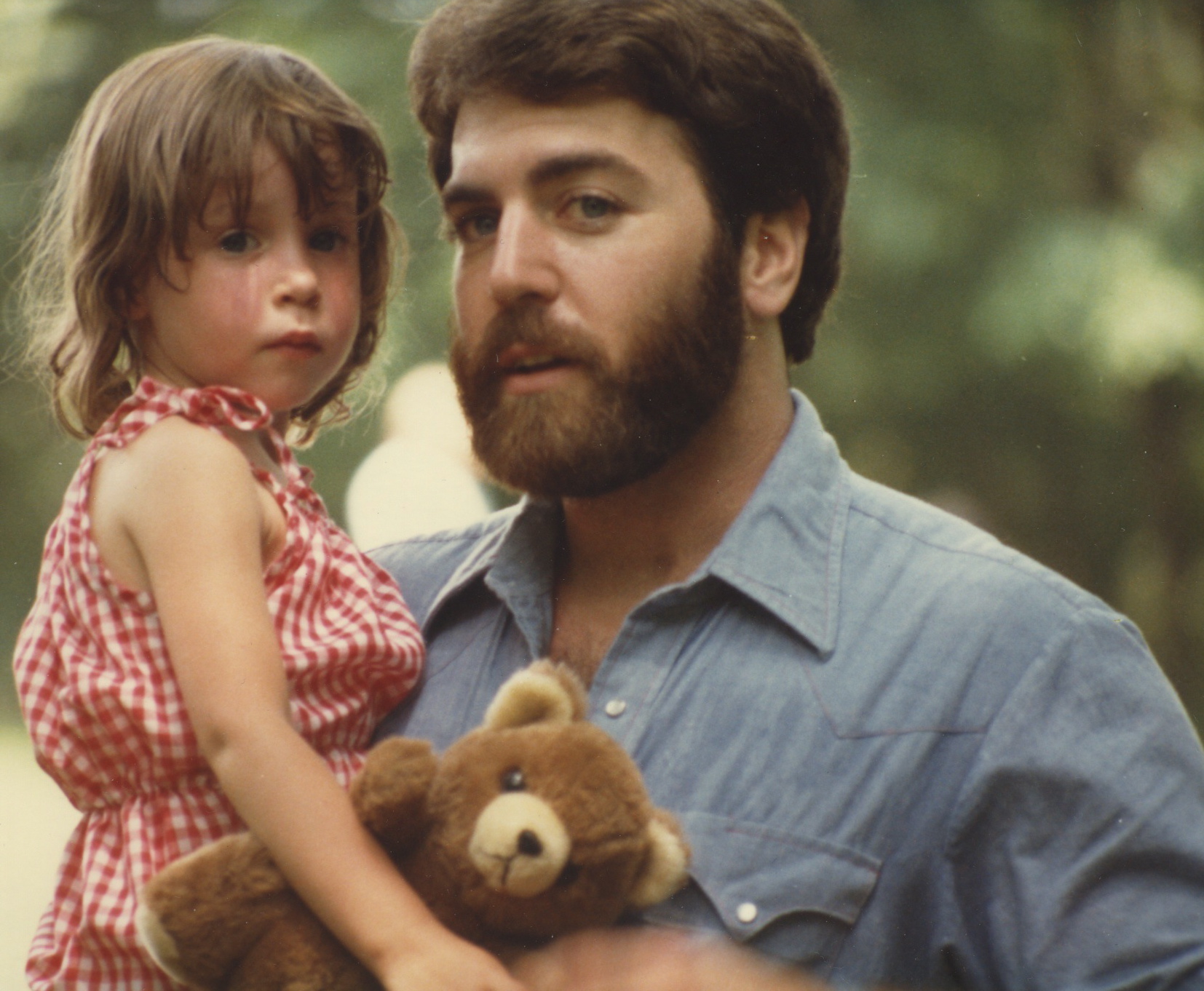
I can still remember a ritual my mom and I used to have before I would go to bed at night. We would play some little games, read some books, and then just before it was lights out we would race to say, “Ready…set…go! Good night, sleep tight, don’t let the bedbugs bite, sweet dreams, I love you, I beat you!” It was our own personal before bed tongue twister and we both really enjoyed it. You can tell I really loved it because I STILL remember it all these years later.

By creating and practicing this kind of mindful repetition, you’re giving your child a deep sense of security. Children really love to know what to expect so that they can fully participate in life and learning.

So what are the rituals in your family? Are there any that you’d like to transform? Or add to? Are there some that might be missing that you can create together?

I would love to know about your special rituals and how you practice them. Please share your story with us all! Warm hugs, Shelly

Encouraging an Expanding Vocabulary

(This post is dedicated to my dad, Bernard B. Birger for always using big words with me and describing complex concepts in great detail, even when I was only three years old.)

Wow, Julia is absorbing language like a sponge on steroids. The other day I casually mentioned to my husband that a friend of ours is “a bit of a boozer” and we both had to avoid eye contact and stifle our laughter when our eighteen month old daughter repeated the word “boozer” about six times in a row. Oy, I really do have to watch what I say around her!

She is definitely in a sensitive period for language acquisition and it’s not going to stop any time soon. In fact, the sensitive period for language begins before birth and lasts until at least seven years old. So, what can we do to encourage our children to expand their vocabulary in ways that will actually serve them? (Because I’m guessing that knowing the word ‘boozer’ isn’t really critical to her healthy development)

There are LOTS of ways to encourage a large, expanding vocabulary, so here are my top five favorite ways to support a child’s language development. An added benefit is that many of these things also prepare young children for reading! So here they are:

1.     Never underestimate your child’s ability to absorb language. Children will learn the words they are exposed to, whether they’re single syllable words or three and four syllable words. So why not use big words? One of Julia’s favorites right now is “massive.” We often talk about the “massive tree” at the dog park or the “massive whale” in one of her storybooks.

 2.    Read, read, and read some more. Reading books is one of the best ways you can support an expanding vocabulary. But remember number one, above. Even very young children can benefit from being read materials above their ability to fully grasp. Of course, if you lose their interest, then go back to books you know your children enjoy. And if they seem to have little or no interest in books, just look at the pictures together, point out the things you see and ask them questions about the pictures they’re looking at. For example: “Can you find the apple?,” “What animal is that?” “What do you think that silly chicken is doing now?”

 3.    Offer synonyms. Children learn language through exposure and context, so by offering synonyms, you’re helping your child to learn many words with the same meaning. So the tree at the dog park isn’t just massive, it’s huge, enormous, gigantic, and colossal too! But don’t be surprised when your two year old reminds you that evergreen trees are ‘coniferous’ and they don’t lose their leaves (or needles) in autumn.

 4.   Rhyme, Sing and Alliterate. Young people (and adults) love to sing, rhyme, and alliterate, probably because they’re such effective learning and problem solving tools. One of the great things about this one is that you can play these kinds of games absolutely anywhere! We especially like to sing and rhyme in the car. It keeps us occupied while we’re stuck in traffic, and it’s just plain fun! (OK, the truth is, we’re never stuck in traffic because we live in Bend, OR, but maybe YOU get stuck in traffic sometimes, so try singing, rhyming, and alliterating the next time you’re stuck in the car) Oh and one more thing, coming up with words that begin with the same letter or rhymes with the same number of syllables as a previous stanza are also good memory games for adults. Let’s keep those neurons firing, people!

 5.    Offer definitions. As children begin to get a solid grasp of language they start to get curious about some of the nuances therein. For instance, a friend of mine recently told me that her two and a half year old son asked her “What means ‘life,’ Mama?” Defining words can be a challenge because we probably have not even considered the definitions of many of the words we use every day. But I think it’s worthwhile to give it a try and if you really can’t come up with anything, then do what my mom always told me to do, go look it up!

I’m sure you’re already doing many of these things with your kids, but I thought that by listing them, I might remind you to do them more frequently and more intentionally. Our time with our young children is going by so quickly that before we know it they’ll be applying to college (it really feels that way, doesn’t it?!) So this week, pay special attention to supporting your child to build a stellar vocabulary that will serve them well for the rest of their lives.

And have a super, fantastic, wonderful, lovely, superb, and joyful week.

Love, Shelly

Tender Transitions

In life there are big transitions, little transitions and everything in between but there’s one thing you can be sure of, there WILL be transitions. Shifting from one thing to the next is challenging for children and adults alike, especially when the transition wasn’t their idea.

I’m in the midst of a big transition right now. We are so fortunate to have my husband’s parents living here full time and being active participants in caring for our daughter. And if you’re thinking we’re the luckiest people ever, then get ready for more, because we ALSO have my mom and step dad here for six months of the year! It is SO incredibly helpful to have so many people adoring and caring for Julia, but there’s a dark side to this beautiful gift too. My parents leave and are gone for six months of the year.

My mom and Jim just left to head back to Illinois a couple of weeks ago and the transition has been really challenging for me. I miss them. Julia misses them. And I’ve had to completely rearrange my working schedule to accommodate the change. It totally sucks.

But is also great. I’m getting more time with my daughter, which is awesome. And I’m forced to really prioritize my work and only engage in the activities that really matter to me. But it’s also still really hard.

Transitions are especially difficult for me, maybe because I’ve had so many of them in my life. After my parents divorced when I was 5, they shared custody and, without going into too many details, for much of my life I split my time between my mom’s house and my dad’s. It was great to be able to have real relationships with everyone involved, but it was hard on me too.

Every two weeks I packed up my bags and moved to a different house with different people, different rules, different expectations, and even different foods. And, everybody was always so excited to see me that I don’t think I really took the time to mourn the loss of the other family before I was thrust into the next one. Luckily for my parents, I didn’t act out. Instead, I stuffed my emotions and tried to pretend that everything was OK. But sometimes it wasn’t.

So that’s what I mean when I say “big transitions.” Learning to let go of my family for two weeks or six months, mourning the loss of a home, job, or loved one, moving away from friends. But there are also all sorts of little transitions and these can be challenging too.

So if you’re wondering why your young child throws a tantrum at the front door and refuses to put on his coat and shoes, consider the possibility that transitions are just hard. Saying goodbye to his toys, home, book, or plan for the day can be really challenging for a kid.

Here’s what I’d recommend if you’re having difficulty with transitions at your house. Be tender about them. Remember that they can be hard. And most of all, TALK ABOUT TRANSITIONS BEFORE, DURING AND AFTER THEY HAPPEN. I wish I had been better about this with my parents leaving town. I’m doing OK talking about it now, but I wish we had thought more and talked more about how our lives were about to change, before it happened. I’m a planner, and when transitions catch me off guard, I find them MUCH more challenging to deal with.

Perhaps your little one feels the same way. It might feel silly to talk to your infant or young child about a big or small transition, but in my experience, a short, matter-of-fact discussion about what’s about to happen can mean the difference between a screaming, kicking freaked out kid and a calm, relaxed, collected child.

When it comes to some of life’s big transitions like the loss of a pet or the death of a loved one, we don’t always get the opportunity to talk about things ahead of time. In that case, be sure to discuss things as they arise so that you and your child can integrate what’s happening as much as possible.

When you’re about to head out the door to go to the store, and you actually CAN give a child a heads up, so please do. They will appreciate it. And you might find that this one simple act of kindness and respect toward your children reaps you more benefits than you could have imagined. I would love to hear all about it. Please share your story with us!

And may your transitions be easy and tender this week, Shelly

I have a confession to make…

I have a confession to make. So first let me set the scene, I’m with my 16 mo. old daughter and she reaches for something. Now I have to quickly decide whether it’s safe for her to have. If it’s not, I feel pretty justified in wrenching it forcefully from her grip. Scissors, sharp knives, push pins, and electrical cords are all things in that category for me.

But then there are other times when I simply don’t WANT her to have the object of her desire. The truth is, sometimes I grab stuff away from her. Wow, I feel so vulnerable sharing that. And I feel awful afterward, especially if she’s left upset and crying. So I’m declaring right this moment that I’m committed to stopping this behavior. I will no longer grab things from my daughter (unless they’re truly dangerous items).

You might wonder what alerted me to the behavior in the fist place. Well, let me tell you. A couple of weeks ago my wonderful mother-in-law (who takes care of my daughter two days a week) came home from the library with a story about how my daughter had walked right up to another child and grabbed the book she was holding away from her. I’m sure it was an awkward moment for all involved and I was reminded of this blog post by Leslie that really inspired me (funny that her story happened at the library too).

After I heard about the “incident” at the library, I began to get curious about where my daughter had learned to grab and more importantly, why I hadn’t been teaching her how to ask nicely when she wanted something from someone else. And in the midst of my inquiry, I realized, I’ve been modeling the very thing she did. Whoa.

So, now that I’ve noticed the behavior that isn’t working for us and I’ve declared my new commitment to honor my daughter more fully, I have to come up with some strategies to help me keep my commitment. The first one is to plan ahead and keep items I don’t want her to have out of her reach entirely. So I’ll go through a few problem areas (like next to the diaper changing station) and reorganize, placing baby unfriendly items away in cabinets or boxes that close.

But I also need a strategy for the times when she does get something that I don’t want her to have. In those moments, I’ll take a deep breath and remember my commitment and then I’ll ask her for the item. If she refuses, I’ll ask her for “my turn”, or I’ll follow her around until she loses interest and then remove the item to a cabinet or drawer.

OK, so now I have my new commitment and my new strategies. I think I’m all set!

The only thing left is to process the feelings I have about how I’ve behaved in the past. I feel guilty about having ripped things away from my daughter in the past. I feel ashamed of my behavior and I’m judging myself as “immature.” And…my deepest truth is that I really was doing the best I could in the moment. It’s just that my best is constantly changing and grabbing things away from a young child no longer makes the cut.

Now I don’t expect my toddler to stop grabbing simply because I’ve stopped, but since we’ve also started talking about taking turns, I’ve noticed a big change already. After just a week or so of discussion, she now walks up to me, puts out her little hand and says “Turn?” My heart melts every single time.

Is this something that you struggle with too? If so, please leave me a comment. I’m out on a little bit of a limb here, and I would love to know that there are other people out here with me! Or maybe your challenge is slightly different, but I would still love to hear about it. We can support one another in making a change!

Sending you all warm hugs, Shelly

Don’t “should” on me!

Language is a powerful thing.  I’m constantly amazed at how simple word choices can make such a huge difference in my everyday life.  For instance, if I think to myself, “I can’t…” I feel deflated and ineffectual, but when I think, “I choose not to…” I feel inspired and powerful.

We each make choices about which words we’ll use to describe our lives every single day.  Don’t we all have a friend who almost constantly whines and complains?  Or know someone who uses language that is offensive to us?  I do my best to be hyper aware of my language and which words I choose to use.   I want to use words that are empowering and inspiring as much as possible, especially around my daughter.

When I first became aware of my word choices and their power, I noticed that I apologized a LOT.  I said “I’m sorry” dozens of times a day. I also discovered that I was afraid to speak up, worried about taking up too much space, and I rarely expressed myself very powerfully.  In a way, I was apologizing for my very being!  But it didn’t feel very good, so I systematically trained myself to stop apologizing habitually, and now I only apologize when I really mean it.

As I continued to explore consciously choosing my words, I realized there was a very specific word that I actually despise.  The word is “should.”  Every time I heard the word “should” I was reminded of other people’s expectations for me, and all the times I had been externally motivated.  I realized that I had been living my life to please other people, but I wasn’t really enjoying it at all! So I began working to develop a strong internal motivation, a clear inner sense of yes and no,  and I abolished the word “should” from my vocabulary.

My friends and I worked together to remind one another when “should” crept back into our language by stopping and saying, “Did you just ‘should’ on me?!”  Bringing a little bit of humor to our mission to abolish “should” made it a fun game that we could all play together.  And it really helped to have the support of people who were all committed to conscious word choices.  By the way, if you want an easy and empowering word replacement, try “could” instead of “should.”  It works almost all of the time!

Now that I’m a mom, I’m reminded yet again how important it is to be aware of the words we use when we talk to our kids.  Of course tone of voice, affect, and energy are often even more important than word choice.  But I still think it’s worthwhile to pay attention to the words we use.

After all, our kids will surely parrot those words back to us, and who really wants their 4 year old saying, “Mommy, you should eat your vegetables before your chocolate.”  Personally, I would much rather hear someone ask me if I would or could, rather than telling me that I should.  Don’t the young people in our lives deserve that same respect from their elders?  I sure think so!

I would love to know what you think about the word “should” and it’s impact on young people.  Please share your opinion or story below!

Thanks for being here and have a great day, Shelly