 This week’s guest blog is from Jill:
I’m happy to be back at AwakeParent.com as a guest blogger today. I wanted to share with you some thoughts on dealing with other adults in your life who interact with your children. As parents striving for greater consciousness, I have found it can sometimes be painful when other adults interact with our precious children in ways that don’t support the experience we’re trying so hard to create.
At times, I have both asked and been asked by other adults to treat a child differently. This hasn’t gone very well! The time I was asked not to interact with a child in the way I wanted to I felt a sense of shame, even though intellectually I agreed with the parent’s boundary. What happened? I touched a child’s hair without permission. Not a big deal, in the grand scheme of things, perhaps, but really, how would I feel if someone I didn’t know reach out and started fondling my tresses, rather than ask? I could see in the parent’s eyes that that was exactly what he was tuned into. I got it; still, I felt small.
I have also not found a way to make such a request of another adult that feels both compassionate and authentic. When I have made such requests, it’s also felt alienating, rather than connecting. It seems no one likes to hear, “Please don’t do that to my child.”
Here’s what I think is going on, and what we can do about it. One, I think a vulnerable part of us comes forth when we connect with a child. I want to treat this part of myself and others with gentleness and compassion, so I want to honor all good faith attempts to connect with children. Two, if I intervene on his behalf, I do my own child a bit of a disservice. I exercise my autonomy instead of allowing him to exercise his. At the same time, I want to intervene if it looks like my child would rather not be experiencing what’s happening.
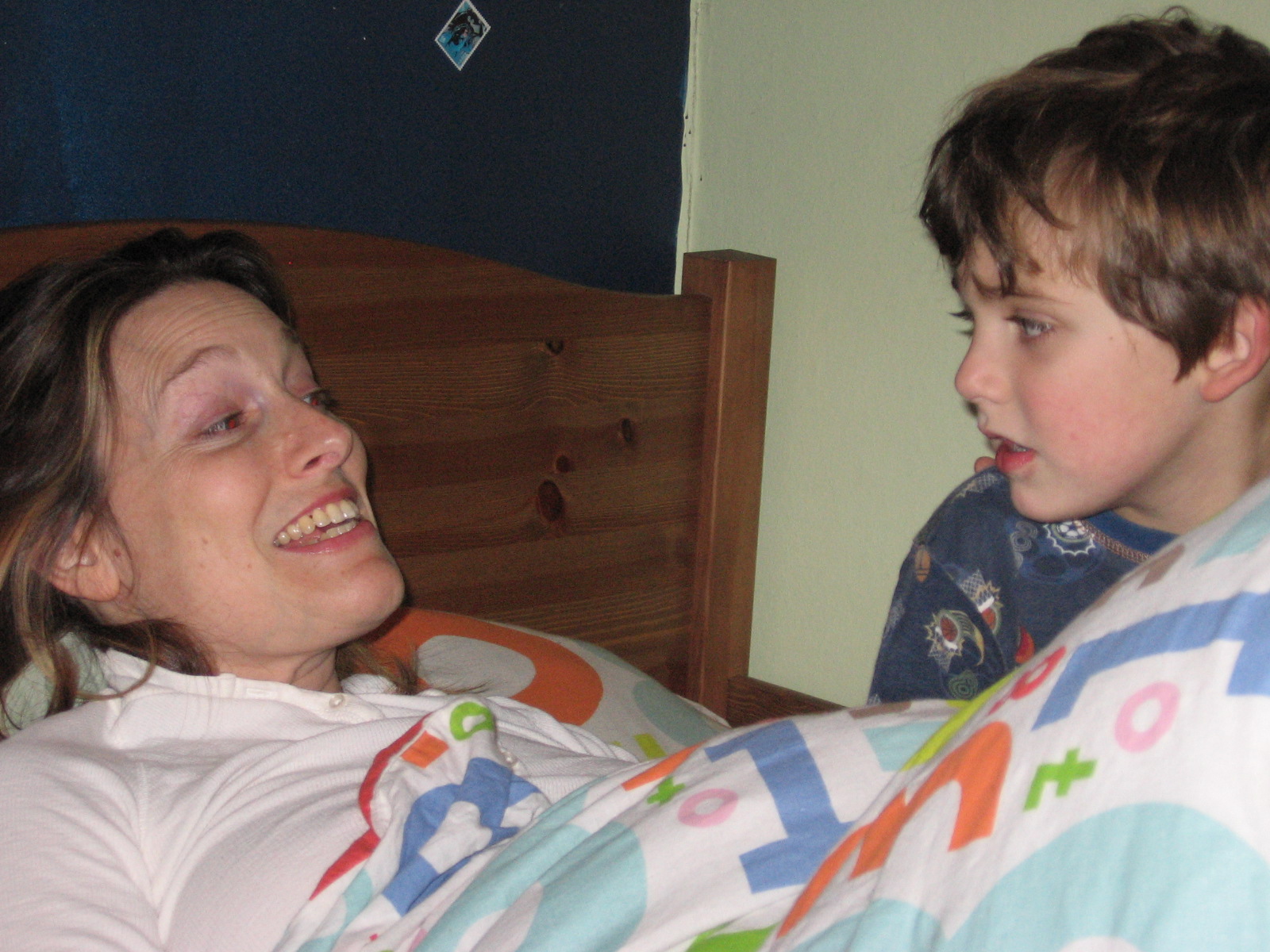
So, if my son looks uncomfortable though not in danger (or being tickled), or like he’s just tolerating something an adult is doing, I ask him, within the other person’s earshot, and with a lighthearted attitude, “Is that okay with you?” Often he says “no,” and almost always the adult apologizes to him, and does not seem offended. This way, I’m also training my son to check in with himself, and ask “Is this OK with me?”
I think most adults genuinely want to connect with children in mutually consensual ways, but we feel awkward because we so seldom see this kind of behavior modeled for us. I still feel slightly embarrassed sometimes when I do manage to treat my child with complete respect, because it’s not what I’ve seen modeled. However, occasionally someone will say they were touched or moved by how I interacted with my son. Maybe we can all help to awaken in each other our deep yearning for all beings, large and small, to be treated with complete respect.
Back in real life, our beloved friends and relatives may not follow our lead as quickly as we would like—or at all, for that matter—people generally default to what they’re familiar with. However, what I’ve noticed is that the more we can respect and embrace the adults’ loving intentions at the same time as we model respect for our children (by lightheartedly asking the child if what’s happening is OK with them), the less likely we will be to trigger shame in the other adult, and to feel triggered ourselves. I want to remind myself and others that we adults are always doing the best we can with the young people in their lives. I want us all to try to support each other where we are, even as we hold out possibilities for where we might be.
I’d love to know your thoughts on this.
Warmly,
Jill
Jill Nagle is the cofounder of Awakeparent.com, and former regular blogger. Currently, she blogs at Zendesk.com, works as a freelance writer and content strategist, and does family mediation with a focus on creative family structures. She works over the phone as well as in person. Learn more here: http://tinyurl.com/thirdsidemediation

 Are you wanting more ease and cooperation from your kids this week? I have a magic question that will get you exactly that. One great thing about this question is that it also works well with other adults. Another wonder of this magic question is that when people ask you this question you feel honored, cared for, and free to say yes or no.