
Forced Apologies Undermine Conflict Resolution Skills

Remember what it was like when you got into a squabble with your siblings or friends and at the end there was the inevitable, “Say you’re sorry” and you half-heartedly responded, “I’m sorry” and then the two of you were supposed to “make up” and play together again as if nothing had happened?

I don’t know about you, but I felt angry and frustrated when this happened to me as a child. And I never really meant it, even when I said it. And the other kid knew that I didn’t mean it. They didn’t mean it either. And it took a while before we were able to actually let it go and be true friends again.

Now as an adult I see that forcing children to apologize when they’re not really sorry actually undermines their internal drive for social cohesion and conflict resolution. I want children to actually empathize with one another, understanding the impact that their words or actions might have had upon another. And then I’d like them to genuinely apologize because they want to. If they’re not ready to apologize, that doesn’t mean they need to be isolated and “think about what they’ve done.”

On a deep level I trust that all children have positive intentions behind their actions. Even when I don’t understand the intentions, they might. I also trust that children want to live in peace and harmony as much as possible. So, while siblings might fight, they also rely on one another for companionship and nobody enjoys the uncomfortable silences and hurtful words that accompany holding a grudge for a long period of time.

Ultimately, apologies are a tool for reconnection when we’ve done or said things that have created a rift in our relationships with others. So why not teach children to use this tool when and where they see fit?

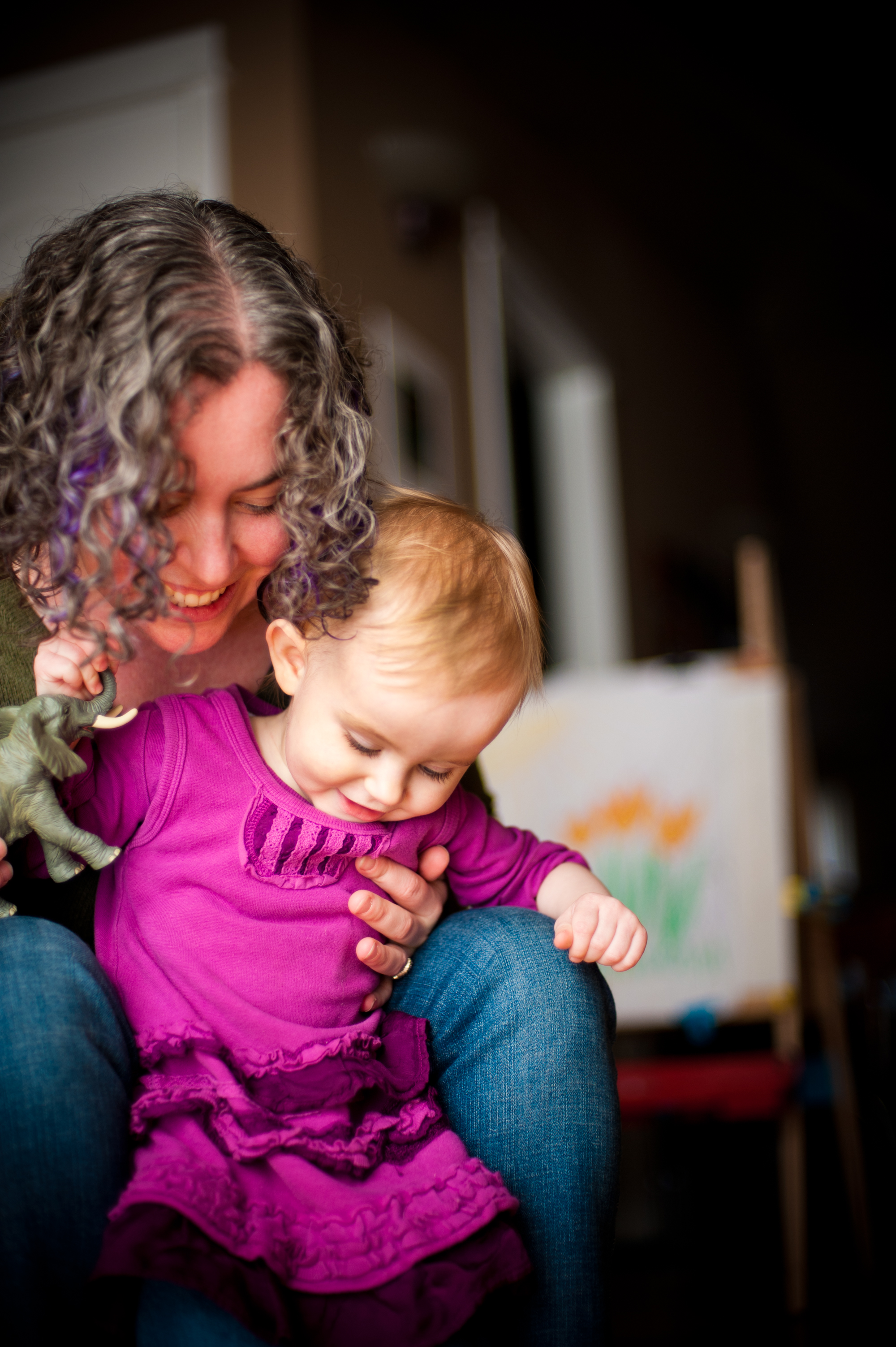
Just the other day my daughter was sitting on my lap. She got excited and head butted me in the face. “Ouch!” I cried out, “You just head butted me. Ow, that really hurts.” Although I’ve never taught her to or asked her to say she’s sorry, she immediately apologized for inadvertently hurting me. And then she offered to kiss the spot that hurt. I was so touched by her genuine apology! And I knew for sure that she wasn’t giving me some canned or memorized speech. Even at two years old, she knows how to repair any damage caused by her actions.

On the other hand, when we ask children to apologize prematurely we are actually devaluing the process of working through conflict. We’re sending the message that we ought to just quickly apologize, even if we don’t feel sorry as a way to smooth over the incident. We’re also inadvertently teaching kids that conflicts should be avoided, rather than used as an opportunity to connect further and get to know each other better.

So this week, rather than asking children to say they’re sorry, let’s try trusting that they already know what to do. Let’s talk with them about how they feel, how they think they’ve been hurt or wronged, validate their feelings, and share new and different perspectives with them.

“Huh, I wonder why he said that to you. Do you think he might have been having a bad day?” or “Well, I guess you could retaliate by not inviting her to your birthday party, but what about talking with her about how you feel about what happened?”

I’ve consistently seen four year olds effectively work through conflicts by talking with each other. It often sounded like this,

“I didn’t like it when you pushed me, that hurt my body.”

“Oh, I didn’t mean to, I wanted you to move because you were blocking the road.”

“Next time, please tell me to move instead of pushing me”

“OK, I’m sorry I hurt your body, does it still hurt?”

“Yes”

“I will go and get an icepack for you.”

“OK, thanks!”

Sure, we had been working with these children for months on how to communicate their needs and desires clearly and how to listen to another person who is upset. And we modeled nonviolent communication and repair strategies often. But with some modeling and guidance, I think all children can learn to resolve their conflicts peacefully.

How are your kids doing with the important task of conflict resolution? Do they need you to intervene whenever they have a disagreement? Or are they able to share their feelings with one another and empathize with others? And how much do they tell you about the social dynamics at school and in other social groups?

I hope you’re having a great week and I can’t wait to hear from you!

Warmly, Shelly

Guest Blog: Family mediation- the power of the “third side”

Thomas-Hands-web

This week’s guest blog is from Jill:

Sometimes we think fighting is just “what kids (or adults) do,” rather than a way we engage when our needs aren’t getting met. I prefer to think of engaging peacefully as “what we do,” and that when we get off track, we can use a hand to get back to a place of connection.

I remember when my son was about three, his dad was in a bread-making phase. Sometimes I liked the results, and sometimes I didn’t. While at the local farmer’s market, my son and I found a particularly yummy loaf of walnut bread, and brought it home discreetly. When his dad saw it, he became incredulous.

“Bread??? You BOUGHT bread!?!?!?”

Canaan felt the tension here. I’ll never forget his response. He raised his body up, opened his arms to the two of us, and proclaimed,

“We all eat bread! There’s farmer’s market bread, and Da-da’s bread, and all kinds of bread to eat.”

Well, shall we let a thousand flowers bloom, or what?

I see this as his attempt to introduce a larger perspective, or “third side,” to his dad’s and my moment of polarization. Sometimes all this takes is showing up with a loving, aware presence.

I remember my stepmother discovering the term “triangualation” in the 80’s, and telling me it was “toxic.” She was referring to one person getting into, or in between two other people who were having a difficult time, creating a “triangle” of three people. Unfortunately, this was the only term in our universe at that time to describe a third person entering into an interaction with two others. There was no positive way to describe a third side to an entanglement.

Today, as a mediator and lifetime student of conflict resolution, I see many ways a third person can show up in a family and help to ease tensions for the other two or more people who are having a hard time to make things easier. This is something humans do intuitively, even when the results aren’t optimal. Kids do it, too, as my son demonstrated above. Continue reading “Guest Blog: Family mediation- the power of the “third side””

The development of will

Time OutWhat’s it like to be a 2-4 year old? (an excerpt from my soon to be released ebook!)
As an infant and young toddler your child saw himself as an extension of you.  He had very little sense of distinction between himself and his parents.  In fact, if you think about it you can understand why this would be so.  Just as we lift our own hand to our mouth if we want to put some food in it- your hand has automatically put food in your baby’s mouth every time he’s been hungry since his birth!  When he needs something, you provide it, so in a way, and in his mind, you’re an extension of him.

Now that he’s older he’s developing more complex language.  He’s learning to distinguish between “yours” and “mine”.  Well if there’s a “yours” and a “mine” there must be a “you” and a “me”.  Now your child begins to see himself as a separate entity with desires, hopes, dreams, and thoughts all his own!  Wow, what an exciting discovery.

A Stronger Will: Unmet needs for choice

Along with the discovery of self, your child is feeling stronger desires than ever before and she’s discovering her personal power.  She’s realizing for the first time that she can affect the outcome of a given situation.  Sure, when she was a baby, she realized that she could move a ball from here to there- but now she’s discovered that she can affect your behavior and have some control over the social dynamics in your home.  This is a huge step in social development.  She’s gone from a helpless being, who is happy to do whatever you want- to a willful child with a mind of her own.  And this is ultimately a good thing- although the transition can be extremely difficult for us.  Sometimes we just want that sweet little baby back (and that’s completely normal)!

If you consider your job as a parent to be raising a capable, independent, and contributing adult, then you can see this phase as a milestone toward that goal.  Now that your child has an ego, strong desires, and a stronger will she can really get things accomplished that she never could before.  Now is a wonderful time to help her develop a sense of responsibility by giving her more freedom coupled with, you guessed it, responsibility.

Easier said than done, right?  Continue reading “The development of will”

Read it again please! The importance of story time

bigstockphoto_Story_Time_588Reading to your kids is a crucially important part of your job as a parent.  And sometimes story time can begin to fall through the cracks of our busy lives.  So this week, I’m writing about the many reasons story time is such an important part of parenting.  I’m hoping to re-inspire you to commit to a daily story time for your kids whether they’re one-year-old, six, or twelve.
My parents all helped to teach me a love of reading that has enriched my life immensely.  My mom and dad read to me every night before bed when I was very young.  My step-mom read me “Little Women” over the course of several months when I was nine.  My mom read chapter books to my brother and me as my step-dad drove us miles and miles on our family vacations.  And in junior high and high school when I showed an interest in science fiction, my step dad turned me on to Douglas Adams.

Let’s explore how reading to your children at various ages supports their growth and development:

As a baby and toddler, your little one is picking up language skills at a phenomenal rate.  Reading to young people helps them increase their vocabulary, understand the parts of language, and learn the rules of English (if that’s your primary language).  There is nothing else you can do that has more of an impact on your child’s future ability to read and learn than a daily story time.  I recommend at least 30min. a day of reading together even with children as young as five or six months old.

When you point to objects and name them, your toddler can quickly learn to identify many more objects than he can verbalize.  Try asking your pre-verbal little one to point to the ball or shoe and you’ll be amazed at how much he can comprehend, even before he can speak.

As your child grows, story time becomes a bonding, connected time that your child can count on.  The emotional security that can grow from taking the time to sit down and read together is truly priceless.  It lets your child know first that she’s important to you and second, that reading and learning are fun.

And by pointing to the words on the page as you read, you’re helping her learn to recognize words.  Before you know it, she’ll be sight reading several words just because she’s had the repetition of hearing the word and seeing it on the page so many times before. Continue reading “Read it again please! The importance of story time”

Connected Parenting Key: get curious

curiosityFirst of all, I’d like to introduce my newest audio program:

8 Steps to Connected Parenting

For those of you who want a quick, easy guide to some of the most important aspects of creating connection with your kids, I’ve recorded 8 Steps to Connected Parenting, my audio guide to Conscious Parenting 101.  You can check out this audio program (only available in MP3 download) here: https://www.awakeparent.com/8steps/

Although this 45 min. audio program is easily worth $20, I’ve decided to offer it for just $8 because I’m hoping you’ll love it, find it very useful, and tell all your friends about AwakeParent.com.

To give you a taste of what this audio program is about, I’ll share one of the steps with you now…Step 5: Check in and Get Curious

Getting curious is one of the most effective ways to invite people to share their inner worlds with you.  When we’re genuinely curious we ask interested questions and people (including children) are compelled to talk with us about what’s going on inside them.

One question to avoid when you want to start a dialogue is “why”.  “Why” puts children into conceptual thought and doesn’t get to the heart of the matter.  Now besides their initial problem, they’re being asked to figure out the reasons for their discomfort and that only leads to more anxiety and upset.

Instead of asking why, try asking questions about what happened, how she’s feeling, or what sensations she’s noticing in her body.  Repeat back what she tells you and ask her to confirm that you’ve gotten it right.   This reflection allows kids to correct you if you’re off track and lets them know that you’re really listening and understanding what they’re telling you.

After you’ve repeated and gotten confirmation that you’re hearing your child accurately, ask, “what else?”  This phrase is an invitation for whatever else your child wants to share.

Here’s an example of a conversation between John and his mom who is curious and reflective. Continue reading “Connected Parenting Key: get curious”