The Little Known Secret to Happier Healthier Kids

We all want what’s best for our kids, but with all of the conflicting information out there, sometimes it’s difficult to tell exactly what that might be. Rest assured, what I’m about to share with you is one of the easiest ways you can help your child develop a healthy immune system and prevent depression and best of all, it’s all scientifically proven.

Scientists have discovered a microbe in dirt that can actually increases serotonin production. Serotonin increases feelings of wellbeing and is even linked with learning. But that’s not the only benefit of playing in the dirt.

Exposure to the millions of microbes and bacteria present in dirt help children develop a healthy immune system. Stranger still, exposure to dirt has been shown to improve cardiovascular health, promote healthy skin by preventing inflammation, and it can even decrease anxiety!

And that’s not to mention the many studies that have shown that simply spending time outside is good for us. In my environmental psychology class in college, we learned that simply listening to nature sounds or even watching a video of a natural scene decreased blood pressure significantly. So how much better must it be to actually get out and enjoy the outdoors?

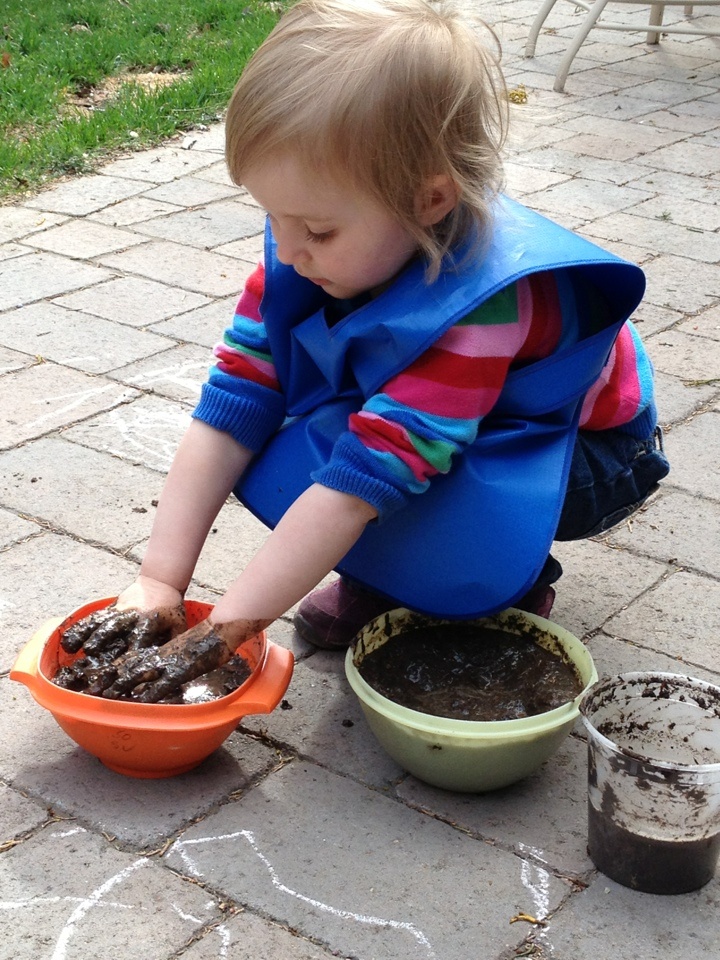
Spending time in nature and digging and playing in the dirt or mud are sensorial experiences that children delight in. Do you remember the wonderful feeling of mud squishing between your toes? Or recall the joy of discovering how a steady stream of water can erode a “mountain” of dirt into nothing at all?

I used to love to make mud pies as a child. I would mix the dirt and water in my own special concoction adding just the right amount of each, a sprinkle of grass, a few clovers, and then I’d mix it all up with a twig and serve up my creations with the pride of a master baker.

Who knew I was improving my immune system, developing a healthy heart, and decreasing my chances of depression? I just knew it was fun!

Last week my mom introduced my daughter to the joys of making her first mud pies. She was slow to warm up, unsure about getting quite that dirty, but I’m betting that by the end of the summer we’ll have some shots of her covered head to toe. And who knows, maybe I’ll join her!

I mean, I don’t have to go to some fancy resort and shell out of bunch of money to take a mud-bath, I can do that in my own back yard! So, yes, encourage your kids to put on some old clothes, and play in the mud, and if you’re feeling adventurous, join in the fun!

Have a wonderfully dirty week, Shelly

Photo by Christee Cook
Fostering Gratitude

My daughter’s favorite phrase lately seems to be, “I want I want I want…” and then she fills in the blank with whatever she happens to want in that particular moment. We’ve been working on asking nicely, which she does beautifully when prompted. And, with Thanksgiving approaching I’ve been thinking about the relationship between desire and gratitude.

In my experience, desire is somewhat uncomfortable and exciting and if my desire goes unfulfilled it can reach a point of frenzy. Gratitude on the other hand is calming, heart centered, and incredibly fulfilling in and of itself.

So, when I find myself stuck in a cycle of desire, I can often find a peaceful way out by consciously practicing gratitude. And I deeply want Julia to develop this useful skill.

For the next couple of weeks when she starts in with her refrain, “I want I want I want…” I think I’ll respond by sharing something I’m grateful for, instead of prompting her to ask nicely. “I’m so grateful we get to spend this time together!” or “I’m glad we have lovely healthy food to eat.” And then I’ll ask, “What are you grateful for?”

Sure, we’ll practice this on Thanksgiving, but why not start early and continue through the end of the month? In fact, why take a break from gratitude at all?

There are bunches of studies from positive psychology and happiness research that show that gratitude increases quality of life. Here’s a list of some peer reviewed studies from 2006-2011 if you’re interested in learning more about the current research.

The point is that gratitude and appreciation are emotions that benefit us and the people around us. And what’s the best way to teach this wonderful skill to our children? Why, to practice it regularly ourselves, of course!

How do you practice gratitude on a daily and weekly basis? Do you have rituals around food, like saying grace? Do you recount favorite moments of each day at bedtime? Do you have family meeting where each person gets a chance to appreciate the other members of the family?

If none of these sound familiar, maybe it’s time to implement a gratitude practice into your life! Even something as simple as keeping a gratitude journal that you write in daily can improve your happiness and wellbeing. And even if you don’t formally adopt a practice WITH the kids, your own daily practice will still positively impact your family.

The holidays are a wonderful time to practice being grateful for what we have, and they’re also a good time to give to others. Sometimes I find that it’s easier to be grateful for the abundance in my life when I spend time with people who are less fortunate. It’s very easy to take things for granted when everyone around us has things like hot running water and cars to drive.

But when we volunteer at a local soup kitchen, it feels really good to give back AND it reminds us how fortunate we are. Really, having hot running water and a roof over our heads is quite a miracle.

So, what are you most grateful for today? And how might you implement a gratitude practice with your kids? Or do you already have one that you’d like to share? I love hearing from you!

Have a wonderful week, Shelly