Montessori Inspired Plant Watering Activity


Montessori Inspired Plant Watering Activity

What you’ll need:

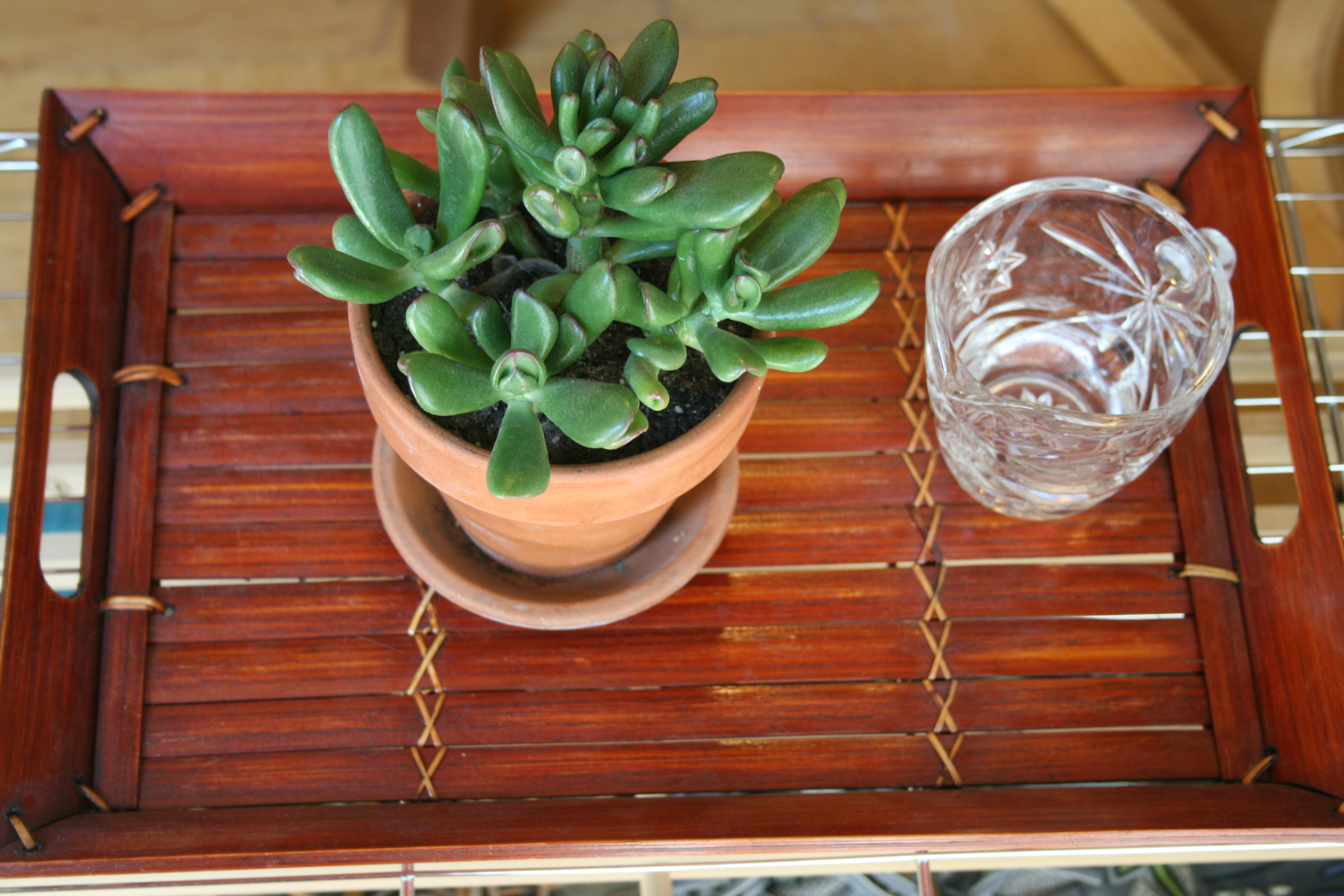
A tray that you don’t mind getting wet

A clear pitcher already filled with a small amount of water

A hardy plant that needs a drink

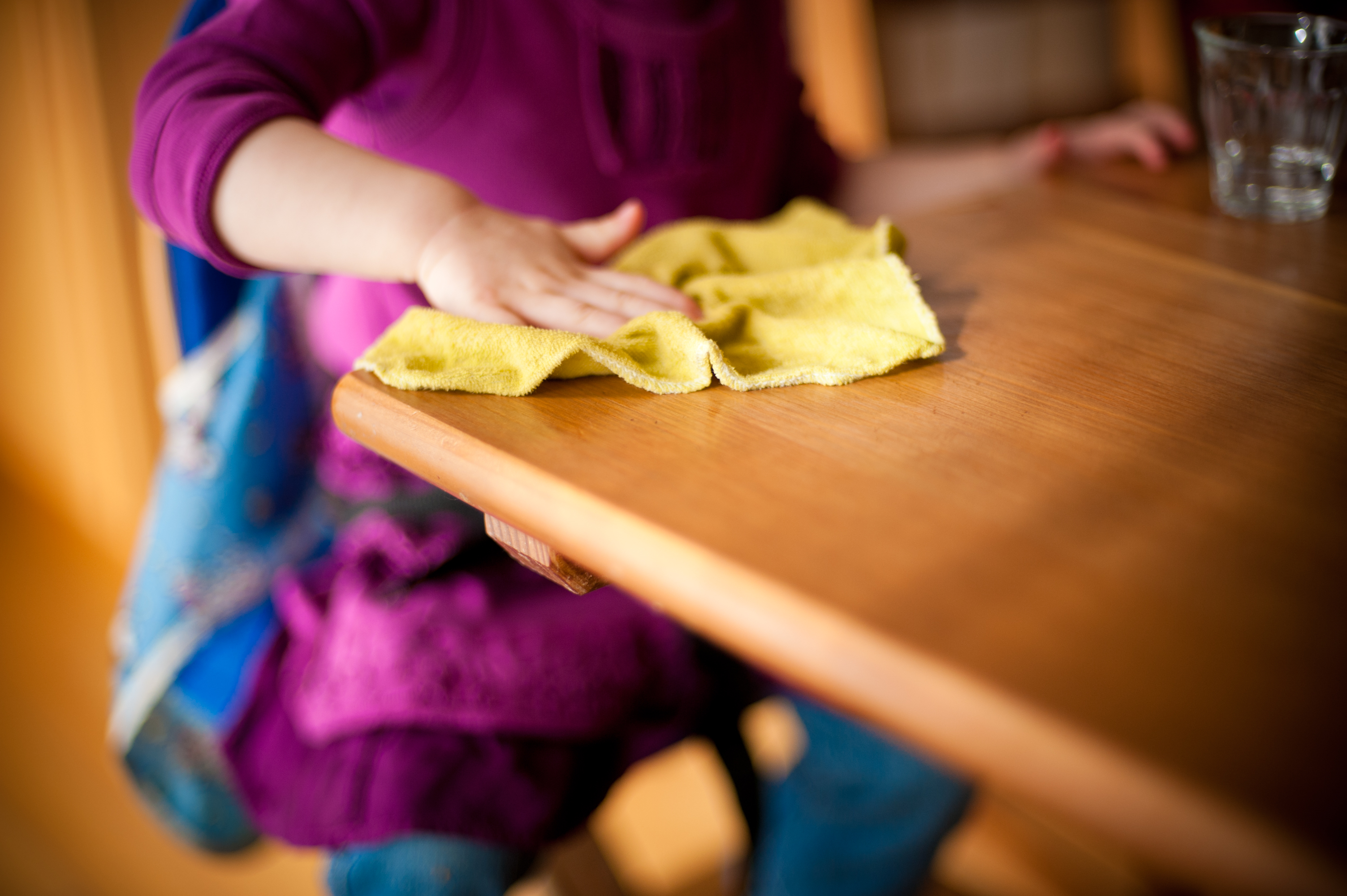
A nearby towel available for spills


Here my daughter discovers the activity and gets ready to pour.


Pouring!


Finishing the pour.


Just making sure she didn’t miss any!

Why We Montessori (my new school just opened!)

About six months ago I realized that Julia is ready for preschool. She loves to go to story time at the library, enjoys social interactions, is absorbing information at a phenomenal rate, and is beginning to test the rules and boundaries, all indicators of readiness for greater social challenges. So I went and visited a hand full of preschools in my area. Most of them wouldn’t admit a child under three years old and since Julia isn’t quite two yet my choices were somewhat limited to a few Montessori toddler programs with pretty steep price tags.

I’ve worked in Montessori classrooms for years and while I loved the programs I visited, I balked at the price. Then I visited some programs that were not Montessori and I was again reminded why I love the Montessori classroom so much. The chaos, clutter, and lack of clear boundaries that I observed at some of the other schools I visited re-inspired me to continue to use Montessori philosophies to teach Julia at home. The only problem was that I don’t have any other children, so there’s no mixed age classroom and a distinct lack of peer interactions.

So I decided to open a Montessori-Inspired preschool and toddler house here at home two mornings a week. This was my first week of class with just one new student, but I was already impressed by the children’s immediate ability to engage with their work, follow my rules and directions, clean up after themselves, and innovate new and interesting ways to explore the environment. My new school is already a success!

Now Julia is getting the social interaction she’s been craving and she is already more physically adventurous after watching her new friend climb jump and play. Hooray! Plus, now I have an even better excuse to spend my evenings creating learning materials. Yes, I really am that much of a Montessori geek. Three part cards are rocking my world right now. More on that in a future post, but for now I’ll just say it’s wonderful to be back in a Montessori classroom.

Here’s a list of a few of my favorite things about Montessori vs. Traditional preschool environments:

Montessori Traditional
Peaceful, quiet, and focused on individual exploration; children are engaged in meaningful learning and expanding their interests and attention spans. Chaotic and loud; children are running around like maniacs with few opportunities for sustained attention.
Lots of choices and children are each doing their own thing, which emphasizes awareness of ones own interests, needs, and desires. The whole group does things together which emphasizes herd mentality and going along with the group.
Mixed ages means children can both learn from one another and teach one another. Varied social experiences and celebration of each child’s unique skills and expertise are the norm. Same ages grouped together means children have little experience navigating social interactions with older and younger children. A child’s only mentor is the teacher.
Clear rules, boundaries, and expectations about the use of materials and the need to put activities away so that the next person can use them creates a culture where cleaning up is just a matter of course. Children end up enjoying cleaning and often choose cleaning activities for fun! Undefined expectations about how to use toys and materials can lead to destructive behaviors as children search for the boundaries. Children are given free reign to create a huge mess and then inconsistently asked to help clean up at the end of the day but never develop a deeper care for their environment.

So, there you have it. Just a few of the reasons that a Montessori or Montessori-Inspired environment is the only one my daughter will be in. And to those of you out there who choose Waldorf for your kids, I’m curious about how you would include the Waldorf philosophies and practices in my chart. I don’t know much about Waldorf but from what I do know, the philosophies sound interesting and aligned with my heart, but my observations of Waldorf in action have been less than stellar. I would love to be converted to a Waldorf lover (although I think Montessori education will always be my first love). So, please leave me a comment to teach me more about why Waldorf is another great choice for conscious parents!

And have a fantastic week. Love, Shelly

First Sink and Float Activity

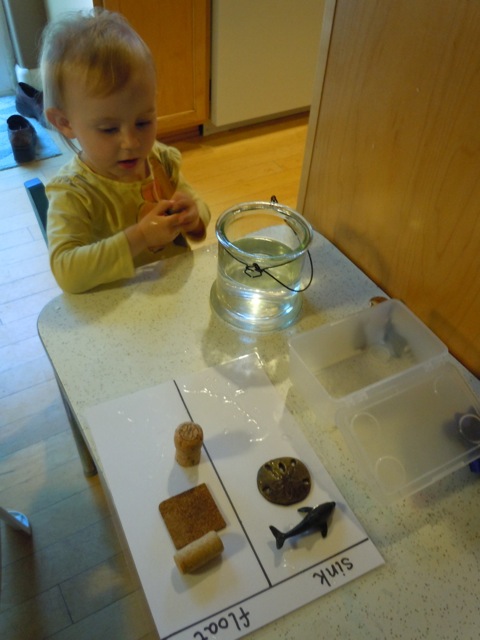
Julia’s first sink/float activity!

I simply wrote sink and float at the top of a piece of card stock, drew a line down the center and then laminated it.

Then I collected some items that sink and some that float. I poured the water into the bucket for her and she had a blast testing each item and putting them on her chart in the appropriate location.

After introducing this yesterday, she woke up and immediately wanted to do this work again. It’s a hit!

Your Work/My Work

In the Montessori classrooms I’ve worked in, there are usually twenty-four children between three and six years old and just two adults. Each child has free choice of hundreds of possible activities in the classroom, and in order to maintain peace and order, we HAVE to create some rules and boundaries.

One of the rules is that we respect one another’s work. We don’t touch each other’s work, we don’t walk on someone else’s work rug, and we don’t clean up after each other. Each person is responsible for getting out, completing, and putting away their own work.

Several months ago I taught a class to parents of Montessori students and when I described the reverence and care we have for our work, a mother perked up. “Oh!” she said, “So THAT’S why my son gets so upset when I clean up his toys, he’s always complaining that I’m not respecting his work, but I didn’t understand why until now!”

I believe strongly in Montessori philosophies and use many of them as guidelines in my home with my daughter and now that she’s approaching two years old I’m beginning to understand what a huge difference this has made in the peace and order of our home.

First, I do my best to respect her work and often ask her to clean up after herself, before offering any help. So when she leaves something out, she can reasonably expect it to be there when she gets back. This provides stability in her mind and encourages her sense of order. She knows where she can find her things and she knows that there is no magical clean up fairy.

As an aside, I actually did think that something like a clean-up fairy existed when I was a young child. I had no concept of my preschool teachers staying after school to clean up, or of my mom and dad picking up after I was in bed. I just thought things magically reappeared in their original locations!

Of course, I’m happy to help my daughter clean up if she needs support, but I don’t make a habit of going around behind her and cleaning up after her.  As a result, I overheard her with her books yesterday. She was looking at the pages and talking about the content of the book and when she got to the end of the book she said, “Back” and put the book back on the shelf!

But here’s the real kicker. I also ask her to respect MY work. That means that she understands that my work is important and I’m committed to its completion. So when my daughter asks me to play with her I will often respond with, “Sure! I would love to play farm with you, but I’d like to finish my dishes work first, so you can go get started without me, or you can watch me finish my work, and then I’ll join you!”

One of the things I love about this is that she’s learning that life is filled with “work” that people enjoy and want to complete before moving on to new tasks. This promotes the concept of follow through while it also helps her to delay gratification while she waits for me to join her in her chosen activity.

I know without a shadow of a doubt that my daughter understands that her wellbeing is my top priority. And, I also want her to know that my own wellbeing is hugely important to me as well. The order of my environment helps me to feel peaceful and relaxed so that when I do sit down to play with her I can completely focus on her, rather than constantly thinking about my enormous to do list and only giving her my partial attention.

I’m sure I’ll write another post about organization and it’s psychological impact on us, but for now I’ll just say, it’s OK to let your child know that you have work to do when you’re at home. If we model respect for their work, they’re bound to learn to respect ours too. And when we honor and respect one another’s work, peace and love have plenty of room to thrive.

So, how do you balance playtime with work time at your house? I would love to learn some of your secrets to success in this area! Please share a comment below.

And have a fantastic week, Shelly