What Not to Say to Someone Who Has Experienced a Loss

It’s hard to know what to say to someone who is mourning a loss, but there are several things that we’d all very much appreciate if you’d remove from your “comforting words” list.

1)   “Well, it could be worse. At least you weren’t farther along, I have a friend/sister/cousin who…” (insert a story of horrific loss here)

I can’t tell you how many well meaning friends messed this one up, but I’m pretty sure that anyone who has experienced a loss is well aware of all the even worse things that could happen.

Trust me, when we discovered we had miscarried at 13 weeks, I thought a lot about everyone I know who had lost a child at any age. I thought about all the many things that could still go wrong, even when we tried again. I thought about genetic abnormalities, missing body parts, another miscarriage, or worse. In fact, I’m now 22 weeks pregnant, and I still check for blood every single time I use the bathroom.

It’s not like I needed any reminders that a future ultrasound could reveal problems or that stillbirth and SIDS are real. For a while I couldn’t stop thinking about the friends I know who have had second trimester miscarriages, or the mothers who have lost their live children in infancy, or early childhood. And then there are the parents spending the night in the hospital praying for the cancer to die and for their sweet child to survive. I thought about drunk drivers and airplane crashes, chemical spills, bombs, cancer, and my aging parents… all of it.

Maybe I tend to obsess over the negative, but I’m pretty sure I’m not the only one. And when I’m already freaking out about how unfair life is, that is not a good time to tell me a story about something even worse. What I need in that moment is a reminder that I’ll get through this and that there are beautiful things to focus on too, when I’m ready.

2)   “I know exactly how you feel.”

Excuse me, but I’m a unique individual with my own fears, thoughts, and experiences. No matter how similar our situations might be, it’s practically impossible for you to know “exactly” how I feel. And even if it were possible, I think the sentiment you’re trying to get across here is, “I’m so sorry for your loss.” Instead, by assuming you understand what I’m going through, you’re actually minimizing my experience and generalizing it to a whole group of other people who’ve gone through a “similar” loss.

Yes, it’s reassuring to know I’m not alone in my grief. But your loss is not equivalent to mine and pretending they’re the same doesn’t help me process my grief. What I’d really appreciate instead is if you could share your own personal story and then offer me empathy and understanding through curiosity and openness. Please listen to me, instead of telling me how I feel.

3)   “You’re feeling better now, right?”

Grief is a very personal process. You have no idea what baggage I might be carrying around from my past. Or what other losses I’ve suffered. And since each person process grief in their own way and over their own time period, there are really no rules about how long it should take. Rushing someone through the process (if that were even possible) is not helpful. Instead, just let me know that you’re there for me if I need to talk and suggest something we could do together. Also, please get comfortable with my tears. There’s nothing worse than mourning a loss with a person who is squeamish about a few tears.

4)   “I’m sure nothing like that will ever happen to you again.”

I’m sorry, but even you can’t predict the future. As much as this is meant to be reassuring, it just doesn’t ring true. We are all human and that means we’ll all have to experience some grief and loss in our lifetimes. We lose people we care about. That’s a part of life. It’s certainly not the fun part, but it is a necessary part. We form bonds and they are broken through a variety of circumstances.

I think that experiencing a loss can actually help us though. By recognizing how precious and fragile life can be, perhaps we can be more present and appreciative of the amazing lives we get to lead. Maybe we can actually stop to smell a flower, instead of rushing by as if we’ll have all the chances we’d ever want to smell that rose, or appreciate that sunset, or tell our loved ones how deeply we care about them.

5)   “I’m worried that something like that will happen to you again.”

Again, as true as this might be, it’s not something you need to share with the person who is going through the grieving process.  Talk to your other friends about your worries or concerns, but please allow me to slowly rebuild my trust in a benevolent universe, instead of burdening me with your concerns.

6)   “Call me if you need anything.”

This goes into it’s own special category with statements like, “What can I do to help?” and “Is there anything I can do?” The truth is, there’s nothing you can do to take away the pain I’m experiencing. Sure, I appreciate the thought, but asking me to reach out in the midst of my sorrow or requesting a list of actions you can take that will “make me feel better” is just more work for me. And right now, I can’t do any work. Sure, stop by with a hug or a gift or send me a sweet text or heartfelt message, but don’t ask me to devise a way for you to help. I’m pretty sure you can figure that out for yourself.

So what CAN you say to someone who is grieving?

Here are 6 wonderful things to say to someone who has experienced a loss:

1)   “I love you.”

2)   “Would you like a hug?”

3)   “It’s OK to cry…a LOT.”

4)   “I’m so sorry for your loss”

5)   “I’m bringing you take-out tonight, what do you want for dinner?”

6)   “I’m here for you. Do you want to talk about it?” (then, just listen with an open heart)
My 10 Most Popular Posts of 2013

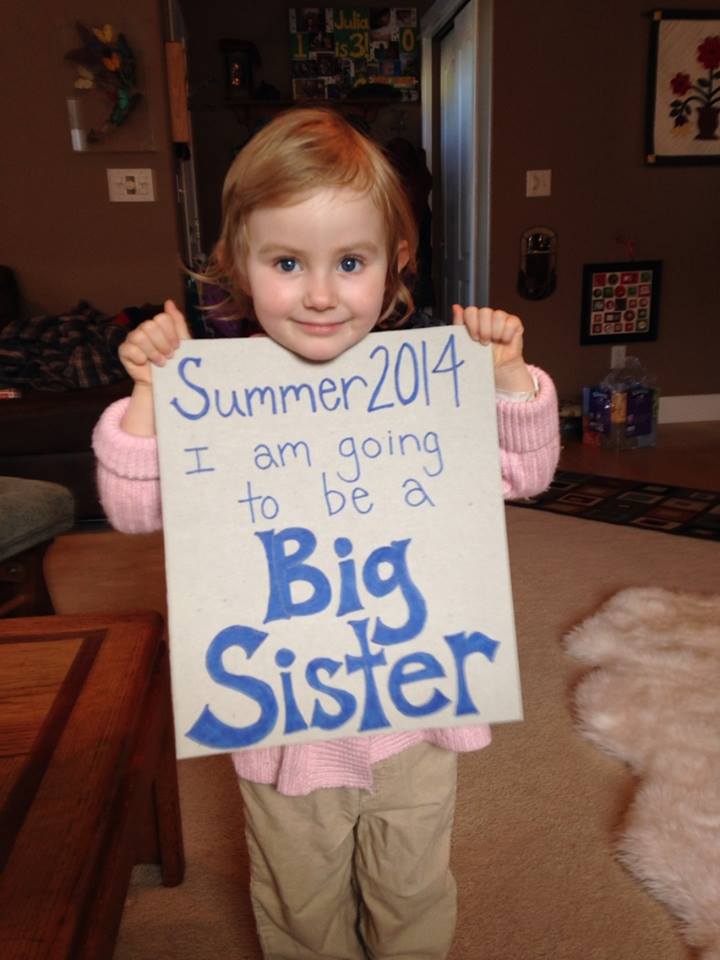
Wow, 2013 was quite a year, wasn’t it? I started working as the office manager at my husband’s chiropractic office, continued coaching, spoke at a conference, and suffered a missed miscarriage. I also got my first tattoo and got pregnant again!

Our daughter Julia started preschool at River Song School, a wonderful non-profit Montessori school here in Bend, OR. And ever since she started school, it seems like she, my husband and I have been fighting off one cold or illness after another.

Through it all, I’ve done my best to keep writing and connecting with other like-minded parents, like you. This year on my blog I’ve had the most page views, shares, and newsletter sign ups ever! So thank you so much for being here and supporting my work and my passion. And may 2014 be our healthiest and happiest year yet.

These were the top 10 most popular posts of 2013:

1)   The Little Known Secret to Happier Healthier Kids

2)   8 Breastfeeding Myths That Make Me Want to Scream

3)   5 Habits That Make Parenting Easier

4)   12 Ways to Encourage Failure and Why You Definitely Want to Do it

5)   7 Secrets to Getting Kids to Clean Up Joyfully

6)   12 Easy Ways to Help Kids Unplug

7)   8 Ways to Help Kids with Anger

8)   7 Destructive Parenting Myths

9)   7 Keys to Getting Kids to Listen

10) What Everybody Ought to Know About Talking to Kids About Sex

Oh, one more thing, if you have suggestions of topics you’d like me to write about this year, you can share your questions or ideas in one of three ways. 1. Comment here 2. Comment or send me a message on my Facebook page or 3. Email me at shelly@awakeparent.com I always love your help coming up with relevant topics!

5 Habits that Make Parenting Easier

Parenting can be the most wonderful and the most challenging experience of our lives. Things that used to seem easy, like getting to an appointment on time or grocery shopping can become all but impossible. We can easily slip into bad habits that create tension, power struggles, and conflict with the very people with whom we most want to connect, our family members.

The good news is that there are also some really good and positive habits that you can begin to practice that will make every aspect of parenting easier and more fun. And once you’ve engrained these into your life, the daily struggle becomes far more bearable and the moments of joy and ease continue to increase.

Here’s a list of the five habits I most rely upon to make my life as a parent easier. These habits help promote cooperation, connection, and may even get you some down time, imagine that!

1)  Warnings for EVERY transition

If there is one thing that makes time with children easier, it’s offering warnings about upcoming events. I know it sounds simple, but it really makes a huge impact.

When I started working with kids as a nanny, I didn’t have this habit, but I soon learned its value when my time with children went from a constant battle at every transition to a smooth and easy transition almost every time.

The trick is to get into the habit of offering a 10 minute, 5 minute and 1 minute warning before EVERY transition. About to have dinner? Offer warnings. Headed out to the store? Warnings. Almost bath time? Warnings.

When you get into the habit of offering these warnings about upcoming transitions, children learn that they don’t have to immediately stop what they’re doing. Instead, they have the opportunity to wind down their play or art project and they are often able to get on board with the next item on the agenda. And even when they’re not able to say yes to a trip to the grocery store, at least they feel honored and respected by your attentiveness and dedication to the warning system.

 2) Regular Sleep Schedules

Sleep deprivation is a very real culprit when it comes to maintaining a positive mood and being willing to cooperate with others. This is true both for you and for your kids. When we are sleep deprived, we’re just not as resourceful, happy, or able to adjust. And kids need a LOT of sleep.

My favorite book on sleep is “The No-Cry Sleep Solution” by Elizabeth Pantley. One of the many things I love about this book is that it contains charts so that you can get into the habit of recording your child’s sleep. What I like about this is that it can be a reality check. You may think your 3 year old doesn’t need a nap any more, but depending on how much nighttime sleep she’s getting, she very well may. There’s a great chart in the book that lists the amount of sleep children need based on their age and how most kids break up their total sleep between nighttime sleep and naps.

The great thing about getting into a regular sleep schedule is that your child’s body will learn when naptime and bedtime are and getting them to sleep becomes easier. My daughter will often even say, “I’m tired, I think it’s naptime Mommy.” We rarely have a struggle at bedtime and I think that’s because our routine is so consistent that it just seems like sleep time around 7pm.

 3) Gratitude, Kindness, & Appreciation

It’s easy to fall into the trap of negativity, always pointing out the things our children are doing wrong, but this habit rarely helps a child snap out of it. In fact, by putting attention on the things we don’t want, we’re actually conditioning our kids to do more of those things. After all, that’s what gets them the attention they so desperately need. You see, children don’t consciously distinguish between positive and negative attention. They just know on some fundamental level that they need attention, and either kind will suffice.

But when we can get into the habit of appreciating what we do like, noticing the things we’re grateful for, and treating our kids with gentle kindness, they blossom before our eyes. I don’t mean we should ignore bad behavior entirely, just that when kindness and appreciation are our habit, we’ll naturally get more of the behavior we want and less of what we don’t want.

That’s because children are hard wired to seek our approval, after all, they rely upon us for their very survival. They deeply WANT us to be pleased with them, even in the times when it seems like they’re doing everything they can to push our buttons. So, instead of seeing the boundary pushing as an attempt to rattle you, begin to see it as a request for connection and safety. Your child is saying, “Will you still love me, even if I misbehave?”

The more we can reassure our kids that they are innately wonderful and deeply loved and appreciated, the less they’ll need to test or challenge us at every turn. Of course, there’s a certain aspect of testing behavior that is just personality based. Some kids will push our boundaries more frequently, regardless of how often we remind them that they are unconditionally loved. And most kids are incredibly sensitive to our energy and will know just how sincere our appreciation and acknowledgment really is. I think that kids who test us more often just need even more gratitude, appreciation, and acknowledgment for the qualities that we most enjoy.

4)  Asking for Help

I don’t know about you, but I have a tendency to do it all myself by default. I somehow think that it’s normal to do child-care, buy the groceries, put them away, clean the kitchen, cook a healthy meal, feed my family, put away the leftovers, and play a game with my daughter while I’m doing the dishes. That. Is. Not. Normal. Or at least it shouldn’t be.

Yes, you may be a stay at home mom or dad or a single mom or dad. You might not have family members that live nearby. But no matter what your circumstances, the old adage, “It takes a village to raise a child,” is still true. We MUST get into the habit of asking for help. And that includes asking our kids for help.

Believe me when I tell you that it’s in your child’s best interest to be a contributing member of your household. And if you do have a partner at home, it’s crucially important that you ask for support when you need it, and sometimes even when it would just be really nice. A recent study found that couples who did chores together were more satisfied with the division of labor and had greater marital satisfaction than couples who did chores separately.

And if you don’t have a partner at home, developing the habit of asking for help is key to your survival. By asking friends and family members to help you, you’re expanding your circle of connections and offering people the opportunity to contribute to you. That’s exactly what creates a feeling of community and helps you keep your sanity. Yes, sometimes it’s difficult to ask for help. Do it anyway.

5) Daily Snuggles

Maybe this is my primary love language, physical touch, speaking here, but snuggling up with my daughter is one of the highlights of my day, every day. By making daily snuggles a habitual part of our daily routine we both fill up our love tanks and remember what’s important to us. When her little arms reach around my neck and she says, “Mommy, I love you TOO much!” I simply melt. These moments are what make all the hard work, sacrifice, stress, and difficulty of parenting 100% worth it.

Make sure you get your tank filled on a daily basis. And if you’re not sure what it is that fills up your tank, think about the moments when everything feels good and right. And make more of those moments. Build them into your day so that they become a habit. And then go back to those wonderful moments in your mind, whenever you start to feel stressed or freaked out.

So, there you have it, my five habits to help make your parenting journey easier and more enjoyable for everyone. I hope they work as well for you as they do for me!

Have a fantastic week and please share your own ideas for habits that make parenting easier.

Photo by Heidi Thomas Thomasandvelophotography.com

What Everybody Ought to Know About Talking to Kids About Sex

Well, it happened. I was rocking Julia before bed a couple of weeks ago and out of the blue she asked, “Mommy? How did Daddy get the seed into your mouth to start a baby growing?” I was a bit surprised to say the least, she’s only three years old after all, but I calmly replied, “Well, he actually put the seed into my vagina, not into my mouth.” To which she replied, “Well what did he use to get it in there?” And I said, “He used his penis. You know, I have a wonderful book called, ‘Where Did I Come From’ that tells all about how a baby starts to grow. Would you like to read that tomorrow?” After an enthusiastic “YES!” I eventually got her to calm down and go to sleep.

The following evening we sat down and read the very same book that my mom read to me when I was a young girl. “Where Did I Come From” by Peter Mayle

The thing I love about this book is that while it’s lighthearted in spots, it also includes scientific details and it doesn’t leave anything out. After having this book read to me as a young girl, I knew exactly how babies are made. Having that information early also opened the door to future conversations about STDs, pregnancy prevention, and even drugs and alcohol.

I’ve always been super grateful that my mom was so forthright, honest, and willing to talk with me about sex. I believe that it’s lead to my healthy sex life and a clear understanding of the pitfalls and dangers of unprotected sex. I’ve known how pregnancy happens since I was very young, so when my peers said weird and untrue things like, “You can’t get pregnant the first time,” I knew the truth.

As we were reading, I noticed that during the description of sex, Julia tuned out and began to look around the room. Then, when the baby started growing inside the mother, she was very interested again. I think it’s because she’s not quite ready to process the details of what having sex is and she clearly has no interest in that part of the story. What she’s curious about is how babies are made and how they grow inside the mother.

Talking with kids about sex isn’t a one-time thing. There is no “the talk.” In reality, teaching children about sex is a series of lots of little conversations over time. By treating sex as just another normal topic of conversation, we can invite our children to come to us with their thoughts, ideas, and questions about this mysterious act.

And that really pays off big time when our sweet babies become teenagers and consider becoming sexually active themselves.

Because my mom and step-mom both talked to me frankly about my changing body when I went through puberty and about sex when I became interested, I knew that using multiple forms of birth control is the safest route if you don’t want to get pregnant. And I was aware that even though I was on the pill, it was still important to use condoms to protect myself from sexually transmitted diseases. I even learned about masturbation from a book that my step-mom recommended called, “Girls and Sex.”

I was also regularly encouraged in locating clinics nearby to get tested and to insist that my partners to get tested. I think it was much easier for me to have those conversations with potential new partners because I had grown up talking about sex. Again, it was just a normal topic of conversation for us.

The only thing I wish I’d known about as a younger woman is the wonderful information in “Taking Charge of Your Fertility” by Toni Weschler. I didn’t read it until I was trying to get pregnant the first time and I couldn’t believe how much information about my fertility and monthly cycle I’d been missing out on for all those years. If you don’t know about cervical fluid yet, you’re in for a whole new understanding of your monthly cycle! Seriously, I think this should be required reading for high school sex ed. OK, so back to talking with your kids about sex.

Here are my top six tips for talking with kids about sex:

1)   Answer all questions honestly, but don’t elaborate too much.

Kids don’t need the details of your exploits, the scientific facts should suffice unless they specifically ask you about your personal experiences (but I don’t know any kid who would want to know those details about their parent).

2)   Check in and start a conversation

if you notice a change in your child’s body or behavior or if your child seems afraid to bring up the topic.

3)   Read a book together

or offer your reading child a book to read on his own and then ask him about it later. Also, ask your child what the kids at school say about sex and debunk any myths.

4)   Notice how your child responds.

If she’s shutting down, stop and come back to the topic at another time.  Remember, this doesn’t have to be a serious or heavy conversation. You can give accurate information in a fun and playful way too.

5)   Make sure that even young children are aware of which parts of their bodies are just for them

and encourage them to assert their boundaries if anyone ever tries to touch them in a way that they don’t like. You may even model it for them, “Stop! I don’t like that! Don’t touch my body.”

6)   Talk about sex often and without much fuss.

Treating sex conversations as somehow more significant than other conversations gives kids the message that this is a taboo topic. Instead, treat conversations about sex like any other mundane topic of life. After all, we don’t blush when we talk about food, poop, or sleep. Why should sex be any different?

I hope these tips are helpful for you and I would love to hear about your own experiences of growing up talking (or not) about sex and how you handle this topic with your kids. Please share your story below!

And have a wonderful week, Shelly

8 Ways to Help Kids With Anger

Emotion regulation is one of the biggest challenges children face. Heck, emotion regulation is one of the biggest challenges anybody faces! So how can we help kids learn to feel, express, and experience their emotions in a healthy and productive way? Joy and happiness are easy to encourage and enjoy. But when kids feel frustrated and angry, it can be difficult to hold space for them and help them ease back into a regulated state without minimizing or squashing their emotional expression.


So here are my 8 ways to help your child with anger:

1)   Reflect—

“It sounds like you’re feeling frustrated…is that right?” or “It seems like you’re still upset about that, are you?” are great conversation openers. Instead of asking a young child how they’re feeling, try guessing his feelings and then check in to see if you’ve guessed correctly. This helps kids to more correctly identify their feelings when they’re in the midst of them since thinking of the right words can be difficult when we’re emotionally activated. But do be careful not to simply assume you know what’s going on. It’s important to check in and ask so that our kids know that we’re tuning in and curious, rather than forcing our own ideas about what’s going on upon them.

2)   Listen—

Instead of offering advice or suggestions, first, simply listen. Rather than asking questions or telling stories about how much you understand what they’re going through, just breathe, relax, and feel your heart as you get down on his level, make eye contact, and listen to your child.

3)   Empathize—

Focus on the feelings and their underlying needs. For instance, “Are you feeling frustrated because you need some space from your brother?” or “Are you feeling upset because you need my attention and I’ve been unavailable?” By noting the need underneath the feelings, you’re helping your child (and yourself!) to better understand what’s happening and how to help herself avoid a future incident.

For instance, when kids understand what they’re needing, they’re more likely to be able to ask for it! And when you are able to connect feelings to their underlying needs, you can help your child by prompting her to ask. “It sounds like you’re getting frustrated. What would help? A snack? Some time alone? How can you ask for what you’re wanting right now?”

4)   Hold space—

Sometimes the greatest gift we can give to someone with big feelings is to simply witness them and hold space for them while they express themselves. Of course you do need to make sure the expression is safe for you and your child, but many times, simply being there and relaxing your own body can be a wonderful grounding rod for a child who’s feeling out of control. You don’t need to say anything at all, but if you feel the need, something simple like, “I’m here,” “I hear you,” or “It’s OK to feel angry (sad, upset)” is best.

5)   Offer alternatives—

Hitting people is not OK, but if your child seems to desperately need to hit something, offering a healthy alternative can be incredibly helpful. Hitting a bed, couch, or pillow can be a good redirect for a child who has trouble controlling her body and lashes out at people. Ultimately, you want your child to be able to let go of her anger without needing to hit, but allowing her to hit an inanimate object can be a good interim step on the way toward a more advanced method of processing anger. The same goes for throwing, spitting, or any other unwanted behavior. By offering a healthy outlet, you can help your child learn self-control AND allow her to express her feelings through her body.

6)   Reconnect—

Many children who experience an explosion of anger have feelings about the outburst afterward. Sometimes they feel scared, ashamed, or worried about what happened. Reconnecting after an outburst is a great way to remind your child that you love him no matter what. It’s also a time when he’s ready to hear your reassurances that it’s OK to have big feelings and stories about how you feel angry sometimes too. Tune in to your child’s favorite way to reconnect, whether it’s snuggling, physical play, or some other cherished family ritual. Also remember to respect your child’s time frame as some kids need some alone time to process what happened before they’ll be ready to reconnect with you.

7)   Envision the future—

After the incident is over, talk with your child about how you might handle a future similar situation. During an upset, your child is unable to process any new information and will simply shut down further if you attempt to problem-solve or make suggestions about what to do differently next time.

But later, when the emotions have cooled, you can ask questions and offer ideas about how you can both handle the situation better next time. This helps kids get into the habit of envisioning a more appropriate way to deal with their upset. You might practice some breathing and relaxation techniques, or role-play a similar situation. Be sure to ask your child what she thinks would help and really listen to her suggestions. Children have an innate wisdom about how to help themselves.

8)   Model what you want—

This one might be the most difficult to implement, but it’s also the most important. Children get their cues about how to behave from us. So if we aren’t able to stop ourselves from exploding in anger, we can hardly blame them when they do the same thing. If you’ve noticed that you’re having your own “tantrums” then it’s time to do some self-empathy and begin to catch your upset, and address it BEFORE you’re yelling or breaking things.

You can apply all of the above keys to your own exploration of healthy anger release. And remember, it’s OK to feel angry, it’s how we behave when we’re angry that makes the biggest impact on our relationships. If you feel that your own anger gets out of control at times, I highly recommend seeking professional help. A therapist or life-coach can help you learn how to deal with your own anger in healthy ways and then you can model that for your kids.

One more note on this. Humans have an incredible ability to empathize with others that is helped by special neurons called “mirror neurons.” Simply put, these mirror neurons are activated by the emotions in the people around us and cause us to feel what others are feeling. What this means for your parenting is that the more at peace you are, the more peaceful your children will be, and the more activated you feel, the more upset they will get.

So, if you notice your child getting upset, first try to calm yourself down and then help your child. And trust that if you’re able to maintain your composure, your child will be more likely to regain his composure sooner too.

I know that a lot of these suggestions are easier said than done, but I trust that your efforts in emotion regulation for both yourself and your child will pay off big time. Please don’t hesitate to post comments with thoughts, questions, or other suggestions. I appreciate your participation here!

And have a great week, Shelly