
7 Keys to Getting Kids to Listen

Isn’t it amazing how selectively our kids listen to us? If they don’t like what they’re hearing, they have an uncanny ability to tune it out and engross themselves in a book or toy instead. I’m sure you’ve experienced this universal kid skill. The thing is, it’s not just children who tune out. We do the exact same thing to them all the time. In fact, I’m guessing we’re where they learned the skill in the first place.

Not a pretty picture, but a good place to begin if we want our kids to truly listen and respond to us when we speak to them.

1)   Listen to children—

Good listening skills are not innate, they’re learned, just like any other skill. Children don’t naturally understand that it’s considered disrespectful to avoid eye contact. They’re just doing what comes naturally to them, avoiding conflict or confrontation.

By modeling good listening skills to your child, you’re showing them exactly what you’re wanting. And since kids are hard wired to imitate their parents, they’re already more likely to listen well and respond respectfully when they’re exposed to those behaviors every day.

So the next time you find yourself tuning out as your child is telling a long involved and possibly nonsensical story, breathe, relax and give him your complete attention. Make eye contact, and give the appropriate social signals that you’re engaged. You might even want to ask some follow up questions just to be sure you heard correctly.

2)   Practice Compassion—

Rather than taking “not listening” as an affront, considering it rude or disrespectful, try to see it for what it is, a genuine attempt to keep the peace.

If you think about the specific times when your child is most likely to employ the avoidance strategy of “not listening,” you may see a pattern. He avoids listening when you ask him to clean up his toys. Or she won’t make eye contact after she’s hit her sister. Most often, children are attempting to avoid conflict, embarrassment, added work, or punishment when they refuse to give us their attention.

So I recommend practicing empathy and compassion as you approach a child who isn’t listening. By showing your child that you understand what’s happening for him, you’re much more likely to get his attention and eventually to get your own message across.

3)   Get close and be very very quiet—

Our natural reaction when kids don’t listen is to speak louder and louder until we’re yelling across the house feeling more and more frustrated. “I KNOW she can hear me,” you think. Don’t be so sure.

When we yell, our kids shut down, go into fight or flight, and are actually less able to listen and process information. Instead, try going over to your child and whispering in his ear.

I first tried this as an assistant teacher in a Montessori classroom. Peace is a huge part of the Montessori curriculum and maintaining a peaceful classroom that provides the most potential for learning and focus is hugely important. Rather than raising our voices in the classroom, we were taught to walk over to the child, get down on her level, gently tap her shoulder, make eye contact and quietly speak to the child.

Amazingly, this works like a charm! Even in situations that were about to go haywire, my calm and quiet reminders helped the children remember the rules and follow them more easily. And in the times when I forgot, got upset, or raised my voice, guess what happened? The volume and energy in the whole classroom was negatively affected.

And I can tell you from experience that the exact same thing happens at home. When we’re able to maintain a calm and peaceful tone of voice, our kids can hear us and are much more likely to respond in the ways we’d like.

4)   Only say it ONCE—

This one is hugely important. Think about it this way, every time you repeat yourself, you’re actually training your kids not to listen to you the first time. When they know that you’ll say it 10 times, there’s really no need to pay attention the first 9 times. Kids can be pretty sure they’ll hear it again and again, so why even tune in?

On the other hand, when you refuse to repeat yourself, children learn quickly that they must pay attention or they might miss crucially important information.

Now I don’t mean that you can never repeat yourself if your child is genuinely curious and truly didn’t hear you the first time. It’s just the incessant repetition with no response that is troublesome. And if you’re not sure if they heard you the first time, ask!

5)   Tell them exactly how you’d like them to respond—

As I mentioned before, children don’t come already equipped with all of the information they need to respond to us or other people in socially acceptable ways. They actually have to learn the appropriate responses. So instead of getting frustrated, let’s try some patient instruction.

When my daughter doesn’t respond in the way I’d like, I simply model it for her or ask her to do it. I’ll say, “I hear you Mommy,” and wait for her to repeat, or I’ll ask, “Will you please let me know that you heard me? You can say, ‘OK Mom!”

And if your child isn’t quite as cooperative as mine is, offer them some responses that meet everyone’s needs. “I hear you Mom and I’ll take care of that after I’m finished with my puzzle.” Or give them the option of giving you a thumbs up if they’ve heard you.

6)   Ask them to repeat it—

We’ve already gone over the importance of NOT repeating yourself, so how can you be sure your child really heard and understood your request? Ask them to repeat what you’ve said. “Hey Julia, did you hear what I asked a moment ago? Can you tell me what I said?” Or be playfully forgetful, “Wait, what did I just say? I can’t even remember! (wink wink)”

The most important part of this practice is remaining completely calm and relaxed as you ask your child to repeat your words. The repetition is not a punishment, it’s simply an attempt to ascertain whether your communication has been effective.

When we have tension in our voices as we ask these types of questions we’re not likely to get a positive response. Remember, no one likes to be forced to do anything so keep an inviting rather than a demanding tone of voice and you’ll have a lot more success.

7)   Have some fun—

Never forget that being playful and easygoing is the quickest way to get a child’s attention. Getting upset only triggers kids into shut down mode, but playing a fun game is a sure-fire way to engage and invite children into your world.

Rather than getting angry, see if you can figure out a way to make listening to you more fun than the alternative. Turn it into a game of who has super keen hearing, or who can guess what you want when you act it out in pantomime. Try learning sign language together or make your request in song and dance.

By lightening up and learning to play and have more fun, you’re showing your kids that you’re willing to step into their world a little bit more and I’ve found that whenever I’m willing to do that, children are happy to reciprocate.

I’m so curious whether you’ve tried these keys yourself and how they’ve worked for you. Please share your insights and stories below!

And have a wonderful week, Shelly

Guest Post: Finding Contentment in the Midst of Chaos

Guest Post by Heather Chauvin

I used to believe that parenting was this ‘life sucking’ transition where you no longer can do anything for yourself and only give give give.

That parenting model wasn’t working for me.

I had no idea what I was getting myself into but I knew something needed to change.

The scariest part of it all was, “how do I change?”

It was about 4 years ago when I was introduced to the concept of ‘mindfulness’. I’m not talking about going to yoga everyday or sitting on a cushion meditating for an hour in the morning. I’m talking about mindfulness as a lifestyle. Becoming aware of HOW my personal beliefs affected my thoughts, actions and my reality.

I was miserable and it was affecting my children (and my marriage).

Happiness. Confidence. Passion. Excitement. Energy. I so badly wanted all of these things, not only for myself but also for my overly anxious child. But how do you get all of these things while raising awesome kids?

How To Change Old Habits And Find Contentment During Chaos

1) Let go.

The mind plays tricks on us and paints unrealistic expectations of what life ‘should’ look like. When we listen to these expectations and we do not meet them, we get overwhelmed, frustrated, angry and sometimes guilt consumes our thoughts. Let it go. Let go of the unrealistic expectation that your house needs to be cleaned, your child need to act a certain way or that you can’t take a nap during the day. Your body needs sleep, take them often!

2) Be curious, not judgmental.

I’m a huge fan of goals but don’t take them too seriously. Life isn’t meant to be planned to ‘perfection’, there is no such thing. Expect the unexpected, always question ‘why’ and don’t settle for the cultural norm.

3) Take action.

Leadership was one of skills I didn’t know I was missing 4 years ago. I was so use to being miserable and expecting someone else to ‘fix’ my problems that I had to recondition myself to take action (if I wanted something to change). You always have a choice. Are you going to take action or wait until things progressively get worse?

4) Breathe.

You have lungs for a reason, use them. Often times our mind starts spinning and we don’t know where to start. Stop what you’re doing. Feel what you’re feeling and breathe through the discomfort.

Parenting is a journey just like anything else. There is no right or wrong. Every child is unique. Every family is different. Trust that you know what you’re doing and keep at it until you find relief and can wake up everyone with a smile on your face

BIO:

Heather Chauvin is a mental health and self-esteem expert who has made it her mission to enhance the lives of women and children through conscious living. Heather has a Bachelor of Social Worker Degree and wide variety of continuing education certification in the mental health and holistic sector. Heather also carries a decade of experience working with many diverse populations locally and abroad. Heather leads dynamic training programs that teach both adults and children to succeed in life and accomplish anything they put their minds to.  Her unique life experience and professional trainings gives Heather a one-of-a kind approach to personal growth and development. You can find her at http://heatherchauvin.com/

The Little Known Secret to Happier Healthier Kids

We all want what’s best for our kids, but with all of the conflicting information out there, sometimes it’s difficult to tell exactly what that might be. Rest assured, what I’m about to share with you is one of the easiest ways you can help your child develop a healthy immune system and prevent depression and best of all, it’s all scientifically proven.

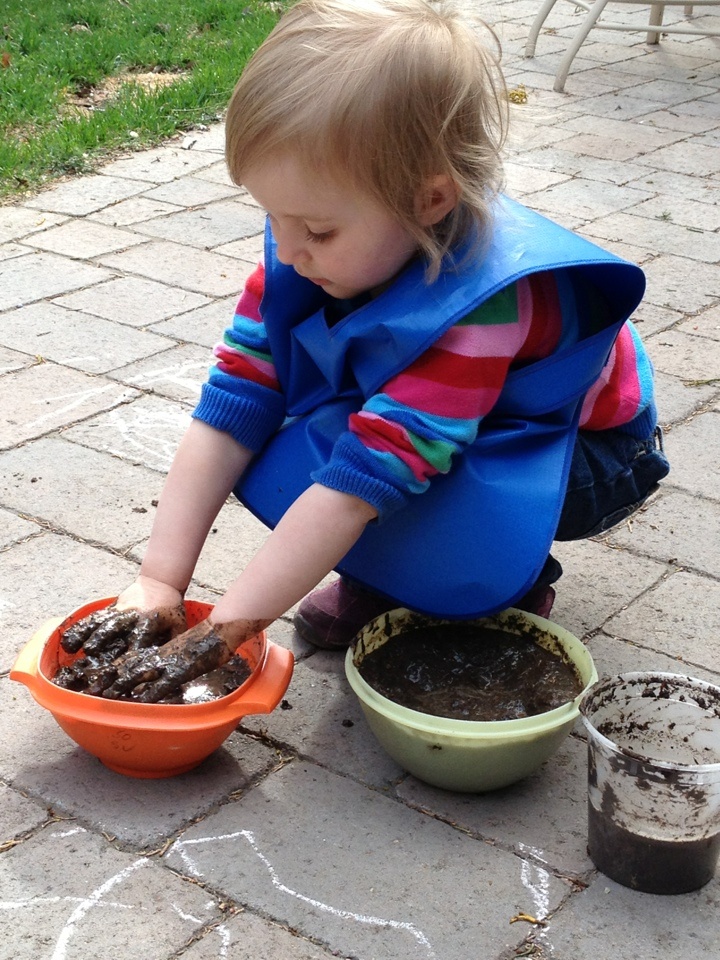
Scientists have discovered a microbe in dirt that can actually increases serotonin production. Serotonin increases feelings of wellbeing and is even linked with learning. But that’s not the only benefit of playing in the dirt.

Exposure to the millions of microbes and bacteria present in dirt help children develop a healthy immune system. Stranger still, exposure to dirt has been shown to improve cardiovascular health, promote healthy skin by preventing inflammation, and it can even decrease anxiety!

And that’s not to mention the many studies that have shown that simply spending time outside is good for us. In my environmental psychology class in college, we learned that simply listening to nature sounds or even watching a video of a natural scene decreased blood pressure significantly. So how much better must it be to actually get out and enjoy the outdoors?

Spending time in nature and digging and playing in the dirt or mud are sensorial experiences that children delight in. Do you remember the wonderful feeling of mud squishing between your toes? Or recall the joy of discovering how a steady stream of water can erode a “mountain” of dirt into nothing at all?

I used to love to make mud pies as a child. I would mix the dirt and water in my own special concoction adding just the right amount of each, a sprinkle of grass, a few clovers, and then I’d mix it all up with a twig and serve up my creations with the pride of a master baker.

Who knew I was improving my immune system, developing a healthy heart, and decreasing my chances of depression? I just knew it was fun!

Last week my mom introduced my daughter to the joys of making her first mud pies. She was slow to warm up, unsure about getting quite that dirty, but I’m betting that by the end of the summer we’ll have some shots of her covered head to toe. And who knows, maybe I’ll join her!

I mean, I don’t have to go to some fancy resort and shell out of bunch of money to take a mud-bath, I can do that in my own back yard! So, yes, encourage your kids to put on some old clothes, and play in the mud, and if you’re feeling adventurous, join in the fun!

Have a wonderfully dirty week, Shelly

Photo by Christee Cook

Want to Instantly Turn Defiance Into Cooperation? Try This!

Some of the most frustrating moments I’ve experienced while being with young people are those times when I really need their cooperation and instead I get met with defiance. I’m trying to get out the door and they refuse to put on their shoes. I want to sit down for dinner and they’re running around the house screaming. I’d like to brush their teeth and get them ready for bed, and they just want to keep playing. Ugh!

I’ve tried lots of strategies to transform those moments, and now that my daughter is approaching 3, I’ve been getting even more opportunities to help her move from defiance to cooperation. Granted, we’ve done a LOT of work to develop ongoing cooperation already, but there are times when I can see, she’s just not interested in going along with what I’m wanting. She wants to assert herself, choose her own path, and often in those moments what’s most fun is to choose the exact opposite of what I want.

So, what do I do? I quickly change my position. Don’t put on your shoes. I do NOT want to see those shoes on your feet.” This reversal instantly encourages my daughter to continue to “defy” me with a glint in her eye as she deviously puts on her shoes.

I protest loudly, “No, no, no! Stop that right now! Oh no, she’s doing it!” And she begins to giggle as she rushes to do all of the things I “don’t” want her to do. “Well, whatever you do, don’t put on your jacket. Hey! You little rascal! What do you think you’re doing?! Get back here! Don’t you dare climb into your car seat! Oh no!”

My daughter absolutely loves this game because she gets to express her defiance, without actually causing any real conflict. And she gets to be the powerful one while I’m relegated to mock frustration and helplessness as she does all the things I’m so desperate to stop her from doing.

In case you’re wondering, it’s obvious to everyone that we’re playing a game. In fact, after playing this game whenever needed over the past few months, now Julia actually asks to play it when she’s not feeling particularly cooperative.

“Will you tell me NOT to do it?” she’ll ask.

And I’m happy to oblige. This game has turned countless moments of potential conflict and parental frustration into a super fun game full of giggles. And best of all, I get the cooperation I was asking for in the first place. It’s really a win-win.

So right now, consider an area of conflict that you’ve been experiencing with your child. Is there a way to reverse your position so that your kids can defy you by doing exactly what you’re wanting? Can you completely let go of your frustration and upset and play with your child instead? Between your new found playfulness and the reversal of power involved, your child will be helpless to resist the fun to be had.

Just one warning though, you do actually have to be able to drop your attachment to the outcome and have some fun. If kids sense that you’re only playing the game to get them to do what you want, it won’t be nearly as fun or effective. So do your best to fully step into character, be the weak and helpless one, and beg them not to do the thing you’re actually wanting. And if they start giggling, you know you’re on the right track!

I would love to hear about your experiences with this and other similar games. Please share your story with me below!

And have a wonderful week, Shelly
7 Secrets to Getting Kids to Clean Up Joyfully

Getting kids to clean up after themselves can be quite a battle. They’re really good at making messes, but when we ask them to clean up, they look at us like we’ve just spoken Swahili. Trust me, they’re not trying to be annoying. They really are confused about how to go about it and they definitely don’t like to be told what to do or forced to do something that’s no fun.

So how can you help your child learn to pick up her toys or put his clothes in the hamper? I’ve got 7 secrets to getting kids to clean up that will completely change the dynamics and turn clean up into a fun time to be had by all.

But there is a catch. Secret #1 was one of the most challenging transformations I’ve ever experienced. You’re ahead of the game if this one is easy for you…

1)  Clean up joyfully yourself

Enjoying cleaning tasks has not been easy for me, but when I realized that I was grumbling every time I had to vacuum, hated to sweep, and despised dusting, I knew that something needed to change.

First of all, I was making myself miserable over tasks that would need to be done and revisited every week for the rest of my life. And secondly, how could I expect my child to clean up joyfully if I couldn’t do that myself?

So, I read, “Peace is Every Step” by Thich Nhat Hanh and I decided to see cleaning tasks as a sort of daily meditation. I was determined to enjoy myself. And now I do genuinely enjoy cleaning. Some days are easier than others, but if you struggle with this, take it from me, you CAN change your mindset about cleaning. And once you do, getting your kids to join you will be much easier.

2)  Invite, don’t force

Nobody likes to be forced to do anything. And the sooner we recognize that children are exactly the same as adults in this regard, the sooner we’ll come up with more effective strategies to help kids want to clean up.

Imagine you’re over at a friends house and she hands you a towel and says, “You used the dishes, so now you have to dry the dishes.” Not very compelling is it?

But what if your friend said, “Would you please help me dry these dishes? I really like to get them put away right after the meal whenever possible. Do you mind?” Now you’re jumping up and pitching in, right? It pretty much always feels better to be asked and invited than to be told and forced. Want them to put their dirty clothes in the hamper? Try asking nicely! You’ll be shocked at how cooperative your kids can be when they’re invited to step up.

3)  A place for everything and everything in it’s placeMontessori shelves

I know, I know, it’s a total cliché. But the thing is, this really works well for kids. When a child knows exactly where to put the puzzle, it’s far more likely to make it back to the shelf.

In fact, for kids, I find that shelves work really well. Arranging their toys and activities so that they can be easily seen, accessed, and then put away can drastically increase the harmony in your home. Here’s a photo of our “work shelves” and bookshelf where Julia can find a wide variety of books and activities and put them away independently. And since we’ve been working on this skill since she could walk, it’s just second nature to her now to put things back when she’s finished with them.


IMG_4093


4)  Create a consistent routine with clearly defined steps

So how did we make it second nature? We were consistent. We have a rule that we only get out one or two things at a time and we clean those up before we choose new work. At two and a half, my daughter still needs some reminders, but it’s not a power struggle, I simply remind her that she has work out and tell her that I’ll hold on to the new activity while she cleans up the old one.

And since she knows exactly where her work belongs, she’s empowered to clean up quickly and get to the next item she’d like to explore.

But what if you haven’t established such a strict rule about how many items can be out at a time? Then you need to create a clear step by step guide for your child about exactly how to clean up a big mess.

For example, if you tell a child to “clean your room,” you get that blank stare. But if you say, “Here’s a basket, first pick up everything off the floor and either put it away or put it into this basket. Next find a place for each item in the basket. After that, make the bed. Don’t know how to make the bed? I’ll show you and we can do it together. Next, use this duster to clean the dust off of your dresser and nightstand. Last, use the carpet sweeper or vacuum to clean the floor. And then you’re done!”

After a few times of going through this routine with your child, he’ll remember the steps and won’t need as much help or supervision.

5)  Make it a game

Whenever I encounter my own resistance to cleaning, I try to make it more fun by putting on some music I enjoy. This works with kids too, you can have a cleaning dance party. But sometimes even a simple game like counting the items as you put them into a basket can be enough to encourage a young child to pitch in.

If simple counting isn’t working anymore, try a more complex game like, I Spy or wind up your little cleaning robot. The more creative you can be with this the better. Because children love to play, so when cleaning up is clearly the most fun to be had, they’ll definitely want to join you.

Another great strategt is to simply hand them an item and “forget” where it goes. Kids love to remind you of things you’ve forgotten and once the item is in their hands, it’s much easier for them to realize what to do next.

6)  Be a leader

If your child just doesn’t seem to want to help out, then it’s your job to model joyful cleaning, enjoy yourself immensely and continue to invite them to play with you in creative ways. This only works if you actually enjoy cleaning, but if you can get there, then you can get the ball rolling, sit back and watch the magic happen.

Afterward, be sure to admire your work with your kids. “Wow, the living room looks so tidy! Thank you so much for all your hard work.”

And if they missed a spot when they were dusting, don’t get overly critical, that will just diminish their enthusiasm the next time. You can point out ways to improve if you’re feeling happy and enjoying yourself, but if you’re feeling even slightly annoyed by your child’s inability to be precise during cleaning tasks, keep your mouth shut and fix the problem yourself when they’re out of the room.

Remember, the most important part is that they enjoy themselves and that they’re willing to help out.

7)  Provide them with tools that fit their bodies

Kids love to be just like adults and when we offer them cleaning tools that fit their small bodies, they rejoice in their ability to contribute to the household. A small broom, dustpan, mop, and duster are a good place to start. Access to rags, towels, a trashcan they can use, and a demonstration of how to do each task (as well as clear boundaries for how we don’t use these items) can invite even the most hesitant beginner cleaner to jump in and give it a try.

IMG_5562

Good luck and I can’t wait to hear how it goes!

Please leave me a comment below.

And have a wonderful day, Shelly