Sharing Your Kids With Your Ex During the Holidays

Divorce, it’s not a topic we usually think of when we’re considering holiday plans, but for children whose parents live separately, holidays can be both wonderful and complicated.

I know they were for me.

My parents divorced when I was five and optimist that I am, I could be heard saying things like, “I’m glad my parents are divorced, now they don’t fight so much!” or, “I get two birthdays, two Christmases, and about four Thanksgiving dinners!”

But the truth is, it was hard for me, even though I never would have admitted that at the time.

It’s stressful to be moving from one home to another or to travel across town or across the country just to visit with your own family for the holidays. And though we all feel the pinch since most of us live far from our families of origin, I think this time is especially stressful for children of divorce.

I can feel my stomach tensing up as I write this. It’s hard to say goodbye to one family and jump into a whole new environment with different people, different rules and expectations, and all the while, missing the family you’ve just said goodbye to. I’m not sure anyone can fully appreciate the experience unless they’ve been through it themselves.

I’ve been there.

I have a few close friends and some clients who are currently separated, divorced, or in the process of divorcing and when I talk with them, I can hear their deep concern for their children along with their relief at having made a decision that will make them happier, better parents overall.

If you’re one of those parents, congratulations on choosing what will surely turn out to be best for you and your kids. Even if it doesn’t seem like it right now, you can help your child have a happy, healthy childhood AND keep yourself sane by creating some distance with your ex.

Underneath the surface questions like how often should he see his dad or should I ask for full custody, I often hear deeper questions like, will my child be OK and how can I make sure he grows up happy and well adjusted?

So, here’s what I know about what works and what doesn’t when you’re sharing your precious child with someone who you no longer want to share a life with.

1)     Protect the child’s relationships with BOTH parents.

The relationship with the other parent MUST be fiercely protected, cared for, nurtured, and supported by BOTH parents. If my mom hadn’t tucked in her own angry feelings toward my dad and made sure I spent lots of time with him, I wouldn’t have the wonderful relationship with my dad that I have today.

And if my dad hadn’t generously agreed to share custody when he wasn’t legally bound to do so, my relationships with my mom and step-dad would have suffered greatly. One thing my parents did right after their divorce: they made sure I had MY OWN relationship with each of them.

What this means for you: Resist the urge to vilify your ex and instead, share the things you appreciate about your ex with your child. Make sure your child has as much time with each of her parents as possible. And always be available to help your child process and work through any negative thoughts or feelings she might have about her other parent. Remember that you and your co-parent are your child’s best example of emotional maturity and responsibility. And if you need help processing your own stuff about your ex, seek professional help. Don’t rely on your child to help you work through your own feelings toward her other parent.

2)    Make transitions smooth and predictable

Transitions between households are difficult, there’s no way around that. It’s completely bewildering to switch homes, so do your best to provide consistency and clarity during and after the transition (and before the next one).

Here are a few suggestions for how to ease the transition:

  • Be there for the hand-off. It’s hugely important to be present at major transitions like picking up or dropping of your child at the other parent’s house. Don’t send a proxy for this important job.
  • Be on time. Don’t make a child wait around for you to pick them up. Children are extremely self-centered which is developmentally appropriate, but that means that they take things very personally too. When you’re late for a pick up, or you send someone else, a child might interpret that to mean that they’re not important to you.
  • Create a short ritual around welcoming the child back to your home. This can be as simple as a hug, a kiss, and helping your child unpack his bag. Or it could be something more elaborate like lighting a candle and saying a prayer for his other family. Ask your child what he would like to do.

3)    Celebrate the benefits and talk about the drawbacks

It was pretty awesome to get twice as many gifts on birthdays and Christmas. More gifts at holidays is a tangible benefit of having divorced parents that a child might want to celebrate. So go ahead and let her revel in her good fortune!

But also remember that even if your child seems “well adjusted,” it’s also important to talk about the drawbacks and downside of having multiple families. It’s a lot of hard work to pack a bag and move to a new home every so often, adjusting to new expectations and enjoying time with this family while simultaneously missing the other one. It would be a lot for anyone to process, and it’s especially overwhelming and confusing for a child.

The best way I know to process emotions is to talk about them. “Wow, I bet you’re having a lot of feelings today. You might be feeling excited to be here, but you’re also feeling sad about leaving your other home, huh?”

A little bit of empathy can go a long way to helping your child understand what she’s going through.

4)   Get professional support for your child

My parents were always big fans of therapy, so I never felt badly about getting professional help to work through my feelings. I went to therapy several times throughout my childhood, usually for short stints. It was reassuring to know that if I needed someone to talk to, my parents would provide me with someone well trained and impartial.

During the custody dispute my parents had when I was seven, my dad and step-mom sent me to group therapy for kids going through divorce. It was called “Kids in the Middle” and I loved going! It was nice to know that I wasn’t alone and that other kids were experiencing similar difficulties.

So, if you’re co-parenting with an ex, I hope this information is helpful and I’d be happy to share more about my experiences growing up with divorced parents. All you have to do is ask!

I hope you had a wonderful holiday weekend and can you believe it’s almost December already?!

Warm hugs and love, Shelly
A Healthy Halloween? Why We Won’t Be Trick-Or-Treating This Year

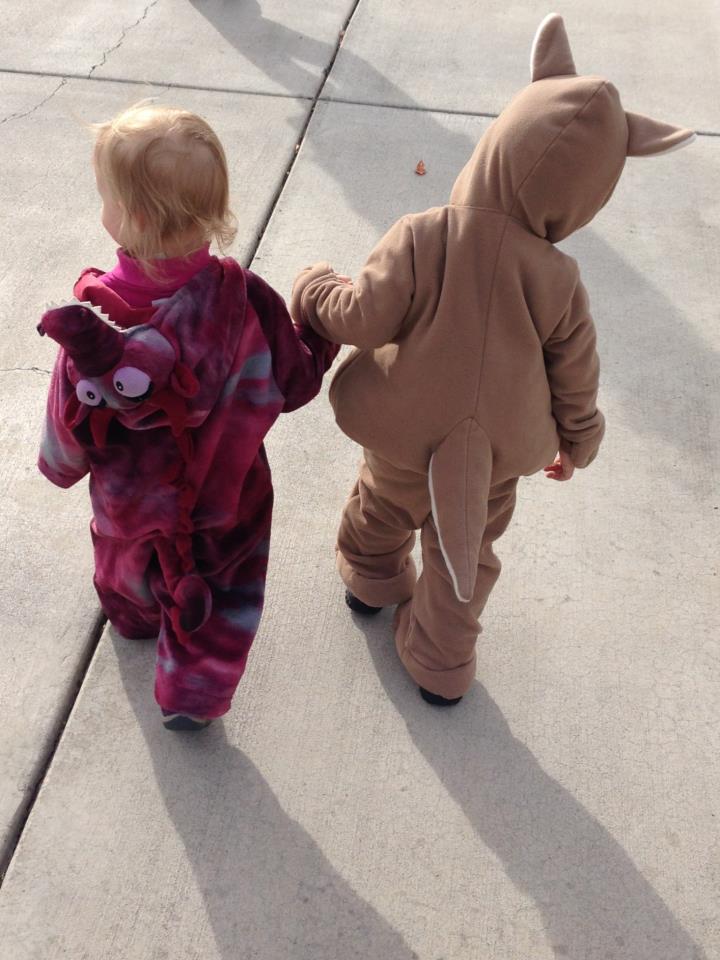
Photo by James Cook

Have you heard about any of the new studies out lately showing the deleterious effects of sugar on our bodies? They are seriously chilling. Sugar has been linked to heart disease, obesity, diabetes, and even cancer. Whoa.

Here’s an article in the New York Times called “Is Sugar Toxic?

And this article from Time magazine “Too Much Sugar Increases Heart Risks” is also informative.

Not to mention the problems with sugar and teeth, if nothing else we are sure that sugar causes cavities and according to LA Dental Town dental health has profound impacts on your health overall as well. So with all this new information about the negative effects of sugar on our bodies, I’ve been strategizing about how we can have a fun and healthy Halloween, WITHOUT binging on sugar.

When I was a kid I loved trick or treating, but there were all those scares about razors in baked goods and whatnot and the recommendation was not to eat anything that wasn’t in it’s sealed individual package. Then again, I have some vivid memories of bobbing for apples and having Halloween parades at school, so maybe this holiday doesn’t actually have to be centered around snack sized sugar bombs.

As I was pondering what to do about Halloween and how to keep our celebrations healthy, Julia asked to have a party. “That’s it!” I thought to myself. The perfect way to keep sugar out of our Halloween celebrations is to provide healthy alternatives and our very own Halloween party.

We can dress up in costumes, carve or paint pumpkins, roast pumpkin seeds, bob for apples, listen to creepy music, make our own masks, and serve savory delights with a Halloween theme. “Pumpkin Soup” by Helen Cooper has been a popular book at our house lately, so perhaps we’ll make some!

OK, the truth is, this party won’t be happening this year, but I’m excited about hosting it next year for all the families we love and who are also conscious of healthy living. For this year we can definitely avoid trick-or-treating, since Julia doesn’t know what it is yet.

But for those of you whose children already know about and are looking forward to trick-or-treating this year, you might want to try participating in a dentist office candy buyback. Here in Bend, OR there are some dentists that will pay kids $1 per pound of Halloween candy that they then send to troops overseas.

I’m not sure how I feel about passing the health detriments of candy on to our service men and women abroad, but I’m guessing they will at least enjoy the treats. And any amount of pleasure we can offer them is so little in exchange for the services they provide.

Alternatively, my friend has struck a deal with her son that he may choose 5 pieces of candy to keep and eat and if he hands over the rest, she will buy him a toy in exchange. Apparently her son didn’t go for it last year, but this year he’s ready to trade in his candy for Legos! Sounds like a win-win to me!

I’m curious, how do you handle Halloween at your house? Do your kids participate in trick-or-treating? Is it horribly mean of me to try to shelter my daughter from it for as long as possible? Am I making a big deal out of nothing, or do you agree that sugar consumption is something we should be taking a good hard look at in ourselves AND in our children?

I always love it when you share your thoughts, so please leave a comment.

And have a Happy Halloween!

Warm hugs, Shelly

My Top 12 Resources for New Parents

I just found out that a good friend of mine is pregnant. Well, technically his wife is pregnant. But as soon as I found out I immediately wanted to create a list of resources for them so that they wouldn’t have to go through the heaps of conflicting and confusing information out there (unless they really want to).

I know my friend and I are aligned on many topics, but within about five minutes of talking with him it was clear that he was about to embark on a whole new world (parenting) that he has never really researched before.

So, here’s my list of the top twelve resources I recommend for new parents. I used these all myself and include an explanation about why I trust the resource or what I like about it.

Here goes:

1)     Baby Center’s Pregnancy Calendar: Although Baby Center is a pretty mainstream resource and includes some information that isn’t completely aligned with my attachment parenting and natural lifestyle I still really enjoyed the pregnancy calendar. I could go there and see how my baby was developing week by week and read about the miracle that was happening inside my body. Fun fun fun!!!

On a not so fun note, Baby Center also has a miscarriage support group. Miscarriage happens more often than is generally believed and women who experience it need to seek immediate support from friends, family, counselors, and support groups. If you’ve experienced a miscarriage, please don’t go through it alone. Reaching out for support can be hard, but it’s crucial to the healing process.

2)    Movie: The Business of Being Born Although this film was somewhat disturbing to watch, I think it’s important to realize how and why birth in hospital has become the norm in America and to recognize that there are other choices out there. And if you do choose a hospital birth, I hope you’ll know your rights so that you aren’t forced into any procedures or medications you don’t actually want. This one is an eye opener for sure.

3)    Birthing class: Hypnobabies I loved my hypnobabies class SO MUCH and it really helped me with the pregnancy and first two stages of birth. The affirmations were incredibly uplifting and the daily practice of self-hypnosis is a wonderful way to unwind and relax. I still use some of the techniques I learned in this class! And even if Hypnobabies isn’t for you, definitely take a class about birth. You’ll be glad you did.

4)   Consider hiring a midwife and/or doula. If you’re planning a homebirth I highly recommend hiring both a midwife and a doula. And even if you plan to birth at the hospital, a doula is a must. A doula’s entire job is to be there for emotional support for the birthing mother. This has multiple benefits from decreasing pressure on dad to helping mama remember what procedures and medications she does and doesn’t want. I would not want to birth without this crucial support.

5)    La Leche League is a wonderful organization committed to helping women breastfeed successfully for as long as they wish. There are local groups all over the place and they’re mother led (no “expert” telling you what you’re doing wrong). I found the group meetings very encouraging and connecting and my local leader was available by phone to personally answer all my questions. Do beware, this organization is all about breastfeeding, so conversations about using formula might not go over so well.

6)    I also HIGHLY recommend Kelly Mom dot com for really great research based information about breastfeeding. I was on Kelly Mom all the time in the first few months of breastfeeding and continue to use it as my #1 resource for all things breastfeeding related.

7)    If you’re having a boy, you’ll have to decide whether or not to circumcise him. I sincerely hope you’ll chose to leave him intact. Here’s some information about why: http://www.intactamerica.org/learnmore and if you do leave him intact, you’ll need to know how to properly care for an intact penis so definitely check out this article about the importance of NOT retracting the foreskin.

8)    Even before your baby is born you’ll have to decide whether you want to follow the recommended schedule for vaccinations (since they’ll offer you the Hep B vaccine at birth). I found Dr. Sears’ book on the subject “The Vaccine Book” incredibly informative and well balanced.

9)    Dr. Harvey Karp has developed a theory about the missing 4th trimester that really makes sense to me. And his techniques for calming fussy babies really work. While I don’t recommend calming your baby using these techniques all the time (babies do need to express their feelings just like the rest of us), there are times when I think Karp’s 5 S’s were the difference between peace and rest and hours of purple crying for us. I read the book and watched the DVD but I think viewing the DVD once or twice will give you all you’ll need to use these techniques when you know your little one is needing help to relax and rest. Oh, and our local library had it, so see if you can check it out before you run out and buy it.

10) Although I know she’ll cringe when she sees that I’ve recommended her right after the above, Janet Lansbury is a fierce advocate for infants and toddlers. She shares practical information about how you can be there for your child without interrupting or overpowering their innate desire to learn and grow naturally. And after reading her articles you’ll be left with a greater respect and awe of infants than you ever thought you’d have. And you might also realize that parenting an infant doesn’t have to be as all consuming as popular culture would have you believe.

11)    Dr. Laura Markham is a wonderful resource for parents. She supports parents in using respectful and developmentally appropriate responses to the challenges of parenting young children. Every time I read her stuff I’m left thinking, “yes, yes, and yes.”

12)  And lastly, Hand in Hand Parenting is one of my greatest inspirations. When I first witnessed a friend holding space for her child to feel his big feelings I was left speechless. Recognizing that tantrums are a cry for connection has completely shifted how I respond to my own daughter when she freaks out. And I think this work has also deepened my own commitment to feeling and expressing my feelings, no matter how unpopular they might be.

OK, so there you have it. These are my top 12 resources for new parents. I just realized I didn’t include any books, so I’ll have to do another post on my recommended parenting books another time! I hope you’re all having a great week and I would love it if you’d add any important resources I’ve forgotten to the comments. Thanks!

Love, Shelly


Don’t Say That Do Say This: 20 Things Not To Say To Your Child (And What To Say Instead)

A few weeks ago a friend on my Facebook page asked for a list of things not to say to children so I decided to create one for all of us. This list is not exhaustive and I would love to add to it with your suggestions so please leave a comment if you’d like me to add something!

I would also like to know if you need or want explanations for any of these. Many of them are self explanatory, but if you’d like me to elaborate, I’m happy to add more information about why column B is preferable to column A. And here’s another post I wrote on the topic.

And, if you’d like to read a great book on this topic, try Sarah MacLaughlin’s “What Not To Say: Tools for Talking With Young Children” I was surprised to find some phrases in there that I was still using! OK, so here’s my list…

Don’t Say  Do Say
  Good job, nice results.   You tried really hard!
  What a beautiful picture!   Will you tell me about it?
  You’re so smart.   What else?
  Don’t cry.   It’s OK to cry.
  You statements   I statements
  Are you listening?   Can you please remind me what I said?
  Hurry up.   Let’s go!
  You’re OK, you’re tough.   Are you hurt? Did you feel scared?
  Shut up!   I need some quiet time, please whisper.
  I promise, no matter what.   This is the plan. Sometimes plans change. We’ll go with the flow. And I’ll keep you informed.
  Clean up or else…   Let’s play a cleaning game!
  Spot went to sleep and won’t wake up any more.   Spot died. Everything that lives also dies.
  Baby talk   Proper terminology
  Of course! I’ll drop everything else.   Please wait for me.
  Perhaps, maybe, possibly…   Yes, No, or I need to think about that.
  Don’t use sarcasm with young children   Say what you mean and mean what you say when talking with kids
  Get your shoes. We have to go RIGHT NOW!!!   We’re leaving in five minutes, what else do you need to do? OK, let’s go!
  Why did you do that?   How did you feel about that?
  What’s wrong with you?   How can I help?
  He’s just a mean person.   I wonder what was going on for him.


I have a feeling we could add to this list forever, but I think this covers many of the phrases that we might be tempted to use and for which there are clear alternatives. If there’s something you’re still wondering about, please ask! If I don’t know, I’ll find out, and if I do know, I’ll respond asap.

Have a great week. Warmly, Shelly

“Back Off!” Empowering Young People to Claim Their Personal Space

Most of the stuff I write about is focused on peace, love, and compassion, but there’s a point where the best defense really is a good offense. Several weeks ago my daughter was at the library and a bigger kid ran over to her and pushed her down. His mother apologized profusely, Julia was dazed and confused, and I was left wondering, “How could I have prevented this?”

My daughter is often quiet and reserved, especially when she’s in a large group or if she’s feeling overwhelmed. And the library is usually teeming with both kids and adults when we go there for story time. So I thought about how I could empower her to stand up for herself in the face of a larger child intent on pushing, hitting, or biting her.

And then I remembered what we do when our dogs get into her face and she doesn’t like it. We say, “Back off Zoe!” or “Back off Jasper!” We had recently expanded to include our four chickens in this practice because Julia was getting scared of their pecking. So I taught her to move forward, put her hand out, and say “Back off chickens!” And it works! The animals really respond to her.

So I decided we would use this same phrasing with people who are moving toward us aggressively. When we feel afraid, we put out our hand and say “Back off!” Sure enough, after a couple of weeks of practice with the animals, my daughter was at the library with her Grammy when a larger child came toward her quickly with a puppet aimed at her face. Julia immediately put her hand out and forcefully said “Back off!” to the boy with the puppet. My mother-in-law said that all the adults were left with their mouths hanging open and the boy was just as surprised as everyone else was. He did back off and went to play elsewhere.

When I heard the story my heart swelled and I felt so proud. I am so happy to know that my daughter can protect herself from harm even though she’s not yet two years old. Although I hope she rarely has to use this skill, I think it’s an essential one for all children. To be empowered to protect oneself from harm could mean the difference between being bullied or victimized and not. Learning to powerfully say things like “Stop! No! Stay back! Don’t touch my body!” can alert others to a potential threat and often will cause predators to move on, rather than be noticed.

So how do you talk to your kids about personal space and protecting themselves from danger? Do they know what to say and do when they feel afraid? I would love to hear your story so please leave a comment below.
And have a wonderful day. Warm hugs, Shelly