
5 Ways Bringing Montessori Home Makes Life Easier

There are lots of reasons why I love Montessori education. It’s respectful, holistic, intellectually and socially stimulating, and child-directed. But one of my favorite things about Montessori is how much easier it is to be an adult spending time with children in a Montessori environment than it is in most any other environment. Here are the top five reasons why bringing Montessori philosophies into your home will make your life much easier.

1)   Cooperation and community mindedness are built in

In the Montessori classroom the children are a community. Everyone works together to keep the environment clean and organized. That means that when someone accidentally spills hundreds of tiny beads all over the floor, all the children in the immediate area gather around and help clean up the mess. Each child is also responsible for cleaning up his or her individual work before choosing a new activity.

By bringing these simple rules and philosophies into your home, you’ll help your child experience consistency, learn responsibility, and best of all, your floor won’t be completely covered with 25 different toys at a time.

Instead, your child will learn to get one or two items out at a time and then joyfully put his work away before getting out something else. Establishing these rules does take a little bit of extra work for you at the beginning, but once your kids are in the groove, it won’t take much effort from you to keep the toys off the floor and on the shelf where they belong (note: you do have to provide the shelf).

2)   Cleaning and cooking skills develop early

Children also learn to sweep, dust, mop, wash a table, and use a sponge at Montessori school.  They also learn to pour, use tongs, cut vegetables, peel an egg, and much more. These skills easily translate to home, all you need to do is invite your child to participate in household tasks and before you know it, you’ll have an awesome little helper on your hands.

Child sized cooking and cleaning tools help kids engage in these tasks easily. And as long as you’re modeling joyful cleaning and cooking yourself, your kids will happily join in the fun. We have a child-sized duster that gets tons of use at our house.

3)   Self directed play and learning give you a breather

One of my favorite things about Montessori education is its emphasis on self directed, individual work. By providing a shelf full of choices and a rug or table to contain her work, my daughter will happily choose activities and play independently for hours a day.

Yes, some kids will have more or less success with independent play. There is definitely a personality aspect to attention span and willingness to explore the environment alone, but these skills can always be developed further through practice. And wouldn’t it be nice to be able to sit back and read a novel while your child occupies himself?

4)   Care of the self is commonplace

Young children love to develop skills that allow them to be more autonomous and independent, especially when it comes to self-care like washing, brushing, dressing, and using the toilet. Montessori practices encourage these efforts by providing low mirrors, child sized tools, stools, hooks, and other aids to help children become successful at these important tasks as early as possible.

That frees you up to focus on other things while giving your child a healthy sense of accomplishment. So, instead of washing your child’s face, give her a cloth and ask her to go look in the mirror and wash her own face. Encourage your toddler to learn to undress and your older child to dress himself. Some of these tasks may be challenging at first, but overcoming challenge is an incredibly useful skill for kids. And just imagine how much time and effort you’ll save when your child consistently puts on her own shoes and coat!

5)   Peace education promotes harmony

Peace education is an important part of the Montessori philosophy. Maria Montessori worked tirelessly for world peace in her lifetime. By introducing the concepts of peace, effective conflict resolution, and empathy for others, children build social and emotional skills that will benefit them for their entire lives.

By bringing these ideas home, you can encourage sibling harmony, inner peace, and practices that will promote a peaceful home. For instance, there is no yelling in the Montessori classroom, instead, teachers approach children individually to remind them to use a quiet voice. This promotes a peaceful environment that is more conducive to learning and concentration.

Most classrooms also have a peace table, peace rug, or other such space specifically designated for meditation, conflict resolution, and other peaceful activities. At our house, we have a lavender filled eye pillow that is our “peace pillow.” If one of us feels agitated, we lie down, put the eye pillow over our eyes, and breathe deeply as we relax. By modeling this practice for my daughter, I’m teaching her useful emotion regulation skills by modeling a healthy response to stress.

All five of these Montessori ideas will bring more peace, ease, and cooperation to your home. I would love to hear whether you use any of these practices in your home and what benefits you’ve noticed.

Have a wonderful week!
 

6 Little Known Ways to Get Kids to Bathe

Some kids love bath time and can’t wait to get in the tub every time you suggest it. Others fall on the spectrum from disinterested to downright frightened of baths. If you’re having trouble getting your kids to bathe, try these counter intuitive tips to make bath-time easier and more enjoyable for everyone.

1) Limit the amount of toys—

Less is more. Trust me on this one. Adding just one or two types of items, rather than every bath toy you own will increase the joy and ease of bathtime. Reducing the number of toys keeps kids more interested in each item over the long-term because they don’t habituate as quickly and get bored with the toys.

And since they’re not so overwhelmed by a bath full of toys, they actually have room to move and play. If your child is in the habit of dumping everything into the tub, you may need to do two things. First, separate the bath toys into subsets, each in their own small plastic bin or basket. Second, have a conversation with your child about the new routine and hold the line. “You may choose one basket of toys for each bath and save the rest for another bath.”

2) Encourage self-care in other areas—

Install a full-length mirror and offer a hand mirror so your child can begin to notice his appearance. Instead of wiping her face, hand her a wet cloth and help her to a mirror. Then leave. Staring at children rarely gets them to do what we want.

But allowing them to explore, observe, and clean their own bodies helps kids develop an internally motivated sense of personal hygiene. It also helps to provide child sized items like brushes and combs that are easily accessible for self-care.

3) Offer activities or themes (ONLY if this is fun for you)—

Bubbles, bath crayons, dinosaurs, water pump, water mill, cups and pitchers, glow sticks. Or suggest that your child decide on a theme. And remember #1, just one of these items is more powerful than lumping them all together. This makes each bath a unique and exciting experience, rather than the same old thing night after night. But, if this feels more like an obligation than a party, stop. Your job is to get your kid clean, not to constantly entertain them.

4) Make it a shorter bath—

Make bath-time more in demand when you limit the length of each bath to 30 minutes or less. By stopping bath before your child is tired of it, you’re increasing the likelihood that she’ll get excited about the next bath. Sure, you might have some tears or upset as you finish up, but nighttime tears are pretty common, normal and healthy, and right now your aim is to consistently get your child into the bath without a fuss.

5) Ask your child to wash a doll, toy, or item of clothing—

I got this advice from my friend who designs corner baths UK style and I’m constantly amazed at how well it works to take the pressure off of my daughter and ask her instead to play the role of the teacher. By asking your kids to do a task, help out, show you how, or teach a doll how to wash, you’re no longer putting pressure on them to bathe, instead, you’re inviting them to be the one in charge of the washing. For young people, being the knowledgeable one who’s in charge is often an irresistible role to play.

6) Bathe less often—

When children feel forced to have a bath on a nightly basis, they tend to rebel. But when given options of taking a bath once every few nights, kids are far more likely to agree. Again, you’re making the bathing experience more fun and novel. Note: this does go against some popular advice about bedtime routines. However, for us, the bath is an optional part of our bedtime routine and everything else is consistent.

So, if you sometimes struggle to get the kids in the bath, try one or more of these tips and let me know how it goes. And if you have any other suggestions, feel free to share them in the comments section. These are by no means the only ways to encourage baths with reluctant kiddos.

Have a fabulous week full of clean kids!

Warmly, Shelly

Photo Credit: DIONNA RAEDEKE

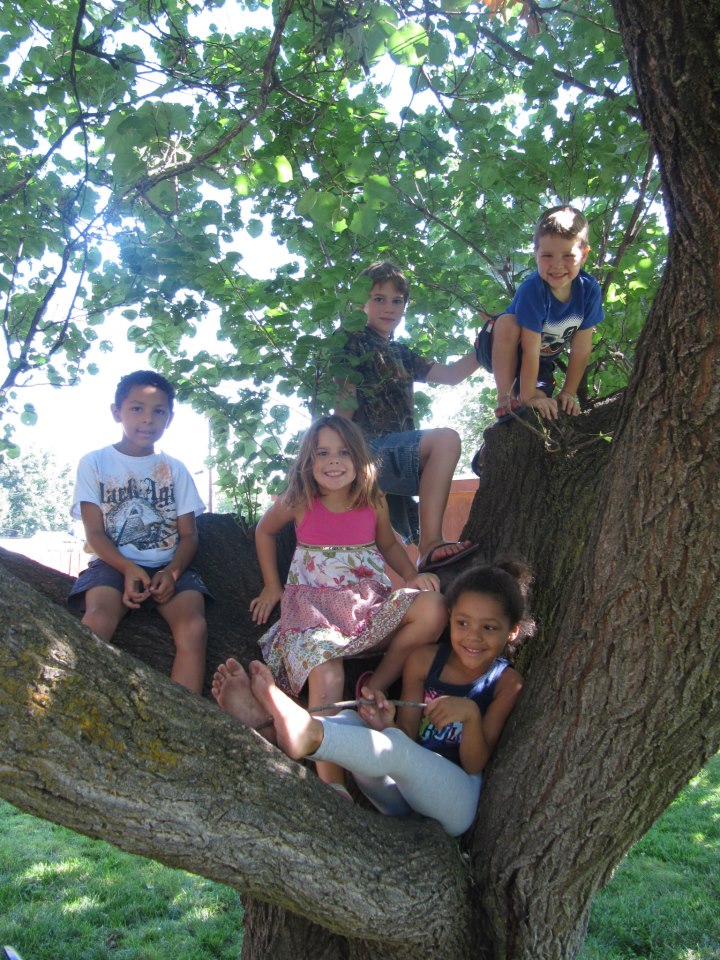
5 Reasons to Encourage Your Kid to Climb a Tree

There are lots of reasons to encourage kids to climb trees, but many of them can begin to seem unimportant when faced with the possibility of our beloved child falling out of one. Besides the fact that kids just love it, here are my top five reasons, backed by science, to support tree climbing despite its inherent risks.

1)   Being Outside Reduces Stress

Many studies over the past 20 years have shown that spending time in nature reduces cortisol levels, lowers blood pressure, increases resilience, and supports cognitive function. And climbing trees is a great way to help kids engage in an outside activity that is fun and challenging.

By encouraging this type of outdoor play and discovery, you’re putting your child into an environment that she has evolved to enjoy and appreciate.

2)   Connecting With Nature Is Good For Us and the Planet

Helping your child develop a personal relationship with nature has lots of benefits both to your child and to the environment. We humans are funny. When we care about something deeply, we’ll work incredibly hard to preserve it. So, by helping your child connect with nature, he is better off because of all of the benefits mentioned above and the environment is better off because your child will work hard to preserve the nature he loves so dearly.

Working with children showed me that when kids understand the direct implications of their impact on the environment, they’re motivated to reduce their carbon footprint and are easily able to change their habits to live in more harmony with nature. For instance, after learning about landfills, many children become recycling activists in their homes and schools. And after a trip to a local water treatment facility where we got to engage in hands on demonstrations, I saw a marked improvement in water conservation efforts and interest in overall watershed health.

3)   Climbing Trees is Good for Physical Development

As I began to write this article I spoke to a local 7 year-old boy. I asked him, “what’s your favorite thing about climbing trees?” and he responded immediately, “Climbing!” Kids love the challenge of deciding where to put their feet and hands, and the exhilaration of getting high up into a tree. There’s a physical challenge and a huge sense of accomplishment that goes along with tree climbing. I wish more kids were encouraged to climb trees.

Developing hand/eye coordination, muscle strength, and the ability to assess their own safety are all skills that benefit kids. And they’re the same skills that are often found lacking in today’s screen focused world.

4)   Taking Risks Helps Kids Learn Their Strengths and Limitations

By challenging themselves physically, kids learn their strengths and limitations quickly. They know when it’s easy, when it’s hard, and when they start to feel unsafe. It’s important for children to have the experience of pushing themselves and knowing when to step back and play it safe. You may be surprised to find that children have quite a strong sense of self-preservation when they’re allowed to exercise it.

Yes, this does require us to step back, stop saying, “be careful!” and allow our kids to explore without us hovering and monitoring their every move. I know it can be difficult, and if you really have a tough time with it, I’d recommend sending the kids out with their dad (or other masculine role model). I’ve found that in general dads are much better at letting kids take physical risks than moms are. As much as super child safe playground like those made by sites like https://www.softsurfaces.co.uk/ are good for the really little ones, there comes a time where the little ones need to grow up and learn to make mistakes and scrape their elbows and knees a little.

Even so, it’s still important to develop this ability for yourself, mom. Eventually we’re going to have teenagers on our hands and if we don’t allow our kids to take calculated risks now, they won’t be prepared for the life and death decisions they’ll be required to make once drinking and driving enter into the picture.

5)   Spending Time in Nature Encourages Scientific Discovery

Are your kids curious about birds, bees, squirrels, and raccoons? Spending time outside climbing trees is a wonderful way to encourage scientific interests. Maybe they’ll discover a next and get to watch baby birds being fed by their parents. Or perhaps they’ll discover a new species of beetle, never before catalogued.

By encouraging kids to climb trees, you’re really encouraging them to explore the natural world in all it’s glory. How does a plant grow? Where does a tree get its nutrients? What does decomposition look like? And what happens if a bird’s nest is disturbed?

Children are natural scientists and will create experiments, hypotheses, and conclusions about everything in life. Why not encourage them to conduct some of their research in the canopy?

So, let’s all go out and climb a tree! And let’s make sure our kids get the opportunity to spend time outdoors, climbing trees, playing, making up songs and stories, coming up with wild theories, and just forging a relationship with this wonderful, wild, beautiful world we live in.

Have a great week, Shelly

What Does Radical Self Care Mean to You?

I was on Facebook yesterday (big surprise) and I glanced at a post that said, “What does radical self-care mean to you?” I didn’t read the rest of the post or think about it much at the time, but as I sat down to write my blog today, I realized that I’ve been engaging in some radical self-care recently.

We all know that self-care is important, or at least we hear it from our friends and nod our heads knowingly. But how often do we actually choose to care for ourselves? And of those times, are we engaging in the minimum amount of self-care so that we don’t feel disgusting, like my recent self-administered foot massage and pedicure? Or are we actually practicing radical self-care?

What does radical self-care even mean?

As I thought more about it I realized that over the past several weeks I’ve spent hours on Pinterest adding pins to my Tattoo board. It’s the most self-centered activity I’ve engaged in for months. And I LOVE it. Every night after my daughter is in bed I pour over images and imagine my tattoo. I think about where I will put it on my body. I imagine how it will look. I think about how much it might hurt and the fact that it will take time to heal.

Maybe it sounds odd to think that a tattoo is self-care, but for me it is. It’s a way to express myself. It’s a beautiful piece of artwork that I get to wear for the rest of my life, just for me. I know it will be painful, but I’ve been through childbirth, so I know how to welcome the pain. And besides, life is painful. There’s no getting away from pain, no matter how hard we try.

For me, there’s a spiritual aspect to getting a tattoo. If you have one, you probably know what I’m talking about, but for those of you who don’t, let me explain.

Years ago I did some Native American spiritual ceremonies. I did sweat lodges, a couple of teepee ceremonies, and finally, a full on vision quest. I spent days on a hill with no food or water. It was a truly transformative experience.

I know, I know, depriving myself of food and water doesn’t exactly sound like self-care, but here’s the thing. When I did those ceremonies I consciously put my body under duress. I was too hot or I was sleep deprived or I was hungry or thirsty or nauseous. But by experiencing those physical challenges, it was somehow easier to access spiritual clarity. The idea behind these kinds of spiritual trials is that they bring us closer to God.

During my vision quest my priorities came into sharp relief.

I got clear about my purpose. I got a visit from my grandmother who had passed away. Call me crazy if you want to, but these experiences were huge gifts to me.

I left each of these life events richer than I was before. I gained more knowledge of myself, my connection to spirit, and my body’s abilities and limitations. Every time I’ve challenged myself whether physically, emotionally, or spiritually, I’ve come away stronger and more sure of myself.

These ceremonies were rights of passage for me. And so is the tattoo I will be getting. For me, a tattoo is radical self-care. And it doesn’t have to make sense to anyone but me. It’s OK if my parents or other people cringe at the sight of my new tattoo. It’s not about impressing or disappointing anyone else, it’s just about ME choosing an outer expression to reflect my inner world.

Sometimes I create visual art, or I cry or rage. Other times I write or hot tub or savor an extra long hug from a dear friend. And soon I’ll be getting my first tattoo.

This is how I heal and grow.

Your way might be different, and that’s beautiful too. I would love to hear about your own notions of radical self-care. What does it look like in YOUR life? Have you been through similar ceremonies or other rites of passage? How do you know when you’ve achieved radical self-care? And do you care how your self-care appears to other people? Does it bother you to think that others might consider you “selfish” for doing the things that nurture you?

I hope you’ll share your thoughts, experiences, and ideas with me by leaving a comment.

And I deeply wish you all the love and peace you can possibly handle.

Warm hugs, Shelly

7 Destructive Parenting Myths

As a parent coach, I hear all sorts of thoughts and ideas that just don’t hold up to the current research on child-development and attachment, but some of these myths have been handed down from generation to generation for so long that we can forget to question them. Here are the 7 parenting myths that bother me the most:

1.    Kids Can’t Be Trusted

In my work as a preschool teacher, I’ve worked with hundreds of children and I’ve never met a child who wasn’t trustworthy. Children will rise to our expectations of them and I’ve noticed that when I expect them to follow through on their commitments and do what they say they will, I get excellent results.

If you’ve been thinking that your child isn’t trustworthy, ask yourself how you can support the innate trustworthiness inside every child. You could try making it easier for your child to keep his commitments by setting up systems that remind and help, instead of blaming or shaming him when he makes a mistake. After all, everybody makes mistakes, it’s a huge part of learning!

2.    Discipline Equals Punishment

I sure wish these two words weren’t as conflated as they are in our culture. Punishing children is both inappropriate and ineffective. Discipline on the other hand is absolutely essential. Self-control, self-discipline, and self-determination are the result of appropriate and compassionate discipline.

Discipline means setting clear boundaries, and being flexible within those boundaries. It does not need to include threatening, coercing or constantly forcing our will upon our kids. And it certainly doesn’t require overt or covert physical or emotional punishments.

Yes, time-out and counting to three can be used as punishment. The tone of your voice and the energy you’re projecting can make a huge impact on how your communication will be received. I’ve seen moms use innocuous phrases to threaten and just the other day I realized that something I said to my daughter could have been a threat if I’d used a different tone.

I think that mutual respect is the key to effective discipline. So this week, check in with yourself about the kind of energy your projecting and do your best to express your highest intentions, rather than getting stuck in the muck of using threats, coercion and punishment to get kids to do what you want.

3.    Breastfeeding is Embarrassing

Breastfeeding is one of the most important and beautiful gifts we can give to our infants, if we’re able. It is not embarrassing or sexual in any way to nurse a baby or toddler. Breastfeeding is without a doubt the best nourishment for babies. It also provides the bonding and comfort that infants need in order to develop healthy relationships and emotion regulation skills. How is any of that offensive? Yes, breasts are involved. In fact, news flash: breastfeeding is the PRIMARY FUNCTION of breasts.

Sure you can try to use a cover, but my daughter would never accept a cover, she found it far too distracting. Yes you can try to nurse at home, but sometimes your baby will be hungry when you’re not at home. Yes, cars are more private, but less comfortable, and there were times when I nursed in a car that I felt like I was hiding. I think it’s time to normalize breastfeeding again. Surely an all natural food source should not be denied to our children because other people are uncomfortable with the sight of a breast.

4.    Co-sleeping Means No More Sex

Without getting too graphic, let me just say that I have co-slept with my daughter for the past three years and my husband and I are having the best sex of our marriage. And no, we DO NOT have sex in the bed when our daughter is there.

Instead, I’ve co-slept with her in HER bed and we’ve reserved our bed for adult time, except for the occasional morning family snuggle. There are lots of ways to arrange co-sleeping. None of them need to involve sex in bed with a child present and all of them allow for lots of fun sexy adult time in places other than where your child is sleeping.

5.    It’s Inappropriate to Show Emotion In Front of Kids

I feel really sad when I think about this one. It’s crucially important for children’s emotional development and wellbeing that the adults around them model emotion regulation and emotional vulnerability. This lets kids know that they’re not alone in their emotional experiences and it helps them learn how to cope with their own big feelings.

Unfortunately when we hide our emotions from our kids, they end up feeling invalidated and learn to suppress their emotions too. Since I had to re-learn how to feel my feelings after decades of repressed emotion, I’m really hoping my daughter doesn’t have to go through the same process.

I do think it’s important to be responsible with our emotions when we’re with our kids. And to me, that means showing and sharing my emotional experience without directing my feelings AT my child or blaming her for my experience. It also means reassuring my daughter that she’s not the cause of my upset and telling her about what’s going on for me in peaceful language that’s developmentally appropriate.

Studies have shown that children can handle exposure to intense emotion without long-term negative effects, as long as they also experience a de-escalation and resolution of the emotional outburst (Nurture Shock by Po Bronson).

6.    Stay at Home Moms (or Dads) Don’t Work

Um, excuse me, but stay at home parentss are some of the hardest working people I know. In fact, often times I’m grateful for the diversion of working for cash because one, it’s painful how little our culture values homemakers’ work and two, being with young people all day every day is enough to make anyone lose their marbles. When I get to work with adults doing coaching I get paid for my time AND I get an adult social interaction out of the deal.

When I’m home alone with my daughter, I giver her attention and do the laundry and the dishes and clean the house and cook and clean up the kitchen after a meal and play with her and put her to sleep for her nap and rush around doing more cooking and cleaning and straightening and sorting until she wakes up and then I do an art project or create an activity or take her to the park or a museum but before we leave I pack a bag with extra clothes and snacks and water and alternate shoes depending on the activity and a sun hat and it. Just. Never. Stops.

And by the end of the day I’m completely exhausted and the house is a mess again and I didn’t earn a dollar. But I did get time with my daughter, some of which was fun and some of which was weirdly frustrating. And now I’m ruminating about the tone of voice I used that wasn’t kind and the thing that stranger said to my kid. Any of that sound familiar?

Let me just say it one more time in case I wasn’t clear, stay at home moms are the hardest working people I know. Your complete dedication to your children astounds me. I am in total awe that you can be with them from 6am to 8pm day in and day out without a break and without completely losing it 80% of the time. I commend you, appreciate you, and I want you to know, I see you. Even in the moments when you’re not with your kids, you’re thinking about them, planning things for them, and preparing to be your best for them. All I can say is WOW. And THANK YOU. Your children benefit immensely from your devotion and I’m so grateful for the work you do.

 7.    Taking Care of Ourselves Is Selfish and Hurts Kids

Quite the opposite actually, we ought to be the adults we hope our children will become. If we want our kids to take good care of themselves, guess what? We have to model the kind of self-care that will help us maintain a healthy and happy life. That means we MUST have friends. We need social interaction in order to be well and enjoy life as social beings. We also need time alone.

It is absolutely crucial that we do the things that make us happy and at ease so that our kids can experience that joy and ease too. Spending time in nature contributes to wellbeing by lowering your blood pressure.

I highly recommend that every woman participate in some type of women’s circle. Ideally you’d have a group of women that you feel comfortable sharing with and who you view as chosen sisters. The women’s circles I’ve participated in have been so incredibly supportive and life affirming. Every single time I participate in a women’s circle I’m glad I went.

Although I’m sure there are plenty more destructive parenting myths, these are the seven that I most want to dispel. On a more positive note, never forget that your connection with your kids is the most important part of parenting. As long as you’re reaching out for it, open to it, and working to repair any damage that’s been done, you’re doing a fantastic job as a parent and as a compassionate, caring, human being.

Have a fantastic week, Shelly