I Trust You

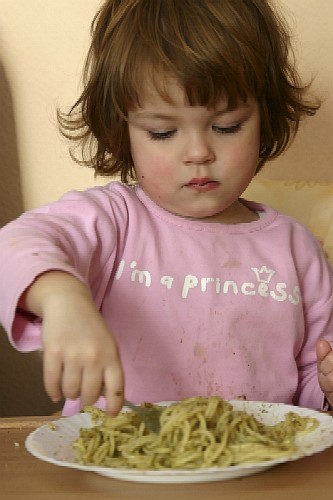
I’ve been working on my new eCourse that will be available this spring and so I’ve been thinking a lot about my parenting values, my priorities, and the ultimate messages I want my daughter to receive both verbally and non-verbally through my parenting.

Of course I want her to know she’s loved and cherished and that she can do anything she puts her mind to. I want her to know she’s valuable and capable and that her opinion matters. And as I pondered these things there was one message that kept showing up.

I trust you.

I want my child to know that not only is she wise and capable, but that I actually recognize that she knows what she’s doing. Yes, she’s just two and a half years old, and I want her to know that I trust her to make wise decisions and to take care of herself, and that I support her in taking appropriate risks and reaping their rewards. I want her to know that it’s OK if she falls on her face, we all do that sometimes, and we learn and grow as a result.

I want her to trust herself.

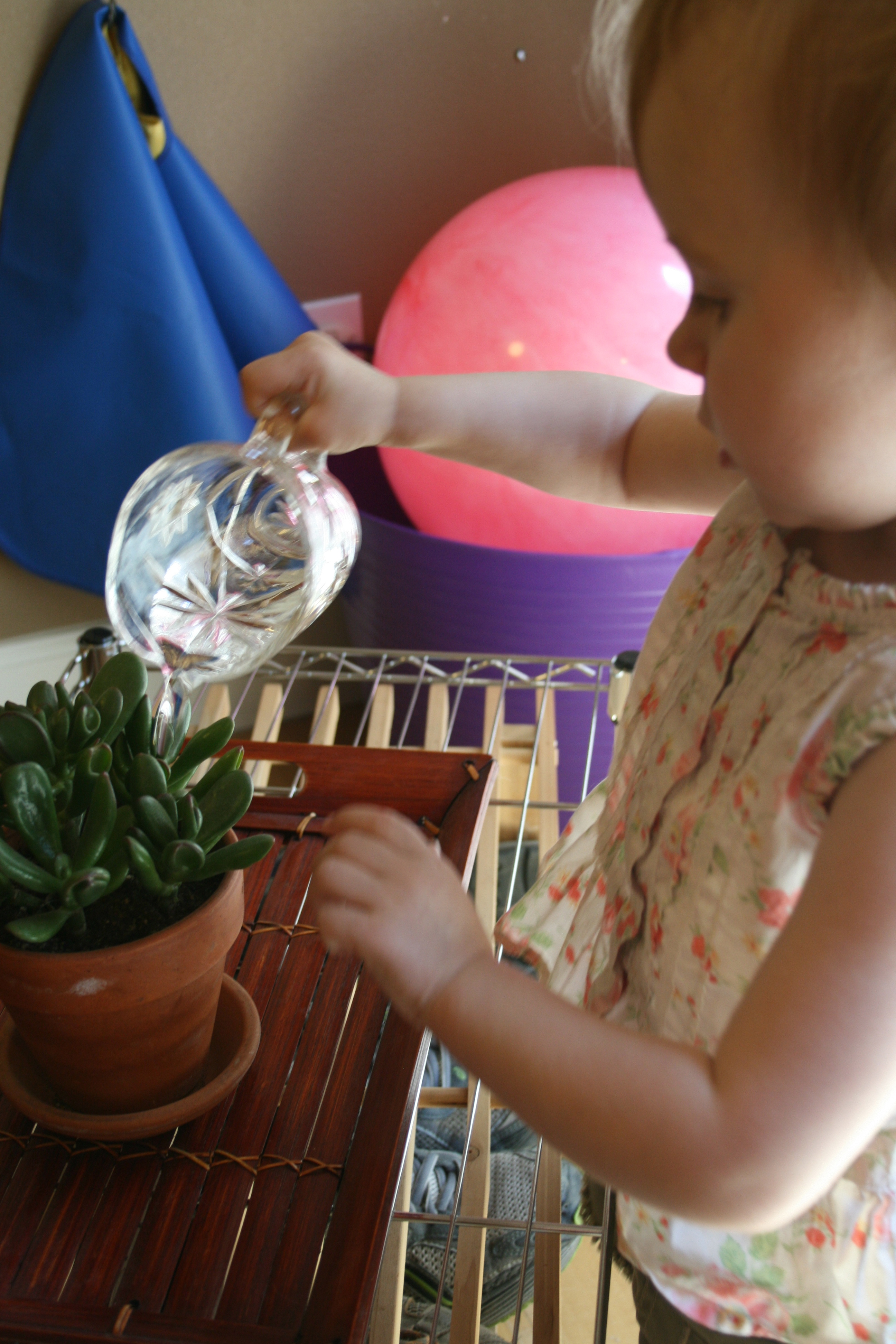
So the other day when she was sorting the silverware, a task she joyfully takes on almost every time I ask, I cringed when she kept asking me to confirm whether the spoon was large or small or whether the fork was in the right spot. “I trust you.” I responded. “You can decide if it’s large or small. Just put it where YOU think it should go.” She happily resumed her task, finished up and went into the other room to do something else.

But later, I worried about her need for reassurance and her fear of making a mistake. I wondered if she’s getting too much feedback from adults about how “right” or “wrong” she is. I fretted that perhaps because I’ve taught her the difference between a sphere and an ellipsoid, I may have inadvertently taken away her ability to discover those things for herself.

Later, after all the worry had dissipated, I just knew on a deeper level how dedicated I am to trusting my child and how committed I am to nurturing self-trust in her. I remembered all the times I’ve refused to offer her an evaluation and asked her to tell me what she thinks instead. I recalled a few times when she’s asked me a question and I’ve simply responded, “You know.”

I remembered a time at the playground when she refused to climb up, worried she might fall. And then a subsequent trip when she tried to climb up and did fall (even though I was spotting her). She cried, got back up and tried again, finally succeeding. I remembered the look on her face. It looked like the success was even sweeter after her previous failure.

I know that’s often the case for me. Overcoming fear and putting in effort gives me a greater sense of purpose. And maybe that’s what they’re meant to do. It’s the things I’m not willing to try, because I’m afraid of failure that most plague me. It’s the times I notice that I’m playing it safe that disappoint me. Because I think we’re all bound for greatness, except when we get in our own way or we’re too afraid to step up.

So I want my daughter to trust her instincts and go for what she wants, recognizing a potential failure as just another stepping-stone to success. Because after all, as long as we persevere, that’s really all failures ever are.

And when she has a question, I want her to look within and know that she’ll always find what she needs there. Sure, she can look something up or ask a teacher. But ultimately, I want her to know that HER truth is what matters most. I want her to know that no matter what others might say, she can trust her inner knowing.

In fact, I want that for everyone! So this week, let’s all trust ourselves more and let’s remind our children that they’re trustworthy. Let’s also take a look at our words and our actions to make sure that we’re sending the message loud and clear that we trust our children. And if there are things that you’re doing that seem to fly in the face of that message, look within and decide for yourself whether you still need to do those things. Maybe there’s a way that you can trust and let go even more than you are already. Or maybe not. Either way, I trust you.

Have a wonderful week, Shelly

Five Signs I’m Not Taking Care of Myself

OK Moms, it’s time to get real. We take excellent, outstanding, superb care of our children almost all of the time. And then the rest of the time we yell at them or do other things we don’t like. But by in large, we are very good mothers doing a really hard job extremely well. But here’s the kicker, we’re not so great at taking care of ourselves sometimes. And that’s where we’re actually failing our kids.

By neglecting ourselves and taking care of others instead, we’re not modeling selflessness, as we might like to believe, we’re actually modeling martyrdom. And it’s no good. I mean do we really want our daughters to grow up and serve up a delicious and nutritious dinner for their families and then go in the other room and cry about how exhausted they are? I don’t think so. We don’t have to suffer to be good parents. In fact, we’re much better parents (and partners) when we’re feeling pampered and privileged, than when we’re on the verge of a mental break down.

This week I realized that over time I have identified several indicators that I’m not taking enough care of myself. I’m guessing some of these are universal, so I’ll share mine, and then you can come up with your own unique list. The idea here is to see the warning signs of a lack of self-care BEFORE things get out of hand, and then to actually take the time, ask for the help, and do what you need to do to take better care of yourself. After all, your children deserve the best version of you, right?

It’s all about self-awareness. So, here are my five signs that I’m not taking enough care of myself:

1) I’m grumpy– When I’m grumpy it’s usually because I’m either too tired, too hungry or too thirsty. When I snap, get easily frustrated, or feel annoyed at everything around me, I know it’s time to take a break, get some food, water and/or rest and reboot. Sometimes I don’t even notice that I’m grumpy until my husband tells me that I’m not being very nice. Luckily, I’m usually not too far-gone and I’m able to hear his feedback as a loving request, rather than a scathing judgment.

2) I’m clumsy– I drop and break things. The other day a glass actually flew out of my hands and exploded all over the kitchen floor in a million tiny shards (of course we were all barefoot at the time) In the past I’ve done things like drop a full container of paint or spilled a bunch of beet juice all over the kitchen counter and floor. This is a reminder to slow down, take more care, get more rest, and to be more intentional as I move through my day.

3) I can’t think straight and I’m on the verge of tears all day— This is clearly an indication of sleep deprivation but can also be a lack of nutrition or hormones. When I forget to take my vitamins it sometimes impacts my mental clarity. And when I’m too tired, I get sad and teary about things that wouldn’t normally bother me. This can also happen to me at certain points in my cycle and can be hormonally driven, so it’s important to have compassion for ourselves when our hormones seem to undermine our emotional stability. It usually really helps me to call a good girlfriend at times like this. Getting some empathy and understanding from a trusted friend can do wonders for my emotional state.

4) I hurt myself– For me this is usually physical, but for you it might also be emotional. When I “accidentally” hurt my body by bumping, bruising, straining, or spraining something it’s a great reminder to slow down and remember my physical limits. I am only human and I need to learn to ask for help! Just before I got pregnant I accidentally cut my finger with a knife and ended up in urgent care with a bunch of stitches. Sure, accidents happen, but take a look at whether there’s a pattern happening here for you.

This can also be emotional, if you find yourself ruminating about things that make you feel bad, you might be hurting yourself emotionally. Do your best to cut it out! Emotional abuse doesn’t help anybody, and your negative self-talk CAN be learned by your children. When I’ve battled negative thoughts in the past, I’ve had to have a no tolerance policy and have forced myself away from thoughts that were hurtful and toward thoughts that are empowering or inspiring.

5) My body feels heavy, slow, and sad— Bodies need exercise. Yes, even yours! I know I’m not getting enough exercise when I feel heavy, slow, and sad. My body loves the jolt of endorphins I get when I do aerobic exercise REGULARLY. Sure, I might feel “too tired” to go for a run, but when I get into a regular exercise routine, I really do feel more energetic and happier. We all have our excuses why we can’t get to the gym, but in a choice between an unhappy mom and a happier mom, your kids will always choose a happier mom, even if it means being away from you for an hour a few times a week (or better yet, every day). Go to that yoga class you’ve been missing, you have my express permission to pamper yourself.

When I realize that one of these things is happening, I slow down, take some time to reflect on my most urgent needs, and then make a plan to meet them. Sometimes that looks like a catnap on the couch while my daughter is playing nearby. When I was pregnant it meant rearranging my entire workday so that I could have an early afternoon nap every single day. Other times it means I leave the house early in the morning to get my work out in. One more thing, don’t underestimate proper nutrition as a contributor to your exhaustion and/or frustration either. Take stock of your intake of caffeine, sugar, and whole foods, as well as exercise and sleep.

So now is your chance to create your own list of signs you’re not taking care of yourself. I hope you’ll do so now and then share them with us! Together, we can learn to take better care of ourselves and as a result we’ll teach our children that our wellbeing is important to us. I know that’s a lesson I REALLY want my daughter to learn.

Have a beautiful week, Shelly

How I Became an EC Mom

OK, so for those of you who don’t know, EC stands for elimination communication. Yep, you guessed it; this blog is about peeing and pooping, so if you’re the least bit squeamish on that topic, read no further! A friend of mine asked me to share about our EC journey, so here it is:

The first time I heard about elimination communication it sounded completely insane to me. I heard wild stories of families who NEVER used diapers and I pictured an entire house covered in plastic drop cloths with some pretty gross repercussions. Sure, if we were living outside and could just hold our babies away from our bodies like I read about in “The Continuum Concept,” I could imagine not using diapers. But I live in a house, and it really bothers me when my dogs or cats fail to go in their designated locations, so why would I allow my child to just pee and poop all over the place? At that moment I decided that EC was not for me.

But after my daughter was born, I read a really great article in Mothering magazine (Oh how I wish they were still publishing!) about elimination communication. In the article the author described lots of different ways that families could go about practicing EC to various degrees. Some families used diapers some of the time, and other used them most of the time but also watched for signals from their child that it was time to go. Through the article I was introduced to the idea of “catching” my child’s pee and poop and that’s when it happened. I became an EC mom.

A good friend of mine had given me TONS of great baby gear hand me downs, so I dug out the small Baby Bjorn potty you see in the photo. When my daughter was about a month old I took off her cloth diaper and sat her up on the potty. She didn’t seem to like the feeling of the cold plastic on her toosh, so I grabbed a pre-fold, cut a hole in it and put it between her butt and the potty. That one sacrificed cloth diaper made all the difference! After that, my little one was happy to sit on the potty whenever I thought to try. But, she didn’t actually go in the potty yet. That was OK with me though, I just wanted her to get used to sitting on the potty and wasn’t attached to achieving any specific goals yet, I think this is key in proper potty training. Looking back at my baby calendar I see that she had her first poop on the potty at 8wks and her first pee at 10wks old!

After my little one had some better muscle control and was able to sit in her Bumbo (around 4 months old) I put the potty in front of the mirror in her room and sat with her for up to 10min. at a time. She loved her potty time! We would make faces, look at books, and talk about increasing our intrathecal pressure, complete with grunting. and bearing down together. At that point she would occasionally go during potty time. We were making progress!

I still wasn’t able to see any signs from her or predict when she would need to go, but we just tried a little potty time here and there when the mood struck me. And then we introduced solid foods at 6mo. Whoa! Suddenly my daughter’s poops became solid and then I noticed that she seemed to go at around the same time, during the morning between wake up and her first nap. After some experimentation I narrowed it down and caught a poop! I was so happy not to have to scrub that cloth diaper that I became determined to catch more.

At some point during her sixth month, I realized that I always pee when I wake up in the morning, so she might need to as well. I tried putting her on the potty first thing after we woke up in the morning and magic happened. She peed AND pooped that first morning and has almost every morning since. I was elated! I had suddenly gone from soaking, scrubbing, sunning, washing and drying poopy diapers to simply dumping the poop in the toilet and getting on with our day!

Now we put her on the potty after she wakes from sleep and a couple more times throughout the day and she almost always pees. She clearly knows what the potty is for (and has since around that six month mark) and although she will hang out for up to thirty minutes if needed, she more often goes within five to ten minutes and then waits for me to wipe and re-diaper her. Yesterday, for the very first time, she finished her business and then stood up.

I know that a lot of EC parents talk about the importance of noticing the cues and the deep connection they feel with their child about these important bodily functions, but for us, EC is more about practicality and ease.

I also like the notion that I’ll never have to “potty train” my child. Sitting on the potty is just something we do every day already. And just for the record, I don’t think our version of EC is something we could only do because I’m a work from home mom. We’ve taken our potty to Grammy’s house and even on vacation with us! All of my daugher’s grandparents and babysitters have used the potty with her seamlessly.

The next step in our journey will be to teach my little one how to signal when she needs to go. So, I’ve begun signing “toilet” every time I say the word potty. No luck yet, but given our success so far, I’m not too worried. I’m pretty sure that she’ll put two and two together in no time.

So, how many of you have gone on your own EC journey? I would love to hear how it went or is going. Please share your stories with us!

And have a wonderful week, Shelly

Parenting exhaustion

Boy, is it exhausting to be a parent or what?!  You start off with the nighttime wake ups but at least when they’re that little, they’re not moving around too much.  Remember when you’d put them down and they’d just stay put?!  It’s like a distant memory, right?

And, by the time you’re actually getting a good night’s sleep (except for the occasional accident or vomiting in the bed), they’re running around like crazy people and screaming, “Play with me! Play with me!” and wanting to go to the park and the pool and everywhere else they can think of.  Whew!  I feel tired just thinking about it.

I’ve heard some divorced parents admit that they’re actually relieved when they’re kids go to their co-parent’s house.  And now that I’m a parent myself, I can see why!  It really does take a village, doesn’t it?  I think we should all have statues erected in our honor if we survive parenthood long enough to see our adult children become exhausted parents.

As a kid, one of the things I never understood was why my parents didn’t have the energy to play with me all the time or take me wherever I wanted.  The idea that resting would be more fun than constant activity was a completely foreign concept.  I think the only time I was still was when I was mesmerized by the television or forced to sleep.

One of the things I loved about being a nanny for twins was that at least they always had each other to play with.  But the truth is, you can’t always just pawn off the littler kids with the bigger kids.  In fact, sometimes that creates more of a hassle than a help.

So, what do we do when we’re tuckered out and our kids are raring to go?  Well, I like to set them up with a self-directed activity and then sit nearby and read a book or rest while they are engaged in playing and learning at the same time.  Here’s a post I wrote a while back about some things kids can do mostly on their own.

There are tons of things that kids would love to do themselves, but often it feels like more work to let them.  Take cooking for instance.  Everyone I know loves to eat cookies.  And kids love to mix and bake them too.  Sure, they’re likely to make more of a mess than you would, but amazingly, they also often ENJOY cleaning up too!  I wrote a post about how to get kids to help with clean up too.

But, once you have them set up with an activity, the really challenging part begins.  We as parents must choose to take care of ourselves and actually REST, rather than jumping up to do another load of laundry or cleaning up after our kids while they’re still making a mess.  We need to learn to stop and take a break!

So, what can you do to maximize the 5-10min. window you have when the kids are happily engaged?  Here’s a list of some of my favorites:

1)     Close my eyes and take deep breaths (or meditate)

2)    Read a novel

3)    Take a bath

4)   Sit outside and watch the wind blowing through the trees

5)    Yoga

6)    Take a cat nap

7)    Smell the roses (literally)

What are the things that you could do to maximize the few minutes of restful time you can squeeze out of the day?  And how else do you deal with the exhaustion of parenting?  Please let me know, I could really use some help on this one!

Have a great week, Shelly


Understanding willful toddlers

I’m generally a happy and optimistic person.  Don’t get me wrong, I’ve had dark moments, but for the most part I enjoy my life and am grateful for it.  However, when I’m with a toddler who seems intent on pushing my buttons, I am hating life.   It seems like no matter what I do to please the little tyrant, I’m still fending off testing behavior hour after hour.

Here are a few empowering thoughts, assumptions, questions, and some dialogue that have helped me change gears and reconnect with a young person after I’ve felt frustrated or hurt:

Q: My 20 mo. old son is throwing things in clear defiance of my wishes.  It seems like he WANTS to upset me.

New interpretation: He’s just asking to play.

Challenge: How can we make it a safe/fun/mutual game?

Inside Shelly’s head:

Oh no, he’s going to throw that.  “Stop!”, He throws it anyway and aims at something breakable but misses.  “Wow, I’m so glad you aimed away from the flower pot!  That flowerpot is fragile and breakable and it would be expensive to replace it.  Hmmm, I wonder what would be good to throw something at…Oh!  I know!  Let’s throw beanbags into the special hole we made!  I want the red beanbag, which one do you want?  I’m going to throw it into the hole.  Can you make it into the hole? C’mon!  Let’s go get the beanbags!”

Q:  My 18 mo. old daughter uses a blood curdling scream when she wants attention and sometimes for no reason that we know of. Continue reading “Understanding willful toddlers”