
How to Hold Space for a Tantrum and Actually Enjoy Yourself

This morning we made it all the way to the car with everything we needed for the day but for some reason when I suggested that my daughter hand me her lunch box so that she could climb into the car, she freaked. After some tears and some pushing me away and something garbled that I couldn’t quite understand, I did get her to agree to let me lift her into the car seat (which she usually HATES) so that she could hold on to her lunch box the entire time. She cried for a while in the car on the way to school. It wasn’t a complete meltdown, but it reminded me how confusing it is when kids get upset and we don’t know why.

Their emotions are so big sometimes and it’s hard to understand exactly why they’re freaking out.

I think that tantrums are some of the most frustrating, upsetting, and confusing experiences we have with our kids. It’s mind boggling to see how out of control they can become over such seemingly meaningless stuff like whether or not they got to have one more bedtime story. Kids can work themselves up into a frenzy over things that appear to us to be completely mundane and innocuous.

Holding space for big feelings is something I’m passionate about, probably because I wanted someone to do the same for me as a kid. In fact, I love it when my husband, friends, and family members hold space for my big feelings now. It’s a huge gift to be invited to fully feel without being silenced, judged, or convinced out of my anger or sorrow. So I’ve developed five steps to holding space for a tantrum that will leave you feeling more peaceful and connected to your child at the end of a meltdown than you did before it began.

Step 1: Remember it’s not about the blue cup

The reasons for a tantrum can be a varied as the people having the tantrum are but remembering that tantrums are usually NOT about the purported upset and are actually often an excuse to release the tension of the day can help you to remain calm and centered as you hold space for your child.

Some common causes of tantrums are: over-tiredness, hunger, social conflict, and unmet needs for autonomy. Remembering these can help you reflect on how to avoid tantrums in the future, rather than remaining stuck in the confusion of trying to understand why your child (who by now you might suspect is insane) is having such an overreaction to the fact that she got the red cup instead of the blue cup. Yes, the color of the cup really does matter to her. AND she’s using this as an opportunity to release pent up emotions, which is ultimately a good thing.

Step 2: Breathe and relax

Easier said than done when faced with a raging or weeping young person. But when we can relax and breathe deeply during a tantrum, we’re effectively managing our own emotions and helping our kids to regulate too. Mirror neurons in our brains cause us to automatically match the emotional energy of the people near us, that’s probably why laughter is so contagious and why we cry at sad movies.

The good news is that we can use these neurons to our advantage by choosing to remain peaceful during a child’s outburst. Kids are naturally inclined to return to a regulated state if they’re near someone else who is feeling peaceful. So take this opportunity to practice the meditation of equanimity, simply being with what’s so without judging it or pushing it away.

Step 3: Don’t take it personally

This is a tricky one, especially if your child likes to scream things like, “I hate you!” during a tantrum. But if you can remember that your child’s upset is more about his unmet needs and less about you or your actions, you may be able to see that having big feelings is just a normal part of life and it’s not your fault that your child is having a meltdown.

When we can stop taking our children’s big feelings personally, we can begin to offer empathy and compassion without needing to backpedal on the boundaries we’ve just set.

“I hear that you’re really upset and I understand that it’s hard to hear no. I love you and it’s OK to cry as much as you need to.”

Step 4: Celebrate your child’s release

I don’t know about you, but when I’m feeling tense a good cry feels great. I might not enjoy it during the crying (although sometimes I do) but I almost always feel MUCH better afterward. I like to imagine that the emotional system is similar to the digestive system. We take in stimulus, we use what we need for our wellbeing, and we’re left with waste products that need to be expelled. I see crying as one of those healthy waste products of our emotional system.

So the next time your child is having big feelings, try celebrating it. “Oh it feels so good to get that out of your body, huh?” By taking an attitude of celebration you’re doing two things, first you’re embracing your child just as he is, letting him know that you love him no matter what he’s feeling and second, you’re re-framing the experience as a positive one for both of you.

 It’s good to let our feelings out and share them with our loved ones.

Remember, this is the foundation you’re building so that your teenager will eventually come to you with her problems, rather than completely relying on her friends for advice.

Step 5: Connect

Some kids like snuggles after a big cry, others want to be left alone or just have their back patted, still others might enjoy sitting quietly and reading a book together. By learning what your child likes after a big release, you can offer it and reconnect lovingly with your little sweetheart.

I’ve noticed that when my daughter is really upset, there’s a part of her tantrum where she needs space, and then toward the end, she comes over to me for a snuggle. It’s such a sweet and tender time of connection for us. I just hold her, rub her back, and remind her that it’s OK to cry until she gets all of her tears out. When she’s done, we usually have some hugs and kisses and then figure out the next fun game we’ll play.

By connecting after a big emotional release, we’re letting our kids know that their big feelings are completely OK, and not anything to be ashamed of or to hide away. For me, this is also healing, since I was afraid to share my big feelings and often chose to stuff or suppress my emotional experience as a child and young adult.

This is how I manage my own emotional state while holding space for kids who are having big, uncontrolled emotions. I hope it works for you too and I would love to hear about your own methods and practices about how you deal with tantrums. Please share your wisdom with the rest of us!

And have a lovely week, Shelly

Photo Credit: DIONNA RAEDEKE

Want more tools and tips on how to handle big feelings? Check out my audio program: Perspectives on Feelings
Helping Kids Eat Healthy Foods

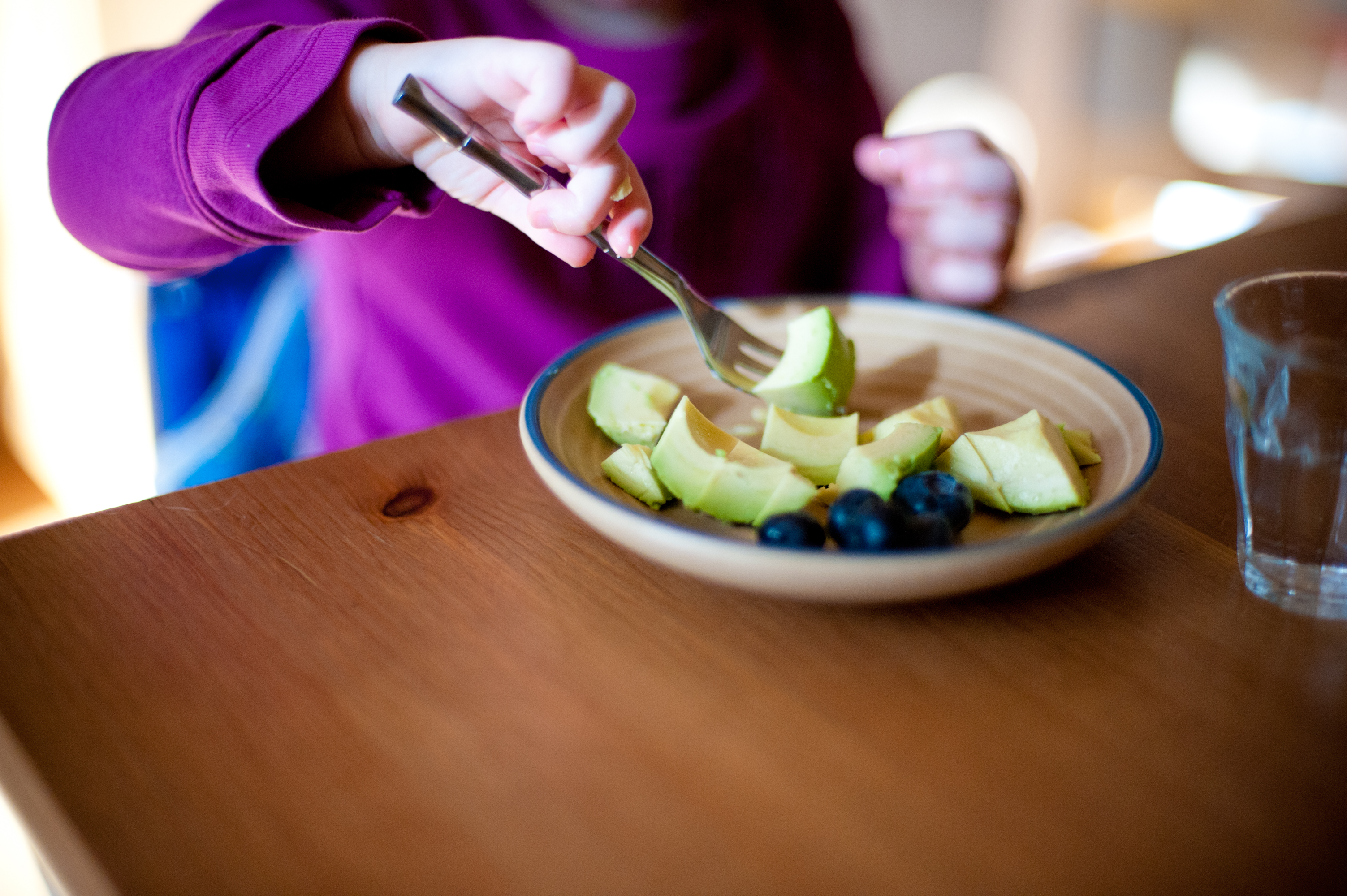
Here’s a question I hear a lot from parents of toddlers (and older children too): “How do I get them to eat nutritious foods?” Well, I’m going to give it to you straight, but you might not like what I have to say on the subject.

The current research is clear about two things:

1) Eating meals together as a family produces healthier eating

2) Your kids will eat what you eat

So, if you don’t want your children to drink sugary soda, guess what? You’re going to have to give it up.

Of course, we’ve found a temporary way around that one, we just tell our daughter that we’re having an “adult drink” and so far, she accepts that. But we know it won’t last forever, and truly, sugary drinks are quickly becoming the next national health crisis. We have got to get over our addiction to them.

When my daughter was just starting solid foods I kept a list of the foods I had introduced and made sure to offer new ones every week. I’m not quite sure why I stopped that, but if you find yourself in a rut, try making a list of all of the foods you know your child will eat, and then make another list of foods to introduce. Go through your list systematically and record their responses.

Don’t give up if your child says they don’t like Brussels sprouts (or any other vegetable). Instead, find new ways to prepare them and offer them multiple times throughout the week or month.

Children’s taste buds change a lot as they mature, so just because they didn’t like it in April, doesn’t mean they won’t enjoy it in October. Children also enjoy refusing foods as a way to have some control over their lives, and sometimes just to see if they can get an emotional reaction. My recommendation is to relax, let go of your attachment to them eating your world famous chicken soup, and keep offering them the healthy foods you love to eat. Eventually you’ll win them over.

Here are some “foods” to watch out for:

  • Hydrogenated or partially hydrogenated oils
  • Added sugars (including fructose, corn syrup, dextrose, sucrose and more)
  • White breads and crackers
  • Fried foods
  • Foods high in saturated fat
  • Sugary drinks (including juices)

And here are some foods to encourage:

  • Fruits (any and all whole fruits are healthy)
  • Vegetables (a wide variety of colors and textures)
  • Nuts and legumes
  • Lean meats and fish
  • Whole grains
  • Calcium rich foods

At our house, I’ve found that it’s much easier to encourage my daughter to eat fruits and veggies when that’s what we have around the house and on the table. She inevitably asks to eat whatever we’re eating, so when everything available is something I’d feel good about feeding her, I know we’re on the right track.

There are lots of strategies you can employ for how to encourage healthy eating. Sometimes I offer the green vegetables first when Julia is hungriest and then I add cheese and fruit toward the end of the meal. We also keep a large bowl of fruit on our kitchen counter and everything processed is hidden away in the pantry. That way, when we need a quick snack, fruit is the quickest, easiest, and most available choice. Plus it’s delicious and nutritious!

If your child is particularly stuck on “kid foods” like macaroni and cheese and pizza, try making your own whole-wheat and low fat versions of their favorite foods.

Another strategy is to engage children in the activities of cooking. When kids prepare their own food, they’re much more likely to want to eat it.

I enjoyed reading Jessica Seinfeld’s cookbook “Deceptively Delicious” in which she shares recipes with hidden healthy ingredients, usually in the form of vegetable purees added to traditional meals.

And while I love it that she figured out a way to get her kids to eat their veggies, I’m not sure how I feel about the fact that they don’t know about it. Personally, I’d rather model healthy eating that’s above board.

I want my daughter to get into the habit of eating fruits and vegetables so that when she’s faced with other choices, as she gets older, she already knows that she loves squash, sweet potatoes, lentils, and black beans.

I know that modeling healthy eating works because just last week as I ate a spinach salad, my daughter asked, “Can I have some?” and then proceeded to scarf down about 10 pieces of raw baby spinach. I hadn’t really offered her raw spinach before, assuming that she’d prefer it cooked. But she loved it!

So my recommendation if you’re having trouble getting the kids to eat their veggies, is to continue to enjoy your own plate of delicious vegetables and keep offering them some time after time until one day they decide they really like them.

When you’re packing snacks for a day out, be sure to include some fresh fruit and vegetables along with the standby applesauce (with no added sugar) and cheesy crackers that you already know they love.

Two more things:

1) We have to let go of the idea the every meal has to be well balanced and eaten heartily. Kids have variable appetites, some days they’ll eat everything you put in front of them, and other days just a few bites of food is enough. So, start to think about your child’s nutrition on a weekly, rather than a daily basis.

2) Let go of the idea that by refusing the food you’ve prepared, your child is somehow trying to hurt your feelings. They’re not. They’re just being kids and we have to trust them to know what their bodies need (as long as we’re providing nutritious options). When we get attached to a specific outcome, children often rebel. No one wants to be forced to do anything, so the more you can model healthy eating and then let go and trust, the more likely it is that your child will choose to eat healthy foods.

Have a healthy week!

Warmly, Shelly


“I don’t need you anymore.”

Last week I was absentmindedly helping Julia put on her shoes when she pushed my hand away and said, “I don’t need you anymore.” Initially I was shocked (she’s 2!), and then I felt hurt. Then I understood that she didn’t mean that she will never need me for anything ever again.

Afterward I thought about how silly it is that such a small sentence could send me into an emotional tailspin, especially when it came out of the mouth of a two year old. I mean, I’m supposed to be the adult and she’s the child!

But that’s parenthood, right? Maintaining composure with friends, colleagues, co-workers and other family members is a breeze compared to keeping our center when our beloved child says something unexpectedly hurtful. We know they don’t INTEND to be hurtful, and even if they do, it’s just their way of exploring boundaries and understanding emotional experiences.

I know that by maintaining composure and sharing my innermost thoughts and feelings from a grounded place, I can help my daughter develop empathy and become more emotionally intelligent.

But it hurts like hell to have your child say something like, “I hate you,” or “Go away, don’t touch me!” So how can we maintain calm composure when our children are spewing their most powerful poison at us?

First we have to remember that they are children. That doesn’t mean that their words are meaningless or that we shouldn’t take them seriously. It means that they aren’t fully aware of the effect their words can have yet and they’re still exploring concepts of power, empathy, and their impact on others.

The problem with breaking down in the face of our children’s attempts to explore their power is that it can actually be scary for them to realize that they can cause emotional upset in us. What children most want is a strong and compassionate parent who can hear the message underneath their hurtful words.

So, next we could translate their words into the underlying feelings and needs they’re trying to express. For instance, when Julia said, “I don’t need you anymore.” I could have thought, “Oh, she’s feeling frustrated because she needs autonomy and accomplishment.” What a difference a little bit of interpretation can make!

Or if a child is saying, “I hate you! Go away!” they may need reassurance that we love them no matter what. They could also need some space, but many times when children push us away with their irritating, or hurtful behavior it’s precisely because they’re testing our resolve to stay and love them no matter what they say or do. If I were able to stay composed in this scenario I might say something like, “I hear you. It sounds like you’re feeling angry, and that’s OK. I love you no matter what and I’m going to stay right here in case you need a hug.”

On the other hand, if I sense that a child really does just want some alone time, I’m happy to offer that too. It’s really just a matter of interpreting what we think the underlying feelings and needs probably are in this particular instance.

Think back to a time in the past few weeks when you’ve lost your cool with your kiddos. Can you identify their underlying feelings and needs? Can you identify your own? How might you have handled the situation differently if you were able to maintain relaxed composure?

I do think it’s important to process emotional content after the heat of the emotion has passed. During an upset, no one is able to learn from the experience. But afterward, by playing games, getting curious, and doing some role-play, we can often turn the most upsetting experiences into opportunities to learn and grow.

I would love to hear about your own moments of emotional turmoil when something unexpected comes out of your child’s mouth. Please share your story with us by leaving a comment below!

And have a lovely week, Shelly

The taking-it-personally vortex

One of my biggest challenges as a parent is trying to find ways not to take it personally when my child blames me for his unhappiness. Sometimes, it’s easier than others. For example, when I  hear, “You’re so mean!”, it’s easy for me me to remember that this is all part of the parenting mix. It’s harder when he does things like vigorously reject my home-cooked food.

I don’t know whether “You’re so mean” rolls off my back because I’ve heard it so many times lately (whenever my son doesn’t get what he wants), and thus am getting used to it but somehow, I’ve been able lately to keep a calm heart in the face of “You’re so mean”,  and offer up empathy guesses into feelings and needs:

“Ah–are you saying you’re angry because you’re not getting what you want?”

“Yeeahhhh.”

Whew. That I can hang with! And it also helps take the edge off his upset. In fact, whenever I can remember to tune in deeply to my son, and help him feel heard and understood, his anger dissipates, and least a bit.

I think if I could remember each and every time I hear something personal, to tune into the feelings and needs underneath, I’d probably be a lot more peaceful.

As it is, what comes up for me sometimes is, well, taking it personally. And then fighting accordingly. This is especially easy to do when I get called a name. For a period of weeks, when my son was unhappy, he’d shout, “Stink!”, which I think was meant to be a noun, as in, You are a “stink,” an unpleasantly-scented thing…like a piece of poop for example.

Continue reading “The taking-it-personally vortex”

One simple trick for hard times: Imagine how you want it to go

It’s finally hitting my son—he has two homes now. He’s struggling to make sense of it, and sometimes lashing out at me. I mean really lashing out—hitting, telling me he doesn’t live with me any more, and that I’m not part of his family. I’ve been thrown for more loops than I can count in a very short period of time. And it’s always like a surprise kick in the gut.

I realized I was kind of going victim about it all. I was seeing these scenario’s as something that was “happening to” me—I was not helping create them, but just reacting to them—in very knee-jerk, disempowered ways: impotent rage, fighting him in petty power struggles, taking it personally, and giving up and getting depressed.

Finally it dawned on me: I could create exactly the scenario I wanted. Continue reading “One simple trick for hard times: Imagine how you want it to go”