
So what exactly AM I supposed to say to my child now?

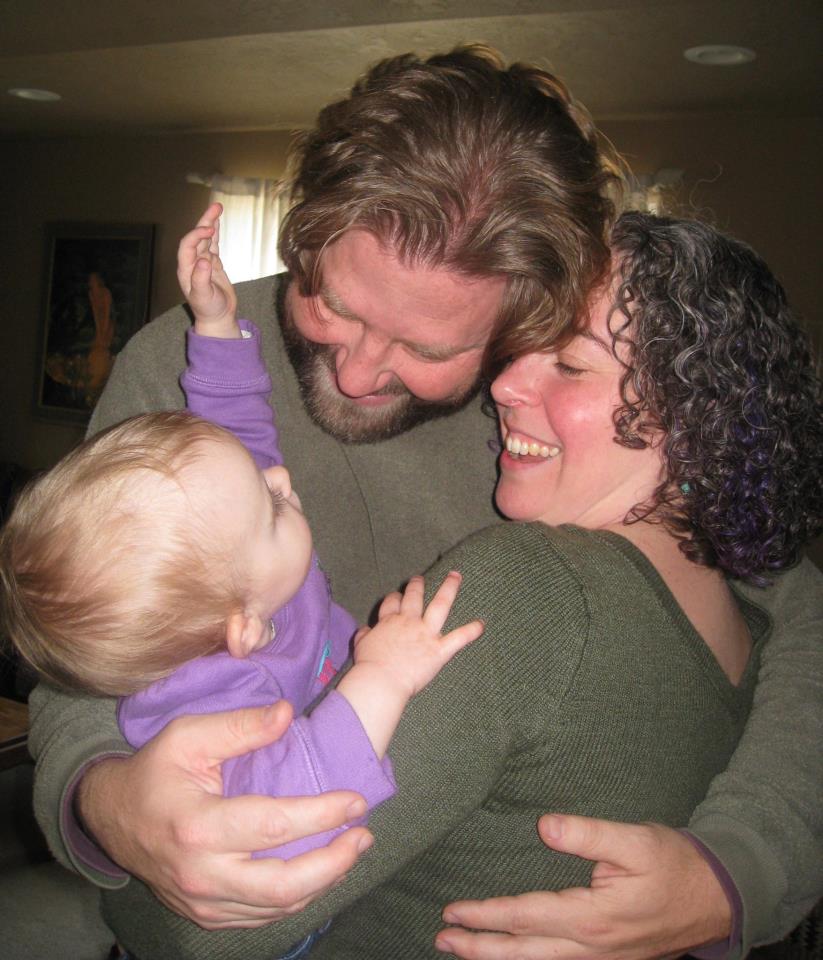
Photo by Suzette Hibble www.thebayareaphotographer.com

Some of the recent research on the psychology of children is showing that saying things like, “You’re so smart! Good job! And He’s so cute!” can actually harm a child’s emerging sense of self-confidence. Apparently when we tell a child she’s smart because she got an A on her report card, she automatically associates the two and begins to think that if she doesn’t get an A, she’ll no longer be considered “smart.”

In an effort to encourage more internal motivation and less dependence on external validation, researchers and other experts are recommending that we remove this kind of empty praise from our vocabulary with our kids.

So now, whenever I say “good job!” to my daughter I immediately suck in my breath and think, “Oh no! I’ve said it. I just totally screwed up my kid.” Granted, that’s probably not the most useful thought, but there you have it

Then there’s the fact that our children are like a mirror that reflects just a little bit too well. When I hear things come out of my daughter’s mouth, it’s clear that she learned them at home (or pretty close to home). So then I begin to listen to what comes out of my mouth even more carefully and I’m almost always surprised at what I discover.

So now I’m left wondering what IS OK and how I can foster the language (in myself, my family and the larger community) that will most serve my child. The practice that jumps to mind is the practice of acknowledgment.

When we acknowledge one another we’re not just labeling each other as “good” or “smart” or “cute;” instead we are sharing our feelings, our experiences, and the impact that another person has had on us. I’ve written about acknowledgment before here: https://www.awakeparent.com/Shelly/loving-ourselves-acknowledging-gifts/ So check that out if you’d like a specific structure to follow.

I also think it’s always OK to say “Thank you” as long as we really mean it. But watch out for anything you’re saying that isn’t exactly what you mean. It’s easy to get into a habit of saying something only to reflect upon it later and realize that what you’ve been saying is no longer true! And things like “please,” “thank you,” and “I’m sorry,” can lose their meaning and become simply “the polite thing to say.”

So this week is all about examining the language we use with our children (and with everyone else) to see if there are things we’ve been saying that aren’t serving us or those we love. Do we over-do empty praise? Have we gotten so focused on telling people what’s wrong that we’ve forgotten to acknowledge their efforts? Are we just going through the motions of being polite without really expressing the heartfelt sentiments? Or is there another way that your language doesn’t truly express what you’re intending? And, what would you RATHER be saying?

I’ve recently realized that I sometimes say, “No, no, no!” so this week I’m committing to removing the frantic and repeated “nos” from my vocabulary. I think I’ll replace them with, “Stop!” I’m curious, what have you noticed about your language that you’re ready to change?

Thanks so much for being a part of this community! I appreciate you.

Big hugs, Shelly

Why Family Rituals Create Confident Kids

Have you ever noticed how young children like to do things the same way day after day? Let’s say you just happened to make a joke at the beginning of lunch one day, so they remind you of the joke every day for the next two weeks. Sound familiar? Or, you cut the crust off of their bread once, so now they MUST have their crust cut off every time.

It can be maddening, but it is also deeply linked to how a young child learns. Repetition is absolutely crucial to learning. So the desire to re-enact daily and weekly rituals is one way that children make sure they’re really “getting it.”

We all have daily and weekly rituals whether they are consciously created or unconsciously enacted. There is a certain way we do things. So this week is all about bringing more mindfulness to the rituals we have and to the ones we’d like to create with our children.

For example, at the beginning of every meal (or snack) I ask my daughter to climb up into her seat by herself and then I buckle her in. At the end of the meal I wipe off her hands and face with a wet cloth and then hand it to her. She proceeds to wipe off the table and then removes her bib and places it on the table. After the table is clean and the bib is off, I unbuckle her and she climbs down.

This is a ritual that is still evolving. But eventually she will set the table with a placemat, dishes, utensils, and a napkin before a meal and she will clean up afterward by placing dishes in a “dirty dish” bin and putting her used napkin in the hamper to be washed.

You might have a ritual around bedtime and/or bath time or even play time. Part of your ritual might involve incantations like when we say “It’s pajama time…Oh yeah!” every night before bed. Or when we sing the “clean up” song when it’s time to pick up our toys. The point is not that we adopt the same rituals, in fact, doing so would probably reduce the value of our family rituals. The point is that there is a certain way that WE in OUR family do things. It’s unique to us. It’s co-created by all of us and it makes us smile when we think about it.

I can still remember a ritual my mom and I used to have before I would go to bed at night. We would play some little games, read some books, and then just before it was lights out we would race to say, “Ready…set…go! Good night, sleep tight, don’t let the bedbugs bite, sweet dreams, I love you, I beat you!” It was our own personal before bed tongue twister and we both really enjoyed it. You can tell I really loved it because I STILL remember it all these years later.

By creating and practicing this kind of mindful repetition, you’re giving your child a deep sense of security. Children really love to know what to expect so that they can fully participate in life and learning.

So what are the rituals in your family? Are there any that you’d like to transform? Or add to? Are there some that might be missing that you can create together?

I would love to know about your special rituals and how you practice them. Please share your story with us all! Warm hugs, Shelly

A Case Against the ExerSaucer

I find it almost unbelievable how popular the ExerSaucer has become in American culture. Since when did we agree to put a huge piece of brightly colored plastic in our living rooms so that our infants will be entertained? I object to the ExerSaucer on so many levels I hardly know where to begin.

Besides being horrifically ugly and made of unsustainable petroleum byproducts, I object to the name. The first part “exer” seems to imply that a child will get exercise through engagement with the toy. However, all the children I’ve seen playing in them are actually moving their bodies much LESS than they would if they weren’t propped up in the huge contraption.

I also object to how it orients an infant. The recommendations I saw suggested putting infants inside as soon as they can sit unassisted. But this standing position is unnatural for babies that young to engage in for extended periods.

Usually when babies are standing with our assistance they’re doing so for a few moments at a time, on our laps and for not longer than a couple of minutes. However, I’ve seen parents leave their infants in their ExerSaucer for much longer than that. Sure, a child can relax her legs and sit in the seat, but again, I find it unnatural for a baby to be in such an upright position all alone and surrounded by brightly colored plastic toys fully 360 degrees around her body.

The other thing that concerns me about these devices is the temptation to use them. When we put our children into a device to entertain them, rather than engaging in a conversation, cooing and singing, or even leaving them to explore the floor on their own, we’re sending a disturbing message. First, we’re telling young infants that all this excitement is perfectly normal and to be expected which sets them up for boredom and disappointment when they’re one day forced to engage in the “real” world. And second, we’re telling them that we would rather put them in a huge plastic contraption than hold them and engage with them.

I also feel worried because babies seem to really enjoy these toys, which just encourages us to put them in again and again and for longer periods of time. “Oh, I’ll just pop him in his saucer while I make dinner, he loves that thing!” I suspect that what’s really happening is that babies are getting over-stimulated which can look like excitement to an untrained eye. But personally, I would MUCH rather set my infant up on a blanket nearby, or even in an infant seat or highchair, because at least they aren’t quite as obnoxious.

There, I’ve said it. I hate so many things about the ExerSaucer it’s hard to even keep track of them all. But all this negativity is getting me down, so what am I recommending INSTEAD of the saucer?

I’d like to see more families playing together, singing together, making dinner TOGETHER. I’d like to see more parents holding, cuddling, kissing, and snuggling their babies. I’d like to see more parents taking a stand against the social ‘norm’ and refusing to live with brightly colored plastic kid’s toys, choosing instead to feature a few beautifully carved wooden toys or a collection of puppets.

In fact, when I tell other parents that we don’t have any of that “plastic crap” at our house, they look at me incredulously and say things like, “How did you keep it away?! We were GIVEN most of this stuff!” To which I reply, “I told everyone the rules before my daughter was born.”

Here are my rules:

1)     If it’s plastic, don’t bother giving it to me, I’ll just sell it to the re-sale baby store

2)    If it’s battery operated and makes noise see above. I HATE stepping on toys and waking up babies when they make loud noises. That is NOT happening at my house.

3)    If it’s wooden, yes.

4)   If it’s on my Amazon wishlist (or other registry)- hooray!

Don’t think that just because you didn’t set up some boundaries before your child was born, you can’t start now. You can. Come on parents, we really are in charge here.  We don’t let aunts, uncles, cousins, and grandparents pick out our furniture, so why would we let them pick out the toys we give to our kids? Let’s take back control of our home environments! And down with the ExerSaucer, I seriously hate those things.

Have a great week! Warmly, Shelly

Sex Positive Parenting

Wow, I’m feeling some anxiety after just writing the title to this article. We have such a strange relationship to sex, here in the U.S. I mean, we’re parents, right? So obviously we’ve HAD sex in the past, yet now that we have children, there is such a social stigma to talking about sex around children or with our kids. I get it. We want to be responsible and not burden our kids with information that’s inappropriate or confusing for them. And we certainly want to avoid even the possibility of any sexual abuse.

The problem is that by shying away from the important topic of sex all together, we’re actually creating quite a problem. When children don’t know about their body parts or how they work or how babies are made, they make up their own stories about these things or they believe the things their friends tell them and sometimes their ideas about sex are quite a bit off the mark.

When I was about three years old, my very favorite book was “Where Did I Come From?” by Peter Mayle. My parents read it to me often and I loved the whole book. Beginning with some of the false ideas about where babies come from, the book describes in some detail how women’s and men’s bodies differ, exactly what sex is, and how sex resulted in the creation of a baby, namely me!  I was fascinated.

In high school I was shocked to discover that some of my friends STILL didn’t know this information. One of the things I like most about the fact that my parents read me this book is that we were always able to talk openly about sex, our bodies, and other “sensitive” topics. The book opened the door to a lifetime of discussion between me and my parents about what our bodies are like, how they function, and how we can best care for them.

I’m certain that I was able to enjoy a healthy sex life as a young woman without getting pregnant because of the openness and discussion I had with my mom. Oh, and also because of the multiple forms of protection against both STI’s and pregnancy that I used. I think that if I had ever experienced any sexual abuse or rape, I would have been able to talk to my mom about it.

Many of my friends didn’t have that kind of open, honest discussion about sex with their parents. Some of them did experience date rape and/or unwanted pregnancies. Now I’m not saying that if their parents had talked to them about sex, these things wouldn’t have happened. But I do think that being equipped with the correct information would have helped them.

So my husband and I are committed to being open and honest with our daughter about the correct names of male and female body parts (we use penis and vulva by the way), how they work, what happens during sex, how she came to be, and what to do if someone touches her body in a way that she doesn’t like. And yes, I still have my childhood copy of “Where Did I Come From?” to read to her when she’s ready.

How do you handle this topic at your house? Do you think we’re on the right track or completely off base? And what was your experience growing up? Did your parents teach you about sex or did you have to guess?

Have a fantastic week! Love, Shelly

Guest Post: Spread the Word

I’m writing this post while I am listening in to an online webinar. Why am I multitasking? Well the content is really interesting, but one of the hosts just had an experience fumbling around trying to figure out how to run the webinar and she apologized to us by saying
“Oh I’m so retarded. ” My heart sank. I stopped hearing anything else that was being said and I typed a message to the host that said,

“The word retarded is offensive to me, my son has Down syndrome. Please refrain from using that word to make fun of yourself. It is disrespectful to people with developmental disabilities. Thank you.

She did write me back during the webinar ( just a few moments ago) to say she was sorry about that and that she will [refrain].

I wonder if that moment between the two of us will make a difference the next time she thinks of using that word? I have no idea. But for me, it’s important to advocate for my son and others who have intellectual disabilities.

I know that most people have no idea that the word “retarded” could really be hurtful. And just so we are clear, I used to use that word myself. I had no clue. I wasn’t ever told that the word could be hurtful. I had never made the connection. It just seemed like a word used to make fun of myself.

However, on February 4th 2009, my understanding of the word changed when I gave birth to my son Max. I learned early on that the way the word retarded is used really does hurt people. I realized it was up to me to share the information. It was up to me to change my own language. It was up to me to advocate for my son. I don’t get angry when someone says it… well maybe a little. Mostly my heart sinks because I know I need to say something to advocate for my son and it’s not always an easy thing to bring up. Some people get defensive, argue with me and feel the need to tell me I’m wrong. I usually just say to someone “ouch, that word actually hurts me when I hear it.” It’s a new experience every time I hear it. I’ve learned ways to be helpful instead of being mean to them. That never works. Trust me. I have to remember not to take it personally, but to use the opportunity to educate with a loving and understanding heart.

The other day I had to take my son to the doctor to check his ears for infection. When the doctor came in to see him, he said “Oh you have a Downs.” I hear this a lot and it makes me shudder. No actually, I have a son who has Down syndrome. Not a “Downs,” or a “Downs baby.” It’s a shift in language that puts the individual first and the diagnosis second. My son is not his diagnosis. He is an incredible little boy with a lot of unique characteristics that make him who he is. Another example would be if someone called my friend who has cancer a “Cancer girl.” Or a “Cancer.” No she is not the diagnosis. She is a girl with a name who happens to have cancer. It’s the same with children and adults who have autism etc. Language Matters.

“Spread the Word to End the Word” Is a message that I feel strongly about. John C McGinley from the tv show Scrubs shares his feelings about the word retard and retarded in this video. He too has a son named Max who has Down syndrome.

I’ve made the commitment to replace the word “retarded” with the word “ridiculous”. Won’t you join me?

-Catherine Just is an award winning, published photographer gracing the cover of National Geographic and inside Oprah.com. She leads Soul*Full retreats for women and the Soul*Full eCourse. She’s also the proud mama to her son Max Harrison who happens to have Down syndrome.
You can find out more on her website at http://www.catherinejust.com or on Max’s Blog http://www.hang-on-little-tomato.blogspot.com

For more information on Down Syndrome:
NDSS