
The trouble with texting

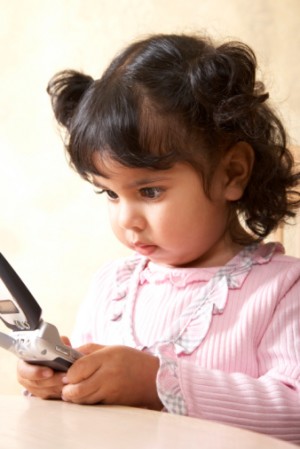
Last night as I was mindlessly flipping through television channels trying to find something interesting I happened upon a show in which young children were being interviewed by a journalist while their parents watched from a room nearby.  The kids were between the ages of three years old and six years old and the journalist was asking them about cell phones and texting.

“Do your parents ever text?” she asked.  The children nodded wildly and raised their hands to speak.  One little boy talked about how his mom was “always texting, texting, texting.”  Another child shared how she hates it when her mom takes phone calls instead of playing with her.  One child shouted, “I wish phones were never invented!” And another little girl talked about how she sometimes plays with six or seven toys at once because she likes to “multi-task” just like her Daddy.  Whoa.

The parents in the next room were a little bit shocked at how strongly the kids felt and ultimately shared that they felt embarrassed that they had prioritized their phones above their children in many instances.  One of the parents was perplexed though, because apparently her job requires that she be available and on call.  She wondered how she could be on call and still let her child know that he’s important to her.

I don’t have any answers for that particular parent, but the show got me thinking.  How much do we really NEED to be at the beck and call of our electronic devices, and how much have we unconsciously fallen into the trap of our shiny, fun toys?  And, considering that our children learn by imitating us, how much do we want our kids staring at screens and pushing buttons to communicate with friends, co-workers, and family members that are hundreds or thousands of miles away? Continue reading “The trouble with texting”
Loving our kids no matter what gets thrown at us

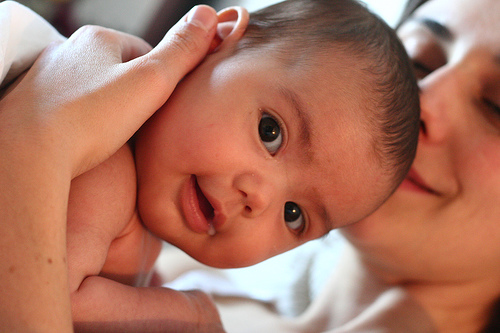
This morning as I hugged my baby to me, she squeezed me and I reveled in the moment of closeness and connection, until I realized she had wiped her booger on my shirt.  I’m not sure there’s much in life that’s more humbling than realizing that to my child, one of my roles is to be her human tissue and wastebasket.

At first I felt offended and wondered if snot removal was all she thought I was good for.  And then I settled in to a deeper realization that motherhood is millions of acts of service, some enormous (like giving birth) and some small (like taking a slobbery apple core) but essentially, I will give of myself to the best of my ability for as long as my child needs me.  I also realized that I should enjoy this time when my child is small and needs me so much, because I know that one of the most challenging acts of service lies ahead–letting go.

So for now, I’ll try to enjoy being a human tissue and later I’ll do my best to be a wastebasket with a smile so that eventually when my child no longer needs me as fiercely, I’ll be able to let go with the fond memories of a time when she couldn’t even sit up or tie her shoes.

As I thought about it more I realized that I could be my child’s wastebasket in more than one way.  Sure, like every mother, I will have a plastic baggie full of garbage in my purse at all times.  But I can also be a receptacle for her emotional boogers and garbage too. Continue reading “Loving our kids no matter what gets thrown at us”

The dangers of praise

Although we tend to think of praise as beneficial to kids, recent research has shown that certain kinds of praise are actually detrimental to young people.  When we tell kids they’re “good” the unintended effects are that children begin to fear being seen as “bad”.

Personally, I think all kids are good all the time.  They’re just easier or more difficult for us to deal with based on their behavior, but that doesn’t make them “bad”, just more challenging for us.  But if we tell kids they’re good or talented or smart, the surprising consequence is that they tend to freeze up and become afraid of being seen as bad or un-talented or stupid.

In one study I read, kids were divided into two groups.  Each group was given an easy puzzle to solve.  After they completed the puzzle one group was told, “You’re so smart!” and the other group was told, “Wow, you tried really hard on that!”.  Then they were offered the opportunity to redo the easy puzzle or to try a more challenging one.

The kids who were told they were smart chose the easy puzzle more often, probably fearing that if they failed, they wouldn’t be praised as “smart” anymore.  On the other hand, the group who were told they tried hard were eager to challenge themselves and often chose the more difficult puzzle.  After all, even if they failed, they would still get praise for trying, so there’s nothing to lose! Continue reading “The dangers of praise”

The importance of observation

When it comes to babies, at my core, I am a scientist.  The process children go through as they transform from a fetus into a walking talking human child in just the first 2 years of life fascinates me.  It’s absolutely incredible really.  As a scientist, I want to understand all I can about this amazing process.  And if there’s one thing I’ve learned that is the same in both my scientific and my Montessori backgrounds, it’s that observation is the key to understanding child development.

My daughter has Erb’s palsy brought on by her shoulder dystocia during birth.  At first I didn’t notice anything wrong, and since most babies heal on their own without any intervention, I just assumed she would too.   She did seem to prefer to use her right arm and hand, but I didn’t know that wasn’t normal.

We have a wonderful pediatric physical therapist who is teaching me all about arm, shoulder and hand development in infants.  She’s taught me that at three months old, Julia shouldn’t have a handedness or preference for one side over the other.  So, I started paying closer attention to the specific movements we’re looking for and truly comparing her arm and hand development on the left with the development of the right.  Much to my amazement there are differences that had gone unnoticed by me in the past.  Although she’s starting to use her left arm more and more, she does raise her right arm above her head more often than she does with her left.

So, what does this have to do with you and with parenting in general?  My point is that if we’re not paying close attention to the physical, emotional, and social development of our kids, things can slip through the cracks unnoticed.  We have to take the time to actually pay attention to where kids are developmentally in order to know that they’re on track and, more importantly, in order to know how to challenge and encourage them to develop further. Continue reading “The importance of observation”

The magic question

Are you wanting more ease and cooperation from your kids this week?  I have a magic question that will get you exactly that.  One great thing about this question is that it also works well with other adults.   Another wonder of this magic question is that when people ask you this question you feel honored, cared for, and free to say yes or no.

This question empowers you and your loved ones to communicate openly, honestly, and freely.  It can even help you learn more about your children and their motivations.  OK, are you ready for it?  The magic question is, “Would you be willing to ____?”  Variations on this question might be “Would you?” “Could you?” or “Will you please?”

But a huge part of the magic of the question is that it’s a true request.  When you ask, “Would you be willing to help me carry in the groceries?” you’re actually asking for help, not demanding it.  So be careful with the variations unless you’re sure you’re truly asking.  Sometimes our demands can be subtle and veiled, but they’re demands none-the-less.

It’s easy to fall into the trap of demanding and ordering kids around, especially when they’re resistant and uncooperative.  “Brush your teeth” “Put on your shoes, we’re leaving” and “Stop hitting your sister” are the kinds of demands most kids experience daily.  If you’ve fallen into the habit of making lots of demands of your kids, you’re not alone.  The problem is that the more we demand, the less kids want to cooperate.  And the less kids cooperate, the more we demand.  It’s a vicious cycle, but you have the power to change the dynamics substantially, just by asking the magic question and being OK with whatever the answer is. Continue reading “The magic question”