Focus on the process, not the product

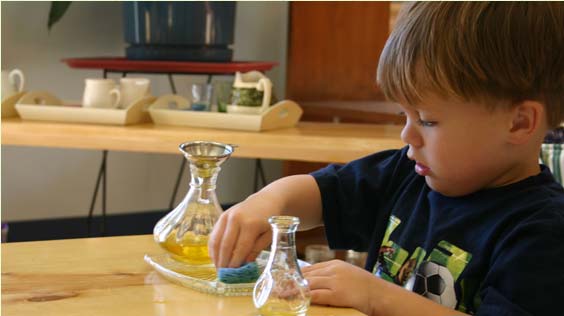
As many of you know, for the five years after college I was a preschool teacher in Montessori classrooms.  I was very intrigued my Maria Montessori and her methods, but what struck me most was her philosophy.  There are quite a few key Montessori philosophies that I subscribe to, but today I want to share one that’s near and dear to my heart.  Montessori said, “It’s the process, not the product.”

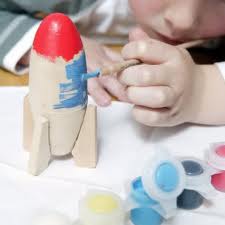
What she meant is that for young people, it’s the process of learning that is to be enjoyed and savored.  Too often we put the emphasis on our kid’s paintings, drawings, or little cut out shapes, but we forget that it’s the experience of painting, drawing, and cutting that matter most to our child’s development.

For children, it’s easy to enjoy the process because they haven’t yet been conditioned to value product over process.  You can see evidence of this in that many three or four year olds will spend time creating a piece of artwork only to forget it at school or toss it aside when it’s finished.  We are the ones who teach children to value their art by featuring it on the refrigerator or espousing it’s many wonderful qualities.  But is our value of product over process something we really want to teach our kids? Continue reading “Focus on the process, not the product”
Busy bodies

One afternoon when I was about six or seven I saw my mom sitting in the living room staring off into space.  “Wacha doin’?” I asked.  “Nothing.” She replied calmly.  “Nothing?!” I thought, NOTHING??!!!  How could someone not be doing a thing?  That was impossible.  Hmmm.”  As I looked at her she seemed peaceful and happy and whole, so I figured that maybe, just maybe, not doing anything was an all right thing to do.

The older I get, the more I try to be like my mom in that moment.  Not the checked out staring off into nothingness part (although that’s kinda nice sometimes), but the part of her that is able just to sit, and contemplate life, and enjoy the present moment.  The more years I get under my belt, the more I appreciate just being.  And the less I think that it’s the “doing” that will define me in other people’s minds (or in their memory of me once I’m gone).  Not that doing is a bad thing; in fact I quite like doing things.  But remembering just to be; And to be peaceful and joyful as I go about my daily life.

This is a foreign concept to kids, or at least it was to me as a kid.  I just wanted to learn new things and grow and reach out in every way I could.  To just sit and breathe was the last thing on my mind.  You see, the thing is, kids are busy bodies.  I’m not sure exactly what it is about being young that makes us want to figure everything out as quickly as possible, or even gives us the notion that anything ultimately CAN be figured out.  But regardless of what drives them, young people are notoriously busy “getting into things”. Continue reading “Busy bodies”

The importance of observation

When it comes to babies, at my core, I am a scientist.  The process children go through as they transform from a fetus into a walking talking human child in just the first 2 years of life fascinates me.  It’s absolutely incredible really.  As a scientist, I want to understand all I can about this amazing process.  And if there’s one thing I’ve learned that is the same in both my scientific and my Montessori backgrounds, it’s that observation is the key to understanding child development.

My daughter has Erb’s palsy brought on by her shoulder dystocia during birth.  At first I didn’t notice anything wrong, and since most babies heal on their own without any intervention, I just assumed she would too.   She did seem to prefer to use her right arm and hand, but I didn’t know that wasn’t normal.

We have a wonderful pediatric physical therapist who is teaching me all about arm, shoulder and hand development in infants.  She’s taught me that at three months old, Julia shouldn’t have a handedness or preference for one side over the other.  So, I started paying closer attention to the specific movements we’re looking for and truly comparing her arm and hand development on the left with the development of the right.  Much to my amazement there are differences that had gone unnoticed by me in the past.  Although she’s starting to use her left arm more and more, she does raise her right arm above her head more often than she does with her left.

So, what does this have to do with you and with parenting in general?  My point is that if we’re not paying close attention to the physical, emotional, and social development of our kids, things can slip through the cracks unnoticed.  We have to take the time to actually pay attention to where kids are developmentally in order to know that they’re on track and, more importantly, in order to know how to challenge and encourage them to develop further. Continue reading “The importance of observation”

The development of will

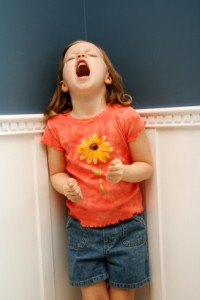
Time OutWhat’s it like to be a 2-4 year old? (an excerpt from my soon to be released ebook!)
As an infant and young toddler your child saw himself as an extension of you.  He had very little sense of distinction between himself and his parents.  In fact, if you think about it you can understand why this would be so.  Just as we lift our own hand to our mouth if we want to put some food in it- your hand has automatically put food in your baby’s mouth every time he’s been hungry since his birth!  When he needs something, you provide it, so in a way, and in his mind, you’re an extension of him.

Now that he’s older he’s developing more complex language.  He’s learning to distinguish between “yours” and “mine”.  Well if there’s a “yours” and a “mine” there must be a “you” and a “me”.  Now your child begins to see himself as a separate entity with desires, hopes, dreams, and thoughts all his own!  Wow, what an exciting discovery.

A Stronger Will: Unmet needs for choice

Along with the discovery of self, your child is feeling stronger desires than ever before and she’s discovering her personal power.  She’s realizing for the first time that she can affect the outcome of a given situation.  Sure, when she was a baby, she realized that she could move a ball from here to there- but now she’s discovered that she can affect your behavior and have some control over the social dynamics in your home.  This is a huge step in social development.  She’s gone from a helpless being, who is happy to do whatever you want- to a willful child with a mind of her own.  And this is ultimately a good thing- although the transition can be extremely difficult for us.  Sometimes we just want that sweet little baby back (and that’s completely normal)!

If you consider your job as a parent to be raising a capable, independent, and contributing adult, then you can see this phase as a milestone toward that goal.  Now that your child has an ego, strong desires, and a stronger will she can really get things accomplished that she never could before.  Now is a wonderful time to help her develop a sense of responsibility by giving her more freedom coupled with, you guessed it, responsibility.

Easier said than done, right?  Continue reading “The development of will”

Following the child: How child directed games and activities can create connection, learning, and mutual cooperation

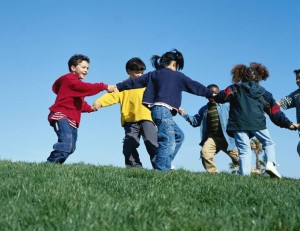
kids_playing_aqerThis week I watched a fascinating video about baby led breastfeeding.  It showed newborn, days old, and months old infants maneuvering themselves into a good nursing position with very little help from their mothers.  Babies were deliberate in their movements bobbing and clearly searching for the nipple.  And, when they found it on their own, many mothers reported that the latch was more comfortable than it had been when they had tried to help their babies find the nipple.  What an incredible innate ability babies have!

Watching newborn infants lead the way at breastfeeding reminded me of one of the foundations of Maria Montessori’s groundbreaking educational philosophies; follow the child.  Montessori asserted that children have an innate desire to learn and if we follow their lead, they will enjoy learning, retain more information, and continue to seek out even more knowledge.

But following the child doesn’t just work to help kids develop their intellect, it also helps them to find their power and leadership skills.  When we allow children to be in charge and take the lead, they will often surprise us with their creativity and take us in directions we never expected.

For instance, kids who are feeling powerless and frustrated about it will often make up games than involve enslaving their brothers, sisters, parents, or other adults.  It’s how they work out their frustrations about being a kid and how they learn to understand what it’s like to be in charge.

I’ve found that by allowing children to lead the way during some specifically designated child led play-time, kids become better able to cooperate and connect for the rest of the day.

I’ve even had experiences where I wasn’t sure why a child was grumpy or defiant and when I allowed the child to lead the play, I soon discovered what was really bothering them.  Kids have an amazing ability to work out their emotional challenges through play, but they have to be allowed the time, space, and attention to do so effectively. Continue reading “Following the child: How child directed games and activities can create connection, learning, and mutual cooperation”