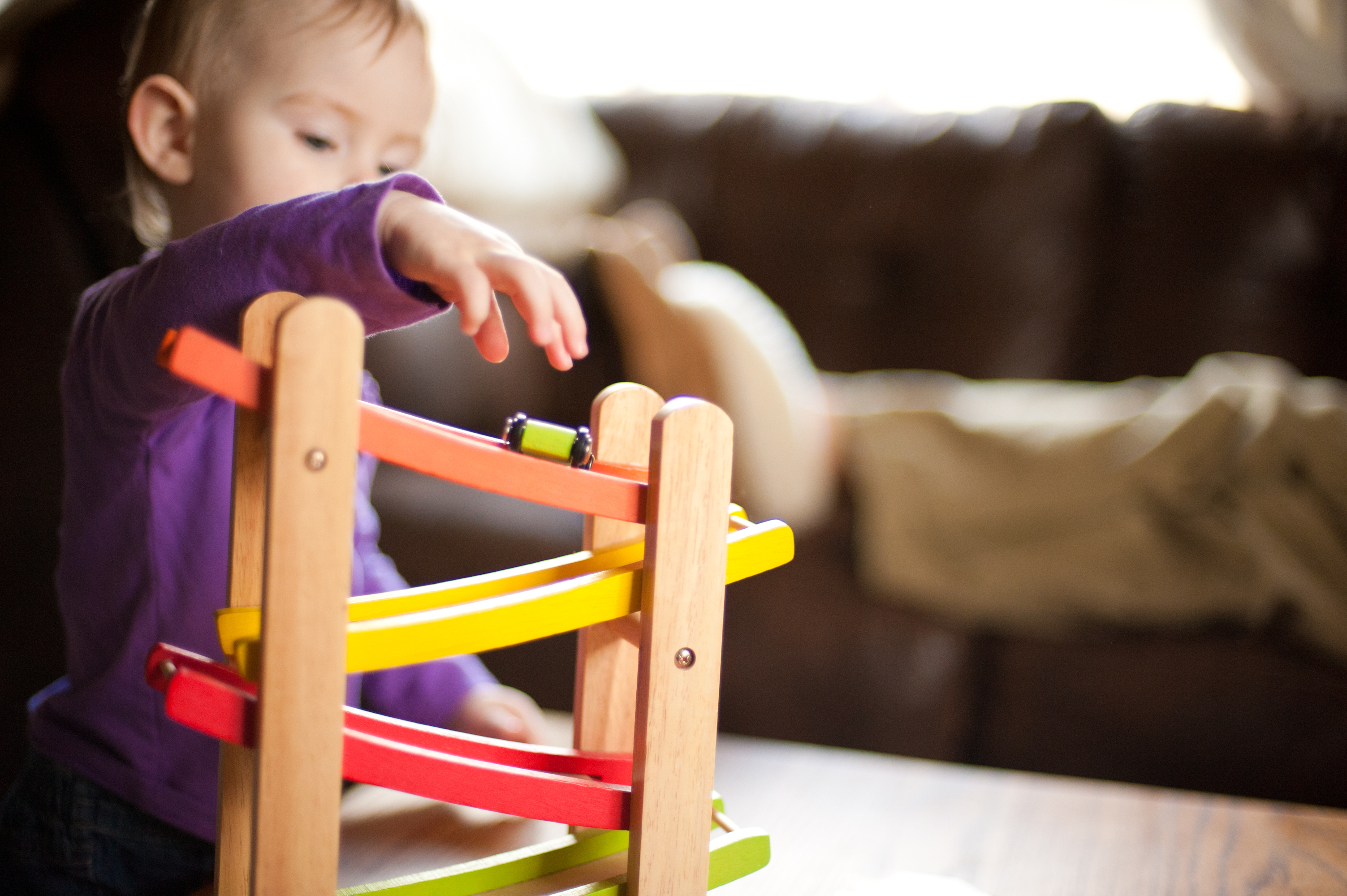

Seven Strategies to Transform Challenging Moments

Sometimes I wish my child wasn’t such a perfect reflection of my emotional state. I was grumpy yesterday and how did my daughter respond? By not listening, not helping, and saying no to everything. I knew that she was just responding to my own “no” energy, yet I somehow couldn’t pull myself out of my funk and become more of a “yes.” Instead, I just simmered in my “everything’s wrong” mentality and watched my child’s behavior become more erratic, clingy, defiant, and reactive as the day wore on.

Usually I can shift things when I feel us heading toward the downward spiral of negativity, but yesterday, not so much. I did finally decide to take the dogs for their walk and being outside in the sunshine, getting some exercise and watching the dogs frolic did help lift my dark mood.

And then I realized that I have bunches of strategies for how to anticipate and transform challenging moments and I can usually use them with creativity and ease. But it seems that at the times I most need them, they’re nowhere to be found.

So this week I’ve decided to write down seven strategies for how to shift things when everything seems to be going downhill. Here they are:

1)    Notice any patterns— He usually melts down in the afternoon around 4pm. She typically freaks out when it’s time to leave the park. He often asks for candy when we’re in the check out line. She wants to watch videos whenever her uncle comes to visit. As you begin to notice the patterns, you might be surprised to learn that your child associates things that seem completely separate to you. This information can be golden if you’re trying to change things up.

2)   Identify what doesn’t work— If you’re unclear what doesn’t work for you, it’s unlikely a change will occur. On the other hand, if you know for certain, exactly what is not working, an alternative will likely come to mind. Don’t be afraid to let your child in on this information. “You know, I’m starting to dread going to the grocery store with you because the last few times you’ve had tantrums. It’s fine with me that you have big feelings, we all do. But I don’t enjoy sitting on the floor in the grocery store while you scream. Do you think we could try something different today?”

3)   Make a plan for a similar future incident— When I was a nanny, one of my charges started biting his brother. I knew that if it had happened once, it was likely to happen again, so his mom, dad, and I came up with a plan to redirect his biting to an inanimate object. We followed up by watching for warning signs, identifying patterns and being on alert at certain times of day.

4)  Take a break— Sometimes the best thing to do is to walk away, take a break, take some deep breaths and focus on myself for a minute or two. Often I find that when I take the time to really reflect on what’s going on for me and I can give myself some empathy or reach out to a friend or loved one for connection, I’m able to shift my energy and my daughter responds in kind.

5)   Be dramatic— I couldn’t seem to get the kids to help clean up their work. I was asking nicely (sort of) and trying to turn it into a game (but my heart wasn’t really in it). Then I finally realized that I could completely freak out about how awesome it was that my student had put a single toy into the basket. “Wow! That’s so COOL! Thank you SO MUCH!!! I LOVE it when you help me out!” Big hugs and cheers ensued. Pretty soon, all the toys were in the basket. Wild, over the top enthusiasm worked here, and I’ve also had success with pretending to faint, running away screaming, or otherwise acting out my internal experience dramatically. It feels good to express myself and it’s fun for kids to see unexpected behavior from the adults in their lives.

6)   Act it out— Children respond incredibly well to puppetry, acting, storytelling and the like. If you’re experiencing a consistent issue with a child, often the best thing to do is to act it out and explore each person’s experience through role-playing and storytelling. Warning: you have to be over the heat of your emotion about the incident or this will come across as lecturing, rather than playing. So take some time, think it over and when you have compassion for your child’s experience, try this one out.

7)   Notice the difference— “Hey, remember how we were working on asking nicely by saying please and then saying thank you when you get what you’ve asked for? Well, I’ve really noticed your efforts. In fact, I was very surprised yesterday when you asked for the sidewalk chalk. You said please without even being reminded!

So, do you use these strategies already? Are there others that work for you that I’ve forgotten to include? I love it when you share your stories, strategies, and ideas with us all. Please let us know what you think by leaving a comment below.

And have a great week, Shelly
 

The Destructive Power of Always and Never

We’ve talked about words and phrases that don’t serve connection before. The word “should” is one to avoid, as are “you” statements and empty praise but what about seemingly innocuous words like “always” and “never”? Sure there are perfectly reasonable uses for these words that don’t cause any trouble. “I will always love you,” for example.

But if we really sit down and analyze our uses of these two words, we are likely to find that they’re often inaccurate and they most certainly invite argument. Let’s take a common example from my own experience, “You never have your shoes on when it’s time to leave the house!”

The problem with a statement like this is that it doesn’t accomplish the goal for which it’s intended (to encourage your child to have his shoes on), and instead, it practically insists that the recipient go into his memory banks and find proof to the contrary. “That’s not true, I had my shoes on yesterday when it was time to go to the park!”

The word “always” works in much the same way. We can almost certainly find evidence to the contrary and our human nature dictates that we figure a way out of the imaginary box we’ve been placed in. In case you haven’t noticed, people hate to be pigeon holed. And yes, that most definitely includes toddlers and young children.

Almost as soon as I attempt to label a child, they seem to magically shed my label by acting in unexpected ways. She’s so sweet (but right now she’s pulling my hair), he’s a force to be reckoned with (but currently he’s snuggling in my lap), they never take a nap in the afternoon (except for today), she always loves her bath (but right now she’s screaming “no!” repeatedly).

As I’ve pondered this urge to label, quantify, and know for sure what to expect, I’ve realized that there are actually very few instances in which the words “always” and “never” are helpful either to move things forward or to discourage unwanted behaviors.

Even the old adage “Never talk to strangers.” Doesn’t really work for us. We often talk to so-called strangers, and since abuse is usually perpetrated by a person a child knows, that advice doesn’t seem as relevant as it was when I was a child.

I’ve even stopped saying “We never hit people,” because there’s this strange sport called boxing and there are martial arts, and occasionally we could be in real danger. So really, sometimes we do hit people. And since kids take things very literally, I try to be as accurate as possible when I communicate with them. Instead, I might say, “We don’t hit people or animals,” and if questioned further I will add, “unless we’re in real danger.”

This week begin to notice when the words “always” and “never” pop up and try to be as real and accurate as possible when you’re talking with the young people in your life.

And if these words do slip out (as they likely will) and you find yourself faced with a child who’s ready to launch into an argument on the subject, gently admit your mistake and move on. “Oh, you’re right, I forgot about that time!” Escalating things further by trying to convince them that you were mostly right won’t get you the results you’re looking for.

By the way, what are the results you’re looking for? Are you hoping for more cooperation? Or to get kids to help clean up? Or do you want them to take more responsibility for their belongings? I would love to know what you’re struggling with so that I can make future posts as relevant as possible to your needs.

Have a fantastic week, Shelly


How Setting Parenting Goals Can Completely Change Your Life

Photo by Suzette Hibble

I’m frustrated with how things are. I know I want a change. I just wish things were different and easier and that I didn’t get a bunch of resistance at every step along the way. I try to talk to my husband about it and we get into a fight. I can’t even seem to figure out exactly what I’m wanting. Sound familiar?

I’ve been a self-professed personal growth junkie for over ten years and if there’s one thing I’ve learned it’s that setting goals is the best way to make a change. Yet somehow when it comes to parenting I seem to forget this important step.

So instead I end up spending days weeks and even months stressing out over how things are going and freaking out about how I must not be doing it right. After a while I finally remember that setting a goal, making a plan and reaching toward my goal is the best way to make change happen. And almost instantly, changes do happen and I’m shocked at how easy it was to get from point A to point B.

I’m not quite sure why it’s easier to set goals when they’re work related or health related but when it comes to setting parenting goals I often draw a blank.

About a year ago Julia and I were really struggling with sleep and I was at my wits end. And then I read “The No-Cry Sleep Solution” by Elizabeth Pantley (which is absolutely my favorite sleep book) and she included questionnaires, forms, and logs to set goals, record what was actually happening, and assess whether or not we were reaching our goals. It worked like a charm!

Almost as soon as I had my goals in mind and my plan set up, Julia easily slipped into the new routine. And the same thing has happened in lots of areas of our life together. From night weaning to potty training, as soon as I had a goal and a plan, life got considerably easier.

So what is it that’s bothering you right now in your parenting journey? Are you losing your temper and don’t want to be? Are you at a loss as to how to proceed in some area? Are tantrums and whining making life less fun? Are you losing sleep night after night?

Take a moment to put your attention on the one or two things that are bothering you most about your parenting and then make a commitment to come up with a specific measurable goal and a solid plan for achieving your goal. Then, after you’ve begun to implement your plan, please write to me and tell me how it’s going!

Now that Julia is just about potty trained, we’ll be embarking on a parent led weaning adventure in the next month or so. I’m going to set some goals, make a plan and stick to it! And I’ll definitely keep you posted on our progress. And I can’t wait to hear about your new parenting goals!

Have a great week, Shelly

How to Teach Toddlers to Share

This week at our Montessori inspired home based preschool something truly magical happened. Two year olds began sharing easily and generously without being forced, coerced, bribed, or scolded. I’ve never seen anything like it before.

A couple of weeks ago there were a lot of tears as the children grabbed toys from one another, wrenched them out of each other’s grasp, hoarded and hid the coveted toys, and when they were recovered by the other party, a whole new set of tears ensued.

I enjoyed this humorous description I recently read online about how toddlers feel about possessions. This has circulated the internet so I’m not sure who originally wrote it, but here you go:

1. If I like it, it’s mine.

2. If it’s in my hand, it’s mine.

3. If I can take it from you, it’s mine.

4. If I had it a little while ago, it’s mine.

5. If it’s mine, it must never appear to be yours in any way.

6. If I’m doing or building something, all the pieces are mine.

7. If it looks just like mine, it is mine.

8. If I saw it first, it’s mine.

9. If you are playing with something and you put it down, it automatically becomes mine.

10. If it’s broken, it’s yours!

The thing is, toddlers are just learning about possession and they feel excited about owning and possessing things. All too often I see frazzled parents running after their toddlers saying things like, “No Colin, that’s not yours, that’s his toy! Colin, give that back right now. You can’t take toys from other people.” And usually the scene ends with the parent snatching the toy away from their child to return it to its rightful owner.

I was guilty of doing the very same thing and wrote about it several months ago. But I made a commitment to stop grabbing things away from my daughter, and lo and behold, she stopped grabbing things from others! At least that was the case until school started.

I knew I had to come up with a plan and fast. In the Montessori classroom we take great care to honor and respect each other’s work. We try our best not to bother, mess up, or interfere in someone else’s activity unless we ask to join them and they agree to share their work.

Often, children will choose to work together, but sometimes they just need their own space and they need to know that no one will invade their space and grab their stuff away. And since children can only learn when they’re feeling safe, secure, and relaxed, the best way to support those emotions in the classroom is to implement a clear boundary and rule that we don’t take someone else’s work.

So, while I’ve done pretty well at stopping the children from invading each other’s workspace, they will often choose to work together and then they need to share effectively. If one child wants the part of the train track that the other is holding, we need an effective way to communicate that without grabbing.

This week I decided to try something new. Rather than protecting the child who possesses the coveted item, I focused on the child who wanted it. “Julia, if you want the truck you may ask for a turn.” She immediately shot off, “May I please have a turn with the truck?” But Fred was not feeling generous and responded with a sharp “No!”

OK, so that didn’t work so well, but I noticed something. Julia was heading toward Fred with her hand out and her palm down and it looked like she was about to grab the truck from him. He pulled back to protect the truck from her and then inspiration struck me.

I invited Julia to ask again, but this time to approach Fred with her hand out and her palm up. And that’s when the magic happened. Fred handed Julia the truck immediately! I was shocked. I hadn’t forced or coerced him. I didn’t even ask him to share. All I did was coach my daughter to ask in a way that invited sharing and voila! Sharing happened naturally.

Since Fred isn’t talking quite as much as Julia yet, we’ve shortened his request to “Turn please?” with the open outstretched hand. Now the two of them are practicing and as I continue to watch there are several things I’m noticing about toddlers sharing effectively. First, when they feel forced, they resist and withhold. Second, when they’re asked nicely with an open hand, they almost seem compelled to offer the toy to the outstretched hand of their friend. Just about every time, there’s at least some sharing happening when we use this technique!

So, what do you think? Will you try this with your kids? What else have you tried that has encouraged sharing? I can’t wait to hear some other strategies that have worked!

Have a fantastic week, Shelly