My Top 12 Resources for New Parents

I just found out that a good friend of mine is pregnant. Well, technically his wife is pregnant. But as soon as I found out I immediately wanted to create a list of resources for them so that they wouldn’t have to go through the heaps of conflicting and confusing information out there (unless they really want to).

I know my friend and I are aligned on many topics, but within about five minutes of talking with him it was clear that he was about to embark on a whole new world (parenting) that he has never really researched before.

So, here’s my list of the top twelve resources I recommend for new parents. I used these all myself and include an explanation about why I trust the resource or what I like about it.

Here goes:

1)     Baby Center’s Pregnancy Calendar: Although Baby Center is a pretty mainstream resource and includes some information that isn’t completely aligned with my attachment parenting and natural lifestyle I still really enjoyed the pregnancy calendar. I could go there and see how my baby was developing week by week and read about the miracle that was happening inside my body. Fun fun fun!!!

On a not so fun note, Baby Center also has a miscarriage support group. Miscarriage happens more often than is generally believed and women who experience it need to seek immediate support from friends, family, counselors, and support groups. If you’ve experienced a miscarriage, please don’t go through it alone. Reaching out for support can be hard, but it’s crucial to the healing process.

2)    Movie: The Business of Being Born Although this film was somewhat disturbing to watch, I think it’s important to realize how and why birth in hospital has become the norm in America and to recognize that there are other choices out there. And if you do choose a hospital birth, I hope you’ll know your rights so that you aren’t forced into any procedures or medications you don’t actually want. This one is an eye opener for sure.

3)    Birthing class: Hypnobabies I loved my hypnobabies class SO MUCH and it really helped me with the pregnancy and first two stages of birth. The affirmations were incredibly uplifting and the daily practice of self-hypnosis is a wonderful way to unwind and relax. I still use some of the techniques I learned in this class! And even if Hypnobabies isn’t for you, definitely take a class about birth. You’ll be glad you did.

4)   Consider hiring a midwife and/or doula. If you’re planning a homebirth I highly recommend hiring both a midwife and a doula. And even if you plan to birth at the hospital, a doula is a must. A doula’s entire job is to be there for emotional support for the birthing mother. This has multiple benefits from decreasing pressure on dad to helping mama remember what procedures and medications she does and doesn’t want. I would not want to birth without this crucial support.

5)    La Leche League is a wonderful organization committed to helping women breastfeed successfully for as long as they wish. There are local groups all over the place and they’re mother led (no “expert” telling you what you’re doing wrong). I found the group meetings very encouraging and connecting and my local leader was available by phone to personally answer all my questions. Do beware, this organization is all about breastfeeding, so conversations about using formula might not go over so well.

6)    I also HIGHLY recommend Kelly Mom dot com for really great research based information about breastfeeding. I was on Kelly Mom all the time in the first few months of breastfeeding and continue to use it as my #1 resource for all things breastfeeding related.

7)    If you’re having a boy, you’ll have to decide whether or not to circumcise him. I sincerely hope you’ll chose to leave him intact. Here’s some information about why: http://www.intactamerica.org/learnmore and if you do leave him intact, you’ll need to know how to properly care for an intact penis so definitely check out this article about the importance of NOT retracting the foreskin.

8)    Even before your baby is born you’ll have to decide whether you want to follow the recommended schedule for vaccinations (since they’ll offer you the Hep B vaccine at birth). I found Dr. Sears’ book on the subject “The Vaccine Book” incredibly informative and well balanced.

9)    Dr. Harvey Karp has developed a theory about the missing 4th trimester that really makes sense to me. And his techniques for calming fussy babies really work. While I don’t recommend calming your baby using these techniques all the time (babies do need to express their feelings just like the rest of us), there are times when I think Karp’s 5 S’s were the difference between peace and rest and hours of purple crying for us. I read the book and watched the DVD but I think viewing the DVD once or twice will give you all you’ll need to use these techniques when you know your little one is needing help to relax and rest. Oh, and our local library had it, so see if you can check it out before you run out and buy it.

10) Although I know she’ll cringe when she sees that I’ve recommended her right after the above, Janet Lansbury is a fierce advocate for infants and toddlers. She shares practical information about how you can be there for your child without interrupting or overpowering their innate desire to learn and grow naturally. And after reading her articles you’ll be left with a greater respect and awe of infants than you ever thought you’d have. And you might also realize that parenting an infant doesn’t have to be as all consuming as popular culture would have you believe.

11)    Dr. Laura Markham is a wonderful resource for parents. She supports parents in using respectful and developmentally appropriate responses to the challenges of parenting young children. Every time I read her stuff I’m left thinking, “yes, yes, and yes.”

12)  And lastly, Hand in Hand Parenting is one of my greatest inspirations. When I first witnessed a friend holding space for her child to feel his big feelings I was left speechless. Recognizing that tantrums are a cry for connection has completely shifted how I respond to my own daughter when she freaks out. And I think this work has also deepened my own commitment to feeling and expressing my feelings, no matter how unpopular they might be.

OK, so there you have it. These are my top 12 resources for new parents. I just realized I didn’t include any books, so I’ll have to do another post on my recommended parenting books another time! I hope you’re all having a great week and I would love it if you’d add any important resources I’ve forgotten to the comments. Thanks!

Love, Shelly


How Self-Care and Personal Practices Can Help Anchor Your Day

A note from Shelly: Kassandra Brown and I found each other on the internet and instantly felt well aligned and connected. Rather than taking a “competition” approach, we’ve decided to help and support one another’s success. I think you’ll enjoy her guest post as much as I did. Excellent reminders to slow down and remember to take care of ourselves in the midst of our busy, service oriented lives.

Guest post by Kassandra Brown

Shhh – everyone is sleeping and now it’s time for you. What do you do with your alone time?

I can help you find the best ways to connect with yourself and ways to make time for that connection.

Here are a few suggestions to get you started:

1) A morning practice: Meditation, journaling, yoga, tai-chi. I suggest activities that are simple enough for you to remember without prompting so you can do them alone (no DVD or YouTube teachers).

Exercise: take 10 min for yourself every morning before the rest of the house is awake. If other people wake up without you, then take some extra minutes before you go greet them to do your own practice.

2) Creative time: sing, draw, paint, sculpt, dance, write poetry. Let it be messy. Let it be easy. Let yourself create with no goal of having it be anything other than your creative expression in this moment.

Exercise: Turn on music you love. Sit with a blank sheet of paper and let yourself flow. You might draw or write. You might get up and dance.

3) Pampering: a long bath, a massage, rubbing yourself with oil, self-pleasuring. Take time to feel sensual in your own body.

Exercise: Walk naked outside. If you can’t do that, be naked in your own home, open a window and feel the sun and the air on your skin. Rub yourself with massage oil.

4) Take off your shoes: The feel of the ground on my naked feet – cold, hot, hard, soft, wet, oozy – is such a blessing. The earth will absorb extra, frenetic energy and leave you feeling more relaxed and clear headed. The earth can also feed you energy which is often more rooted and solid than the buzzy energy we get from caffeine, sugar, and other stimulants.

Exercise: Try walking barefoot on the earth for 10-30 min anytime you feel low, disconnected, or restless.

5) Connect with a friend: Take time to really check in with each other. Ask “How are you doing?” and mean it. If you’re not sure how to do this, try PIES. You can tell your friend how you are doing physically, intellectually, emotionally, and spiritually. And you can ask about each of these areas too.

Exercise: call 3 friends and ask them if they’d like to have a ‘check in date’ once each week. If all 3 say yes, great. You now have 3 anchor points in your week. If one says yes, great that’s probably a more manageable time commitment. Ask for help if you need support structuring a check in date to make it fair and manageable.

It is really important to take time to anchor your day, to anchor into yourself, to find your ground. Finding your own way into yourself through creation of personal practices that really feed you is a big part of what I can help you do through parent coaching.

What practices help you in your day? How do you connect with your true self? Please share your insights and your questions with us!

Kassandra Brown is a parent coach who says “I am so lucky to do this work! I love hearing the difference in parent’s voices when they go from feeling tired and helpless to empowered and insightful.” She coaches via phone or Skype and would be delighted to consult with you today. You can find her at www.parentcoaching.org Contact Kassandra today for more insight into ways to anchor your day!

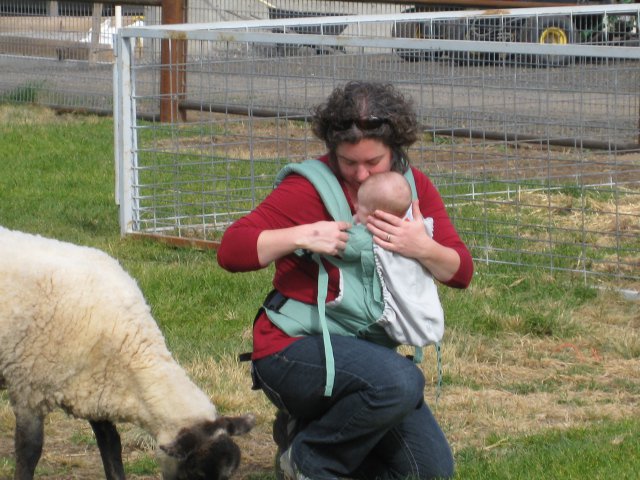
Happy International Babywearing Week!

OK, I’ll admit it, I use a stroller sometimes. I’m not very hardcore about baby wearing, I mean I already carried my daughter around inside for nine months, right?! Don’t get me wrong I love wearing my baby SOME of the time. When Julia was littler (she’s two now!) I used slings and the Ergo carrier and it was so nice to be snuggled, heart to heart with my little one and have my hands free. So when I realized it’s International Babywearing Week, I couldn’t help posting something with a few resource links about babywearing. I LOVE Attachment Parenting! 🙂

Here are some links and resources:


Don’t Say That Do Say This: 20 Things Not To Say To Your Child (And What To Say Instead)

A few weeks ago a friend on my Facebook page asked for a list of things not to say to children so I decided to create one for all of us. This list is not exhaustive and I would love to add to it with your suggestions so please leave a comment if you’d like me to add something!

I would also like to know if you need or want explanations for any of these. Many of them are self explanatory, but if you’d like me to elaborate, I’m happy to add more information about why column B is preferable to column A. And here’s another post I wrote on the topic.

And, if you’d like to read a great book on this topic, try Sarah MacLaughlin’s “What Not To Say: Tools for Talking With Young Children” I was surprised to find some phrases in there that I was still using! OK, so here’s my list…

Don’t Say  Do Say
  Good job, nice results.   You tried really hard!
  What a beautiful picture!   Will you tell me about it?
  You’re so smart.   What else?
  Don’t cry.   It’s OK to cry.
  You statements   I statements
  Are you listening?   Can you please remind me what I said?
  Hurry up.   Let’s go!
  You’re OK, you’re tough.   Are you hurt? Did you feel scared?
  Shut up!   I need some quiet time, please whisper.
  I promise, no matter what.   This is the plan. Sometimes plans change. We’ll go with the flow. And I’ll keep you informed.
  Clean up or else…   Let’s play a cleaning game!
  Spot went to sleep and won’t wake up any more.   Spot died. Everything that lives also dies.
  Baby talk   Proper terminology
  Of course! I’ll drop everything else.   Please wait for me.
  Perhaps, maybe, possibly…   Yes, No, or I need to think about that.
  Don’t use sarcasm with young children   Say what you mean and mean what you say when talking with kids
  Get your shoes. We have to go RIGHT NOW!!!   We’re leaving in five minutes, what else do you need to do? OK, let’s go!
  Why did you do that?   How did you feel about that?
  What’s wrong with you?   How can I help?
  He’s just a mean person.   I wonder what was going on for him.


I have a feeling we could add to this list forever, but I think this covers many of the phrases that we might be tempted to use and for which there are clear alternatives. If there’s something you’re still wondering about, please ask! If I don’t know, I’ll find out, and if I do know, I’ll respond asap.

Have a great week. Warmly, Shelly

Talking with Children About Death

Photo by Kat Caldera

My aunt died yesterday. I haven’t seen her in years but it still feels like a sock in the gut to realize that I’ll never hug her or talk to her again. She was such a fun and vibrant woman. Her death was unexpected and quite shocking to the whole family. My heart goes out to my uncle, cousins, and especially to her only granddaughter.

Death is such a strange part of life. The antithesis of life really, and also a great reason to savor every moment of life. We never know how many or how few moments we might have with our loved ones, so we’ve got to make every one count. In the case of a death within our inner circle of family or friends, we are forced to figure out a way to talk with children about this challenging topic.

In an ideal world, I would like to think that we can talk about death in the same straightforward way we talk about all sorts of things with our kids. But for most of us, death can bring up such dark and scary feelings that we have a tendency to tiptoe around it or offer confusing stories and explanations based on our spiritual beliefs.

I’ve decided not to wait until someone close to us dies to talk with my daughter about death. Instead, I use every opportunity to discuss death and dying and I try my best to be real and honest about it. Lately she’s been really into dinosaurs, which has led to a lot of conversation about death and extinction.

When we go to the High Desert Museum she’s fascinated with the stuffed displays and often asks, “Is it real or dead?” I usually ask her to tell me what she thinks. Death is a difficult concept for children to understand. The finality of it is elusive, the sadness adults experience around death is baffling, and because young kids are still working on forming their primary attachments, many of them have not yet experienced the pain of loss. And that’s OK. Personally, I’d like to put that experience off for as long as possible.

Unfortunately, it’s not up to us to decide when or how tragedy might strike. And if we’ve never even broached the subject of death with our children before, it can be even more difficult to initiate the conversation when we’re mourning.

I recommend introducing the concepts of death and dying in casual conversation and then waiting to see if your child has follow-up questions. The more centered and grounded we can be as we talk about death, the better, but if you find yourself feeling emotional as you talk with your child, just share your feelings honestly. “I’m feeling sad right now because I miss Grandma.”

One thing to watch out for when talking with children about death is the sleeping metaphor. Children take things very literally and don’t understand metaphor, so telling a young child that, “Spot is sleeping and won’t wake up anymore” can be terrifying for them. I’ve heard stories of children fighting sleep and waking with nightmares, because they’re fearful that they might never wake up. It’s better to avoid any connection between sleep and death until children are around 10-12 years old.

Personally, I also avoid talking about “heaven” or other spiritual aspects of death until children are curious or ask direct questions like, “What happens to us after we die?” And then I try to offer as unbiased an explanation as possible. “Well, our bodies rot away and nobody knows for sure what happens to the rest of us. Some people think we go to a place called ‘heaven’, what do you think?”

If a child directly asks me what I believe, I’m happy to share my thoughts and beliefs, but I would rather encourage them to come up with their own ideas about what might happen after our bodies die. If we wait until children initiate these deeper conversations about death, they often won’t happen until children are around 8-10 years old and for some, as late as the teen years.

I do think it’s best to decide with your partner how the two of you want to approach this topic with your children. Whether you agree on an afterlife or not, when you’re on the same page and give similar answers to your child’s questions, your kids will feel reassured that his parents have given the same information on the subject. On the other hand, if you introduce the concept of a soul and heaven and your husband is an atheist, you might have more explaining to do than you bargained for. Then again, what a great opportunity to discuss your own beliefs further!

So, I’m curious, have you talked with your child or children about death yet? What did you say? How did they respond? Is there anything I forgot to mention that you’d like to share with the other parents here?

I hope you’re having a nice week. Warm hugs, Shelly

More resources including a list of picture books about death: http://www.nlm.nih.gov/medlineplus/ency/article/001909.htm