
My daughter hammered nails outside by herself for about 20 minutes before I shot this video. Just a few weeks ago she was unable to start the nails or hammer them in independently, and now she can! I’m so proud of my little builder.
8 Ways to Help Kids With Anger

Emotion regulation is one of the biggest challenges children face. Heck, emotion regulation is one of the biggest challenges anybody faces! So how can we help kids learn to feel, express, and experience their emotions in a healthy and productive way? Joy and happiness are easy to encourage and enjoy. But when kids feel frustrated and angry, it can be difficult to hold space for them and help them ease back into a regulated state without minimizing or squashing their emotional expression.
So here are my 8 ways to help your child with anger:
1) Reflect—
“It sounds like you’re feeling frustrated…is that right?” or “It seems like you’re still upset about that, are you?” are great conversation openers. Instead of asking a young child how they’re feeling, try guessing his feelings and then check in to see if you’ve guessed correctly. This helps kids to more correctly identify their feelings when they’re in the midst of them since thinking of the right words can be difficult when we’re emotionally activated. But do be careful not to simply assume you know what’s going on. It’s important to check in and ask so that our kids know that we’re tuning in and curious, rather than forcing our own ideas about what’s going on upon them.
2) Listen—
Instead of offering advice or suggestions, first, simply listen. Rather than asking questions or telling stories about how much you understand what they’re going through, just breathe, relax, and feel your heart as you get down on his level, make eye contact, and listen to your child.
3) Empathize—
Focus on the feelings and their underlying needs. For instance, “Are you feeling frustrated because you need some space from your brother?” or “Are you feeling upset because you need my attention and I’ve been unavailable?” By noting the need underneath the feelings, you’re helping your child (and yourself!) to better understand what’s happening and how to help herself avoid a future incident.
For instance, when kids understand what they’re needing, they’re more likely to be able to ask for it! And when you are able to connect feelings to their underlying needs, you can help your child by prompting her to ask. “It sounds like you’re getting frustrated. What would help? A snack? Some time alone? How can you ask for what you’re wanting right now?”
4) Hold space—
Sometimes the greatest gift we can give to someone with big feelings is to simply witness them and hold space for them while they express themselves. Of course you do need to make sure the expression is safe for you and your child, but many times, simply being there and relaxing your own body can be a wonderful grounding rod for a child who’s feeling out of control. You don’t need to say anything at all, but if you feel the need, something simple like, “I’m here,” “I hear you,” or “It’s OK to feel angry (sad, upset)” is best.
5) Offer alternatives—
Hitting people is not OK, but if your child seems to desperately need to hit something, offering a healthy alternative can be incredibly helpful. Hitting a bed, couch, or pillow can be a good redirect for a child who has trouble controlling her body and lashes out at people. Ultimately, you want your child to be able to let go of her anger without needing to hit, but allowing her to hit an inanimate object can be a good interim step on the way toward a more advanced method of processing anger. The same goes for throwing, spitting, or any other unwanted behavior. By offering a healthy outlet, you can help your child learn self-control AND allow her to express her feelings through her body.
6) Reconnect—
Many children who experience an explosion of anger have feelings about the outburst afterward. Sometimes they feel scared, ashamed, or worried about what happened. Reconnecting after an outburst is a great way to remind your child that you love him no matter what. It’s also a time when he’s ready to hear your reassurances that it’s OK to have big feelings and stories about how you feel angry sometimes too. Tune in to your child’s favorite way to reconnect, whether it’s snuggling, physical play, or some other cherished family ritual. Also remember to respect your child’s time frame as some kids need some alone time to process what happened before they’ll be ready to reconnect with you.
7) Envision the future—
After the incident is over, talk with your child about how you might handle a future similar situation. During an upset, your child is unable to process any new information and will simply shut down further if you attempt to problem-solve or make suggestions about what to do differently next time.
But later, when the emotions have cooled, you can ask questions and offer ideas about how you can both handle the situation better next time. This helps kids get into the habit of envisioning a more appropriate way to deal with their upset. You might practice some breathing and relaxation techniques, or role-play a similar situation. Be sure to ask your child what she thinks would help and really listen to her suggestions. Children have an innate wisdom about how to help themselves.
8) Model what you want—
This one might be the most difficult to implement, but it’s also the most important. Children get their cues about how to behave from us. So if we aren’t able to stop ourselves from exploding in anger, we can hardly blame them when they do the same thing. If you’ve noticed that you’re having your own “tantrums” then it’s time to do some self-empathy and begin to catch your upset, and address it BEFORE you’re yelling or breaking things.
You can apply all of the above keys to your own exploration of healthy anger release. And remember, it’s OK to feel angry, it’s how we behave when we’re angry that makes the biggest impact on our relationships. If you feel that your own anger gets out of control at times, I highly recommend seeking professional help. A therapist or life-coach can help you learn how to deal with your own anger in healthy ways and then you can model that for your kids.
One more note on this. Humans have an incredible ability to empathize with others that is helped by special neurons called “mirror neurons.” Simply put, these mirror neurons are activated by the emotions in the people around us and cause us to feel what others are feeling. What this means for your parenting is that the more at peace you are, the more peaceful your children will be, and the more activated you feel, the more upset they will get.
So, if you notice your child getting upset, first try to calm yourself down and then help your child. And trust that if you’re able to maintain your composure, your child will be more likely to regain his composure sooner too.
I know that a lot of these suggestions are easier said than done, but I trust that your efforts in emotion regulation for both yourself and your child will pay off big time. Please don’t hesitate to post comments with thoughts, questions, or other suggestions. I appreciate your participation here!
And have a great week, Shelly
4 Secrets to Effective Gentle Discipline

You’re clear that you want to be a kind, caring, and compassionate parent. You don’t want to yell or spank your kids, but sometimes it’s hard to know if gentle discipline is actually working.
There are time when your kid is completely out of control and it’s confusing to figure out what to do about it when threatening, coercing, bribing, and punishing are all off the table. But there are things you can do that will dramatically increase cooperation without the destructive effects of coercion and punishment.
1) Keep Your Cool—
This is crucially important but MUCH easier said than done. Essentially, we’re teaching our kids emotion regulation by providing a healthy example for them. So the more we can breathe, relax, and express boundaries dispassionately, the better things will go.
If you find yourself loosing it, try disengaging from your child and take a moment to cool off in another room. It may also be helpful to name your emotions, “I’m feeling really frustrated so I’m going to go into my room for a few minutes and we’ll talk more when I’m more relaxed.”
If emotions are heated, save the conversation about why your child should follow the rules for another time. When kids are emotionally activated, they’re unable to learn anything new and you’ll just get more and more upset thinking that they’re not listening, when in reality, they’re unable to process any information because they’re so emotionally triggered.
2) Compassion for Kids—
Recognizing that children act out because they’re hurt, confused, or struggling in some way can be a huge eye opener. Children do not want to push our buttons, no matter how much it seems like they do. Rather, they’re trying to get their needs met and they’re learning how to advocate for themselves, sometimes in ways that make us want to scream.
The truth is that a misbehaving child is asking for empathy, and understanding. They just haven’t learned very effective ways to win our support yet. So instead, they whine, hit, scream, spit, and try all sorts of ineffective strategies. Seeing these behaviors as a cry for help and an experiment can make it much easier to treat our kids with compassion when their behavior is out of control.
3) Play—
When kids are defiant, as strange as it seems to us, they’re often expressing a need for play. By being playful with your contrary child, you can turn defiance into cooperation. But beware, what works one time is not guaranteed to work the next time. So you’ll need a whole bunch of potential games to play at any given moment. If being playful isn’t your usual MO, I’d recommend sitting down and coming up with a list of games and ways to play when you’re faced with a child who doesn’t want to cooperate. Refer to your list when you find yourself wanting to control and force your child to cooperate.
Here’s my own list of games to get you started:
- Play the “you better not do that!” game
- Pretend she doesn’t know how to do it and ask her to prove it
- Ask her to teach her doll how to do it
- Talk in a funny voice
- Sing a silly song about it
- Pretend she’s a baby and do it for her
- Pretend we’re animals and hop, roar, or slither our way through
- Put her in charge
- Let her know that I’ll be very surprised if I notice it’s already done
- Make it a race and time how long it takes
4) Setting Clear Boundaries—
Children desperately need boundaries, but they also need a limited number of rules to follow and some amount of flexibility depending on the situation. That can make setting clear and consistent boundaries seem like some sort of unattainable nirvana of gentle discipline. Especially when it seems like they only listen to us when we lose it and yell at them. So here are my strategies for how to set consistent boundaries in a gentle way:
a) Make a short list of essential rules. These are things that are safety issues, or things that drive you batty and you will not abide. Make sure your list has no more than 5 items of these “non-negotiable” rules.
b) During a time when everyone is calm, ask your child to agree to the rules and have a discussion about why these rules are so important to you. Ask your child what she thinks of the rules and if there are any she’d like to remove or add. Really have a discussion with your child about this and be sure to let her know that while you’ll take her ideas into consideration, and you hope you can all agree, ultimately you’re the parent(s) so you’ll make the final decision on the rules for your family.
c) Do your best to make it almost impossible for your child to break the rules. For instance if your rule is “we always hold hands in the parking lot” make sure YOU take your child’s hand or wrist every time. If the rule is “no hitting the baby” provide additional supervision, space between siblings, and begin to remove the baby from the room if you notice your older child getting agitated.
d) Come up with a protocol for what you’ll do if the rule is broken. I don’t advocate any form of punishment, however, you do need to know exactly what you’ll do if the rule is broken to encourage adherence to the rule in the future and to acknowledge that the rule has been broken. Having this protocol in place can also help you keep your cool and remember that your child is simply testing the boundaries, which is a huge part of learning and understanding rules.
In the above examples you might choose to go back home because parking lots aren’t safe or you may separate the kids if hitting occurs. There are times when I have removed toys or other objects, especially when they’re dangerous and I occasionally limit my daughter’s mobility (i.e. sit by her bedroom door so that she cannot leave at bedtime) It’s up to you to decide what you’ll do based on your 5 most important rules.
e) Be more flexible with limits you’d like to set but which aren’t as essential to safety or sanity. The more freedom and autonomy your child experiences outside of the main rules, the more likely his needs for freedom will be met and he’ll choose to adhere to the major rules.
f) Address the underlying needs. Whenever kids act out it’s because they need something. When we can identify the need and address it directly, we reduce the incidents of pushing the limits and we nurture and care for our child in a way that really nurtures and supports them. For instance, often the need underneath hitting is either for space and/or touch. By checking in and either offering some alone time or snuggles, we eliminate the reason our child broke the rule in the first place.
Alright, so there you have it! I would love to know if these strategies work for you too, so please share your story or idea below.
And have a fabulous week, Shelly
Why it’s Important to Read to Your Child Daily
Guest Post
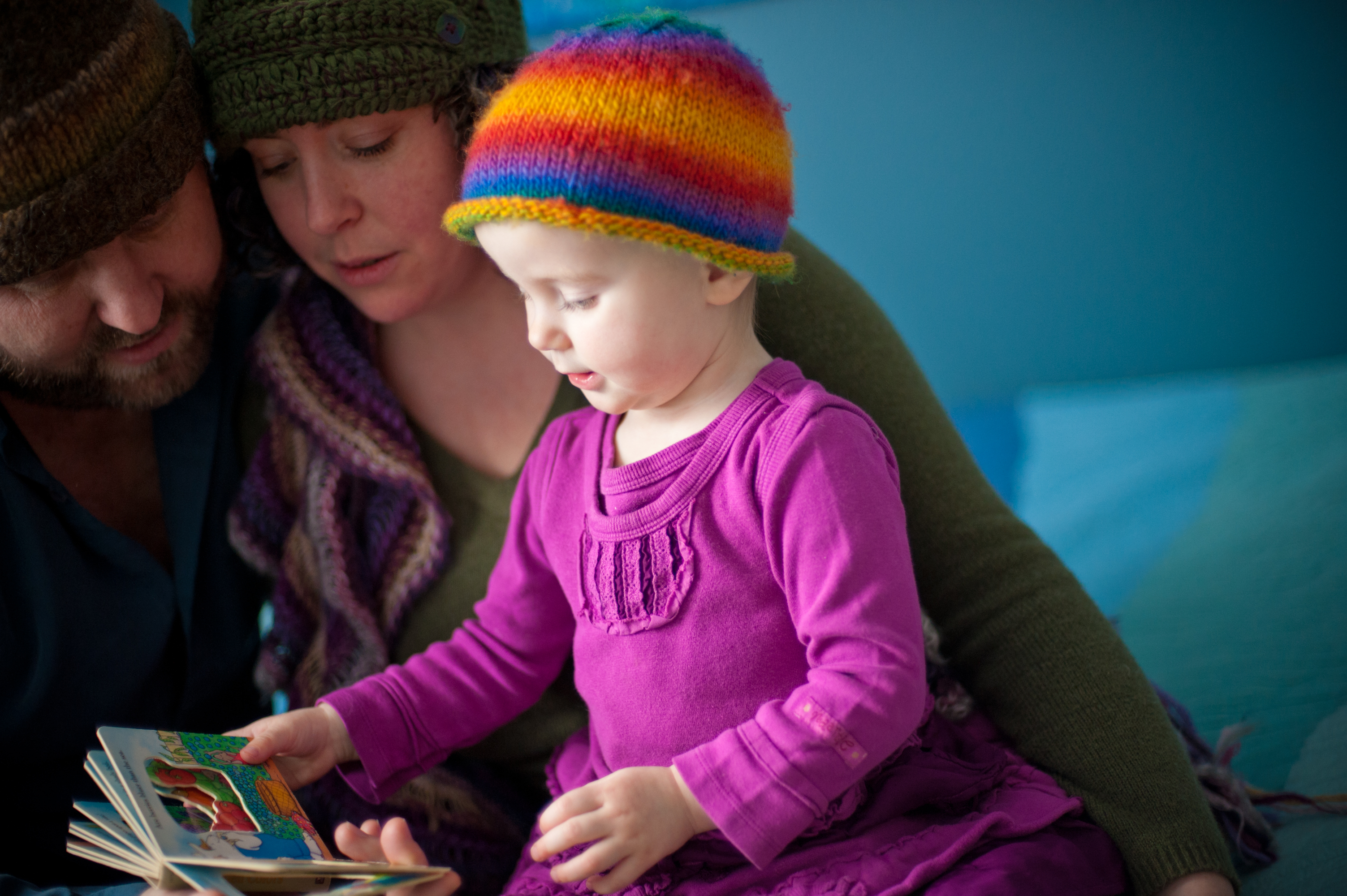
Parenting has its fine moments when you’ve recently given birth and you’re looking at your little angel all snuggled up at home. Like a sponge absorbing every little smell, sight and sound, your child will use everything around him to orient himself and build the foundations of what will become his basic core as a person. According to Dr. Tim Kimmel, author of Raising Kids Who Turn Out Right, building character can help raise your child to be happy, confident and strong to reach his potential in the future. Raising him this way requires a hands-on approach and none exemplifies this method more than reading to your child.
Reading is considered one of the best ways to spend quality time and can act as early training to build a foundation in literary skills as well. A study conducted by the National Academy of Education and the National Institute of Education in 1985, determined that the most important thing a parent or teacher of an early learner can do is to read aloud to him. Apart from laying the groundwork for reading, you’re also teaching your child listening skills that will help him concentrate on what you’re relaying and therefore increase attention span. You, as a parent, can also impart specific values by choosing books that have moral lessons incorporated in the story. All in all, studies have shown that children who have a prior background to reading achieve greater success in systemic reading education. While we thought that bedtime stories are nothing more than little indulgences, it actually provides your child with structure and trains the body to have a regular sleeping pattern.
Think of it this way: won’t it be nice when the earliest memory your child has of you is the time you spent snuggled up on the couch or in bed reading together? The most precious thing we can give children is our time and if we spend it with them, they will remember it when they grow up and are likely to do the same for their kids. Start early. Don’t wait until they’re running up and down the stairs with their iPad in tow. Whisper to them stories while they’re still wrapped in their Marks and Spencer baby clothes looking at you with those glowing eyes and innocent smiles. Believe me, it’s worth it.
6 Little Known Ways to Get Kids to Bathe
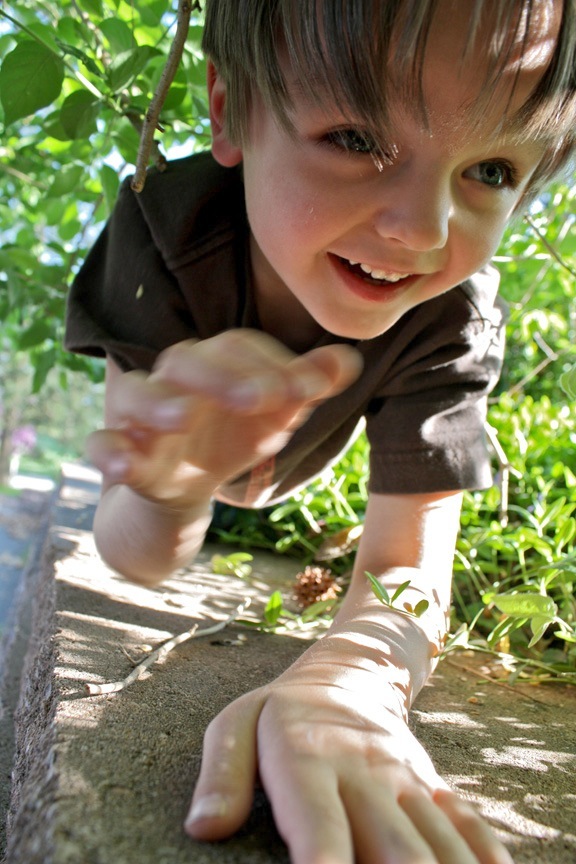
Some kids love bath time and can’t wait to get in the tub every time you suggest it. Others fall on the spectrum from disinterested to downright frightened of baths. If you’re having trouble getting your kids to bathe, try these counter intuitive tips to make bath-time easier and more enjoyable for everyone.
1) Limit the amount of toys—
Less is more. Trust me on this one. Adding just one or two types of items, rather than every bath toy you own will increase the joy and ease of bathtime. Reducing the number of toys keeps kids more interested in each item over the long-term because they don’t habituate as quickly and get bored with the toys.
And since they’re not so overwhelmed by a bath full of toys, they actually have room to move and play. If your child is in the habit of dumping everything into the tub, you may need to do two things. First, separate the bath toys into subsets, each in their own small plastic bin or basket. Second, have a conversation with your child about the new routine and hold the line. “You may choose one basket of toys for each bath and save the rest for another bath.”
2) Encourage self-care in other areas—
Install a full-length mirror and offer a hand mirror so your child can begin to notice his appearance. Instead of wiping her face, hand her a wet cloth and help her to a mirror. Then leave. Staring at children rarely gets them to do what we want.
But allowing them to explore, observe, and clean their own bodies helps kids develop an internally motivated sense of personal hygiene. It also helps to provide child sized items like brushes and combs that are easily accessible for self-care.
3) Offer activities or themes (ONLY if this is fun for you)—
Bubbles, bath crayons, dinosaurs, water pump, water mill, cups and pitchers, glow sticks. Or suggest that your child decide on a theme. And remember #1, just one of these items is more powerful than lumping them all together. This makes each bath a unique and exciting experience, rather than the same old thing night after night. But, if this feels more like an obligation than a party, stop. Your job is to get your kid clean, not to constantly entertain them.
4) Make it a shorter bath—
Make bath-time more in demand when you limit the length of each bath to 30 minutes or less. By stopping bath before your child is tired of it, you’re increasing the likelihood that she’ll get excited about the next bath. Sure, you might have some tears or upset as you finish up, but nighttime tears are pretty common, normal and healthy, and right now your aim is to consistently get your child into the bath without a fuss.
5) Ask your child to wash a doll, toy, or item of clothing—
I got this advice from my friend who designs corner baths UK style and I’m constantly amazed at how well it works to take the pressure off of my daughter and ask her instead to play the role of the teacher. By asking your kids to do a task, help out, show you how, or teach a doll how to wash, you’re no longer putting pressure on them to bathe, instead, you’re inviting them to be the one in charge of the washing. For young people, being the knowledgeable one who’s in charge is often an irresistible role to play.
6) Bathe less often—
When children feel forced to have a bath on a nightly basis, they tend to rebel. But when given options of taking a bath once every few nights, kids are far more likely to agree. Again, you’re making the bathing experience more fun and novel. Note: this does go against some popular advice about bedtime routines. However, for us, the bath is an optional part of our bedtime routine and everything else is consistent.
So, if you sometimes struggle to get the kids in the bath, try one or more of these tips and let me know how it goes. And if you have any other suggestions, feel free to share them in the comments section. These are by no means the only ways to encourage baths with reluctant kiddos.
Have a fabulous week full of clean kids!
Warmly, Shelly
Photo Credit: DIONNA RAEDEKE