What to do about potty talk

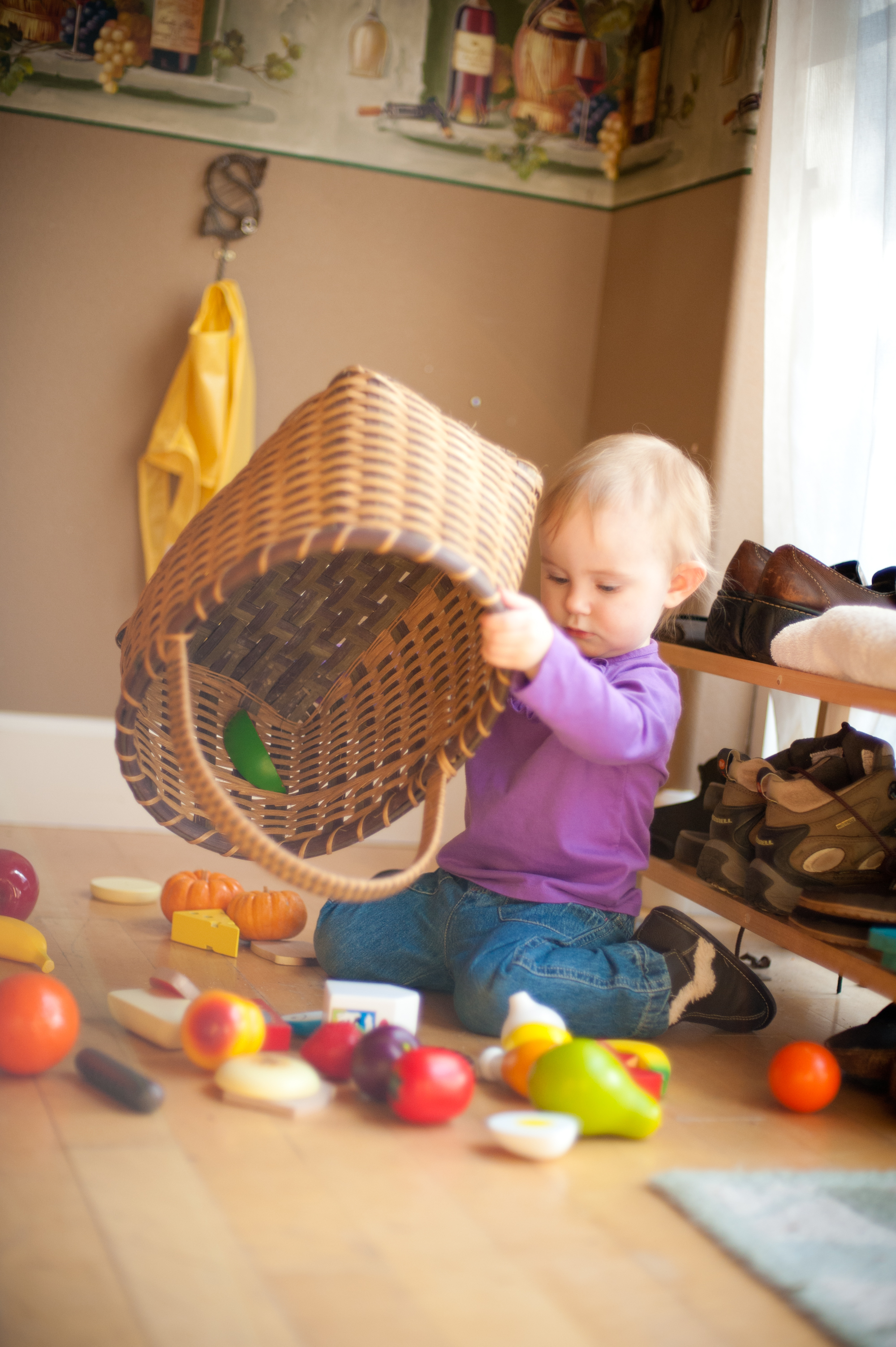
kids_potty_mouth_pm-thumb-270x270-1Isn’t it amazing what kids find funny?  I’ve been surprised more than once by what seems hilarious to a 2, 4 or 6 year old.  And then I remember, their sense of humor is just developing.  Kids this age have a challenging time understanding word play and innuendo, but they do know that burps, farts, and poop are some of the funniest things around.

I’m guessing you’ve especially had an opportunity to witness this phenomena if you have a little boy but some little girls love potty talk too.  Suddenly “poopy butt” or “potty head” is their new favorite nickname for everyone.

So, what to do?  Well, first of all, recognizing that this is a normal stage of development can help you breathe deeply and relax a little when your child says “penis” for the tenth time that day or calls the lady checking you out at the grocery store a “fart face”.  Patience is a huge key to allowing this stage to pass, but patience alone will probably not create the kind of verbal environment you’re wanting.

So, you’ll have to create boundaries, letting your child know what works for you and what doesn’t.  I invite you to give a little here, and recognize that using potty talk is a way that your child is experiencing joy, laughter, and humor.  But clearly it’s not appropriate to call the teacher names or to shout the names of certain body parts across the store.  So the first step is to decide where your boundary is.  And that can vary greatly depending on your own preferences. Continue reading “What to do about potty talk”

Giving kids power helps them cooperate

kid_power4If you’re noticing that your kids are having a difficult time cooperating or listening or generally following your lead, first let me remind you, you’re not alone.  Lots of parents go through this difficulty every day.  I know it can be super frustrating when you’re just trying to get things done, or get to the store, or follow the rules, and your child is fighting you every step of the way.

One way to encourage cooperation from kids is to designate some time each week (or day) where they get to be in charge.  Somehow by allowing kids to take the lead for even 10 minutes a day, you’ll find that they’re much more willing to allow you to take the lead for the rest of the time.  There are several ways you can do this.

First, let your child know that for the next 10 minutes, they get to be in charge, they’re the boss, the parent, or the king or queen of your home.  Tell them that as long as the activities they choose are safe, you’ll follow their lead.

You can try playing follow the leader and allow the youngest child in your household to be the leader.  Follow along as if you’re completely entranced by the activities your child is doing and encourage any other siblings to play too.  You’ll be amazed at what a difference it can make in the life of a young child when they get this time to be in charge, tell people what to do, and watch them do the silly things they’ve thought up.

If you think about it, young people get so little of this kind of play time, they’re starving for some king or queen time.  Kids are constantly told where to be, what to wear, how to act, and to “hurry up”.  Imagine how good it feels to them when they get to be the ones in charge, bossing us around for a change.  They love it!

For more games you can play that your kids will love and that will encourage their sense of power and control over their lives Continue reading “Giving kids power helps them cooperate”

Seek first to understand…

In his Seven Habits of Highly Effective People, Stephen Covey enjoins us to “Seek first to understand, then to be understood.”

As hard as this may be to remember to do with other adults sometimes, I find it even harder to remember to do with my son.

Recently I got my son and his stepbrother reading and math workbooks based on movie characters. My son got a Cars (as in the Disney movie) workbook for Chanukah, while his stepbrother got a Spiderman workbook. My son wailed and hollered for days…”It’s not fair! It’s not fair! Why did you give him that?”

I explained that I knew Canaan (my son, and that’s his new chosen spelling of his name) liked Cars, so I got him that, and I knew Taebin (his stepbrother) liked Spiderman so I got him that. Completely logical.  Meanwhile I was kicking myself for not remembering to get them identical gifts.

Canaan’s dad explained to him that if he kept reacting like this, people wouldn’t feel like giving him gifts anymore. Turning on my best earth mother tone, I imparted a deeply meaningful spiritual lesson about how gifts are expressions of the heart, and the giver wants joy and gratitude in response, and how the gesture of giving the gift is an act of love, far beyond the gift itself.

We also reminded him to focus on himself, and not pay so much attention to what other kids were getting.

Well, sure.

And…blah, blah, blah.

What does any of this mean to a six-year-old with a bruised heart?

Maybe something sunk in. I hope it did.

But what dawned on me was that I had completely skipped over the step of seeking first to understand him. And in so doing, missed the chance to really connect with him, build trust, and show him I was on his side. And how much more valuable would that be than trying to “convince” him of something when he plainly knows otherwise?

I stopped mid-lecture.

“Are you feeling really sad, because when you saw Taebin’s gift you wanted his more than yours?”

Immediately his energy relaxed.

“Yyyeeeeahhhh….”

Of course it did–I was showing him that I was with him, not against him.

So I continued.

“And you really wish you had that present, so you could feel like things were equal?”

Tiny whimper.

“Uh-huh.”

Oh, my sweet little puffin.

I felt myself soften, too.

I noticed that I can feel afraid, sometimes, when I take this approach, that I’m somehow reinforcing “irrational behavior,” or teaching him that it’s “Ok to be upset about little stuff.”  I’m also just wanting peace, and wanting his tirade to end, which fuels my strategy of explaining why it “should” end.

I need to remind myself that empathizing with him doesn’t mean I’m agreeing with his story–it just means I’m taking a moment to seek first to understand, before trying to get understood. This works pretty well with adults. How much more mileage can we get from this technique with young people, who don’t even have the advanced brain development most adults do? But boy, do they know when someone is genuinely trying to understand them.

Please tell me your experience–what happens when you seek first to understand (and check out with the other person whether you got it right), before seeking to be understood?

Oh, and happy Chanukah!

The beautiful urge to bite and what to do about it

Young people are discovering their world and constantly coming up with strategies to meet their needs.  Sometimes these strategies cause pain and upset in others and are experienced as destructive.

The most common examples of destructive behaviors in 1-5 year olds are hitting and biting.  Older kids often use their words to destructive means.  And teenagers do all sorts of behaviors that we adults see as destructive and dangerous.  But what if we were able to see the beautiful needs behind these behaviors and redirect kids in a way that helps everyone experience more peace and joy?

Redirection is a wonderful tool that will help you help your child.  When we can offer another option that’s less destructive, kids will often gladly take our suggestions.  After all, they’re usually not trying to hurt others, they’re just trying to meet their own needs.

When I was a nanny one of my charges began to bite his brother, other kids at the park, and even me and his mom.  Ouch!  I’ve heard all sorts of stories about what to do with a kid who’s biting from ignore it to bite him back.  But I knew that biting a baby or young child was not going to work for me.  I would certainly feel sad and guilty if I were to retaliate against such a young child (or any child for that matter).  And ignoring a destructive behavior can just help it grow and become ingrained.  So we tried another strategy­–redirection.

First, we began to watch him closely and after some observation we discovered that there was a look in his eye just before he tried to bite.  Next, we tried to understand what need he was trying to meet and we determined that when he needed space, he bit.  He would usually try to bite in a situation when he was in a confined space, had another child touching his body, or when another child took the toy he was playing with.

So for starters, we tried to anticipate any situations that were likely to result in his desire to bite and diffuse the situation before he even got the idea.  But we weren’t perfect, and sometimes he still got the look in his eye, opened his mouth, and tried to bite someone.  We acted swiftly, removed him from the person he was about to bite and REDIRECTED his aggression toward his blanket.  “It’s not OK to bite people, but if you need to bite, you can bite your blanket.”  After a few weeks, “John” began to go and get his blanket whenever he had the urge to bite!

If you think about it, the urge to bite has helped us out immensely when it comes to eating.  If we didn’t have a need to bite, we might never have discovered some of the delicious foods we eat today.  So, ultimately, biting is a beautiful need, it just sometimes gets generalized to people and things that aren’t safe for biting.

A friend recently shared that her young son had begun to bite his bed frame and was damaging his bed and eating wood!  She decided to redirect her son’s behavior so they found a heavy plastic fork and deemed it his “special biting fork”.  Now when he has the urge to bite he asks his mom for his special biting fork, then he gnaws on it for a few minutes and hands it back to mom.  I was talking to his mom on the phone the other day when he said, “Mom, can I please have my special biting fork?” and I found myself grinning from ear to ear.  I’m so happy that he gets to bite something that’s safe for him!

There are lots of other behaviors that can be redirected into more constructive choices for kids.  What have you tried?  Which redirections have worked for you?  I’d love to hear about your experiences with redirection.  Thanks for being here!

Another look at demands

We don’t blog much about, and certainly don’t advocate much for, demands. But sometimes a seemingly rash move like a demand can really shake things up–in good ways.

Last week a good friend of mine back east quit his job. His boss, who rarely had anything but criticism and sarcasm for him said, “I didn’t think you’d have the guts to do what’s best for yourself.” Then the two of them sat down and had a heart-to-heart that lasted over two hours!

This got me thinking–it seemed like the boss, too, was caught in some kind of pattern that was harmful even to herself. She experienced a kind of relief, too, when my friend quit–essentially, did the only thing in his power to demand the behavior stop. She also expressed some sadness and regret that things had gone the way they did. Once my friend unilaterally changed the terms of their relationship by walking out, the boss also got freed up to be more herself–got more access to her full humanity.

Which got me thinking about how sometimes we get stuck in patterns we don’t want, or might not even be aware of.  And how we–or our kids–can feel stuck in a pattern, even as we defend our behavior in that pattern. And how making a unilateral decision–in this case, a demand–can turn things around.

Continue reading “Another look at demands”