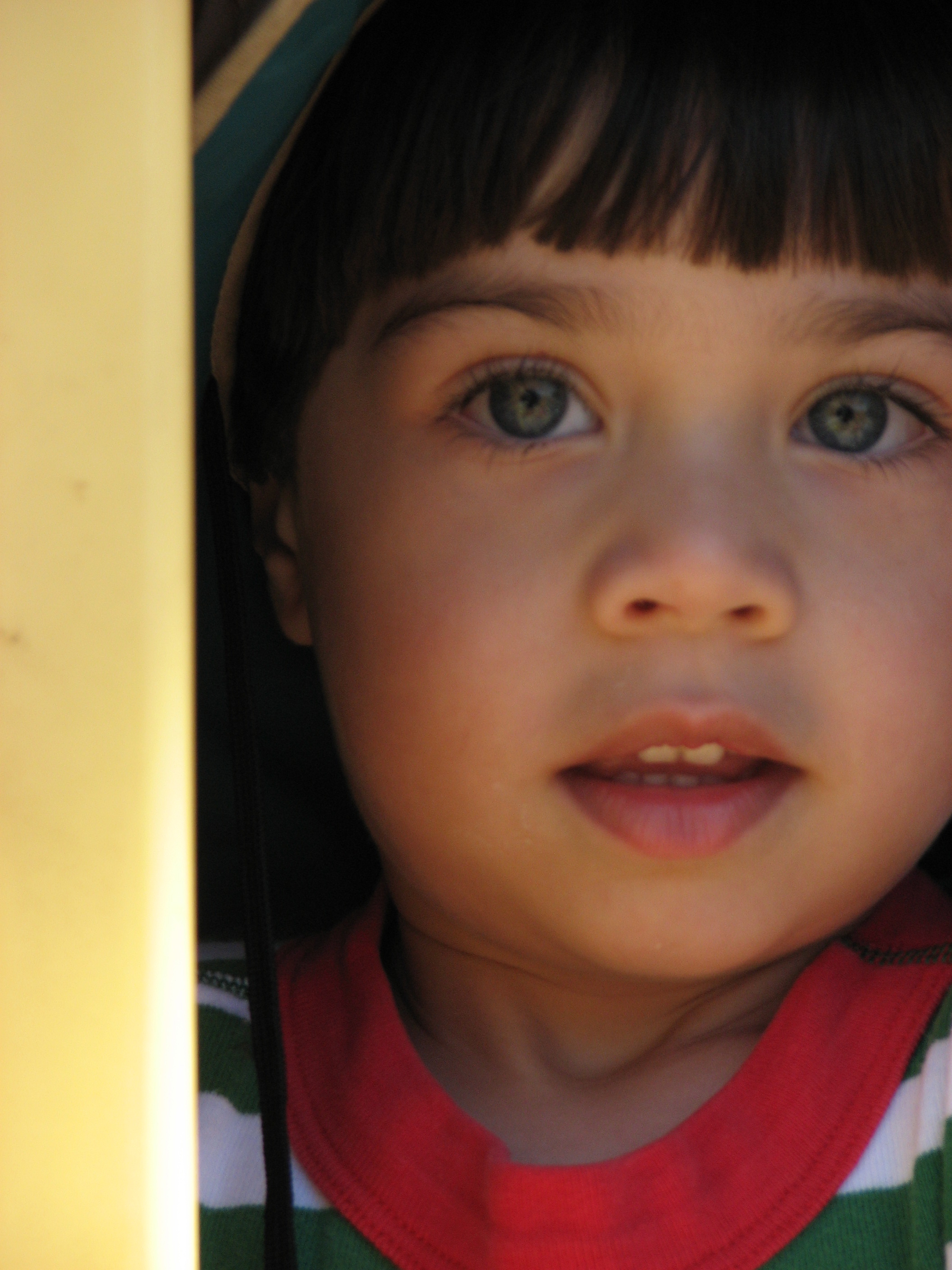
Got a wild child? Give ‘em more responsibility!

I know it sounds counter-intuitive, but working in preschools has taught me that when kids act out, it’s often because they’re bored and want attention from us. I’ve noticed that when I give these kids MORE responsibility, jobs to do, and tasks to complete (without being too ATTACHED to them actually accomplishing the task) they respond by becoming more driven and successful.

This creates a positive cycle in which:
1) You notice some behaviors you don’t like.
2) Rather than focusing on those behaviors, you offer alternatives in the form of tasks, jobs, or responsibilities (careful here though, these must be tasks that would be nice to have done, but which are true requests- not demands). Continue reading “Got a wild child? Give ‘em more responsibility!”

How I averted a power struggle and created a game instead

After I learned to Go for the Giggle, I had an experience with a child in which I could see two distinct choices before me of how to handle a potential power struggle.

It was another afternoon with “Kyle”, six years old, and “Neil”, who was two. I was sitting in the playroom folding the family laundry.

Just as I had almost finished, and was stacking some of the folded laundry into the basket, Kyle ran over and knocked the basket over, spilling the newly folded laundry on to the floor.

I felt a flash of anger and tensely asked him to pick it up. He refused and ran out of the room with a grin. I continued to fold the last of the laundry but left the basked toppled and waited for him to return.

I considered my options… “This could easily escalate and become a huge power struggle,” I thought, envisioning that scenario unfolding (pun intended).

I knew I didn’t want to pick up the laundry myself, but I also couldn’t force him to do it.

Suddenly, Kyle entered the room wearing his dress-up armor, carrying a sword and a shield.

He pointed the sword at me.

I asked again if he would pick up the basket. He said, “I didn’t knock over the basket.”

We all knew he was lying–we’d seen him knock the laundry over.

But I had an idea. I decided to play along with his game and see if I could spin this so that he’d actually WANT to pick up the basket.

“Oh Great Knight!” I exclaimed, “I’m so glad you’ve come! A laundry monster has knocked over my basket of laundry! Please, Great Knight, will you help me?!”

Kyle flashed me a smile and ran over to the basket.

After he picked everything up he pointed the sword at me again.

I glanced over and pointed at a stuffed dragon on the floor nearby “There it is Great Knight! The Laundry Monster! Slay it!” Kyle quickly directed his sword at the stuffed dragon–and away from me.

I felt triumphant. Not only had I averted a potential power struggle, we had actually remained connected, and had fun together in the midst of a potential disaster.

I got my laundry fixed, and he got to play and save face. In fact, as soon as I was able to take his lead and really play with him, he was able to cooperate.

In this instance, not only was I able to remain grounded in my own needs for safety and peace, but also I was able to make a clear request, to which Kyle could agree without feeling overpowered, forced, or coerced.

So, the next time it seems like he’s just out to get you, see what you can do to turn the tables to avoid the power struggle.

I feel so grateful that this time, I chose the path of ease, fun, and connection. I hope by sharing this story, I can offer you more options for avoiding a power struggle and staying connected with your child.

Thanks for being here!
Warmest hugs, Shelly Birger

P.S. What did you think about this topic ? Have you ever had similar experiences? We welcome your comments in the box below.

Three benefits of being a “Show-up” dad

I just talked with a new coworker whose pictures of his beautiful family were flashing over his screen. We talked about parenting, and kids. Here’s what he said about fatherhood:

“My wife and I have very separate busy lives, but because we are both active in our daughter’s life, our relationship grows stronger.  Many times I wonder how I “turned out OK” because my father was the typical dad of his day, and I was on my own to “grow up.”  Taking an active role in helping my daughter learn new things continues to teach me about myself in return!  The ability to be a part of her life and development as a person is one of the greatest gifts I’ve been given.”

I knew what he was talking about. Media images from shows in the 50s and 60s (like “Leave it to Beaver” and “Father Knows Best” ) showed pretty segregated gender roles.  Stereotypical Dads impregnated their wives, brought home the bacon, and meted out discipline when Junior didn’t obey. Nowadays, that’s the kind of scenario someone might bring to therapy to “recover” from.

Times sure have changed.

Though economic pressures weigh heavily on most families, and segregated roles still seem to be the only viable alternative in many two-parent families I talk to, many families find ways to mix things up regardless. Some have for generations!

Here are three of the biggest benefits I see that men get when they show up and decide to take on parenting as part of who they are:

1) Wholeness. The more time men spend with their families, the more perspective and balance they feel with their outside jobs (and yes, challenge to keep that balance). This results in greater ability to relax (it’s hard to be uptight with little ones jumping on you and giggling),more of an overall sense of well-being, and greater contact with the whole of their humanity, including the part that gets to relate to others. Yes, that great guy is more than a money-making machine–he’s a warm and wonderful DAD!

2) Greater closeness with partner. If a man is partnered, and he and his partner share child responsibilities, they share a significant part of their worlds. When two people have completely separate worlds, they have less to talk about and can become more entrenched in what’s necessary to inhabit the world they spend the most time in. This was most obvious in housewife-breadwinner “Leave it to Beaver” roles of the 1950’s, but still can exert influence on families today. When those roles are more fluid, there’s more common ground to share and bond around. Families who share responsibilities also have a chance to share more intimacy.

And here’s the best thing a “Show-Up” dad gets:

3) A real relationship with his children. We get the relationships we cultivate. When we show up and take an interest in what our kids are doing, listen to them, share in their worlds and share our worlds with them in appropriate and joyful ways, (funny, it works this way with adults, too!) we form the foundation for a rich and rewarding relationship for the rest of our lives.

What do you notice and feel about fatherhood, either your own or that of someone close to you? Please tell us in the comment box below.

Warmly,

Jill

How can I keep my independent two-year-old safe?

My friend Mindy had a recent challenge with her two-year-old son. She wrote:

Shelly, We have a big challenge. I like to leave our doors open to the backyard, so Thomas and the animals (we have two dogs and a cat) can go in and out as they wish.

Today Thomas crawled under the automatic gate into the front yard!

Then he came around to the front door and played a game out of it. But I’m terrified he is going to go near the street or in it, or someone is going to snatch him. I really can’t watch him well enough now that I have Tabitha (3 mo.) to ensure he won’t do it again, and there is no way to alter the gate to prevent his tiny little body from going under it. What do I do?
Continue reading “How can I keep my independent two-year-old safe?”

How Rocking, Spinning, and Swinging Your Kids Helps Them Pay Attention

Ever wonder why we have the impulse to rock babies to help them calm down?

Studies show that rocking, spinning and other physical movement through space helps children’s brain development and their ability to pay attention, by stimulating the vestibular (inner ear) system.

And here’s the thing, this works with both infants and older kids. It can also be a really fun way for you to cut lose and play with your kids.

So, the next time your little guy is about to lose it, check with him about whether it sounds fun, and then spin around with him in your arms, or take him to a nearby swing-set.

Even hanging upside down can produce vestibular stimulation. Just make sure he’s enjoying it, and not getting dizzy or upset. It never hurts to ask, “Is this okay?”

Believe it or not, when we get lots of motion through space (like on a swing, dancing, or spinning) it actually helps our senses work better. With some well-timed rocking or spinning, stimulation, your little dude could be settling down with his dinosaurs for some sustained play time.

In other words, you may get to shower today! Hooray!

So here’s the deal with vestibular stimulation: Continue reading “How Rocking, Spinning, and Swinging Your Kids Helps Them Pay Attention”