
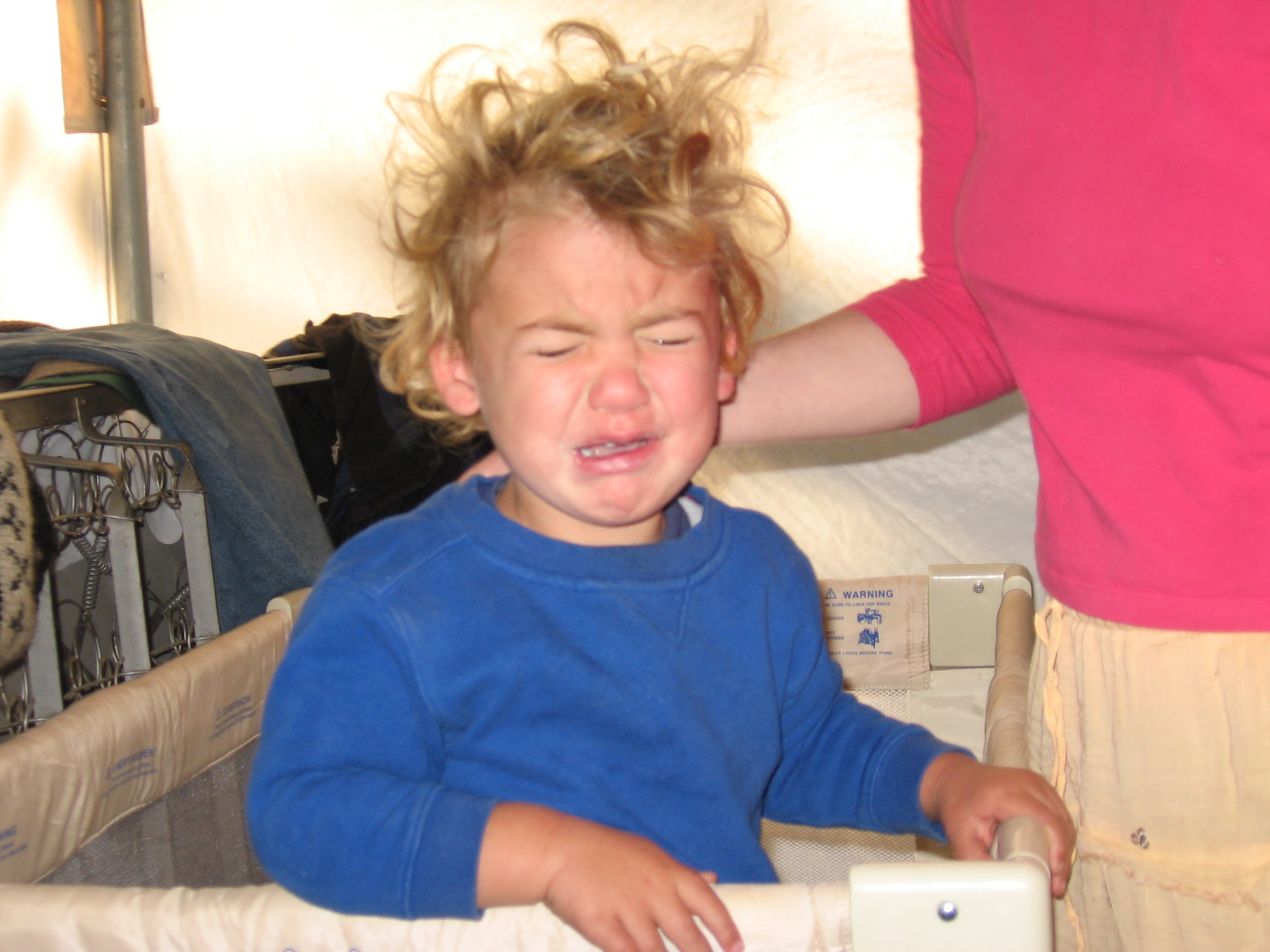
A lot of these tips sound great in theory, right? And anything is possible when we’ve got our wits about us. But what about those times when we’re really just about to fall into despair? (Or have already fallen?)
I confess: I’ve called Shelly and said, “Help! I feel like a hypocrite–here I am writing and teaching about parenting stuff and I’m about to lose it myself!”
Granted, I may feel more challenged with some of my child’s ways than other parents do with their children. But I think many of us at least once in a while find ourselves at–or over–the brink of despair when we most need energy to cope.
I’m learning that “losing it” can be an important part of the process. Certainly, if it’s happening, it’s part of the process no matter what. I’ve talked recently about How to be in charge and still stay connected, as well as Imagining ahead of time how things will go.
Now I want to say a few words about what to do with some of our own more unsettling emotions, like despair.
The other night I was doing my usual juggling act of trying to clean the kitchen, feed my son, and not forget to feed myself (he eats so few things our dinners are almost always separate). It had been a hard day, and I was trudging along, doing what needed to be done.
As occasionally happens, he complained loudly about the food. That did it. I just didn’t have anything else in me to respond. So, I did what I’ve watched others do, but never had the nerve to do myself: I went limp. I said, “I can’t deal with this.” And I went into my room, closed the door and lay down.
Wow–what a moment. For once, I didn’t “make it okay.” It made me realize how much energy I spend all the time trying to “make it okay,” and here I was feeling not at all okay. And my son knew it.
After a few minutes, my depletion began to ebb. I went back into the kitchen, obviously still feeling down. My son came to me and took my hand. He looked me in the eye. “Thank you for dinner,” he said. Then, “Thank you for EVERYTHING.”
Wow. I still tear up when I think of this. It meant so much to me.
In retrospect, I think it was my choosing to show him the depths of my despair that led him to, completely of his own accord, offer up such an amazing display of gratitude. My actions told him, “I have limits. I need appreciation. I can’t operate indefinitely without rest and replenishment.”
I feel as though I could write reams about this. I also have other examples of sharing strong emotions consciously (and not-so-consciously…though we can learn from those, too!) that I’ll share in future entries.
What do you do when you’re feeling despairing? I’d love to know–please tell me in the comment box below.
Warmly,
Jill
amen, amen, amen!
this is the issue that is on the front burner for me as a mom–“your rights end where mine begin!” how to accept my own limits, how to communicate those, how to cope when i’m fried. just this morning, i said out loud, “i just don’t have the energy to bear everybody’s suffering today.”
how else can we teach our kids to respect their own patience/energy limits if we aren’t honest about ours?
beautiful jill. it’s so important to accept where we are and then the children do too…
Thank you, Alina. And lots of love to you all the way over there :-).
Thankyou for the newsletter , it has very good examples and tips, my problem and the problem of my son are not in any of the catagories I have seen in your site. I have a very controling husband and controling father for my son.
In my house there is a lot of yelling, my son gets so upset and doen,t want to do any thing, he hates to do home work, doesn,t like to study . In general he doesn,t care about any thing except x box and computer. Because of his lack of interest in progressing in his studies at the moment he doesn,t have access to x box until he does well in school. Even then he just doesn,t show any interest . WE don.t want him to be behind so we are over him not to fail. the yelling continues every afternoon and the problem between me and his father is getting bigger and bigger. I don,t agree how he is handling to solve the proble. Now you see how difucult is my situation?
Oh, I hear you, and it does sound difficult. It also sounds like you feel very out-of-control. One thing that has been helping me, as I wrote about a couple of weeks ago (scroll down) is realizing that while I don’t have control over what might be happening around me, I can think about how I *want* it to go for the next time, and *decide* how *I* will be. Hey, I could be calm! And loving, even when others are upset! And try to understand what’s upsetting them. What a concept. Though it might not go perfectly, this at least gives you a better chance of having it go how you want. Let us know how it goes. And hang in there.
Jill, Good post! It think it’s important to be honest with our children about our feelings in ways appropriate for them to understand. Once when I’d had it one evening, I told my daughter, “I’m tired of being the mommy. You can be the mommy. I want to be the child.” Then I threw a mild fit, “Waa, waa, waa. I never get my way. You’re so mean to make me go to bed.” My daughter immediately picked up on the role playing and countered, “But you need your rest, daughter. It’s important for your body to get enough sleep. I’m sorry but Mommy says go to bed.” By the end of this short episode we both were laughing and enjoyed sharing each other’s perspectives. It helped my daughter see that I was human and sometimes wanted to be cared for. It helped us both lighten the mood and provided incentives to cooperate with each other.
Ooohhh, I love it! Juicy creativity, joy and laughter. More, more, more!
It’s difficult to know what’s best when you’re freaking out in your head. The key is to learn how to relax, take a step back and understand what’s going on. That way you can make educated decisions and deal with things properly with a cool head. Great post Jill!
.-= Robert´s last blog ..South African Man Marries Four Women Simultaneously–Talk About a Need for Life Insurance! =-.
Thanks, Robert…now how do I remember to do that when I’m already “freaked out…?” Thanks for the reminder!
I agree with Christee, I think its good to be honest wiht our kids, they are not stupid and can pick up on our feelings very quickly, from a very young age. In future you should be more open wiht your feelings and you may be surprised at how your childern react poitively to them,
Good luck, i welled up too “when he said thanks for everything”
Christina