Open and close activities are a big hit!

Have you ever noticed how much young children love to open and close things? And how they’ll repeat the opening and closing action again and again? If you think about it, we open and close things all the time in our daily lives, so why wouldn’t children want to learn this important skill? One of the things that continues to surprise me about open/close activities for children is how many times they’ll repeat the action. I’ve seen kids absorbed in this work for well over thirty minutes at a time.

In the Montessori classroom we always had an open and close activity that the kids would gravitate toward, so I knew my daughter would enjoy learning to open and close things. But I had no idea just how MUCH she would enjoy it! We currently have an Open/Close activity in my office and every time my office door is open, my daughter makes a bee-line to it, takes the objects out of the box and begins to open and close them again and again and again.

Here’s a video I took last week…

My 13mo. old daughter doing her open/close activity from Shelly on Vimeo.

One of the great things about this activity is that it can grow with your child. Right now I have a couple of small metal tins, a small jar with a lid, and a plastic container with an attached lid in the activity for my 13 month old. But when she’s 3 years old, we’ll have a coin purse with a zipper, a box with a latch, and some other more challenging items.

Even if your child is 7 or 8 years old, you can find fun things to put in an open/close activity. Most 8 year olds I know LOVE figuring out how to lock and unlock padlocks or even the front door of their house. Of course you’ll have to decide what you’re comfortable with.  Learning to open and close plastic baggies and food containers can be a fun challenge too.  Remember diaries with locks?

So, the next time you get annoyed that your little one is emptying your purse out on the floor of the restaurant, remember, he’s just trying to learn about opening, closing, and containment. Oh, and he’s probably also looking for a toy or a treat too and I’m guessing he’ll find one!

Consider creating an open/close activity to keep at home, or a portable one for when you’re out and about. You can offer a lunch box filled with containers or an old purse you’re willing to give to your child. Begin collecting small items that have unique and interesting closures.

Once you have a few items compiled, arrange them in a basket or box and display the activity in an accessible location. When your child shows interest in the new “work,” sit down together and demonstrate opening and closing each item before allowing her to explore the activity on her own.

For added interest for your older child, include a small car, animal, doll, or action figure inside each container. For your reader, label the containers and invite your child to put the appropriate item back into the container when he’s finished playing.

We are having so much fun at our house with our open and close activity. I would love to hear about your experience with this fun work! Please share a comment below. And have a great week! Warmly, Shelly

Make your life easier, give kids their own drawer

When our daughter started to crawl we did what most parents do, we dashed around the house “baby proofing” everything in sight.  We moved dangerous things up or to cabinets that could be locked or secured.  I installed latches on cabinets containing cleaning products.  But as I looked around our home and imagined putting latches on every cabinet and drawer in the house, I got overwhelmed.

And then it hit me; maybe I didn’t actually have to install all those latches!  Of course, I realize that I might need to add a few as my daughter grows and gets into things more, but I came up with a solution that is working well and has caused the least work for everyone.  I gave my daughter her very own drawer.

As soon as she opened the bottom drawer in the kitchen for the very first time, I grabbed a bag, threw its original contents inside, and then tossed a few of her toys in the drawer.  I included some kitchen items like a metal spoon, a set of measuring spoons, and a plastic cup.  And voila!  She took to it like a bee to honey.

Now, whenever I’m cooking or we’re hanging out in the kitchen, she crawls right over, opens up her drawer and plays with her “kitchen toys.” She hardly even seems to notice that there are other cabinets and drawers nearby!

Office shelf

But I didn’t stop there, I gave her a drawer in the master bathroom and she occupies herself masterfully while my husband and I take our morning showers.

We have also designated the bottom two shelves of the living room bookcase to the little one, and in true Montessori form, I leave new and exciting toys on those shelves to encourage her exploration. She even has two shelves in my office that will have her “work” on them for years to come.

Sure, we also have a basket of toys in the kitchen, living room, and her bedroom too.  But she seems to enjoy her drawers even more, and I don’t have to look at the stuff inside when she’s finished, I just close the drawer!  Of course, the next step will be to teach her to close the drawers herself.  And after that, we’ll begin putting toys into the drawer and closing it when we’re about to leave the room.

Living room shelf

If you have an older child who doesn’t yet have any designated kid’s activity areas in the common rooms, I highly recommend you clear some space for your younger family members.  Then, stock their shelves and drawers with interesting activities that you’ll rotate when they lose their appeal.  And if you also provide a rug and/or a child sized desk or table that they can work at, you’ll be helping your child set up great work habits and helping yourself get some peace and quiet.  Because, when kids know where to look for an activity that they can explore on their own, they’ll go back to it again and again, and you’ll actually get some adult work done!

I would love to hear about your own solutions to support your child’s freedom and independence at home.  Please leave me a comment!

Have a fantastic week, Shelly

Spinning and swinging for fun, focus, and emotion regulation

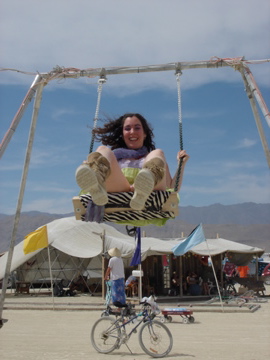
The vestibular system is responsible for balance, focus, and even plays a role in emotion regulation. But the best way to activate the vestibular system is by moving through space. So, if your child is having trouble with focus or emotion regulation, try encouraging movements like spinning and swinging and you’ll notice a huge change.

At Montessori school, we used the swings to help kids focus at least several times a week. I even activate my own vestibular system by doing somersaults whenever I’m feeling socially anxious. (So if we’re at a party together and I sneak into a back hallway for a moment, you know what I’m up to.) The thing is, it really works! After a few forward rolls, I feel so much happier and better able to engage and be social. If you don’t believe me, I challenge you to try it for yourself.

But I’m not writing this to help adults with their social anxiety, rather, I want young people who get labeled as “out of control” or informally called “adhd” to have solutions to anxiety, aggressiveness, or lack of focus that are easy, fun, and free of negative side effects. So, the next time you see your kids spinning in circles, remember that they’re self-regulating and it’s really good for their brains. Plus, it’s just fun and it feels good to spin around in circles!

For months now my daughter has enjoyed shaking her head back and forth. She’ll shake her head and then look up and smile. I usually join her just because it’s fun, but now I’m remembering that shaking our heads or moving our heads through space in other ways is actually crucial to brain health and wellbeing. The vestibular system needs input!

And, now that we humans spend less time running through the forest and more time sitting in front of screens, it’s even more important that we consciously choose to activate those systems.

So, your homework this week is to dance, wiggle, spin, jump, cartwheel, and swing with your kids. It’s good for everybody’s brain and it’s a great strategy to teach your child for times when he’s feeling worried, bored, or disconnected.

Have a fabulous week! Warmly, Shelly

Delay of gratification is a crucial skill

Photo by Suzette Hibble

Teaching your child to delay gratification can help him in all sorts of ways.  He will learn self-control and willpower.  He will also reduce his impulsivity and increase in academic performance.  But delaying gratification does not come easily and often won’t develop naturally, unless parents and caregivers help children learn this important skill.

Luckily, you can start to teach these skills at any age with simple games that don’t take much time.  Start by offering your child a toy you know she wants but at the last second pull it back saying, “Ut oh, wait just a moment.  Wait…wait…great job waiting!” and then hand your child the toy.  At first just ask your infant or toddler to wait a few seconds.  Then as your child becomes better and better at waiting for the object of her desire, begin to lengthen the time required.

This works best if you’re both in a good mood and you’re playful in your removal of the object.  Children always learn best when they’re enjoying life.  But if your child reacts negatively to your attempts to play a waiting game, just ignore any outburst, give the toy back after the allotted time and try again later.

It won’t do much good to tell your child when they didn’t wait well, but when they do, be sure to give him some positive feedback using effort and/or behavior based praise.  “Great waiting!”  “Good job!” And “Wow, I could see how much you wanted that, but you waited anyway!  Nice!” are all great ways to reinforce delay of gratification.

Do your best to stay away from character based praise though.   “Good boy!” or “You’re so smart!” can actually make some kids more self-conscious and fearful, rather than helping them feel good about their accomplishments.  For more information on effort based praise see my earlier article “The dangers of praise.”

Impulsivity is a defining characteristic of young children, so don’t expect too much too fast.  But if you play waiting games a few times a day, every day, you can expect your child’s capacity for waiting to grow over time.  And that’s good news, because in the short term, you’ll have a more patient and considerate child.

And in the long term, delay of gratification has been linked to better studying behaviors and might even be linked to reduced drug use in teens and young adults. If you caught my blog about a conscious relationship to money, you know that delay of gratification is also a great asset in terms of financial planning, saving, and living within your means.

Right now I’m wishing that I had learned much earlier to delay gratification, but we all have to start somewhere, and I’m a firm believer that it’s never too late to learn a new skill.  So, as I teach my daughter to wait, I’ll also be practicing delaying my own gratification and we’ll both enjoy the benefits of increased willpower and reduced impulsivity.

What have your experiences with impulsivity and self-control been?  I would love to know what you think about this topic.  Please leave me a comment!

Have a wonderful week, Shelly

Preventing toddler tantrums

When a toddler wants something, it’s crystal clear.  They yell, scream, fuss, throw their bodies around, grab, and then when they get the object of their desire, it’s as if none of that just happened.  They’re instantly content, but you know it’s temporary.  Soon, they’ll want something else, and eventually it will be something that you can’t give them.

So what’s the best way to handle a toddler’s tantrums?  One of my favorite tools for helping to calm infants is “The Happiest Baby on the Block” DVD by Dr. Harvey Karp.  There’s a book by the same title as well.  And apparently Dr. Karp had lots of parents asking him about how to handle toddler tantrums too, so he wrote a companion book and created another DVD called “The Happiest Toddler on the Block.”  It’s great stuff.

But just in case you don’t have time to read the book and watch the DVD yourself, I’ll give you an overview of his tips and techniques to reduce the frequency, length, and intensity of tantrums.

The first concept he introduces is the idea that toddlers are like little cave-people.  I really like this idea because it helps us understand who we’re really dealing with.  Toddlers are opinionated and very clear about their desires, but their command of language is still quite limited, especially when they’re upset.  They do a lot of gesturing, grunting, and making noises to get their point across, just like a Neanderthal might have.   In general they’re uncivilized, and that’s part of their appeal.  They are not little adults, they’re beings all their own.

That’s why reasoning with toddlers rarely works well.  They don’t understand your long, complex sentences and three syllable words, at least not while they’re freaking out.  So, seeing your little one as a mini cave-man, can help you figure out why the next tip is so important.

Learning to speak “toddler-ese” is the best way to help your little one know that you understand what she’s going through.  And as I’ve said many times before, empathy is often the best way to handle most tantrums.  When children feel heard and understood, they relax and become more cooperative.  So how can we help toddlers feel heard and understood?  We have to learn to speak their language.

Dr. Karp says that the most important elements to “toddler-ese” are matching intensity, keeping our phrases short, and using lots of repetition.  Listen to your toddler when she’s trying to express a desire and you’re likely to see her pointing, grunting, “Uh, uh, uh!” and repeating what she wants “Up!  Up!  Up, Mama!”

So, let’s say you’re not able to pick your sweet toddler up because your arms are full of groceries.  But you’re feeling worried, because you can see a tantrum about to come on.  Rather than ignoring or reasoning, try saying something like, “Riley!  You want up, up up!  You want mama to pick you up, up up!”  Be sure to match your child’s level of intensity.  Then, watch your child as you empathize with her in her language.   You’re likely to see her relax and become fascinated with you.  At that point, you can explain the predicament, “Honey, I want to pick you up, but my arms are full of groceries, can you wait one minute please?”

There are lots of other great tips and tricks in Karp’s books and DVDs but these are the ones that jumped out the most and that I thought would be most helpful to share.  I hope you’ll have a wonderful week and as always, I would love to hear about your own experiences with these ideas.

Warm hugs, Shelly