Joyful Discipline: Setting clear boundaries with joy in your heart

I’ve been doing some online research into discipline and wow, there’s a lot of misleading and just plain ineffective information out there! Just yesterday I saw an article that was actually quite disturbing to me. The article suggested a lot of punitive discipline but the one that really struck me was the idea of creating a “consequences jar” and when a child misbehaved, just going over to the jar and pulling out a random consequence and applying it to the child. Whoa. This is not only ineffective; it’s just plain mean. I don’t want my child to be afraid of doing the wrong thing and then forced to make up for it by performing some random task.

So, clearly I’m not an advocate of random consequences, spanking, punishments, or even time-outs but that might leave you wondering, “How can I set clear boundaries with my child in a way that’s kind and respectful, but also maintains some order and keeps us all safe and happy?” My answer is easy to understand and challenging to implement. Setting clear and consistent boundaries with joy in your heart is the key to effective, respectful discipline.

Thinking back over the past few weeks, consider the moments when you felt you needed to create or maintain a rule or boundary. How were you feeling in the moment? I find that I tend to restrict my daughter’s behavior the most when I’m feeling upset or overwhelmed. When I’m feeling creative and joyful, I rarely even need to stop her from what she’s doing!

That doesn’t mean we don’t have rules. It does mean that our rules are based on either safety or exhibiting our values. For instance, I’ve never liked to see babies chewing on board books. I understand that for some people, destroying a board book due to teething seems like no big deal, but for me, it represents misuse of a valuable object.

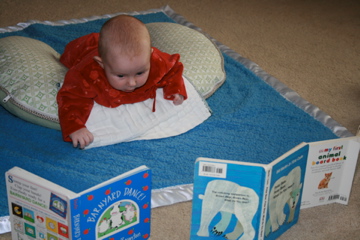
So ever since my daughter could hold a board book, our rule has been, “Books are for reading, not for eating!” The rule was stated often as we initially established it, but it was said with joy and enthusiasm, not in a threatening or angry tone. And guess what? We still have beautifully pristine board books and a daughter who LOVES to look at them independently. Sure, she occasionally tests the boundary, and every single time I protect the book from her, smiling and playing with her as I remind her, “Books are for reading, not for eating, silly!” Sometimes this evolves into a fun game, other times I remove the books and we find something else to do, but most of the time, she would just rather look at and read the book than chew on it.

Recently Julia received an easel as a holiday gift and our rule is that the crayons must remain at the easel. She has a hard time remembering the rule, so I’ve figured out some ways to make it easier for her. I either remove the crayons, which means she has to ask for them (and then I supervise her with them and remind her to return them to the easel when she steps away), or I tie them onto the easel with a string. Either way, I’m making sure that the rule is observed, but I’m not angry with her for breaking it, instead, I want it to be easy for her to follow the rule. That’s what I mean about having joy in your heart as you maintain a boundary. For me, I know that if it’s turning into a power struggle, then I’m on the wrong path.

For those of you with older children, here’s a blog I wrote called “How I averted a power struggle and created a game instead” which has another example of setting a clear boundary with joy in your heart. This happened with a six year old boy who was really pushing my buttons.

So your homework, should you choose to accept it, is to sit down this week at a time when you’re feeling joyful and loving and write down all the rules of your household. Then take a look at them and decide whether any of them can be dropped. Next, identify the rules that are really important to you but are the most difficult for your kids to follow. Brainstorm about ways to make it easier for your children to follow these rules. Lastly, make a commitment to yourself that this week you’ll stop, breathe, and feel joy in your heart before you remind your child of the rules. “I love you so much, and this is not OK.”

Please share your thoughts about joyful discipline- does it work? Is it hard? Easy? I want to know!
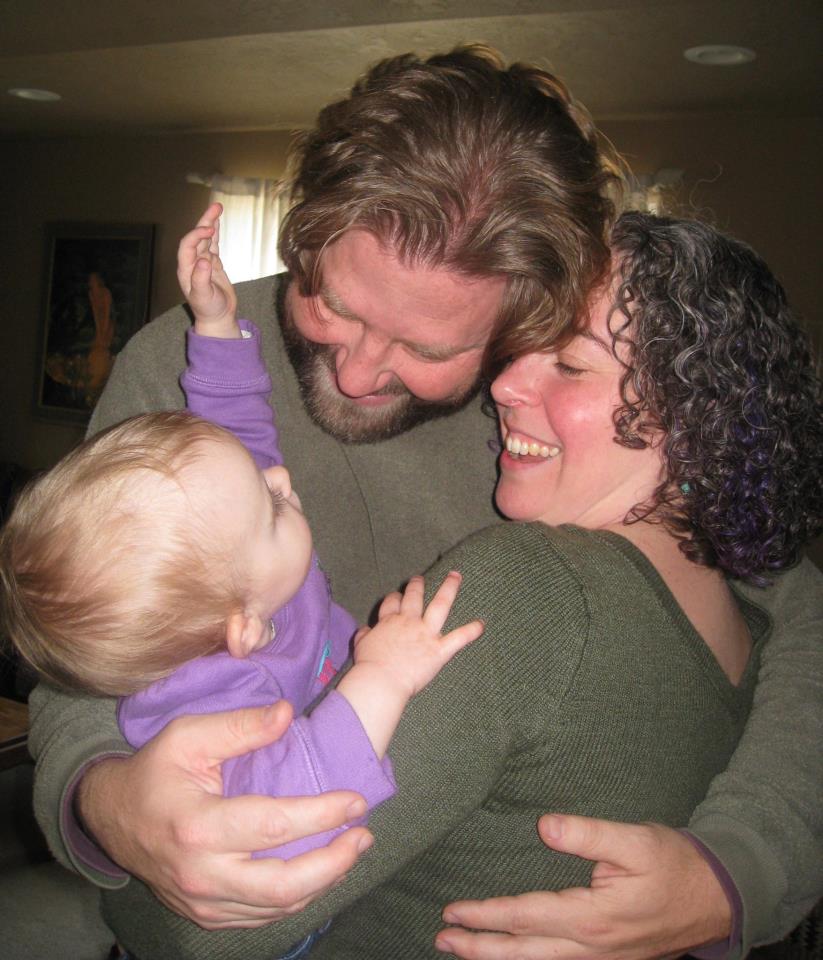
Tender Transitions

In life there are big transitions, little transitions and everything in between but there’s one thing you can be sure of, there WILL be transitions. Shifting from one thing to the next is challenging for children and adults alike, especially when the transition wasn’t their idea.

I’m in the midst of a big transition right now. We are so fortunate to have my husband’s parents living here full time and being active participants in caring for our daughter. And if you’re thinking we’re the luckiest people ever, then get ready for more, because we ALSO have my mom and step dad here for six months of the year! It is SO incredibly helpful to have so many people adoring and caring for Julia, but there’s a dark side to this beautiful gift too. My parents leave and are gone for six months of the year.

My mom and Jim just left to head back to Illinois a couple of weeks ago and the transition has been really challenging for me. I miss them. Julia misses them. And I’ve had to completely rearrange my working schedule to accommodate the change. It totally sucks.

But is also great. I’m getting more time with my daughter, which is awesome. And I’m forced to really prioritize my work and only engage in the activities that really matter to me. But it’s also still really hard.

Transitions are especially difficult for me, maybe because I’ve had so many of them in my life. After my parents divorced when I was 5, they shared custody and, without going into too many details, for much of my life I split my time between my mom’s house and my dad’s. It was great to be able to have real relationships with everyone involved, but it was hard on me too.

Every two weeks I packed up my bags and moved to a different house with different people, different rules, different expectations, and even different foods. And, everybody was always so excited to see me that I don’t think I really took the time to mourn the loss of the other family before I was thrust into the next one. Luckily for my parents, I didn’t act out. Instead, I stuffed my emotions and tried to pretend that everything was OK. But sometimes it wasn’t.

So that’s what I mean when I say “big transitions.” Learning to let go of my family for two weeks or six months, mourning the loss of a home, job, or loved one, moving away from friends. But there are also all sorts of little transitions and these can be challenging too.

So if you’re wondering why your young child throws a tantrum at the front door and refuses to put on his coat and shoes, consider the possibility that transitions are just hard. Saying goodbye to his toys, home, book, or plan for the day can be really challenging for a kid.

Here’s what I’d recommend if you’re having difficulty with transitions at your house. Be tender about them. Remember that they can be hard. And most of all, TALK ABOUT TRANSITIONS BEFORE, DURING AND AFTER THEY HAPPEN. I wish I had been better about this with my parents leaving town. I’m doing OK talking about it now, but I wish we had thought more and talked more about how our lives were about to change, before it happened. I’m a planner, and when transitions catch me off guard, I find them MUCH more challenging to deal with.

Perhaps your little one feels the same way. It might feel silly to talk to your infant or young child about a big or small transition, but in my experience, a short, matter-of-fact discussion about what’s about to happen can mean the difference between a screaming, kicking freaked out kid and a calm, relaxed, collected child.

When it comes to some of life’s big transitions like the loss of a pet or the death of a loved one, we don’t always get the opportunity to talk about things ahead of time. In that case, be sure to discuss things as they arise so that you and your child can integrate what’s happening as much as possible.

When you’re about to head out the door to go to the store, and you actually CAN give a child a heads up, so please do. They will appreciate it. And you might find that this one simple act of kindness and respect toward your children reaps you more benefits than you could have imagined. I would love to hear all about it. Please share your story with us!

And may your transitions be easy and tender this week, Shelly

Sex Positive Parenting

Wow, I’m feeling some anxiety after just writing the title to this article. We have such a strange relationship to sex, here in the U.S. I mean, we’re parents, right? So obviously we’ve HAD sex in the past, yet now that we have children, there is such a social stigma to talking about sex around children or with our kids. I get it. We want to be responsible and not burden our kids with information that’s inappropriate or confusing for them. And we certainly want to avoid even the possibility of any sexual abuse.

The problem is that by shying away from the important topic of sex all together, we’re actually creating quite a problem. When children don’t know about their body parts or how they work or how babies are made, they make up their own stories about these things or they believe the things their friends tell them and sometimes their ideas about sex are quite a bit off the mark.

When I was about three years old, my very favorite book was “Where Did I Come From?” by Peter Mayle. My parents read it to me often and I loved the whole book. Beginning with some of the false ideas about where babies come from, the book describes in some detail how women’s and men’s bodies differ, exactly what sex is, and how sex resulted in the creation of a baby, namely me!  I was fascinated.

In high school I was shocked to discover that some of my friends STILL didn’t know this information. One of the things I like most about the fact that my parents read me this book is that we were always able to talk openly about sex, our bodies, and other “sensitive” topics. The book opened the door to a lifetime of discussion between me and my parents about what our bodies are like, how they function, and how we can best care for them.

I’m certain that I was able to enjoy a healthy sex life as a young woman without getting pregnant because of the openness and discussion I had with my mom. Oh, and also because of the multiple forms of protection against both STI’s and pregnancy that I used. I think that if I had ever experienced any sexual abuse or rape, I would have been able to talk to my mom about it.

Many of my friends didn’t have that kind of open, honest discussion about sex with their parents. Some of them did experience date rape and/or unwanted pregnancies. Now I’m not saying that if their parents had talked to them about sex, these things wouldn’t have happened. But I do think that being equipped with the correct information would have helped them.

So my husband and I are committed to being open and honest with our daughter about the correct names of male and female body parts (we use penis and vulva by the way), how they work, what happens during sex, how she came to be, and what to do if someone touches her body in a way that she doesn’t like. And yes, I still have my childhood copy of “Where Did I Come From?” to read to her when she’s ready.

How do you handle this topic at your house? Do you think we’re on the right track or completely off base? And what was your experience growing up? Did your parents teach you about sex or did you have to guess?

Have a fantastic week! Love, Shelly

Noticing your child’s signals about next developmental steps

A friend and I were talking the other day and she mentioned that one of her biggest challenges with providing activities for her children is knowing where they’re at developmentally. I can relate. Figuring out which activities will be engaging and challenging without being frustrating for kids can be a confusing undertaking. So here are some of the questions I ask myself as I’m preparing Montessori activities for my daughter to do at home.

1)     What topic or skill is she most interested in right now?

2)    What action or activity does she seem to enjoy most and like to repeat?

3)    Which items on the shelf are being ignored? (they are probably too easy)

4)   Which items on the shelf are most popular?

5)    When does she get frustrated? (probably too difficult)

These questions help me identify possible new activities, create extensions for activities that are too easy, and remove activities that are too challenging. They also help me identify any sensitive periods of development my child might be in currently.

My daughter is in several sensitive periods right now. She is absorbing language, practicing her verbal skills and memorizing books, asking for multiple repetitions. She is very interested in putting things in and taking things out of boxes, baskets and the like with repetition. And she enjoys using wind instruments like whistles and recorders.

So I often ask myself “How can I provide opportunities for her to further develop her interests and skills?”  And inevitably when I ask myself the question, answers arise. Obviously we’re reading books like crazy, I mean right now she is read at least a dozen books every single day and often she wants each book read multiple times in a sitting.

And then I’m also sensitive to opportunities to hone her skills when we’re out an about. The other day we went to a market near our home where they provide working child-sized grocery carts. We had a handful of items on our list so I asked my daughter to find the items on the list (I helped her locate them) and she delighted in putting four cans of chicken noodle soup into the cart all by her self. We continued through the store searching for what we needed.

When we had everything on our list she was happy to push the cart up to the check out line and talk with the mom and baby in line behind us while we waited for our turn. Then she preceded to hand the checkout guy every item in the cart one by one. All the adults were very impressed but Julia just seemed satisfied with her work and with the social interactions she was having. She wasn’t looking for praise (and honestly she didn’t get much more than a “Thanks honey!”). Instead, she was simply continuing to develop her skills, pushing herself to do more and better than she had ever done before. It was really fun to watch!

So what is your child most interested in right now? How can he further develop an emerging skill? And which activities can you think up that will help foster his love of learning?

Here’s a sampling of activities for Julia right now (she’s 17 months old).

1)     Coloring with large whole hand grasping crayons

2)    Spooning beans from one dish to another

3)    Books, books, and more books

4)   Putting blocks, books, and other toys away

5)    Bean or water bin

If you need some suggestions for your child’s age/developmental stage, leave a comment!

And have a fantastic week, Shelly

Guest Post: Spread the Word

I’m writing this post while I am listening in to an online webinar. Why am I multitasking? Well the content is really interesting, but one of the hosts just had an experience fumbling around trying to figure out how to run the webinar and she apologized to us by saying
“Oh I’m so retarded. ” My heart sank. I stopped hearing anything else that was being said and I typed a message to the host that said,

“The word retarded is offensive to me, my son has Down syndrome. Please refrain from using that word to make fun of yourself. It is disrespectful to people with developmental disabilities. Thank you.

She did write me back during the webinar ( just a few moments ago) to say she was sorry about that and that she will [refrain].

I wonder if that moment between the two of us will make a difference the next time she thinks of using that word? I have no idea. But for me, it’s important to advocate for my son and others who have intellectual disabilities.

I know that most people have no idea that the word “retarded” could really be hurtful. And just so we are clear, I used to use that word myself. I had no clue. I wasn’t ever told that the word could be hurtful. I had never made the connection. It just seemed like a word used to make fun of myself.

However, on February 4th 2009, my understanding of the word changed when I gave birth to my son Max. I learned early on that the way the word retarded is used really does hurt people. I realized it was up to me to share the information. It was up to me to change my own language. It was up to me to advocate for my son. I don’t get angry when someone says it… well maybe a little. Mostly my heart sinks because I know I need to say something to advocate for my son and it’s not always an easy thing to bring up. Some people get defensive, argue with me and feel the need to tell me I’m wrong. I usually just say to someone “ouch, that word actually hurts me when I hear it.” It’s a new experience every time I hear it. I’ve learned ways to be helpful instead of being mean to them. That never works. Trust me. I have to remember not to take it personally, but to use the opportunity to educate with a loving and understanding heart.

The other day I had to take my son to the doctor to check his ears for infection. When the doctor came in to see him, he said “Oh you have a Downs.” I hear this a lot and it makes me shudder. No actually, I have a son who has Down syndrome. Not a “Downs,” or a “Downs baby.” It’s a shift in language that puts the individual first and the diagnosis second. My son is not his diagnosis. He is an incredible little boy with a lot of unique characteristics that make him who he is. Another example would be if someone called my friend who has cancer a “Cancer girl.” Or a “Cancer.” No she is not the diagnosis. She is a girl with a name who happens to have cancer. It’s the same with children and adults who have autism etc. Language Matters.

“Spread the Word to End the Word” Is a message that I feel strongly about. John C McGinley from the tv show Scrubs shares his feelings about the word retard and retarded in this video. He too has a son named Max who has Down syndrome.

I’ve made the commitment to replace the word “retarded” with the word “ridiculous”. Won’t you join me?

-Catherine Just is an award winning, published photographer gracing the cover of National Geographic and inside Oprah.com. She leads Soul*Full retreats for women and the Soul*Full eCourse. She’s also the proud mama to her son Max Harrison who happens to have Down syndrome.
You can find out more on her website at http://www.catherinejust.com or on Max’s Blog http://www.hang-on-little-tomato.blogspot.com

For more information on Down Syndrome:
NDSS