
Guest Blog: Family mediation- the power of the “third side”

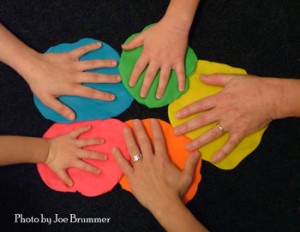
Thomas-Hands-web

This week’s guest blog is from Jill:

Sometimes we think fighting is just “what kids (or adults) do,” rather than a way we engage when our needs aren’t getting met. I prefer to think of engaging peacefully as “what we do,” and that when we get off track, we can use a hand to get back to a place of connection.

I remember when my son was about three, his dad was in a bread-making phase. Sometimes I liked the results, and sometimes I didn’t. While at the local farmer’s market, my son and I found a particularly yummy loaf of walnut bread, and brought it home discreetly. When his dad saw it, he became incredulous.

“Bread??? You BOUGHT bread!?!?!?”

Canaan felt the tension here. I’ll never forget his response. He raised his body up, opened his arms to the two of us, and proclaimed,

“We all eat bread! There’s farmer’s market bread, and Da-da’s bread, and all kinds of bread to eat.”

Well, shall we let a thousand flowers bloom, or what?

I see this as his attempt to introduce a larger perspective, or “third side,” to his dad’s and my moment of polarization. Sometimes all this takes is showing up with a loving, aware presence.

I remember my stepmother discovering the term “triangualation” in the 80’s, and telling me it was “toxic.” She was referring to one person getting into, or in between two other people who were having a difficult time, creating a “triangle” of three people. Unfortunately, this was the only term in our universe at that time to describe a third person entering into an interaction with two others. There was no positive way to describe a third side to an entanglement.

Today, as a mediator and lifetime student of conflict resolution, I see many ways a third person can show up in a family and help to ease tensions for the other two or more people who are having a hard time to make things easier. This is something humans do intuitively, even when the results aren’t optimal. Kids do it, too, as my son demonstrated above. Continue reading “Guest Blog: Family mediation- the power of the “third side””
Having friends could save your life!

The New York Times published an article this week (July 2010) about the importance of having a social network http://well.blogs.nytimes.com/2010/07/28/a-new-risk-factor-your-social-life/ Apparently, the study shows that having strong social ties decreases your risk of dying by 50%!  Researches concluded that not having a social network can be as dangerous to your health as smoking a pack a day or being an alcoholic.

In the study, strong family ties counted as a social network, but I suspect that the social experiences we get to have with our peers and elders are hugely important.  So, if your only family ties are with your partner and kids, take a moment this week to consider how you can expand your social network to include some fun peer connections.   According to this study, it really could be a matter of life and death.

In my parenting coaching practice, I often work with moms who tell me they just don’t have time to connect with their friends anymore.  They struggle to get in some alone time or a workout here and there or a date with their husband, but they seem to forget that having a conversation with a girlfriend or going to lunch with an old college buddy can be just as important.

I know it’s not easy to connect with friends when your kids are around, but as a nanny, I managed to meet up with a girlfriend who also had a charge a couple of times a week.  We would chat at the park while we watched the kids play, or meet up for lunch and have a very disjointed, many times interrupted, conversation while we somehow got ourselves and the kids fed.  Or we’d walk to the library together and have a whispered adult conversation during toddler story time. Continue reading “Having friends could save your life!”

Following the child: How child directed games and activities can create connection, learning, and mutual cooperation

kids_playing_aqerThis week I watched a fascinating video about baby led breastfeeding.  It showed newborn, days old, and months old infants maneuvering themselves into a good nursing position with very little help from their mothers.  Babies were deliberate in their movements bobbing and clearly searching for the nipple.  And, when they found it on their own, many mothers reported that the latch was more comfortable than it had been when they had tried to help their babies find the nipple.  What an incredible innate ability babies have!


Watching newborn infants lead the way at breastfeeding reminded me of one of the foundations of Maria Montessori’s groundbreaking educational philosophies; follow the child.  Montessori asserted that children have an innate desire to learn and if we follow their lead, they will enjoy learning, retain more information, and continue to seek out even more knowledge.

But following the child doesn’t just work to help kids develop their intellect, it also helps them to find their power and leadership skills.  When we allow children to be in charge and take the lead, they will often surprise us with their creativity and take us in directions we never expected.

For instance, kids who are feeling powerless and frustrated about it will often make up games than involve enslaving their brothers, sisters, parents, or other adults.  It’s how they work out their frustrations about being a kid and how they learn to understand what it’s like to be in charge.

I’ve found that by allowing children to lead the way during some specifically designated child led play-time, kids become better able to cooperate and connect for the rest of the day.

I’ve even had experiences where I wasn’t sure why a child was grumpy or defiant and when I allowed the child to lead the play, I soon discovered what was really bothering them.  Kids have an amazing ability to work out their emotional challenges through play, but they have to be allowed the time, space, and attention to do so effectively. Continue reading “Following the child: How child directed games and activities can create connection, learning, and mutual cooperation”

The Importance of Time Away From Your Kids

I know I’m usually sharing all sorts of ideas for activities with kids or ways to handle conflict lovingly, but today I want to talk about the importance of taking time AWAY from your kids.

We all need alone time but I hear from a lot of parents that they feel guilty when they take time away from their kids.  Let me allay your fears.  Yes, you are your child’s biggest influence and the people they most need to connect with, AND it’s absolutely healthy and good for them to develop relationships with other adults.

If you have a nanny, babysitter, aunt, uncle, or grandparent who loves your children, please give them the opportunity to have a closer relationship with your kids by going away for the weekend, having a date night, or going to a yoga class.  It’s good for you and it’s also really good for your kids.

When young people have the opportunity to develop strong bonds with people other than their parents, they become more well rounded, better able to adapt, and they’re exposed to new ways of thinking and new ways of doing things.  This all provides variety and learning that you can’t give to your kids otherwise.

A study recently came out showing that children who had two parents who participated in their upbringing, specifically, kids who had a relationship with their fathers as well as with their mothers had higher IQ’s than kids who only had a mother in their lives.  In fact, researchers could tell who had had a father’s influence during childhood when they looked at the IQ scores of people in their 20’s!

What can we infer from this study?  Well, I for one, think that if two parents are better than one parent, then even more caring adult influences are likely to benefit your child too.

Maybe I’m biased, because after my parents divorced and remarried, I ended up with four loving parents who cared for me, connected with me, and shared their world-views with me.  I even spent a couple of school years going over to my grandparents’ house after school, so I had the opportunity to develop a strong bond with my grandma and grandpa.

As a kid, I loved getting new perspectives and ideas from the adults in my life and I often tried to emulate the best qualities I could find in each of them.  As a result, I think I turned out to be a pretty great, well adjusted, and compassionate person.  I also got the idea that I was a pretty lovable and likable person, because I had a bunch of wonderfully supportive adults who enjoyed my company.

OK, now that I’ve convinced you that it benefits your child to spend time away from you, what about the benefits to you?!  When you get time away you’re able to look at things from a new perspective.  You might get some new insights into a recurring dynamic at home, or you might just relax and enjoy yourself, allowing yourself to let go and stop being responsible for another human being for a moment.  Ahhhh, that feels pretty good.

The other thing that happens when you take time and space from your kids, whether it’s a weekend away or a few hours every afternoon, is you actually miss them!  And that’s a VERY good thing for you and for your kids.  When you get the space you need and you find yourself longing for reconnection with your kids, I guarantee the quality of your interactions when you reconnect will be much better.

On the other hand, if you’d rather force yourself to spend all of your free time with your kids, feel guilty for even wanting some space, and then build castles of anger and resentment, I guess that’s a valid choice.  It just seems like a lot less fun for everyone.

So, this week’s challenge is to foster your child’s relationship with another adult by taking time for yourself.  Try really pampering yourself and see how much you can enjoy it.  Really let go of any residual guilt you may have felt in the past and relish your alone time this week.

Have a wonderful week.  Warm hugs, Shelly

Pets help kids learn empathy

Kids & DogHave you ever noticed that the way kids are around animals is like a microcosm of the way they are around everyone? When young people are happy, comfortable, and compassionate, they treat animals with kindness and care. And when they’re upset about something or feeling picked on and powerless, they often take out their aggressions on the family pet.

If you have a pet, pay attention this week to how your children treat the animals in your home. Are they gentle and caring, allowing the pet to come to them? Or do they chase, pull, grab, and harass the family cat or dog?

If your child is treating animals with care, you can develop their empathy skills even further by assigning them responsibilities like feeding the animals and giving them water. Older kids can even help brush and bathe the family pet. By taking the time to care for another, young people can begin to realize that they can have a positive impact on others through their care and hard work.

If on the other hand, your child is treating animals in a less than compassionate way, this is a perfect opportunity for them to learn empathy! By showing your child how to touch a pet in a way that is pleasurable for the animal, you can help your child develop a new awareness of other creatures and their likes and dislikes. When you remind your child that the cat doesn’t like to be chased, but will come and sit on her lap if invited, you’re teaching her patience, kindness, and how to be magnetic and inviting. What a great set of skills! Continue reading “Pets help kids learn empathy”